



“Don’t Repeat the Same Mistake,” Uhuru Tells Kenyans as Ruto Seeks Re-election
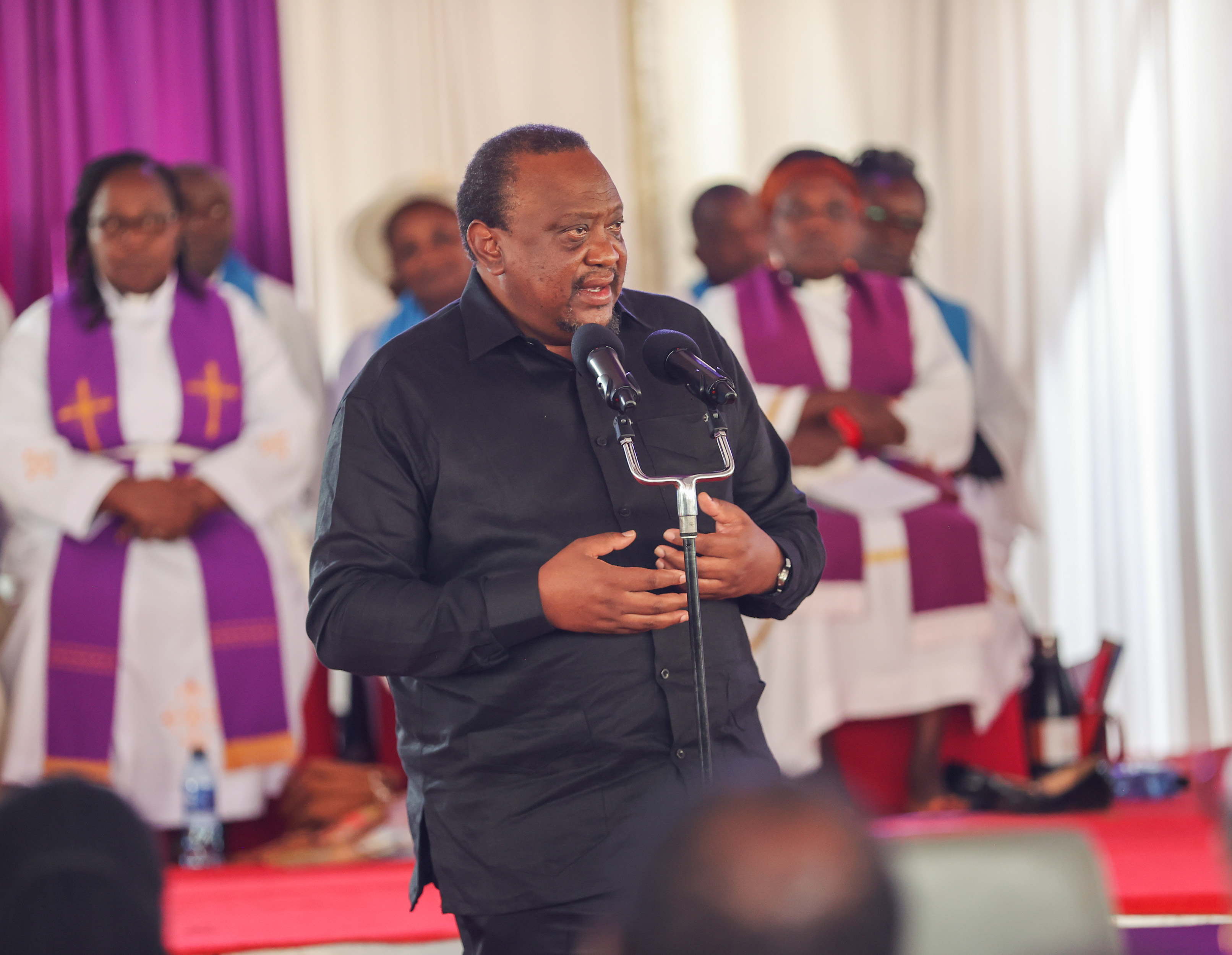
Former President Uhuru Kenyatta urges Kenyans to reflect on past political choices and avoid repeating the same mistakes as the country heads toward the 2027 General Election.
Former President Uhuru Kenyatta has urged Kenyans to carefully reflect on the country’s political journey as the 2027 General Election approaches, warning against what he described as repeating past mistakes when choosing national leaders.
Uhuru’s remarks come at a time when political activity is gradually intensifying ahead of the next General Election, with President William Ruto expected to seek a second and final term in office.
The former president has called on Kenyans to examine the promises made by political leaders, their record in government and the direction the country has taken before making their next political decisions.
His message places greater emphasis on the need for voters to look beyond political slogans and personalities and instead consider issues affecting their daily lives, including the economy, employment, healthcare, education, infrastructure and the cost of living.
Uhuru, who served as Kenya’s president from 2013 to 2022, remains an influential figure in the country’s political landscape. His administration handed over power to Ruto after the 2022 General Election, in which Ruto defeated former Prime Minister Raila Odinga.
Since leaving office, Uhuru has continued to comment on national political developments while maintaining a relatively different role from his time as head of state.
His latest remarks are likely to attract attention as political parties and alliances begin positioning themselves ahead of the 2027 contest.
President Ruto came to power on a platform that included addressing the high cost of living, creating employment opportunities, supporting small businesses and improving the economic position of ordinary Kenyans.
Since assuming office, his administration has introduced and pursued several programmes and reforms, including changes in the healthcare sector, housing initiatives, agricultural programmes and measures aimed at expanding government revenue.
The government has also defended its record, arguing that its policies are intended to address long-standing economic challenges and create a stronger foundation for future growth.
However, the administration has faced criticism from sections of the public and political opposition over issues including taxation, the cost of living, government spending and the implementation of some of its policies.
The political debate surrounding the 2027 election is therefore expected to focus heavily on whether the government has delivered on its promises and whether voters believe the current administration deserves another term.
Uhuru’s call for Kenyans not to “repeat the same mistake” adds another layer to that debate.
The former president has previously differed politically with Ruto, despite the two having worked closely together during the Jubilee administration.
Ruto served as Uhuru’s deputy president between 2013 and 2022. Their political relationship later deteriorated, particularly during Uhuru’s second term, as the former president increasingly worked with Raila Odinga under the Building Bridges Initiative.
The relationship between Uhuru and Ruto became one of the major political stories leading up to the 2022 election.
Ruto eventually left the Jubilee political establishment and campaigned under the United Democratic Alliance and Kenya Kwanza coalition.
Uhuru, meanwhile, supported Raila’s presidential bid through the Azimio la Umoja coalition.
Raila ultimately lost the election, while Ruto secured the presidency after the Supreme Court upheld the presidential election results.
With another election approaching, the political landscape is once again beginning to shift.
Several political leaders have already begun building alliances and engaging voters across different parts of the country. The opposition is also expected to reorganise and present alternative platforms ahead of the election.
For voters, the coming political period is likely to involve intense debate over the performance of the current administration and competing proposals from those seeking to replace it.
Uhuru’s remarks appear to encourage Kenyans to approach the process with careful consideration.
Rather than simply following political personalities or party affiliations, voters are being urged to assess what different leaders have done, what they promise to do and whether their proposals address the challenges facing the country.
The cost of living is expected to remain one of the central issues in the 2027 campaign.
Many households continue to pay close attention to the prices of food, fuel, electricity, housing and other essential goods and services. Employment, particularly among young people, is also likely to feature prominently in political campaigns.
Healthcare is another major issue.
The government has been implementing reforms in the health sector, including the transition from the National Health Insurance Fund to the Social Health Authority. The reforms are intended to expand access to healthcare and change the way medical services are financed.
The transition, however, has generated debate, with questions being raised over implementation, registration, payments and access to services.
Education is similarly expected to remain a major political issue, particularly as families continue to deal with school fees, university funding and changes in the education system.
Agriculture, which supports millions of Kenyan households, will also be important in the political conversation.
The government has promoted reforms aimed at increasing agricultural productivity, improving access to inputs and markets and strengthening value chains.
Supporters of the administration argue that such programmes are designed to improve farmers’ incomes and reduce dependence on imports.
Critics, however, continue to demand clearer evidence of how the reforms are benefiting ordinary farmers.
Infrastructure and development projects will also form part of the 2027 political discussion.
Across the country, the government has continued to announce and implement projects involving roads, housing, electricity, water, markets and other public facilities.
The administration is likely to use these projects as part of its record when seeking another mandate.
Opposition leaders, on the other hand, are expected to scrutinise the cost, implementation and impact of government projects while presenting their own alternatives.
This political contest will give Kenyan voters an opportunity to compare competing programmes and records.
Uhuru’s remarks therefore come at a significant moment.
The former president has urged citizens to remember their experiences and assess whether the leadership choices made in previous elections have produced the results they expected.
His comments also highlight the importance of accountability in democratic governance.
In an election, political leaders seek the support of voters by presenting their policies, promises and records. Once elected, they are expected to account for how they exercise public authority and use national resources.
For Kenyans, evaluating that record can involve looking at economic indicators, public services, development projects, government expenditure and the experiences of ordinary citizens.
The 2027 election is expected to feature a new generation of political conversations as well.
Young Kenyans make up a significant portion of the electorate and are likely to demand greater attention to employment, entrepreneurship, digital opportunities, education and political participation.
The diaspora is also increasingly becoming part of Kenya’s political conversation, with leaders discussing how Kenyans living abroad can contribute to the country’s development and leadership.
At the same time, regional political dynamics will continue to influence alliances and campaigns.
Kenya’s political parties have historically relied on coalitions to build national support, and the 2027 election is unlikely to be different.
Leaders are expected to engage across regions as they seek to build broad-based political alliances.
Uhuru’s intervention could therefore become part of the wider debate over the direction Kenya should take after 2027.
Whether Kenyans agree with his assessment or not, his remarks raise questions about how citizens should evaluate political leadership.
The former president is effectively encouraging voters to examine the consequences of previous political decisions before making new ones.
President Ruto, meanwhile, will be expected to present his administration’s record to voters and explain why he deserves another term.
Opposition candidates will also have to convince Kenyans that they offer a credible alternative and can address the country’s economic and social challenges.
Ultimately, the decision will rest with Kenyan voters when they cast their ballots.
The months leading to the 2027 General Election are expected to bring more political rallies, public debates, policy announcements and coalition negotiations.
As the competition intensifies, voters will have access to competing claims from different political camps.
The challenge for citizens will be to separate campaign rhetoric from verifiable records and carefully examine the proposals presented by each side.
Uhuru’s warning about not repeating the same mistake is therefore likely to remain part of the broader political conversation.
For the former president, the message is about reflection, accountability and the importance of making informed choices.
For President Ruto and his supporters, the coming election will provide an opportunity to defend the administration’s record and seek a second mandate.
For the opposition, it will provide an opportunity to present an alternative vision and persuade voters that a different direction is necessary.
And for ordinary Kenyans, the election will ultimately be about choosing the leadership they believe best addresses their priorities.
As Kenya heads toward another closely watched political contest, the focus is expected to shift increasingly from personalities to policies, performance and the future direction of the country.
The 2027 General Election will offer voters another opportunity to assess the promises and records of political leaders and determine who should lead Kenya for the next five years.

You Might Also Like
-
Nairobi Senator Edwin Sifuna has unveiled The Equitable Party (TEP) as the political platform for his 2027 presidential bid. Sifuna was unveiled as the party leader and presidential candidate during a Nairobi event on Sunday. TEP, previously registered in 2022, will now serve as the formal politic
-
Mary Muthoni's message today centred on early preparation, child safety, clean drinking water, food hygiene and proper medical care. She urged parents in flood-prone areas to accompany children to school where necessary, warned families against using untreated water, and advised sick Kenyans to seek
-
DIG Eliud Lagat's latest declaration that the operation to pacify the Kerio Valley will continue signals that the government is not yet ready to scale down its security campaign despite the progress reported in recent months. The authorities say operations have significantly reduced banditry, with L
-
The shooting in Lolgorian, Trans Mara South, has left one person dead following clashes between police officers and residents near the Kilimapesa mining area. The confrontation reportedly began when officers conducting a patrol towards the mining site encountered resistance from residents, leading t
-
Authorities have arrested 45 suspects in Mau Narok, Nakuru County, during a multi-agency crackdown on illicit alcohol, drugs and other illegal activities. The operation targeted unlicensed bars and suspected drug-trafficking networks, with police recovering suspected second-generation alcoholic drin
-
Rigathi Gachagua's Boston engagements today have placed several major issues at the centre of Kenya's political conversation. His strongest message was that only legitimate Kenyan citizens should participate in the 2027 election, while he also criticised President William Ruto and continued presenti