




IEBC Sets the Stage for the 2027 General Election: What the Commission Announced on Monday, September 14, 2026
The major IEBC development on Monday, September 14, 2026, was not the holding of an election but the formal publication of the notice for Kenya's 2027 General Election. The commission confirmed that the polls will be held on Tuesday, August 10, 2027. The announcement comes as the IEBC works on several fronts, including voter registration, election technology, campaign-financing regulations, security preparations, voter education and measures against misinformation. The commission has also pushed back against claims concerning dead voters and defended its procurement processes for election technology. At the same time, it has warned that misinformation, fake election results and political violence could threaten public confidence in the 2027 polls. The next year will therefore be crucial for Kenya's electoral preparations. The IEBC will be under significant pressure to demonstrate that its systems, personnel, technology and procedures are ready well before August 10, 2027. For voters, the publication of the election notice provides a clear reminder that preparations for the next General Election are already underway. In short: Kenya did not vote yesterday. The key IEBC announcement was the formal setting and publication of the August 10, 2027 General Election date, together with continued preparations on voter registration, technology, campaign financing, security and protection of the integrity of the electoral process.
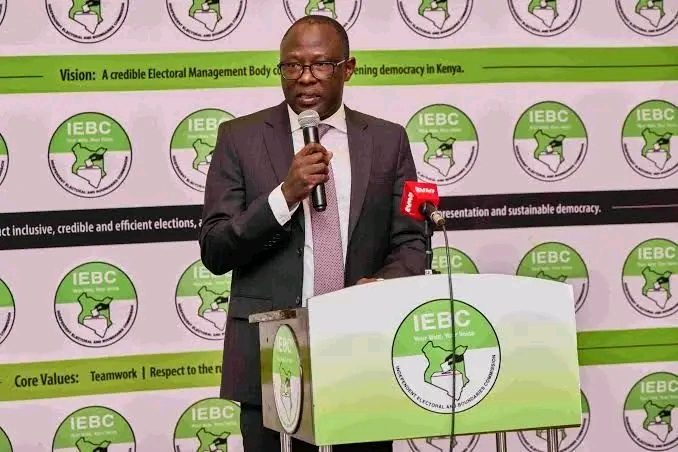
The Independent Electoral and Boundaries Commission (IEBC) made a major announcement on Monday, September 14, 2026, formally moving Kenya’s preparations for the 2027 General Election into another important phase. It is important to clarify that Kenya did not hold a General Election yesterday. Rather, the IEBC published the official notice for the next General Election and confirmed that Kenyans will go to the polls on Tuesday, August 10, 2027. The announcement was made by IEBC Chairperson Erastus Edung Ethekon pursuant to Article 88(4) of the Constitution, the Elections Act and the Elections (General) Regulations, 2012.
Official announcement of the 2027 election date
The most significant development from the IEBC yesterday was the publication of the Notice of the General Election. The notice formally confirms August 10, 2027, as the date when Kenyans will elect their leaders in the next General Election.
The IEBC said the notice is based on its constitutional and statutory mandate. The commission referred specifically to Article 88(4) of the Constitution, the Elections Act, and the Elections (General) Regulations, 2012. The announcement also referred to various Kenya Gazette notices containing the election and campaign-financing timelines.
The IEBC had already identified August 10, 2027, as the election date in its Election Operations Plan. However, the publication of the official notice is significant because it gives the date formal legal and administrative effect and provides political parties, candidates, voters and other stakeholders with a clear electoral calendar.
The IEBC's own website is now displaying a countdown to the August 10, 2027 General Election, demonstrating that the commission has entered a more advanced stage of preparations.
*What Kenyans should understand about yesterday's announcement*
There has been potential for confusion because people may refer to the announcement as an "election yesterday." However, the development on September 14 was not voting day. There were no presidential, parliamentary or countywide General Election results announced yesterday.
Instead, the IEBC announced the official date for the 2027 General Election. Therefore, Kenyans should distinguish between the publication of the election notice and the actual polling day.
The announcement is nevertheless a major electoral milestone because it signals that preparations have entered a more formal phase. Political parties and prospective candidates can now work with the established electoral calendar, while the IEBC continues preparing the systems, personnel, logistics, voter register and security arrangements required for the election.
Campaign-financing timelines
Another important issue contained in the IEBC announcement concerns campaign financing.
The commission said the election and campaign-financing timelines are contained in several Kenya Gazette notices, including Gazette Notices Nos. 13497, 13498, 13499, 13500, 13501, 13502 and 13503, published on August 20, 2026, as well as Gazette Notice No. 13771, published on August 26, 2026.
Campaign financing is an important part of Kenya's electoral system because elections involve substantial expenditure by candidates and political parties. The legal framework is intended to establish limits and controls around campaign expenditure and contributions.
The IEBC has previously announced the gazettement of the Election Campaign Financing Regulations, 2026 and contribution and spending limits applicable to the 2027 General Election. The commission has said the framework is intended to regulate campaign financing and ensure compliance with the Election Campaign Financing Act, 2013.
This means political parties and candidates cannot simply wait until the final months before the election to consider financial compliance. They are expected to understand the applicable rules and prepare their campaigns within the legal framework.
IEBC defends preparations for election technology
Another major electoral issue raised yesterday involved the procurement of the technology that will support the 2027 elections.
IEBC Commissioner Alutalala Mukhwana dismissed allegations that the commission was planning an illegal procurement of the Integrated Elections Management System (IEMS). He said the commission was following the required procurement procedures and that the technology would be acquired through a tender process.
The issue is particularly important because technology has become a central component of Kenya's elections. Election technology is used for voter identification, transmission and management of electoral information and other election-management functions.
Mukhwana said the commission was aware of concerns about the time available to procure and prepare election technology but maintained that the process would be completed within the required timelines.
This comes against the background of lessons from previous elections, where technology has been a major subject of political debate and legal challenges.
IEBC responds to claims about dead voters
The IEBC also found itself responding to political comments concerning the possibility of dead people voting in the 2027 election.
UDA Secretary General Hassan Omar had made remarks suggesting that even dead people could somehow contribute to President William Ruto's election victory. The remarks generated considerable public debate.
IEBC Commissioner Alutalala Mukhwana rejected the suggestion and explained that the biometric voter-verification system is designed to verify voters using biometric identifiers, including fingerprints and iris recognition.
According to the commission's explanation, a deceased person cannot simply appear at a polling station and pass the biometric verification process.
The issue nevertheless highlights the importance of maintaining an accurate voter register. The credibility of any election depends not only on what happens on polling day but also on the accuracy and integrity of the register used to identify eligible voters.
Concerns over misinformation and fake election results
The IEBC is also increasingly focusing on misinformation and disinformation ahead of the 2027 elections.
Commissioner Mukhwana warned about the possibility of fake election results, misinformation and political violence undermining the credibility of the electoral process.
This is particularly significant in an era when information can spread rapidly through Facebook, TikTok, X, WhatsApp, YouTube and other social-media platforms.
A fake election-result graphic can reach thousands or even millions of people before the IEBC has an opportunity to correct it. Such misinformation could create confusion, provoke political tensions and cause supporters of different candidates to believe that their candidate has won or lost before official results have been announced.
The IEBC therefore has an important responsibility to communicate accurate information quickly and consistently.
At the same time, voters have a responsibility to verify election information through official IEBC channels rather than immediately sharing unverified posts.
Security preparations
Security is another major component of the IEBC's preparations.
The commission has been working with other institutions, including the National Police Service and the National Cohesion and Integration Commission, to address electoral-security risks.
The IEBC's Election Operations Plan includes measures for continuous risk assessment, cooperation with security agencies, electoral-security training and the deployment of an electoral risk-management tool.
These preparations are important because Kenya's electoral history has demonstrated that elections can sometimes generate tensions, particularly when political competition becomes intense.
The objective is therefore not only to organize polling stations but also to create an environment where voters can participate freely and peacefully.
Voter registration remains important
The official announcement also comes at a time when the IEBC is continuing preparations to expand and improve the voter register.
The commission has emphasized the importance of continuous voter registration and reaching eligible Kenyans who are not yet registered.
Recently, the IEBC also clarified a voter-registration exercise at Kenyatta University after a video circulated online. Chairperson Erastus Ethekon explained that the commission deploys registration kits to strategic locations to make it easier for eligible Kenyans to register.
The commission has maintained that every eligible Kenyan has a constitutional right to apply for voter registration and participate in elections.
This is particularly relevant to young Kenyans who have attained voting age since the last General Election. They are expected to take advantage of registration opportunities so that they can participate in the 2027 polls.
Political parties now face a clearer electoral calendar
The publication of the election notice is also important for political parties.
Parties now have a definite date around which to organize their activities, including candidate identification, internal nominations, mobilization of supporters, development of manifestos and campaign strategies.
Potential presidential candidates, governors, senators, Members of Parliament and Members of County Assembly will increasingly be expected to demonstrate their preparedness for the election.
However, the official election date does not mean that every political activity taking place now is automatically part of the formal campaign period. Political actors must continue observing Kenya's electoral laws and regulations.
*Why August 10, 2027 matters*
The confirmation of August 10, 2027, is significant because it gives Kenyans certainty about when they will next exercise their constitutional right to elect leaders.
The six elective positions expected in the General Election include the President, Governor, Senator, Member of the National Assembly, Woman Representative and Member of the County Assembly.
The election will therefore involve millions of voters across the country and thousands of polling stations.
The scale of the exercise means that preparations have to begin long before election day. Ballot papers, polling materials, technology, election officials, security arrangements, voter education, transportation and tallying arrangements all have to be prepared well in advance.
The role of the IEBC
The IEBC has the constitutional responsibility of managing elections and referenda in Kenya. Its mandate includes conducting or supervising elections, registering voters, regulating the nomination of candidates, settling certain electoral disputes, registering political parties where applicable under the law, and regulating aspects of the electoral process.
The commission therefore has a responsibility to ensure that the 2027 election is conducted in a manner that is free, fair, transparent, impartial and credible.
The IEBC's preparations will be closely monitored by political parties, civil-society organizations, the media, international observers and ordinary Kenyan voters.
Public confidence will be critical
One of the biggest challenges facing the commission will be maintaining public confidence.
Kenya's previous elections have generated intense political debate over technology, voter registration, vote counting, transmission of results and the announcement of winners.
The IEBC will therefore need to communicate clearly with the public and political parties throughout the preparation period.
Any allegations concerning electoral malpractice will need to be addressed with evidence and timely explanations. At the same time, political leaders will be expected to avoid statements that could unnecessarily undermine public confidence in the electoral process.
*What happens next* ?
Following the publication of the General Election notice, attention will now shift to implementation of the electoral timetable.
The IEBC will continue voter registration and voter education while preparing electoral materials and systems. It will also continue working on technology procurement, election logistics, recruitment and training of election officials, security coordination and stakeholder engagement.
Political parties, meanwhile, will intensify preparations for the 2027 contest.
For ordinary Kenyans, the most important message is that August 10, 2027 is now the officially published election date. Citizens who are eligible but not registered should follow IEBC announcements on registration opportunities and ensure that their details are correctly captured.

You Might Also Like
-
Former Migori Governor Okoth Obado is back in the Milimani High Court on September 16, 2026, for sentencing following his conviction over the 2018 murder of Rongo University student Sharon Otieno. Obado, alongside his former personal assistant Michael Juma Oyamo and former Migori County official Cas
-
The announcement that Nairobi will host the 2029 World Athletics Championships has been met with considerable excitement in Eldoret, particularly among upcoming athletes, coaches and residents who identify strongly with Kenya's athletics tradition. Young athletes see the championships as a potentia
-
 President Ruto's reaction to Nairobi winning the 2029 World Athletics Championships has centred on national pride, Africa's historic opportunity and recognition of Kenya's athletics heritage. He has described the victory as belonging to Kenya, Africa and generations of athletes who have made the cou
 -
The 15th Mara Day celebrations concluded on Tuesday, September 15, 2026, at Bomet Stadium, bringing together Kenyan and Tanzanian leaders, environmental experts, conservation organisations and local communities to discuss the protection of the Mara River ecosystem. Key leaders included EAC Affairs a
-
The story of Mercy Kanini of Juja, Kiambu County, is both extraordinary and heartbreaking. She made headlines after delivering five babies through normal delivery at Thika Level Five Hospital, an event described as extremely rare in Kenya. The babies were subsequently transferred to Kenyatta Nationa
-
President William Ruto's September 15, 2026 visit to Siaya marks the third day of his current Nyanza development tour and represents one of the most politically significant stages of the regional visit. The day is centred on Dhogoye Bridge, Sihayi-Bar Ober-Sega Road, Alego Usonga Affordable Housing