Kenya Steps Up Fight Against Mother and Child Mortality as Tessie Mudavadi Leads World Prematurity Day Celebrations in Nyeri
The World Prematurity Day celebrations led by Tessie Mudavadi in Nyeri County have highlighted the importance of protecting mothers and newborns while strengthening Kenya's fight against preventable deaths. Through the Okoa Malaika programme, 92 neonatal incubators have been distributed to 49 health facilities across 44 counties, with another 12 incubators handed over to six Central region counties during the latest celebrations. The reported neonatal mortality figure of 21 deaths per 1,000 live births from the 2022 survey, alongside the encouraging reduction to 19 in the latest 2025/26 survey, shows both the progress made and the work that remains. Ultimately, reducing maternal and child mortality requires sustained investment, accessible healthcare, modern medical equipment, trained professionals and community awareness.
Kenya has renewed its commitment to reducing maternal, newborn and child mortality as the country joined the rest of the world in marking World Prematurity Day, an important occasion dedicated to raising awareness about premature births and the challenges faced by mothers and babies born before completing the normal pregnancy period.
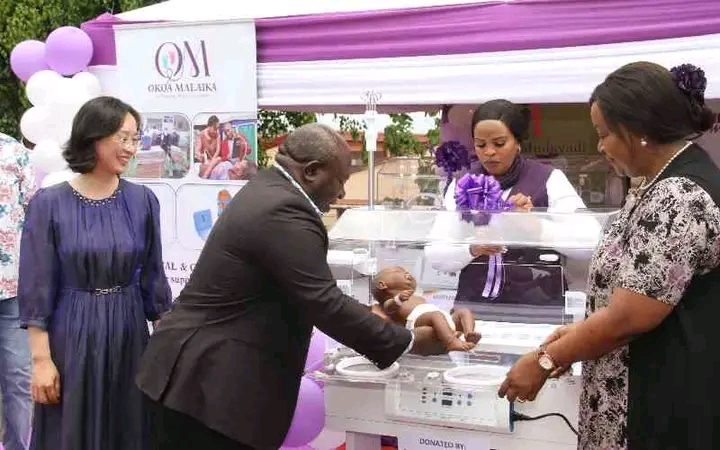
The celebrations were led by Tessie Mudavadi, spouse to Prime Cabinet Secretary Musalia Mudavadi, in Nyeri County, where she called for stronger maternal and newborn healthcare services to improve the survival chances of premature babies.The event brought together healthcare professionals, government representatives, development partners, families and other stakeholders committed to improving maternal and child health in Kenya.
The celebrations also highlighted the importance of preventing avoidable deaths during pregnancy, childbirth and the first weeks of a child's life. Participants were reminded that every mother deserves quality healthcare and every newborn deserves an opportunity to survive and grow into a healthy child.
Kenya continues to face challenges in reducing newborn deaths, with the 2022 Kenya Demographic and Health Survey recording 21 neonatal deaths for every 1,000 live births. However, the latest 2025/26 Kenya Mini Demographic and Health Survey indicates that the figure has declined to 19 deaths per 1,000 live births, showing some progress while highlighting the need for further improvements.Her participation highlighted the need for collective efforts to protect mothers and children, particularly babies born prematurely who require specialised medical attention.
Speaking during the event, she called on stakeholders to strengthen antenatal care, ensure early identification of pregnancy complications and improve access to specialised newborn services.
She also emphasised the importance of educating expectant mothers and their families about the need to attend regular antenatal clinic appointments.
Early identification of pregnancy complications can help healthcare providers take appropriate measures before a situation becomes life-threatening. Pregnant women need proper medical monitoring throughout pregnancy to identify conditions that could affect their health or the development of their unborn children.The celebrations also marked the third anniversary of the Okoa Malaika Infant Pre-Term Mitigation Programme, an initiative established to support hospitals with essential equipment for caring for premature and vulnerable newborns.
According to information shared during the event, the programme was launched on November 17, 2023, through a partnership between the Mudavadi Memorial Foundation Trust Fund and Ushiriki Wema Foundation.
Through ten phases, the programme has distributed 92 neonatal incubators to 49 health facilities across 44 counties in Kenya.
The initiative aims to strengthen newborn care in public hospitals, particularly Level 4 and Level 5 facilities that handle premature babies and newborns requiring specialised medical attention. The equipment is expected to strengthen the capacity of hospitals to care for babies born prematurely and those experiencing complications immediately after birth.
Incubators are important medical devices because premature babies are often born before their bodies have fully developed the ability to regulate temperature.
They provide a controlled environment that helps maintain the baby's body temperature while allowing healthcare workers to monitor and provide essential treatment.
For many families, having access to an incubator can make a significant difference between life and death, particularly when a baby is born several weeks before the expected delivery date.
The donation is also expected to ease pressure on healthcare facilities that receive premature and critically ill newborns from surrounding areas.The issue of newborn mortality remains a major concern in Kenya's healthcare sector.
According to the 2022 Kenya Demographic and Health Survey, the country recorded 21 neonatal deaths for every 1,000 live births.
Neonatal mortality refers to the death of a baby within the first 28 days after birth.
This period is particularly important because newborns are vulnerable to infections, breathing difficulties, complications arising from premature birth and other medical conditions.
However, the latest Kenya Mini Demographic and Health Survey for 2025/26 recorded a neonatal mortality rate of 19 deaths per 1,000 live births.
The reduction is encouraging, although health experts continue to emphasise the need to accelerate efforts to prevent deaths that can be avoided through timely medical intervention.China has supported the Okoa Malaika Programme for three consecutive years through its embassy in Kenya.
The partnership demonstrates the importance of collaboration between governments, foundations and healthcare institutions in addressing challenges affecting mothers and newborns.
Guo Haiyan emphasised that women's and children's health remains an important part of public health and development.
The cooperation is expected to continue supporting efforts aimed at improving access to essential healthcare equipment and specialised newborn services.
Such partnerships are important because reducing newborn mortality requires more than awareness campaigns. It also requires resources, trained healthcare workers, modern equipment and strong medical facilities. He explained that the medical equipment played a crucial role in saving his baby's life.
His experience demonstrated the importance of ensuring that hospitals have sufficient neonatal equipment to respond to emergencies involving premature newborns.
He welcomed the latest donation, noting that he understood the value of incubators from a parent's perspective.
His testimony illustrated that behind every piece of donated medical equipment is a family hoping to see its newborn survive.
For parents with premature babies, the first days after delivery can be frightening because they are uncertain whether their children will recover.Peris Muthee, a neonatal nurse at the hospital, expressed appreciation for the equipment, noting that it would help more babies receive timely and safe care.
Nyeri County Referral Hospital serves patients from the county and neighbouring areas, making access to adequate neonatal equipment particularly important.
Healthcare workers are often required to manage several newborn emergencies, meaning additional incubators can improve their ability to provide specialised care.
However, medical equipment must also be accompanied by adequate staffing, proper maintenance, reliable electricity and essential medical supplies.
Hospitals must ensure that the equipment remains operational and that healthcare workers have the necessary training to use it effectively.Measures Kenya needs to reduce mother and child mortality
Reducing maternal and newborn mortality requires a comprehensive approach that addresses risks before, during and after childbirth,First, pregnant women should be encouraged to attend regular antenatal clinic appointments. These visits allow healthcare providers to monitor the mother's health, assess the baby's development and identify complications early.
Second, deliveries should take place in properly equipped health facilities under the supervision of skilled healthcare professionals.
Third, hospitals need adequate neonatal intensive care units, incubators, oxygen supplies and essential medicines to manage premature babies and newborns experiencing complications.
Fourth, mothers should receive proper medical attention after delivery. Postnatal services help identify infections, excessive bleeding, high blood pressure and other complications that could threaten the mother's life.
Fifth, communities should be educated about maternal health, nutrition, pregnancy danger signs and the importance of seeking medical assistance without delay.Government and stakeholders urged to strengthen healthcare services
The World Prematurity Day celebrations have once again drawn attention to the responsibility of government and healthcare stakeholders to invest in quality maternal and newborn services.
Although Kenya has made progress in expanding access to skilled birth attendance and health facility deliveries, the country still faces challenges in ensuring that every mother and newborn receives quality care.
According to the 2025/26 Kenya Mini Demographic and Health Survey, 91.9 per cent of births were attended by skilled providers, while 91.1 per cent took place in health facilities.
These figures demonstrate improvements in access to maternity services, but they also underline the importance of improving the quality of care provided in those facilities.

You Might Also Like
-
Two individuals suspected of being members of a criminal gang have been shot dead by police officers following a dramatic pursuit in Bamburi, Mombasa County. The incident has raised renewed attention to security concerns in the coastal region, with questions emerging about the circumstances that led
-
Interior Cabinet Secretary Kipchumba Murkomen has visited the Rome Police Operations Centre in Italy to learn how modern technology is being used to strengthen security operations, improve police coordination and enhance law enforcement. The visit provided an opportunity for the Kenyan delegation to
-
 The Teachers Service Commission (TSC) has appointed Cheptumo Ayabei as its new Secretary and Chief Executive Officer, ushering in a new chapter in the leadership of the institution responsible for managing Kenya's teaching workforce. Ayabei, who previously served as the commission's Director of Fina
-
The Riverside tragedy has left a family devastated after a father of five reportedly lost his life, leaving behind five children to face an uncertain future without his presence. The heartbreaking incident has sparked concern and sympathy, highlighting the emotional and financial challenges families
-
President William Ruto’s 90-day plan to introduce a new basic education law has sparked debate over the management and control of the education sector, with county governments raising concerns about protecting their constitutional responsibilities. The proposed legal reforms are expected to review
-
Former Deputy President Rigathi Gachagua has declared his intention to challenge Johnson Sakaja and Ronald Karauri in the 2027 Nairobi gubernatorial race, signalling an increasingly competitive battle for City Hall. Gachagua has maintained that the Democratic Change Party (DCP) will not enter into z