



Murkomen Draws the Line: No Compensation for Livestock Killed in Samburu Security Operation
Interior Cabinet Secretary Kipchumba Murkomen has ruled out compensation for livestock owners whose animals were killed during a security operation in Samburu County, saying the government has no legal or budgetary framework to compensate property lost during such operations. Murkomen told MPs that official police records showed 237 livestock had been killed, disputing higher figures reported by local leaders and residents. Samburu leaders, including Governor Lati Lelelit, have demanded compensation, arguing that the affected animals were killed during a government-led operation and that their loss has severely affected pastoralist families whose livelihoods depend on livestock. Murkomen said investigations would continue to establish what happened and determine whether any security officers acted unlawfully, while the government maintains that addressing banditry requires both effective security operations and long-term investment in roads, water, infrastructure and economic opportunities in northern Kenya.
Interior Cabinet Secretary Kipchumba Murkomen has ruled out compensation for families whose livestock were killed during a recent security operation in Samburu County, saying the government currently has no legal or budgetary framework that allows his ministry to compensate victims for such losses. His position has sparked renewed debate among Samburu leaders and affected residents, who maintain that the government should compensate families whose animals were allegedly killed by security officers during an operation aimed at tackling banditry and cattle rustling.
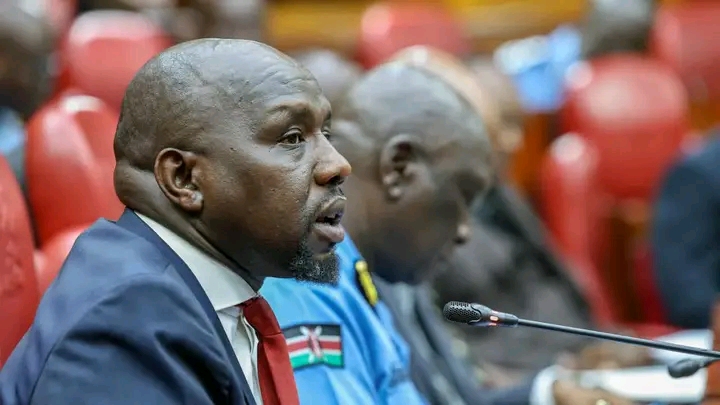
Murkomen made the remarks on Wednesday, October 7, 2026, when he appeared before the National Assembly’s Departmental Committee on Administration and Internal Security alongside senior security officials, including Inspector-General of Police Douglas Kanja. The committee had summoned the security chiefs following growing concerns over the killing of livestock during an operation in Waso Ward, Samburu County.
The controversy centres on the number of animals that were killed. Samburu leaders and affected residents have maintained that more than 700 livestock were shot during the operation. However, Murkomen disputed that figure, saying official police records showed a significantly lower number.
According to Murkomen, the initial police report recorded 237 livestock as having been killed. He said other figures circulating publicly, including 700, 800 and even more than 1,000 animals, had not been established through official investigations. He insisted that the government needed to establish the exact number of animals involved before drawing conclusions about what happened.
The disagreement over the figures has become an important part of the controversy because livestock is the primary source of livelihood for many pastoralist families in Samburu. Losing cattle, goats and donkeys can therefore have consequences beyond the immediate value of the animals, affecting food security, household income and the ability of families to recover economically.
Why Murkomen says there will be no compensation
Murkomen explained that his ministry does not have a budgetary provision specifically set aside to compensate people whose property is lost during criminal or security incidents.
He also argued that there is no legal policy framework under the current criminal justice system that would allow the National Police Service to make such payments. According to reports of his appearance before the committee, Murkomen warned that agreeing to compensation in the Samburu case could create demands from other communities that have suffered losses through crime.
The Interior CS said that making an exception for the Samburu case could create what he described as a “Pandora’s box”, because livestock theft and destruction of property occur in many parts of the country.
His argument is that the government's responsibility is primarily to protect life and property, investigate crimes and ensure that people responsible for unlawful acts are prosecuted. Compensation, he maintained, cannot simply be authorised without a legal and budgetary basis.
Samburu leaders demand compensation
The position has been strongly challenged by Samburu leaders, who argue that the circumstances of the livestock deaths make the case different from ordinary livestock theft.
Samburu Governor Lati Lelelit has been among those calling for compensation, arguing that the affected animals were killed during a government security operation. He has maintained that if security officers were responsible for the deaths, affected families should not be left to bear the economic burden alone.
Earlier, Samburu leaders had presented a petition to Parliament seeking compensation for the families affected by the operation. Reports indicated that dozens of families had been affected and that county officials were pushing for investigations and compensation after the livestock deaths.
Governor Lelelit has argued that livestock represents the economic foundation of many Samburu households. The loss of animals therefore means loss of wealth, food, income and future opportunities.
The governor previously estimated the value of the animals lost at about KSh70 million, based on figures collected from several locations. The county's figures, however, have not been independently reconciled with the lower number cited by the national security authorities.
What happened during the security operation?
The incident occurred during a multi-agency security operation targeting banditry and cattle rustling in parts of Samburu. Security officers, including personnel from the General Service Unit (GSU) and Anti-Stock Theft Unit (ASTU), were deployed to the region as part of efforts to deal with insecurity.
The operation has since attracted questions about the conduct of security officers and whether adequate precautions were taken to prevent civilian casualties and destruction of property.
Murkomen previously acknowledged that livestock had been killed during the operation and directed security agencies to exercise maximum caution to minimise collateral damage. He said security officers were expected to distinguish between legitimate security targets and civilians or their property.
The latest parliamentary appearance has therefore shifted the debate from simply discussing the security operation to examining accountability, investigations and the government's responsibility for property lost during security actions.
Investigations still ongoing
Although Murkomen has ruled out compensation, he has not said that the government will ignore the circumstances surrounding the livestock deaths.
He said investigations were ongoing to establish who was responsible and under what circumstances the animals were killed. The investigations are expected to determine whether security officers acted lawfully and within their rules of engagement.
Murkomen indicated that officers found to have acted unlawfully could face disciplinary or legal action. At the same time, civilians found to have participated in criminal activity would also be dealt with according to the law.
This means that while monetary compensation has been rejected, the possibility of accountability through investigations remains open.
The bigger problem of banditry
During his appearance before MPs, Murkomen also linked the persistent insecurity in Samburu and other northern Kenyan counties to historical marginalisation and underdevelopment.
He argued that security operations alone cannot permanently eliminate banditry. In his view, poor roads, inadequate communication networks, limited water infrastructure and lack of economic opportunities have contributed to insecurity in areas such as Samburu, Isiolo, Turkana and other parts of northern Kenya.
Murkomen called for increased investment in infrastructure, arguing that improved roads would allow security agencies to reach remote areas more quickly while also opening communities to markets, schools, health services and other opportunities.
He also proposed investment in dams and water infrastructure to reduce competition over pasture and water, which can contribute to conflict between pastoralist communities.
Livestock remains central to Samburu livelihoods
The compensation dispute has also highlighted the economic importance of livestock in Samburu.
For many pastoralist families, cattle, goats, sheep and donkeys are not simply property. They provide food, income and social security. Livestock can also be exchanged or sold to meet important family needs such as education, medical expenses and household necessities.
The loss of a large number of animals can therefore push an already vulnerable family deeper into poverty.
This is why affected residents and local leaders have continued to demand compensation despite Murkomen's position. They argue that the issue should not be treated purely as a question of criminal justice but also as a question of livelihoods and government accountability.
Calls for better security operations
The Samburu controversy has also renewed calls for security agencies to improve the way operations are conducted in pastoralist areas.
Local leaders have argued that security operations must distinguish between bandits and innocent residents. They have called for investigations into the chain of command, rules of engagement and circumstances that led to the deaths of the animals.
Samburu West MP Naisula Lesuuda also raised concerns that failure by the government to address residents' grievances could increase frustration within communities. She warned that promises that are not fulfilled can undermine public confidence in government security programmes.
A difficult balance for the government
Murkomen's position places the government in a difficult situation. On one hand, authorities are under pressure to act firmly against banditry and cattle rustling, which have caused deaths, displacement and loss of property in northern Kenya.
On the other hand, security operations must protect innocent civilians and their property. Where property is allegedly destroyed during a government operation, affected citizens naturally expect an explanation and accountability.
The current dispute over compensation is therefore likely to continue as investigations establish the exact number of livestock killed and determine how the animals died.
For now, Murkomen's message is clear: the government will not compensate the affected livestock owners under the existing legal and budgetary framework. He has instead emphasised investigations, accountability for unlawful conduct and long-term investment in development as the preferred response.
The Samburu case could consequently become an important test of how Kenya handles property losses during security operations, particularly in regions where livestock is the backbone of the local economy.

You Might Also Like
-
Former President Uhuru Kenyatta steps down as Azimio council chair, with James Orengo and Rigathi Gachagua emerging in discussions over the coalition’s future leadership.
-
Kenya's Ebola response has entered a critical surveillance and contact-tracing phase following confirmation of the country's first imported Bundibugyo Ebola case. PS Mary Muthoni says 57 contacts have been identified, with 10 already placed under quarantine, while health officers across the country
-
Deputy President Kithure Kindiki's appearance at Jamhuri Park on October 7 placed agriculture and food security at the centre of the national economic transformation conversation. He outlined government figures on farmer registration, fertiliser prices, livestock vaccination, milk production, meat e
-
A passenger travelling aboard a Kenya Airways flight from Nairobi to Lagos, Nigeria, has died after suffering a medical emergency shortly before the aircraft landed at Murtala Muhammed International Airport. The passenger reportedly became unresponsive about 20 minutes before landing, prompting cabi
-
NCIC's latest actions against CS Geoffrey Ruku and its handling of nominated MP Joseph Wainaina Iraya underline the commission's growing focus on political language and national cohesion ahead of the 2027 elections. Ruku has been directed to stop repeating remarks that NCIC found divisive, respond w
-
President William Ruto says Raila Odinga’s mausoleum at Kang’o Ka Jaramogi honours his contribution to Kenya’s democratic journey and will help preserve his legacy for future generations.