Parliament Endorses NSSF Investment in Rironi–Mau Summit Road as Alice Ng’ang’a Praises Fund for Making the Right Decision
The parliamentary endorsement of NSSF's investment in the Rironi–Mau Summit Road project marks an important development in Kenya's infrastructure financing strategy. Committee chairperson Alice Ng’ang’a has praised the Fund for making what she described as the right investment decision, following an inspection of the ongoing construction works. With the Rironi–Gilgil section reported to be approximately 40 per cent complete, attention is now focused on maintaining construction progress and achieving the expected completion timelines. NSSF is banking on long-term toll revenue to generate returns for its contributors, while the government expects the highway to improve transportation, trade and economic activities across the country.
Parliament has endorsed the National Social Security Fund (NSSF) investment in the ambitious Rironi–Mau Summit Road project, describing the multi-billion-shilling infrastructure venture as a strategic investment expected to generate long-term returns while transforming Kenya's transport network.
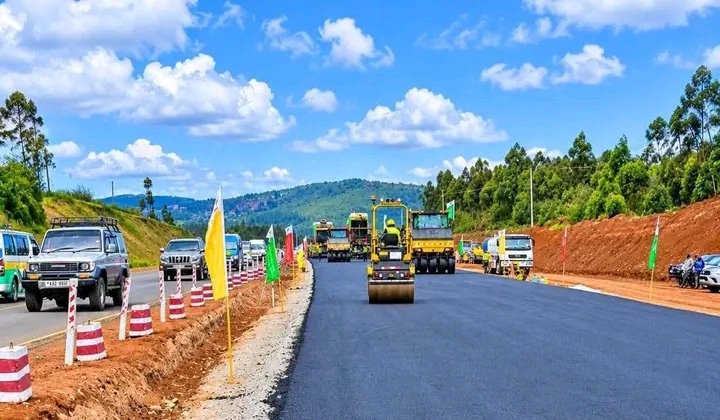
The endorsement follows an inspection tour by the National Assembly's Departmental Committee on Social Protection, led by its chairperson, Alice Ng’ang’a. The committee visited the ongoing construction works along the 81-kilometre Rironi–Gilgil section to assess the project's progress and establish how NSSF's investment is being utilised.
During the inspection, Ng’ang’a praised the Fund's leadership for supporting the road project, saying that NSSF had made the right decision by investing members' savings in an infrastructure project with the potential to generate sustainable returns.
She expressed satisfaction with the progress witnessed at the construction site, noting that the committee had an opportunity to assess the work firsthand rather than relying entirely on reports presented to Parliament.The inspection tour was organised to allow members of the Departmental Committee on Social Protection to evaluate the progress of the Rironi–Mau Summit Road project and understand the nature of NSSF's participation.
The committee was accompanied by representatives of the NSSF Board of Trustees and management, led by Board Chairman David Kariuki Njeru and Managing Trustee and Chief Executive Officer David Koross.
The delegation examined the ongoing construction activities along the Rironi–Gilgil section, which covers approximately 81 kilometres.
The inspection provided an opportunity for the lawmakers to receive updates from the project team regarding construction progress, financing arrangements, implementation timelines and measures put in place to protect the interests of NSSF members.
According to the information presented during the visit, the Rironi–Gilgil section had reached approximately 40 per cent completion.This progress was welcomed by the committee, with Ng’ang’a acknowledging that the project was moving forward and that the investment appeared to have a promising future.
Parliament's involvement also demonstrates the importance of oversight when public institutions invest large amounts of money in long-term infrastructure projects.
For NSSF members, the central concern is whether their contributions are being managed responsibly and whether investments will generate sufficient returns to support future pension payments.
The committee's inspection was therefore an important opportunity to examine the investment and seek clarification from the Fund's management.Understanding the Rironi–Mau Summit Road project
The Rironi–Mau Summit Road is one of Kenya's major infrastructure projects, designed to improve transportation between Nairobi and the western parts of the country.
The 233-kilometre highway is being implemented under a Public-Private Partnership (PPP) arrangement, which brings together the government and private investors to finance, construct and operate major infrastructure.
The project was officially launched by President William Ruto in November 2025 at Kamandura in Kiambu County.It is divided into 3 parts:
Rironi–Naivasha–Gilgil: An 81-kilometre stretch.
Rironi–Mai Mahiu–Naivasha: A 58-kilometre stretch.
Gilgil–Nakuru–Mau Summit: A 94-kilometre stretch.
The first two sections involve the National Social Security Fund and China Road and Bridge Corporation (CRBC), while the third section is being undertaken by Shandong Hi-Speed Road and Bridge International Engineering.
The overall objective is to provide a modern highway with improved capacity, better traffic management and safer road infrastructure.
The project is expected to improve connectivity between Nairobi, Kiambu, Nakuru and other regions that depend on the Northern Corridor for transportation and trade. Traditionally, pension funds invest in assets such as government securities and other financial instruments to generate returns that support their members during retirement.
However, infrastructure investment provides another opportunity for pension funds to diversify their portfolios and participate in long-term economic development.
The Rironi–Mau Summit Road project is expected to generate income through toll collections over the concession period.
By participating in the project, NSSF hopes to benefit from the revenue generated by motorists using the highway.
The investment is also expected to provide an opportunity for the Fund to grow members' savings through an income-generating infrastructure asset.
During the inspection, the committee was informed that NSSF's investment was part of a wider strategy to diversify beyond traditional investment options.The inspection also provided an opportunity for the committee to receive updates on the expected completion of different sections.
The Rironi–Gilgil section, which covers 81 kilometres, was reported to be approximately 40 per cent complete.
The contractor indicated that the Rironi–Naivasha–Gilgil stretch could be usable by March 2027.
Other project timelines indicate that the Rironi–Naivasha section is targeted for December 2026, while the wider highway corridor is expected to be completed by June 2027.
These timelines are important because the highway is expected to address some of the longstanding transportation challenges experienced along the Nairobi–Nakuru route.
The government and contractors will need to maintain the pace of construction to achieve the projected deadlines.The Rironi–Mau Summit Road is expected to deliver several economic benefits beyond improving transportation.
First, the highway is expected to reduce congestion along one of Kenya's busiest transport corridors.
The existing route serves thousands of motorists daily, including private vehicle owners, public transport operators and heavy commercial trucks.
Improved road capacity could make transportation more efficient and reduce delays experienced by road users.
Second, the highway is expected to support businesses operating in Kiambu, Nakuru and neighbouring counties.
Farmers transporting agricultural produce to markets will benefit from improved connectivity, while traders will have better opportunities to move goods between different regions.The highway also connects important economic centres that play a major role in Kenya's agricultural and commercial activities.
Third, the project is expected to create employment opportunities during construction and subsequent maintenance activities.
Construction companies require engineers, machine operators, technicians, drivers, security personnel and other workers to support their operations.
Local businesses may also benefit from increased economic activity associated with the construction process.
Additionally, improved road infrastructure could encourage further investments in hospitality, logistics, manufacturing and commercial developments along the corridor.The Rironi–Mau Summit Road investment provides an opportunity for NSSF to diversify its portfolio, but the Fund must ensure that the expected returns are achieved without exposing contributors to unnecessary financial risks.
The committee's inspection is therefore an important part of parliamentary oversight.
Members of Parliament have a responsibility to ensure that public institutions entrusted with workers' savings operate in the best interests of contributors.
The Fund's management must also continue providing clear information about the project's financial performance, construction progress and revenue projections.Kenya faces significant infrastructure financing requirements, and relying entirely on the national budget or government borrowing can place pressure on public finances.
By involving institutional investors such as NSSF, the government can mobilise additional resources for projects that might otherwise take longer to implement.
The Rironi–Mau Summit Road demonstrates how pension savings can participate in long-term infrastructure development while seeking financial returns.
However, such investments must be carefully managed to balance national development priorities with the responsibility of safeguarding retirement savings.

You Might Also Like
-
Two individuals suspected of being members of a criminal gang have been shot dead by police officers following a dramatic pursuit in Bamburi, Mombasa County. The incident has raised renewed attention to security concerns in the coastal region, with questions emerging about the circumstances that led
-
Interior Cabinet Secretary Kipchumba Murkomen has visited the Rome Police Operations Centre in Italy to learn how modern technology is being used to strengthen security operations, improve police coordination and enhance law enforcement. The visit provided an opportunity for the Kenyan delegation to
-
 The Teachers Service Commission (TSC) has appointed Cheptumo Ayabei as its new Secretary and Chief Executive Officer, ushering in a new chapter in the leadership of the institution responsible for managing Kenya's teaching workforce. Ayabei, who previously served as the commission's Director of Fina
-
The Riverside tragedy has left a family devastated after a father of five reportedly lost his life, leaving behind five children to face an uncertain future without his presence. The heartbreaking incident has sparked concern and sympathy, highlighting the emotional and financial challenges families
-
President William Ruto’s 90-day plan to introduce a new basic education law has sparked debate over the management and control of the education sector, with county governments raising concerns about protecting their constitutional responsibilities. The proposed legal reforms are expected to review
-
Former Deputy President Rigathi Gachagua has declared his intention to challenge Johnson Sakaja and Ronald Karauri in the 2027 Nairobi gubernatorial race, signalling an increasingly competitive battle for City Hall. Gachagua has maintained that the Democratic Change Party (DCP) will not enter into z