President Ruto Opens Third Global Parliamentary Summit on Hunger and Malnutrition in Nairobi
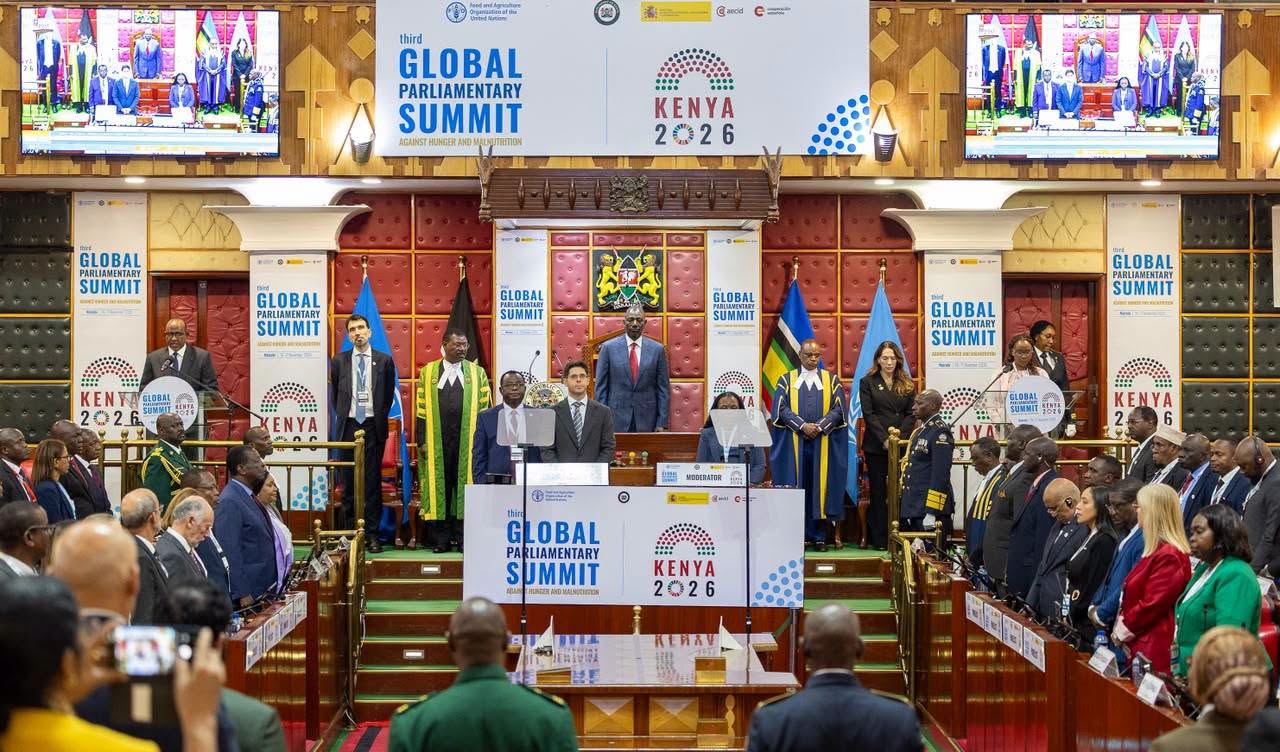
President William Ruto attended the opening of the Third Global Parliamentary Summit Against Hunger and Malnutrition at Parliament Buildings in Nairobi, bringing together parliamentary leaders, policymakers and international delegates to discuss strategies for tackling food insecurity and improving nutrition worldwide. The summit provides a platform for strengthening international cooperation, promoting sustainable agriculture and developing policies aimed at ensuring access to affordable and nutritious food. Discussions are expected to focus on the growing challenges of hunger, rising food prices, climate change, agricultural productivity and the need to strengthen food distribution systems. Kenya's participation highlights its commitment to global efforts to address hunger, support farmers and promote sustainable food production. The gathering also underscores the critical role of governments and parliamentarians in mobilising resources, strengthening legislation and implementing lasting solutions to food insecurity and malnutrition.
President William Ruto has attended the opening of the Third Global Parliamentary Summit Against Hunger and Malnutrition at Parliament Buildings in Nairobi, bringing together parliamentary leaders, policymakers, government representatives and international stakeholders to discuss practical solutions to hunger, food insecurity and malnutrition across the world.
The high-level gathering has placed Kenya at the centre of international discussions on food security, with participating countries expected to examine the challenges affecting agricultural production, food distribution, nutrition and access to affordable meals. The summit provides an important platform for leaders to exchange experiences, strengthen partnerships and explore sustainable approaches to ensuring that every person has access to sufficient, safe and nutritious food.
President Ruto's participation highlights Kenya's engagement in global conversations surrounding food security and the need for coordinated action to address the challenges affecting millions of people. The summit comes at a time when many countries continue to grapple with rising food prices, climate-related disruptions, poverty, conflicts and economic pressures that have made access to adequate nutrition increasingly difficult for vulnerable populations.
Hunger and malnutrition remain among the most pressing development challenges facing the international community. Despite improvements in agricultural technology and food production in different parts of the world, millions of people continue to experience food shortages and inadequate nutrition. The situation has raised concerns among governments and international organisations, with calls for stronger political commitment and increased investment in sustainable food systems.
The Nairobi summit is expected to strengthen the role of parliaments in addressing these challenges by encouraging lawmakers to prioritise food security in national development agendas, legislation and budgetary allocations. Legislatures play a significant role in determining how governments invest in agriculture, healthcare, nutrition programmes, water infrastructure and social protection initiatives.
Through their oversight responsibilities, parliamentarians can also ensure that public resources allocated to food security programmes are properly utilised and that policies designed to support vulnerable communities deliver meaningful results.
The gathering further provides an opportunity for participating countries to discuss how they can strengthen agricultural systems and reduce their dependence on vulnerable food supply chains. Disruptions caused by extreme weather conditions, conflicts and international economic uncertainties have demonstrated the importance of building resilient food production and distribution networks.
For Kenya, food security remains a major national development priority, particularly because a significant proportion of the population depends on agriculture for employment and household income. Farmers across different regions continue to face challenges associated with unpredictable rainfall, rising production costs, limited access to affordable agricultural inputs and changing market conditions.
Climate change has emerged as one of the major threats to agricultural production, with prolonged droughts and excessive rainfall affecting crop yields and livestock production in different parts of the country. These challenges have increased the need for climate-smart farming methods, improved irrigation systems and stronger support for small-scale farmers.
The government has continued to emphasise agricultural transformation as part of its broader development agenda, recognising that increased food production is essential for improving household incomes, reducing poverty and stabilising the cost of living.
Investment in irrigation has been identified as an important strategy for reducing dependence on rainfall. Expanding irrigation infrastructure could enable farmers to produce food throughout the year, particularly in areas that frequently experience prolonged dry conditions.
Improved access to quality seeds, fertilisers, agricultural extension services and modern farming technologies is also considered essential in increasing productivity. Small-scale farmers, who contribute significantly to the country's food supply, require affordable inputs and reliable information to improve their farming practices.
The summit also places emphasis on the relationship between hunger and malnutrition, two challenges that are closely connected but require different approaches. While hunger refers to insufficient access to food, malnutrition can occur when people consume inadequate amounts of essential nutrients or diets that lack nutritional balance.
Children are particularly vulnerable to the effects of malnutrition, especially during the early stages of development. Poor nutrition can affect physical growth, brain development, learning abilities and general health, with consequences that may extend into adulthood.
Pregnant women and breastfeeding mothers also require adequate nutrition to support their health and the development of their children. Ensuring access to nutritious foods and essential healthcare services is therefore important in reducing preventable health complications.
In many communities, food insecurity is closely linked to poverty and limited economic opportunities. Families experiencing financial difficulties may be unable to afford balanced diets, forcing them to rely on cheaper food options that may not provide all the nutrients required for healthy living.
Rising food prices have further complicated the situation, particularly for low-income households that spend a substantial proportion of their earnings on basic necessities. When the cost of essential commodities increases, families may reduce the quantity or quality of food they consume.
These economic pressures have reinforced the importance of developing policies that support food affordability while protecting farmers and other players within the agricultural value chain.
The summit also provides an opportunity to examine the impact of food wastage, which remains a major challenge in many countries. Significant quantities of food are lost during harvesting, transportation, storage and distribution, while edible products are also discarded by households and businesses.
Improving food storage facilities, strengthening transportation networks and investing in modern preservation technologies could help reduce post-harvest losses and ensure that more food reaches consumers.
In rural areas, farmers sometimes experience difficulties accessing markets because of poor roads, inadequate storage facilities and limited market information. These challenges can result in significant losses, especially when perishable agricultural products cannot reach consumers in time.
Strengthening agricultural value chains would therefore play an important role in improving food availability, increasing farmers' earnings and reducing the cost of food for consumers.
Another important issue surrounding the summit is the need to strengthen international cooperation in addressing food insecurity. Hunger is a global challenge that cannot be resolved through isolated national interventions alone.
Countries need to work together in developing agricultural technologies, sharing scientific research, improving food trade systems and supporting communities affected by climate-related emergencies.
International partnerships can also help developing countries access financial resources, technical expertise and modern agricultural technologies required to strengthen their food systems.
The participation of parliamentary leaders is particularly significant because lawmakers have the authority to influence national policies and approve budgets that determine the level of investment directed towards food production and nutrition programmes.
Parliaments can promote accountability by ensuring that governments honour their commitments towards improving food security. They can also encourage the adoption of laws that protect small-scale farmers, support sustainable agricultural practices and improve access to nutritious food.
The Nairobi gathering is therefore expected to reinforce the importance of placing food security at the centre of national and international development planning.
Beyond agricultural production, discussions surrounding hunger and malnutrition also highlight the importance of education and public awareness. Communities need reliable information about balanced diets, food preparation, breastfeeding, child nutrition and healthy eating practices.
Schools and healthcare facilities can play an important role in promoting good nutrition through awareness programmes and targeted interventions. School feeding programmes, for instance, can help improve children's access to meals while supporting school attendance and learning outcomes.
Governments can also strengthen social protection programmes targeting vulnerable households, including families living in poverty, people affected by drought and communities experiencing displacement.
Such interventions can provide immediate assistance while longer-term investments are implemented to improve agricultural productivity and economic opportunities.
The summit further comes amid growing concerns about the effects of climate change on global food systems. Changing temperatures, unpredictable rainfall and extreme weather events have increasingly affected farming activities and threatened food production in different regions.
In countries that depend heavily on rain-fed agriculture, prolonged droughts can destroy crops, reduce livestock productivity and increase competition for limited water resources.
On the other hand, excessive rainfall and flooding can destroy farms, wash away fertile soil and damage infrastructure required to transport agricultural produce.
These challenges demonstrate the need for countries to invest in climate-resilient agriculture, including drought-resistant crop varieties, water harvesting, irrigation and improved agricultural forecasting.
Access to timely weather information can help farmers make informed decisions about planting seasons, crop selection and harvesting schedules.
Technology is also becoming increasingly important in modern agriculture. Digital platforms can connect farmers to markets, provide information about agricultural inputs and help them access financial services. Mechanisation and improved farming equipment can further increase productivity while reducing the labour required for agricultural activities.
However, ensuring that these innovations benefit small-scale farmers remains a major consideration. Governments and development partners must work towards making agricultural technologies affordable and accessible to communities that need them most.
The summit's focus on parliamentary action also highlights the importance of ensuring that food security policies are supported by adequate financing. Without sufficient budgetary allocations, even well-designed programmes may struggle to achieve their intended objectives.
Lawmakers are therefore expected to examine ways of strengthening financial commitments towards agriculture, nutrition, water management and social protection.
Effective coordination between national governments, county administrations, development organisations and private-sector players will also be necessary to ensure that food security interventions reach communities across different regions.
For Kenya, the discussions provide an opportunity to showcase its agricultural potential while learning from international experiences and identifying areas where cooperation could strengthen domestic food systems.
The country's agricultural sector remains central to its economy, supporting millions of households through crop production, livestock keeping, fisheries and related commercial activities.
Improving productivity within the sector could contribute significantly to economic growth, employment creation and poverty reduction while helping the country reduce its vulnerability to food shortages.
As the Third Global Parliamentary Summit Against Hunger and Malnutrition gets underway in Nairobi, attention remains focused on the commitments that participating leaders will make and the practical measures they will pursue to address food insecurity.
President Ruto's presence at the opening underscores Kenya's participation in the global effort to find lasting solutions to hunger and malnutrition.
The gathering is expected to strengthen dialogue on the responsibilities of governments and legislatures in ensuring that food security becomes a shared development priority.
Ultimately, the fight against hunger requires more than increasing food production. It demands effective policies, responsible leadership, adequate financing, strong agricultural institutions and cooperation between countries.
As parliamentary leaders deliberate on the challenges facing global food systems, the central message remains the need to transform commitments into practical interventions that improve access to affordable, safe and nutritious food.
The success of such initiatives will be measured not only by the declarations made during international meetings but also by their impact on ordinary families, farmers and vulnerable communities.
With millions of people across the world still facing food insecurity and malnutrition, the Nairobi summit offers an important opportunity to renew international commitment towards building resilient food systems and ensuring that future generations have access to adequate nutrition.

You Might Also Like
-
Two individuals suspected of being members of a criminal gang have been shot dead by police officers following a dramatic pursuit in Bamburi, Mombasa County. The incident has raised renewed attention to security concerns in the coastal region, with questions emerging about the circumstances that led
-
Interior Cabinet Secretary Kipchumba Murkomen has visited the Rome Police Operations Centre in Italy to learn how modern technology is being used to strengthen security operations, improve police coordination and enhance law enforcement. The visit provided an opportunity for the Kenyan delegation to
-
 The Teachers Service Commission (TSC) has appointed Cheptumo Ayabei as its new Secretary and Chief Executive Officer, ushering in a new chapter in the leadership of the institution responsible for managing Kenya's teaching workforce. Ayabei, who previously served as the commission's Director of Fina
-
The Riverside tragedy has left a family devastated after a father of five reportedly lost his life, leaving behind five children to face an uncertain future without his presence. The heartbreaking incident has sparked concern and sympathy, highlighting the emotional and financial challenges families
-
President William Ruto’s 90-day plan to introduce a new basic education law has sparked debate over the management and control of the education sector, with county governments raising concerns about protecting their constitutional responsibilities. The proposed legal reforms are expected to review
-
Former Deputy President Rigathi Gachagua has declared his intention to challenge Johnson Sakaja and Ronald Karauri in the 2027 Nairobi gubernatorial race, signalling an increasingly competitive battle for City Hall. Gachagua has maintained that the Democratic Change Party (DCP) will not enter into z