



President Ruto Signs Landmark Kenya–Italy Health Deal to Deliver 15 New Hospitals Across Kenya
President William Ruto's signing of the Kenya-Italy-GKSD health partnership on September 8, 2026, marks an important development in Kenya's efforts to expand healthcare infrastructure. The programme will provide for 15 hospitals in 15 counties — 13 Level 5 county referral hospitals and two Level 6 national teaching and referral hospitals. The initiative is being implemented under Italy's Mattei Plan for Africa and is intended to address Kenya's shortage of hospital beds, expand specialised healthcare services and strengthen the country's referral system. The two Level 6 facilities in Mombasa and Uasin Gishu, together with the 13 Level 5 hospitals, could significantly reduce pressure on major referral institutions and bring advanced medical services closer to millions of Kenyans. However, the true success of the agreement will ultimately be measured not by the signing ceremony but by the construction, equipping, staffing and successful operation of the hospitals. If implemented effectively, the partnership could become one of the major investments in Kenya's healthcare infrastructure and could contribute significantly to the government's Universal Health Coverage ambitions. In simple terms, the deal is not merely about constructing 15 buildings. It is about creating a stronger network of hospitals capable of treating more Kenyans closer to home, reducing pressure on national referral facilities and expanding access to specialised healthcare across the country.
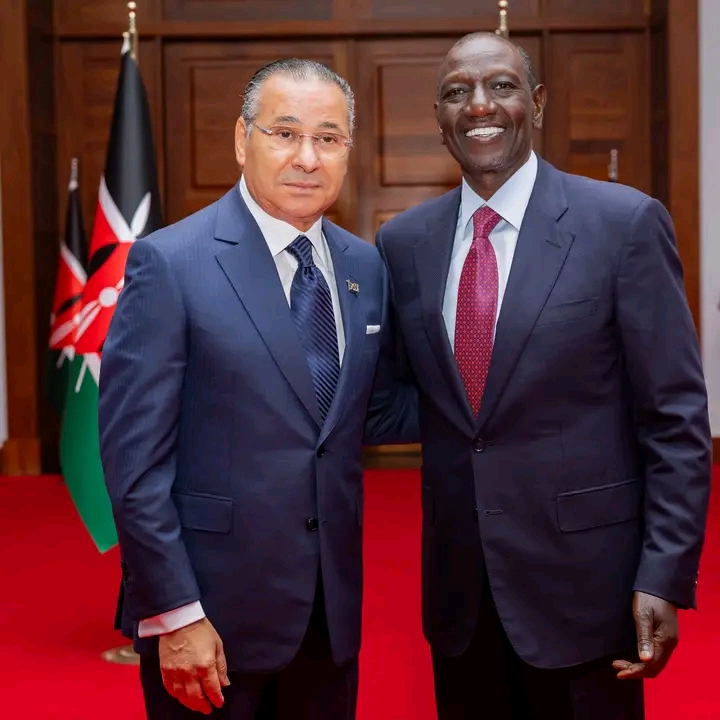
President William Ruto on Tuesday, September 8, 2026, announced a major healthcare partnership between Kenya, the Government of Italy and the Italian GKSD Group, which is expected to deliver 15 new hospitals across 15 counties. The agreement, signed at State House in Nairobi, is being presented as a significant step in the government's efforts to expand healthcare infrastructure, increase access to specialised treatment and advance Universal Health Coverage (UHC) in Kenya.
The partnership provides for the development of 13 Level 5 county referral hospitals and two Level 6 national teaching and referral hospitals. The initiative is being implemented under Italy's Mattei Plan for Africa, a broader framework through which Italy is strengthening strategic economic and development partnerships with African countries.
A major boost to Kenya's healthcare infrastructure
The announcement comes at a time when Kenya continues to face significant pressure on its healthcare system, including shortages of hospital beds, specialised facilities and healthcare capacity in many counties.
President Ruto said Kenya currently has approximately 12 hospital beds for every 10,000 people, compared with a World Health Organization benchmark of 25 beds per 10,000 people. The new hospitals are therefore intended to increase the country's inpatient capacity and make more specialised healthcare services available closer to where people live.
The shortage of hospital beds has long contributed to congestion in major referral facilities. Patients requiring specialised treatment are sometimes transferred from county hospitals to national referral centres, particularly in Nairobi and other major urban areas. Such transfers can be expensive and difficult for families, especially when patients require prolonged treatment.
The new facilities are expected to strengthen Kenya's referral system by allowing counties to manage more complex medical cases locally.
The 15 counties set to benefit
According to details released following the signing, the partnership will cover 15 counties.
The two Level 6 national teaching and referral facilities are planned for Mombasa and Uasin Gishu. These include the Mombasa National Teaching and Referral Hospital in Jomvu and the Moi Teaching and Referral Hospital in Eldoret, which is currently under development.
The 13 counties identified for Level 5 referral hospitals are:
Kilifi
Mandera
Marsabit
Embu
Migori
Nyamira
Turkana
Kisii
Baringo
Bomet
Narok
Murang'a
and another county within the 15-county programme.
The programme is particularly significant because it extends major health infrastructure beyond Nairobi and other established national referral centres.
For counties such as Bomet, Kericho's neighbouring regions, Nyamira, Kisii, Narok and Baringo, the development of higher-level health facilities could reduce the distance residents travel when seeking specialised treatment.
What Level 5 hospitals mean
Level 5 hospitals occupy an important position in Kenya's healthcare system. They function as county referral hospitals capable of providing services that are more advanced than those normally available at lower-level facilities.
The planned Level 5 hospitals are expected to have substantial bed capacity and provide specialised and emergency services. Earlier government plans for the 13 Level 5 facilities envisioned hospitals with capacities of approximately 300 beds each, although the final specifications and implementation arrangements for each facility may vary.
Such facilities can provide services in areas such as surgery, maternity care, emergency medicine, intensive care and other specialist disciplines.
Their development would also help strengthen the connection between lower-level health centres and national referral institutions.
The importance of the two Level 6 hospitals
The two Level 6 facilities are particularly important because Level 6 institutions sit at the highest end of Kenya's public healthcare referral system.
The Moi Teaching and Referral Hospital in Eldoret serves a large population across western Kenya and the broader Rift Valley region. Its expansion is therefore expected to have significance beyond Uasin Gishu County.
Similarly, the planned Mombasa National Teaching and Referral Hospital in Jomvu is expected to strengthen specialised healthcare services at the Coast.
Patients from the Coast and neighbouring counties frequently travel long distances when they require highly specialised medical services. A stronger Level 6 facility in Mombasa could therefore reduce the need for some patients to travel to Nairobi.
Italy's role in the partnership
The partnership represents another important development in the growing relationship between Kenya and Italy.
The hospital programme is being implemented under Italy's Mattei Plan for Africa, an initiative designed to deepen Italy's partnerships with African countries in sectors including healthcare, energy, agriculture, education and infrastructure.
Italy has increasingly positioned Kenya as an important partner in East Africa. Earlier in 2026, President Ruto and Italian Prime Minister Giorgia Meloni witnessed the signing of several agreements covering cooperation between the two countries. During those discussions, Ruto had also highlighted Italy's potential role in helping Kenya upgrade hospitals from Level 4 to Level 5 and from Level 5 to Level 6 in different counties.
The latest agreement therefore builds on discussions that had already been taking place between Nairobi and Rome.
GKSD Group's involvement
A major feature of the new arrangement is the involvement of GKSD Group, an Italian investment and development group.
The partnership brings together the Kenyan government, the Italian government and GKSD Group for the development of the 15 facilities. Reports on the signing indicate that Kenya's Health Cabinet Secretary Aden Duale was among officials involved in formalising the agreement.
The involvement of a private-sector partner alongside the two governments is important because major hospital projects require significant investment, technical expertise, construction capacity, medical equipment and long-term planning.
The government has indicated that it wants financing arrangements for the projects to move forward quickly so that the facilities can be delivered within the intended programme.
Bringing specialised healthcare closer to Kenyans
One of the biggest expected benefits is improved geographical access to healthcare.
For many Kenyans living in rural and remote areas, obtaining specialised treatment can involve travelling to a major town or even Nairobi. Such journeys can create additional financial and emotional pressure on families.
A patient requiring specialised surgery, cancer-related treatment, advanced diagnostic services or critical care may have to travel hundreds of kilometres.
The planned hospitals are intended to change that situation by creating stronger referral facilities within counties.
For example, the proposed facilities in Mandera, Marsabit and Turkana could be particularly important because of the geographical challenges faced by residents in northern Kenya. Similarly, facilities in Bomet, Narok, Baringo and Nyamira could improve access to higher-level care for populations that might otherwise travel to larger urban centres.
Reducing pressure on national referral hospitals
Another expected benefit is reducing congestion in major referral hospitals.
National institutions receive patients from across the country, including cases that could potentially be managed at county level if appropriate infrastructure were available.
By strengthening Level 5 hospitals, the government hopes to ensure that patients are treated at the appropriate level of care.
The two planned Level 6 hospitals would then provide highly specialised services for patients whose conditions require advanced intervention.
This creates a stronger referral chain: community health services and lower-level facilities refer complicated cases to Level 4 or Level 5 institutions, while the most complex cases can be referred to Level 6 facilities.
Supporting Universal Health Coverage
The hospital programme is closely connected to President Ruto's broader Universal Health Coverage agenda.
UHC aims to ensure that Kenyans can obtain necessary healthcare services without suffering financial hardship.
However, health insurance and financing reforms alone cannot achieve UHC if there are not enough hospitals, doctors, nurses, specialists, equipment and medicines.
The new infrastructure is therefore intended to complement reforms in health financing and healthcare delivery.
President Ruto described the partnership as an important step towards expanding healthcare capacity and accelerating Kenya's journey towards UHC.
Potential benefits for employment
The construction of 15 hospitals could also create employment opportunities.
During construction, thousands of workers across different professions may be required, including engineers, architects, quantity surveyors, construction workers, technicians, drivers and suppliers.
Once completed, the hospitals will require doctors, nurses, clinical officers, laboratory technologists, pharmacists, radiographers, administrators, cleaners, security personnel and other workers.
This means that the long-term impact could extend beyond healthcare to employment and local economic development.
Businesses around the new facilities could also benefit as hospitals attract workers, patients and visitors.
Better equipment and specialised services
Modern hospital buildings alone cannot transform healthcare. The facilities will also require modern diagnostic and treatment equipment.
The partnership therefore has the potential to strengthen access to advanced medical services if the hospitals are properly equipped and staffed.
For Kenyans, this could mean greater access to services that are currently concentrated in a few major facilities.
The success of the programme will consequently depend not only on constructing buildings but also on ensuring that the facilities have qualified personnel, reliable medical supplies, equipment maintenance, adequate funding and effective management.
Challenges that must be addressed
Despite the optimism surrounding the agreement, the construction of 15 hospitals will be a major undertaking.
One of the biggest challenges will be financing and ensuring that the projects move from agreement to actual construction and eventually to fully operational hospitals.
Kenya will also need to ensure that there are sufficient healthcare workers to staff the facilities.
This is particularly important because the country's health system is currently experiencing significant pressure. Recent reports have highlighted tensions in the health sector, including an ongoing nurses' strike and concerns from doctors about increased workloads.
Consequently, building hospitals must go hand in hand with investment in human resources.
There will also be a need for transparent procurement, proper project supervision and clear timelines so that Kenyans can see tangible results from the agreement.
A significant moment for counties
For the 15 counties involved, the announcement represents the possibility of a major transformation in healthcare delivery.
Residents could benefit from improved emergency care, specialist treatment, better referral systems and increased hospital capacity.
The project could also reduce the financial burden associated with travelling long distances for treatment.
For counties such as Bomet, Kisii, Nyamira, Narok, Turkana and Mandera, where access to specialised services can be a major challenge, the impact could be especially significant if the facilities are completed, adequately equipped and properly staffed.

You Might Also Like
-
President William Ruto’s visit to Kericho County is therefore an important development event for the region. Governor Dr Eric Mutai, local leaders and residents have welcomed the President as he undertakes a tour focused on development and the implementation of government projects. The projects e
-
President William Ruto's visit to Bomet today is one of the county's major development events of 2026. Governor Prof. Hillary Barchok and other leaders have welcomed the President, while residents have been preparing to turn out and participate in the historic tour. The visit begins with an inspect
-
The inspection of Itembe Airstrip by Davis Chirchir, coming just ahead of President William Ruto's arrival in Bomet, places the airstrip at the centre of the President's development tour. The facility is undergoing a major rehabilitation involving a 1,000-metre asphalt runway, taxiways, an apron, d
-
The flagging off of approximately 99,000 metric tonnes of fertiliser, equivalent to about two million 50kg bags, by Agriculture PS Dr Kipronoh Rono alongside KTDA Holdings National Chairman Enos Njeru at the Port of Mombasa is an important development for Kenya's tea industry. The exercise is inten
-
Felix Koskei's speech in Londiani on September 7, 2026, was largely centred on reassuring residents about the future of the proposed Sh8 billion Londiani Referral Hospital. His most important message was clear: the government says the hospital will be constructed in Londiani and has not been moved
-
CS Lee Kinyanjui's clarification on work visas and permits for foreigners has come at a critical moment in Kenya's immigration and trade debate. The government's main position is straightforward: being allowed to enter Kenya without a visa or eTA does not automatically give a foreign national the r