




Ruto Promises Teachers Retirement Benefits Within 10 Days in New Pension Reforms
President William Ruto has pledged to streamline the payment of teachers’ retirement benefits, promising that retirees will receive their dues within 10 days of leaving service within the next three months.
President William Ruto has announced that teachers in Kenya could soon receive their retirement benefits within 10 days of leaving service, promising to address longstanding delays that have left many retired educators waiting for their dues.
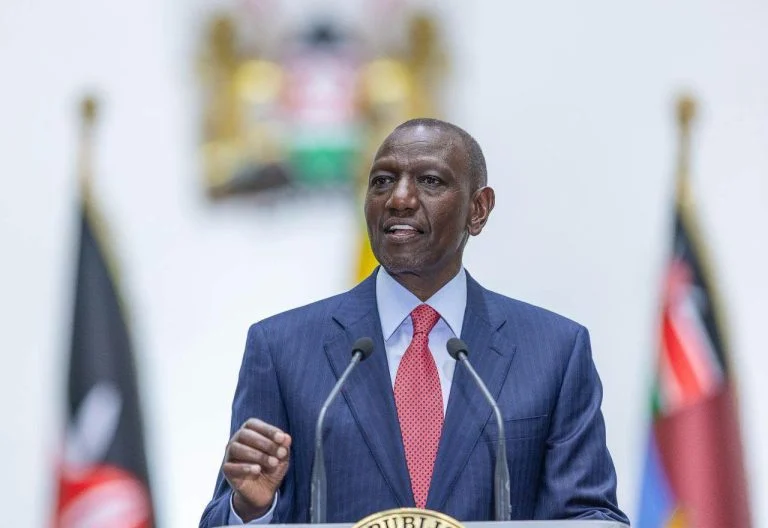
Speaking during the World Teachers’ Day celebrations at Kasarani on Monday, October 5, 2026, the Head of State said government agencies responsible for processing retirement benefits had assured him that the new timeline would be achieved within the next three months.
Ruto said the government was working to streamline pension administration and ensure teachers receive their benefits promptly after completing their years of service.
“The agencies responsible have assured me that within the next three months, we will be able to pay a teacher’s retirement benefit within ten days of their retirement,” the President said.
The announcement comes amid continued concerns over delays in processing retirement benefits, with teachers and their representatives calling for reforms to make the pension system more efficient and reliable.
Government Moves to Address Pension Delays
For years, the payment of retirement benefits has remained a concern among teachers leaving public service. Some retirees have experienced lengthy waiting periods as their pension claims move through different government offices for verification, processing and payment.
The delays can create financial difficulties for retired teachers who depend on their pension payments to meet daily expenses, settle outstanding obligations and support their families after leaving employment.
Retirement benefits are particularly important because they provide financial security after years of teaching and serving the country. Many educators spend decades in classrooms before reaching retirement age, expecting their pension entitlements to help them transition into the next stage of life.
However, administrative challenges, incomplete records and lengthy verification procedures have previously contributed to delays in settling some claims. In April 2026, the Teachers Service Commission reported that thousands of teachers’ pension cases remained at different stages of processing, highlighting the scale of the challenge.
Ruto’s latest announcement signals the government’s intention to improve the process and reduce the time retirees must wait to access their money.
If implemented as promised, the proposed 10-day timeline would represent a significant change in the experience of teachers retiring from public service.
Digital System Expected to Speed Up Processing
The government is relying on digital reforms to improve the administration of retirement benefits.
According to the President, the Pension Management Information System, developed through collaboration between the Teachers Service Commission and the National Treasury, is among the measures being used to speed up pension processing.
The system was rolled out on July 1, 2026, and the process of uploading teachers’ records is underway.
The digital platform is intended to improve the handling of pension information, reduce administrative bottlenecks and make it easier for relevant agencies to process retirement claims.
By improving access to records and coordinating information among institutions, the system is expected to minimise delays associated with manual procedures and repeated verification.
The success of the initiative will depend partly on the completeness and accuracy of the records entered into the system, as well as the ability of the responsible agencies to process claims efficiently.
For teachers approaching retirement, accurate employment histories, contribution records and other required documentation remain important in ensuring their claims can be processed without unnecessary interruptions.
The government will therefore need to ensure that the digital transition is accompanied by effective coordination among the institutions responsible for approving and paying retirement benefits.
Teachers Expect Faster Access to Their Entitlements
The announcement is likely to attract attention from serving teachers nearing retirement and those who have already left service but are still waiting for payments.
For many retirees, pension benefits represent money earned through years of public service. Timely payment can help them meet household expenses, access healthcare, support dependants and plan their finances with greater certainty.
Long delays, on the other hand, can leave retirees struggling to manage their affairs at a time when they may no longer have a regular salary.
Ruto said the reforms were intended to spare retired teachers the difficulties associated with moving from one government office to another while following up on their claims.
The proposed arrangement would seek to make the process more predictable, allowing eligible retirees to receive their benefits within a clearly defined period after retirement.
However, the President’s announcement remains a commitment whose implementation will need to be demonstrated through actual payments and improved processing timelines.
Teachers and their unions will be watching to see whether the government meets the three-month deadline and whether the 10-day target applies consistently to eligible retirees.
Broader Efforts to Improve Teachers’ Welfare
The pension announcement formed part of wider discussions on teachers’ welfare during the World Teachers’ Day celebrations.
Teachers’ welfare has remained a central issue in the education sector, with concerns extending beyond retirement benefits to include salaries, career progression, promotions, working conditions and access to medical cover.
During the celebrations, Ruto also outlined other government measures affecting the teaching profession, including teacher recruitment, promotion opportunities and housing initiatives.
The President said the government planned to have recruited 120,000 teachers by December 2026, while also addressing the conversion of some contract teachers to permanent and pensionable terms.
He further discussed promotion opportunities and efforts to improve teachers’ access to affordable housing.
These commitments reflect the range of issues affecting educators throughout their careers, from recruitment and professional development to retirement planning.
For teachers, however, the implementation of these measures will be just as important as the announcements themselves.
While recruitment and promotions affect serving educators, pension reforms directly concern those who have completed their working years and expect to receive the benefits attached to their service.
Accountability Will Be Key to the New Timeline
The three-month implementation period will be an important test for the agencies responsible for managing teachers’ retirement benefits.
The Teachers Service Commission, the National Treasury and the relevant pension authorities will need to coordinate their work to ensure that the promised timeline becomes operational.
This includes ensuring teachers’ records are complete, claims are verified without unnecessary duplication, and approved payments are released promptly.
Clear communication will also be essential. Retiring teachers need to understand the documentation required, the steps involved in processing their claims and how they can check the status of their payments.
An efficient pension system should minimise unnecessary visits to government offices while providing reliable information to retirees whose claims require additional verification.
The government will also need to address existing cases that have remained unresolved, alongside ensuring that newly retiring teachers benefit from the improved system.
Without attention to outstanding claims, the reforms could improve future processing while leaving some retirees facing the same difficulties they have experienced in the past.
The announcement therefore raises expectations not only for faster payments going forward but also for progress in addressing cases that remain pending.
Retired Teachers Await Implementation
As the government works towards the proposed deadline, teachers and education stakeholders will be looking for evidence that the reforms are producing tangible results.
The 10-day target offers a clear benchmark against which the performance of the pension system can be assessed.
If the arrangement becomes operational as promised, it could reduce uncertainty for retiring educators and provide a more dependable transition from employment to retirement.
It could also strengthen confidence in the administration of retirement benefits by demonstrating that public servants can access their entitlements without prolonged administrative delays.
Nevertheless, the outcome will depend on the practical implementation of the digital system, the quality of available records and the efficiency of the agencies involved.
For teachers who have spent years educating Kenyan children, timely retirement payments remain an important part of recognising their service and protecting their financial security after employment.
Ruto has given the responsible agencies three months to deliver the promised changes. The coming months will show whether the government can translate that commitment into a system that consistently pays eligible retiring teachers within 10 days.
For now, the President’s announcement has renewed attention on pension administration and placed the timely settlement of teachers’ retirement benefits firmly on the government’s agenda.

You Might Also Like
-
An 18-year-old Form Four student, Joy Wangui, has been found dead in the Kiambaa area of Molo, Nakuru County, in a shocking incident that has left her family and residents deeply disturbed. Police are investigating the circumstances surrounding her death, with her boyfriend, identified as Walter Kip
-
The meeting hosted by Health CS Aden Duale and involving the Council of Governors Health Committee has produced a significant agreement on the future of county health facilities under SHA. The new framework clarifies how facilities will be contracted, reduces some documentation hurdles, maintains in
-
Head of Public Service Felix Koskei has emphasized the importance of peace, dialogue and unity within families and communities, remarks that come amid growing concern over domestic conflicts and a tragic suspected murder-suicide in Bomet. The deaths of a couple in Cheboin, Chepalungu, have renewed a
-
Kindiki's October 5 visit to Kiambu placed infrastructure and economic development at the centre of the government's message to residents. The Nyambari ESP Market, Uplands-Githunguri Road and Kwaheri-Mary Magdalena Road were among the key projects launched, while the Deputy President also inspected
-
Speaking during the World Teachers’ Day celebrations at Kasarani on October 5, Education Cabinet Secretary Julius Ogamba delivered a direct message to striking university lecturers: return to work, obey court orders and allow negotiations to continue. He said the government had fully cleared arrea
-
Homa Bay Governor Gladys Wanga has questioned Edwin Sifuna’s chances of defeating President William Ruto in 2027, citing the difficulty of uniting the opposition behind his candidacy.