Ruto Tells Opposition to Stop Underestimating Young Kenyans, Says Youth Can Make Their Own Political Choices
President William Ruto has urged his political rivals to respect Kenyans and stop underestimating the country's young people, insisting that the youth are intelligent, informed and capable of making independent political decisions. Speaking during a church service in Narok County, the Head of State maintained that young Kenyans understand the issues affecting the country and should be allowed to decide which leaders and political parties deserve their support. His remarks come amid growing political competition ahead of the 2027 General Election, with the youth expected to play a significant role in determining the country's political direction. Ruto challenged opposition leaders to recognise the independence of young voters instead of assuming they can easily be manipulated through political rhetoric. He also highlighted the importance of respecting different political opinions, as debates over governance, employment, economic opportunities, education and the cost of living continue to dominate national conversations. The President's message reinforces the growing influence of young people in Kenya's democracy and the importance of addressing their concerns as political leaders seek public support.
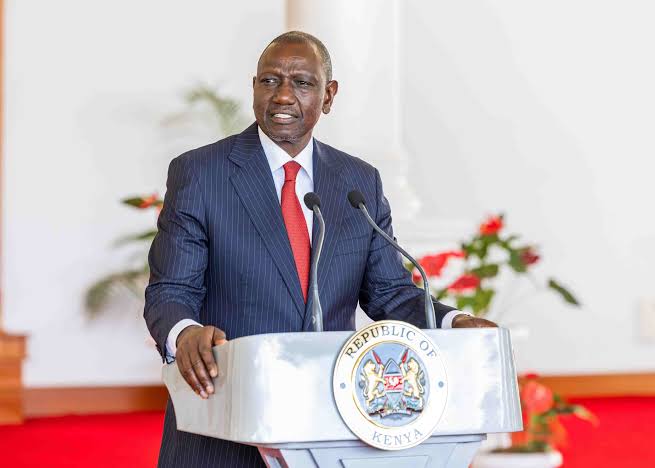
President William Ruto has challenged his political rivals to respect Kenyans and stop underestimating young people, insisting that the country's youthful population is intelligent, informed and capable of making independent political decisions.
Speaking during a church service in Narok County on Sunday, November 15, 2026, the Head of State maintained that young people understand the issues affecting the country and should not be treated as individuals who can easily be manipulated or influenced by political leaders.
Ruto argued that the youth have the ability to evaluate political messages, assess the performance of leaders and decide who deserves their support without being instructed on what political direction to follow.
The President's remarks appeared directed at political opponents whom he accused of failing to appreciate the intelligence and independence of young Kenyans. He urged rival leaders to recognise that the country's younger generation has its own views, expectations and priorities when it comes to leadership and national development.
According to the President, young people should be respected as important participants in the country's democratic process rather than being viewed as a political group that can simply be mobilised through criticism, political rhetoric or promises.
He maintained that every Kenyan has the constitutional right to make an individual political choice based on personal conviction, experience and an assessment of the leadership options available.
Ruto's remarks come at a time when the youth have increasingly become a central force in Kenya's political conversations. Young people have continued to demonstrate their willingness to participate in national debates, question government decisions and demand accountability from leaders across the political divide.
The President's comments also highlight the growing importance of the youth vote as political leaders begin positioning themselves ahead of the 2027 General Election.
Kenya has a significant youthful population, making young voters an important constituency for anyone seeking political leadership. Their participation in elections, public discussions and civic activities continues to shape the country's political landscape.
Over the years, young Kenyans have increasingly used digital platforms to express their opinions on governance, economic policies, corruption, unemployment, education and the cost of living.
Social media platforms have provided the younger generation with opportunities to discuss national affairs, challenge political narratives and demand explanations from individuals occupying public offices.
Through these platforms, young people have demonstrated that they are interested in issues affecting their everyday lives and are prepared to question decisions that they believe do not serve the interests of the country.
The President's remarks therefore come against a background of increased youth participation in political discussions and growing demands for leaders to address concerns affecting the younger generation.
Unemployment remains one of the major challenges facing young Kenyans, with thousands of graduates and other job seekers struggling to secure stable employment opportunities.
Many young people have expressed concerns about the limited availability of jobs, the high cost of starting businesses and the financial difficulties associated with accessing education and professional training.
Others have raised concerns about the rising cost of living, arguing that economic pressures continue to make it difficult for young households to achieve financial independence.
These challenges have made employment creation, economic empowerment and opportunities for entrepreneurship important issues in national political discussions.
For many young voters, political leadership is increasingly evaluated based on the ability to create opportunities, improve public services and establish an environment where individuals can earn a decent living.
Education is another major concern, particularly among university and college students who continue to face challenges associated with tuition fees, accommodation expenses and the availability of financial support.
The transition from education to employment has also remained difficult for many graduates, with some struggling to find opportunities that match their qualifications and professional training.
Young entrepreneurs, meanwhile, continue to call for improved access to affordable credit, business training, markets and government support programmes that can help them establish and expand their enterprises.
These issues have contributed to a generation that is increasingly interested in understanding government policies and demanding practical solutions rather than relying entirely on political promises.
Ruto has repeatedly positioned his administration as one that prioritises economic empowerment, job creation and opportunities for young people.
The government has highlighted various initiatives targeting employment, entrepreneurship, digital skills and access to economic opportunities as part of its broader development agenda.
However, the success of such programmes remains an important subject of public discussion, with young people and other stakeholders continuing to assess whether government interventions are translating into meaningful improvements in their lives.
The President's latest remarks have also drawn attention to the relationship between political leaders and the younger generation.
In a democratic society, political support is voluntary and should be based on the freedom of citizens to evaluate competing ideas and make decisions without intimidation or manipulation.
The youth, like other groups of voters, have the right to support the government, join the opposition, remain politically independent or change their political positions depending on their assessment of national issues.
Ruto's call for political rivals to respect young people therefore touches on the broader question of how politicians engage with voters and recognise their independence.
The Head of State appeared to challenge the assumption that young Kenyans can be directed towards particular political positions without considering their own opinions and interests.
He insisted that young people are capable of understanding the political environment and determining what they want for themselves and the country.
The remarks are particularly significant because the youth have become increasingly vocal about accountability and the responsibilities of elected leaders.
Recent political conversations have demonstrated that young people are not only interested in election campaigns but also want to participate in discussions about how public resources are managed and how government policies are implemented.
They have increasingly called for transparency, responsible leadership and improved service delivery across different sectors.
Their concerns have also extended to the management of public finances, taxation, healthcare, education and the general direction of the economy.
For political leaders, this means that engaging young voters requires more than making campaign promises or organising political gatherings.
It requires listening to their concerns, explaining government decisions and demonstrating how proposed policies can improve their economic and social circumstances.
The growing political awareness among young Kenyans has also changed the way political campaigns are conducted.
Political parties and leaders are increasingly using digital platforms to communicate their agendas, engage potential supporters and respond to criticism.
Young voters have consequently gained more opportunities to compare political positions and access information about candidates and government programmes.
However, the increasing availability of information has also created challenges, including the spread of misinformation, political propaganda and misleading claims on social media.
This makes civic education and access to credible information important in ensuring that citizens make informed political decisions.
The President's message also raises the importance of respecting political differences in a country where competition between leaders can sometimes result in heated exchanges.
Political opponents have a responsibility to engage one another through democratic debate while respecting the rights and opinions of citizens.
Disagreement over government policies should not become a reason to undermine the intelligence or decision-making abilities of particular groups within society.
The youth should be allowed to participate freely in political activities without being dismissed because of their age, economic circumstances or preferred political positions.
At the same time, young voters have an important responsibility to examine the promises made by political leaders and assess whether those seeking their support have credible plans for addressing national challenges.
As the country approaches the 2027 General Election, the youth vote is expected to remain an important factor in determining the direction of political competition.
Both government and opposition leaders are likely to intensify efforts to engage young Kenyans as they seek to communicate their political agendas and attract support.
The competition is expected to focus on issues such as employment, economic opportunities, education, taxation, digital transformation and the cost of living.
Political leaders who demonstrate a clear understanding of the challenges facing young people may have an advantage in attracting their attention and support.
However, the younger generation is also increasingly demanding accountability and measurable results rather than relying solely on political personalities and campaign slogans.
Ruto's remarks in Narok therefore serve as a reminder to political leaders that young Kenyans should be treated as informed citizens whose opinions and decisions deserve recognition.
His appeal for political rivals to respect the youth comes at a time when the country's political environment is experiencing intense debate over leadership, economic management and the future of Kenya.
The President maintained that young people have the ability to determine their own political direction and should not be underestimated by those seeking public office.
The discussion goes beyond political competition and highlights the important role of young people in shaping Kenya's democracy.
With the 2027 elections approaching, the ability of political leaders to understand the priorities of the younger generation, engage them respectfully and respond to their concerns could become a defining factor in the country's political landscape.
Ruto's message to his political opponents is that young Kenyans are capable of making their own decisions and should be respected rather than treated as a population whose political choices can be dictated by others.

You Might Also Like
-
Two individuals suspected of being members of a criminal gang have been shot dead by police officers following a dramatic pursuit in Bamburi, Mombasa County. The incident has raised renewed attention to security concerns in the coastal region, with questions emerging about the circumstances that led
-
Interior Cabinet Secretary Kipchumba Murkomen has visited the Rome Police Operations Centre in Italy to learn how modern technology is being used to strengthen security operations, improve police coordination and enhance law enforcement. The visit provided an opportunity for the Kenyan delegation to
-
 The Teachers Service Commission (TSC) has appointed Cheptumo Ayabei as its new Secretary and Chief Executive Officer, ushering in a new chapter in the leadership of the institution responsible for managing Kenya's teaching workforce. Ayabei, who previously served as the commission's Director of Fina
-
The Riverside tragedy has left a family devastated after a father of five reportedly lost his life, leaving behind five children to face an uncertain future without his presence. The heartbreaking incident has sparked concern and sympathy, highlighting the emotional and financial challenges families
-
President William Ruto’s 90-day plan to introduce a new basic education law has sparked debate over the management and control of the education sector, with county governments raising concerns about protecting their constitutional responsibilities. The proposed legal reforms are expected to review
-
Former Deputy President Rigathi Gachagua has declared his intention to challenge Johnson Sakaja and Ronald Karauri in the 2027 Nairobi gubernatorial race, signalling an increasingly competitive battle for City Hall. Gachagua has maintained that the Democratic Change Party (DCP) will not enter into z