



Kizza Besigye: A Legacy of Resistance and Hope
Kizza Besigye: A Legacy of Resistance and Hope
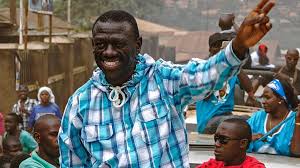
Dr. Kizza Besigye is a prominent Ugandan politician, medical doctor, and opposition leader who has been a significant figure in Ugandas political landscape for many years. His journey is marked by courage, resilience, and an unyielding commitment to challenging authoritarianism and advocating for democracy in Uganda. Here’s a narrative that reflects his story:
The Struggle of a Peoples Leader: The Story of Dr. Kizza Besigye
Dr. Kizza Besigye was born on April 22, 1956, in a small village in Uganda. From an early age, he showed a deep interest in learning, and his exceptional intelligence set him apart from his peers. As a young boy, he witnessed the growing political tension in Uganda, especially as the country struggled with oppressive regimes and the consequences of dictatorship.
After excelling in his studies, Kizza enrolled at Makerere University to study medicine, where he would go on to become a medical doctor. Despite his promising career in healthcare, Uganda’s political climate weighed heavily on him. By the time he completed his studies, Idi Amin’s brutal regime had fallen, but Uganda still faced years of instability.
In 1986, a new figure emerged in Uganda’s political landscape — Yoweri Kaguta Museveni. Museveni led the National Resistance Army (NRA) in a rebellion that overthrew the government of Milton Obote. Kizza Besigye, captivated by the promise of change and national healing, joined the NRA as a medical officer. The new government promised to bring justice, development, and democracy. Besigye believed in Museveni’s vision and served loyally in the new government, even holding the position of personal physician to President Museveni.
However, over the years, Besigye grew increasingly disillusioned with Museveni’s leadership. What started as a genuine revolution of hope for a better Uganda gradually became an entrenched authoritarian regime. Kizza began to notice the government’s disregard for democratic principles and the growing signs of corruption and oppression.
In 2001, Besigye made a bold and life-changing decision. He broke away from Museveni’s government and ran against him in Uganda’s presidential election. This was not just a political decision — it was a moral stand. Besigye became the main opposition leader, challenging Museveni’s long reign.
In the 2001 election, Besigye faced numerous obstacles. The election was marred by allegations of rigging, voter intimidation, and violence. Besigye contested the results, but the political system was stacked against him. The government did everything in its power to suppress opposition, including arresting Besigye on charges of treason, despite no concrete evidence. He was imprisoned, but his resolve only grew stronger.
The arrest sparked international outrage and brought global attention to Ugandas political struggles. Besigyes supporters rallied behind him, creating a powerful movement for democratic change. Throughout his years in opposition, Besigye was arrested multiple times, often under dubious charges, and faced constant threats to his life. Yet, despite this repression, his commitment to his people never wavered. He consistently advocated for free and fair elections, the protection of human rights, and an end to the government’s control over the country’s political institutions.
Besigye’s personal life was also deeply affected by his political journey. His wife, Winnie Byanyima, a prominent Ugandan civil society leader, faced her own battles on the international stage, but together, they remained a symbol of resilience. They endured hardships, but their marriage remained a source of strength in the face of adversity.
In the years that followed, Besigye continued to run for president, challenging Museveni in multiple elections. Despite the heavy odds, his message resonated with many Ugandans who were disillusioned with Museveni’s 30+ years of rule. His campaigns brought issues like corruption, economic inequality, and lack of freedom to the forefront of public consciousness.
Besigye’s story is one of sacrifice, determination, and a relentless drive for change. Though he never won the presidency, his influence in shaping Ugandas political discourse is undeniable. He became a symbol of hope for those who sought democracy, transparency, and justice in a country that had been under one-party rule for decades.
Throughout his career, Besigye remained steadfast in his belief that the people of Uganda deserved better. He often stated that his struggle was not just for political power but for the very soul of Uganda. In his eyes, the fight was for the rights of the people, for a nation where freedom and democracy would flourish.
In the final years of his political career, Besigye faced an uphill battle as the Ugandan political landscape became increasingly repressive. But even as an opposition leader, he continued to inspire new generations of activists and leaders. His legacy is defined not by the titles he never held but by the undying spirit of resistance that he ignited in the hearts of millions.
Dr. Kizza Besigye remains one of Uganda’s most courageous and determined political figures, a man who stood tall against tyranny and never backed down from fighting for the freedom and rights of his people.

You Might Also Like
-
Interior Minister Kipchumba Murkomen has criticised journalists for questioning his remarks suggesting that police officers can ask citizens for fuel for their vehicles when they are called to security agencies. Speaking amid public outrage.
-
Senator Karen Nyamu has slammed Isiolo MCAs for pushing an impeachment motion against Governor Abdi Guyo without following legal procedures. She called the move a "dangerous joke" lacking evidence and due process. The Senate was forced to suspend proceedings amid a growing standoff.
-
Interior CS Kipchumba Murkomen questioned Cleophas Malala’s involvement in the National Drama Festivals. He criticized the use of student plays for political messaging, urging that scripts be left to teachers. This followed Butere Girls’ walkout over alleged mistreatment during the event.
-
It is January and every person has a new year resolution they believe will make them better. For the majority, losing weight is usually at the very top to starve off lifestyle diseases and lead a healthier and happier life.
-
The African Unions (AU) regional economic community, the Intergovernmental Authority on Development (IGAD), has denied allegations in a letter that it supported President William Ruto's hosting of the Rapid Support Forces (RSF), a Sudanese rebel group.