



Moses Kuria Proposes Disbanding KeRRA and KURA to Transform Kenya’s Roads Sector
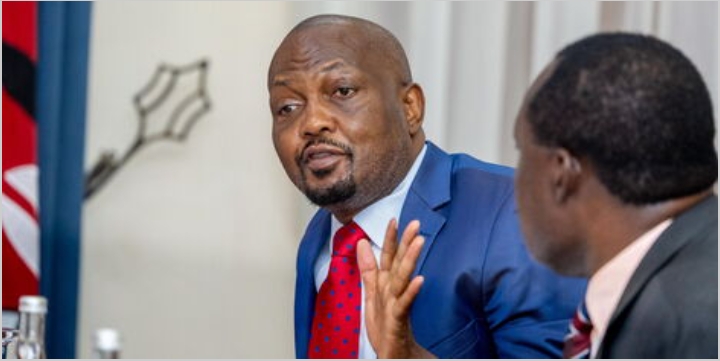
Senior Advisor in the Presidential Council of Economic Advisors, Moses Kuria, has advised the government to disband Kenya Rural Roads Authority (KERRA) and Kenya Urban Roads Authority (KURA), which manage funds from the Roads Maintenance Levy Fund (RMLF).
There has been a heated debate surrounding the allocation and management of the Roads Maintenance Levy Fund (RMLF), which is collected through fuel levies. The core of the debate lies in whether the funds should be centrally managed by the national government or devolved to the counties. The national government strongly argues for centralized control, claiming that this approach would enhance efficiency and proper planning. From their perspective, having a single authority overseeing the funds and road projects would minimize wastage, standardize construction, and ensure that national infrastructure goals are met uniformly across all counties.
On the other hand, county governments and several political leaders have voiced their concerns against this model, seeing it as a threat to the principles of devolution. Among those opposing centralized control is former Prime Minister Raila Odinga, who believes that such a move would significantly undermine local governance. Raila has criticized the national government for attempting to control resources that should rightly be managed at the county level. While addressing mourners in Siaya County, Raila emphasized that it was illogical for someone based in Nairobi to oversee the construction of roads in distant counties like Mombasa. He argued that this kind of central control breeds inefficiency, delays, and a disconnect between national planners and local needs.
President William Ruto, however, has made a case for why the national government should be entrusted with the management of RMLF. Speaking during an event in Narok County, Ruto urged county governors to allow the national government to take charge of the funds. He expressed his belief that with central control, the government would be in a better position to plan and execute more road projects across the country. “I would request these honorable members... if you leave me with that road money you are battling for, I can plan for more funds to construct all these roads,” Ruto said. His argument hinges on the idea that centralized planning allows for economies of scale and streamlined execution of large-scale infrastructure projects.
Adding to the debate, Cabinet Secretary Moses Kuria offered a middle-ground solution. He partly agreed with President Ruto that the Kenya National Highways Authority (KeNHA), which falls under the national government, should retain control of the Roads Development Budget. Kuria believes that KeNHA is best positioned to manage major highways and national roads. However, he also emphasized the importance of county involvement and suggested that each county should establish its own County Roads Authority. These authorities would take charge of managing local road infrastructure while working under the guidance and coordination of the Kenya Roads Board (KRB).
Kuria proposed that the Kenya Roads Board should continue allocating RMLF funds to counties using the same proportions as the Revenue Sharing Formula determined by the Commission on Revenue Allocation. This method, he argued, ensures fairness and alignment with the existing financial framework used for other devolved funds. Moreover, he stressed that county assemblies should play an active role in deciding how funds meant for roads are spent, thereby empowering local governments to take full responsibility for their infrastructure.
In addition to using RMLF, Kuria encouraged counties to explore financial tools such as loans and bonds to raise additional capital for road development. He pointed out that counties could use their allocations as leverage to attract investments from the private sector. By using such mechanisms, counties can increase their budgetary capacity and implement comprehensive road projects tailored to the specific needs of their residents. According to him, this approach would enhance efficiency, ownership, and accountability at the local level.
The ongoing debate reveals a deeper struggle between the ideals of centralization and devolution in Kenya’s governance system. Proponents of devolution argue that local leaders understand the needs of their regions better and can respond more quickly and effectively. Central government proponents, however, stress the need for national cohesion, proper regulation, and the ability to execute large-scale infrastructure programs without bureaucratic fragmentation. As this debate continues, it underscores the need for a balanced approach that respects constitutional mandates while ensuring the efficient use of public resources.

You Might Also Like
-
Interior Minister Kipchumba Murkomen has criticised journalists for questioning his remarks suggesting that police officers can ask citizens for fuel for their vehicles when they are called to security agencies. Speaking amid public outrage.
-
Senator Karen Nyamu has slammed Isiolo MCAs for pushing an impeachment motion against Governor Abdi Guyo without following legal procedures. She called the move a "dangerous joke" lacking evidence and due process. The Senate was forced to suspend proceedings amid a growing standoff.
-
Interior CS Kipchumba Murkomen questioned Cleophas Malala’s involvement in the National Drama Festivals. He criticized the use of student plays for political messaging, urging that scripts be left to teachers. This followed Butere Girls’ walkout over alleged mistreatment during the event.
-
It is January and every person has a new year resolution they believe will make them better. For the majority, losing weight is usually at the very top to starve off lifestyle diseases and lead a healthier and happier life.
-
The African Unions (AU) regional economic community, the Intergovernmental Authority on Development (IGAD), has denied allegations in a letter that it supported President William Ruto's hosting of the Rapid Support Forces (RSF), a Sudanese rebel group.