40,000 Ethiopians Flee Deadly Border Conflict into Marsabit as Religious Leaders Urge President Ruto and Prime minister Abiy Ahmed to Broker Peace
The displacement of approximately 40,000 Ethiopians into Marsabit County has created an urgent humanitarian challenge for Kenya. Families fleeing violence around Moyale need food, safe water, shelter, healthcare and protection, while the communities hosting them require additional resources to prevent the crisis from overwhelming local services. Religious leaders and community representatives are calling for President William Ruto and Prime Minister Abiy Ahmed to support diplomatic efforts aimed at settling the disputes between the relevant Ethiopian regional authorities and affected Oromo and Somali communities. Marsabit Governor Mohamud Ali has also called for an immediate ceasefire, responsible leadership and increased humanitarian assistance. Meanwhile, Kenyan security agencies are working to maintain stability and prevent the violence from spreading across the border.
Religious leaders and community representatives are calling for diplomatic intervention by Kenyan President William Ruto and Ethiopian Prime Minister Abiy Ahmed to help resolve the longstanding disputes contributing to the violence. Their appeal comes as the humanitarian situation in Moyale deteriorates and pressure mounts on local communities that are hosting thousands of displaced families.
The Kenya National Commission on Human Rights (KNCHR) has also urged the government and humanitarian partners to respond urgently, warning that shortages of essential supplies, overcrowded temporary shelters and inadequate sanitation could expose vulnerable families to further suffering. Although some reports put the number of arrivals at approximately 40,000, the precise figure remains subject to ongoing assessments as people continue to cross the border.The escalating crisis has centred on the Moyale border region, where communities and regional authorities associated with Ethiopia’s Oromia and Somali regional states have experienced renewed tensions and violent confrontations.
The conflict is connected to longstanding disagreements over territorial boundaries, administrative authority and local control. Reports indicate that tensions intensified following a dispute over the raising of the Somali Regional State flag and the establishment of an administrative office in an area claimed by Oromia authorities. The killing of a 13-year-old girl on October 18, 2026, reportedly heightened tensions before heavier clashes erupted around October 22.
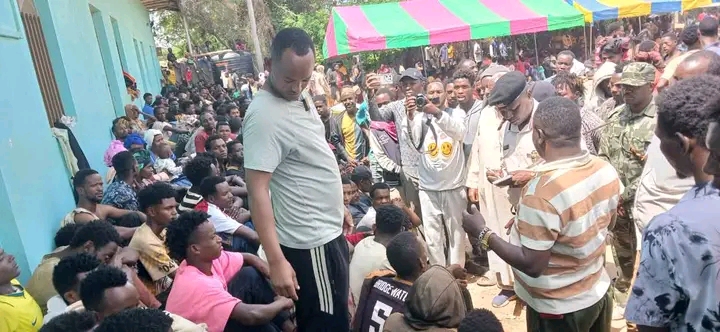
The fighting has forced families to leave their homes, businesses and livestock behind as they seek protection across the international border. Many have arrived in Kenya with few possessions, hoping to find food, shelter and a safe environment for their children.The Kenya National Commission on Human Rights reported that more than 15,000 people were staying in temporary shelters, while over 20,000 others were being accommodated by relatives, friends and members of the host communities.
Temporary accommodation has included schools, churches and other community facilities. One location, Odda Mission Church Secondary School in Moyale, was reported to be sheltering approximately 4,800 displaced Ethiopians during a visit by Marsabit Governor Mohamud Ali on October 29.
The large number of arrivals has created an enormous challenge for the county government and humanitarian organisations. Facilities originally intended for education, worship or other community activities are being used to provide emergency accommodation.
Families are sharing limited space, while aid agencies work to determine how many people require food, medical attention, shelter materials and other basic services.The growing humanitarian crisis has strengthened calls for high-level diplomatic intervention to address the underlying disagreements and prevent further violence.
Religious leaders and community representatives are urging President William Ruto and Prime Minister Abiy Ahmed to support peaceful negotiations between the relevant Ethiopian authorities and affected communities. Their appeal reflects the understanding that emergency relief alone cannot resolve a conflict that continues to force families from their homes.
Religious institutions are particularly important during periods of insecurity because they often serve as places of refuge, community coordination and mediation. Churches, mosques, elders and other trusted local figures can help bring people together, discourage retaliation and encourage dialogue.Heavy rainfall can worsen these conditions by making temporary shelters damp, damaging sanitation facilities and increasing exposure to contaminated water.
The Kenya National Commission on Human Rights has specifically warned that poor sanitation and overcrowding could increase the risk of disease outbreaks. It has called for improved healthcare, safe water and sanitation services.
Medical teams need to identify and treat people suffering from injuries, dehydration, infections and other illnesses. Preventive services, including vaccination where appropriate, maternal healthcare and nutritional assessments, are also important.
Particular attention is required for pregnant women, breastfeeding mothers, newborns and young children.Reports indicate that four births had taken place at two locations serving displaced people, underlining the need for maternal and newborn healthcare. Women giving birth during displacement may face additional difficulties accessing skilled medical personnel, clean delivery facilities and postnatal care.
Authorities and humanitarian partners should therefore ensure that emergency medical services are available close to the temporary shelters and that urgent cases can be referred to adequately equipped health facilities.
Mental health support is equally important. Families who have witnessed violence, lost relatives or abandoned their homes may experience severe emotional distress. Children, in particular, need safe spaces, psychosocial support and opportunities to resume learning when conditions permit.The governor also appealed to residents, particularly young people, to reject rumours and retaliatory violence. He stressed that communities on both sides of the border have longstanding relationships built on trade, coexistence and mutual support.
His message is important because the humanitarian crisis could become more complicated if tensions spread from Ethiopia into Kenyan communities.
Displaced people should not be blamed for violence they are fleeing. Equally, local residents must not be exposed to threats, insecurity or unfair pressure because their communities are hosting families in need.
The governor has called on international partners and humanitarian organisations to increase supplies of food, medicines, shelter materials and other essential items. He has also highlighted the importance of assistance for children and expectant mothers.Marsabit County Commissioner Stanley Kamande has said security agencies have intensified patrols to maintain law and order. Reports indicate that police officers, Kenya Defence Forces personnel and other security units have been deployed to support operations in the area.
The security response is intended to protect civilians, monitor developments and prevent violence from crossing into Kenya.
Reports of gunfire and heavy weapons near the border have increased anxiety among residents. The Associated Press also reported that Kenyan police had recorded three incidents involving stray bullets in Moyale during the preceding week.
The government faces the challenge of maintaining border security while ensuring that people fleeing danger can access safety and humanitarian assistance.Security operations should therefore be conducted in accordance with the law and with respect for human dignity. People seeking protection must not be subjected to discrimination or returned to places where they face serious threats to their lives.
Authorities must also discourage the circulation of unverified information that could provoke hostility against particular ethnic communities.
Effective security requires cooperation between national agencies, county authorities, community elders and residents. It also depends on clear communication so that the public can distinguish verified information from rumours.The conflict involves communities associated with Ethiopia's Oromia and Somali regional states, including Oromo Borana and Somali Garre communities in the wider border region. However, it is important not to portray entire ethnic groups as responsible for the violence.
The immediate disagreements include territorial and administrative questions, while longstanding local grievances have contributed to tensions.
Kenyan leaders have warned against importing the conflict into Marsabit, Wajir and Mandera counties. They have urged residents to protect innocent civilians and maintain peaceful relations regardless of ethnicity.
Marsabit Governor Mohamud Ali has similarly warned that hate speech and misinformation could heighten tensions. Organisations identified in reports include the United Nations High Commissioner for Refugees (UNHCR), the World Food Programme (WFP), the International Organization for Migration (IOM) and UNICEF. Their activities and areas of support differ, but the overall response includes emergency food, shelter, water, sanitation, health services and protection.
Marsabit County has welcomed the assistance already being provided but warned that the needs exceed the resources currently available.
Governor Mohamud Ali has highlighted planned World Food Programme assistance targeting 16,000 people, while stressing that additional support is necessary as the number of displaced families rises.
Humanitarian agencies need reliable information about the locations and needs of displaced families to avoid duplication and ensure that people living outside formal shelters are not overlooked.Negotiations should include affected communities and trusted mediators so that local grievances are properly understood. Religious leaders and elders could help facilitate dialogue, while government representatives would be responsible for developing and implementing lawful political and administrative solutions.
A lasting agreement should also include mechanisms to investigate serious abuses, protect civilians and prevent renewed violence.
Rebuilding trust will be important because communities may continue to carry fear and resentment after the immediate clashes end. Dialogue, reconciliation programmes and cooperation over shared resources could help rebuild relationships.
Kenya can support diplomatic engagement with Ethiopia while strengthening humanitarian assistance and maintaining security along the border. Regional organisations and international partners may also help facilitate negotiations if the parties agree.

You Might Also Like
-
The reported killing of Benard Kiplangat Ngetich near Jambo Kenya has raised concerns among residents and local leaders in the Kipkelion area. According to a report published on October 24, 2026, Ngetich was attacked while walking home with his friend Wilson Rono, who survived with injuries. The rep
-
The President wants Russian companies to go beyond selling goods to Kenyan consumers and instead establish factories, invest in local industries, process resources and create employment. He has identified manufacturing, agriculture, energy, infrastructure, mining, engineering and technology as areas
-
The High Court has rejected the Teachers Service Commission’s (TSC) request to lift orders stopping the implementation of its circular regulating teachers’ conduct on social media. The decision means the rules remain suspended as the legal case continues. The dispute has attracted attention amon
-
Duncan Kimathi, a former student at the United States International University-Africa (USIU-Africa), has been sentenced to death after being convicted of murdering fellow student Sarah Aruwa in the Kiamako area of Kiambu County in 2012. The case brings renewed attention to the pursuit of justice for
-
The consultations between Education Cabinet Secretary Julius Ogamba, Head of Public Service Felix Koskei and National Treasury Cabinet Secretary John Mbadi represent an important part of the government's efforts to resolve the ongoing public university staff strike. Their discussions took place as
-
Police in Bomet County have launched investigations following the discovery of a school principal’s lifeless body in a hotel room in Sotik. The circumstances surrounding the death remain unclear, with suspected suicide among the possibilities being examined by investigators. Detectives are working