




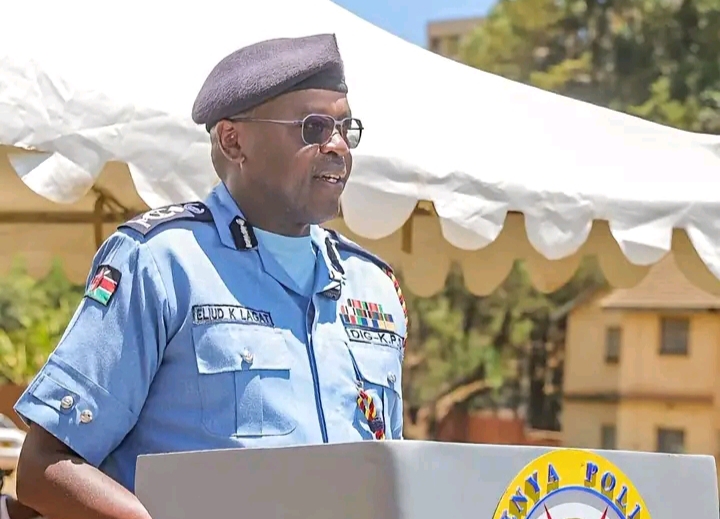
Eliud Lagat Issues Tough Warning to Drivers: Obey Traffic Rules or Risk More Road Accidents
Deputy Inspector General Eliud Lagat's call for motorists to obey traffic rules underscores the urgent need for greater discipline and responsibility on Kenyan roads. Speeding, reckless overtaking, drunk driving, distracted driving and operating unroadworthy vehicles can turn ordinary journeys into tragedies. The responsibility for reducing accidents rests with every road user. Drivers must obey traffic regulations, pedestrians must exercise caution, motorcycle riders must observe safety requirements and passengers should discourage reckless driving. Ultimately, road safety is about protecting lives. By observing traffic rules, exercising patience and respecting other road users, Kenyans can help reduce preventable accidents and make the country's roads safer for everyone.
Deputy Inspector General of Police Eliud Lagat has urged motorists across Kenya to strictly observe traffic rules and regulations as part of efforts to reduce road accidents and save lives. Lagat emphasized that road safety is a shared responsibility involving drivers, passengers, pedestrians, motorcyclists and other road users.
The Deputy Inspector General's message comes amid continued concern over road crashes in different parts of the country. Road accidents have remained a major public safety challenge, with crashes frequently resulting in deaths, serious injuries, destruction of property and significant economic losses.
Call for responsible driving
Lagat's appeal focuses on the need for motorists to take greater responsibility while using Kenyan roads. Drivers are expected to follow speed limits, obey traffic signs, avoid dangerous overtaking and ensure that their vehicles are in good mechanical condition.
According to the police leadership, many road crashes can be prevented when motorists exercise patience and discipline. Reckless driving, speeding, driving under the influence of alcohol or drugs, dangerous overtaking and failure to observe road signs can put the lives of many people at risk.
The Deputy Inspector General's message therefore serves as a reminder that reaching a destination quickly should never be considered more important than protecting human life.
Speeding remains a major concern
One of the most important issues associated with road safety is excessive speed. When a vehicle is travelling at high speed, a driver has less time to react when a pedestrian crosses the road, another vehicle stops suddenly or an unexpected obstacle appears.
High speed can also make crashes more severe. Even where a driver attempts to avoid an accident, the increased speed can make it difficult to control the vehicle.
Drivers have consequently been encouraged to respect posted speed limits and adjust their speed according to road and weather conditions. A speed that may be acceptable on a clear and dry road may be dangerous during heavy rain, at night or on a poorly maintained road.
Dangerous overtaking
Lagat's call also highlights the importance of avoiding dangerous overtaking. Drivers who attempt to overtake without confirming that the road ahead is clear can cause head-on collisions and other serious crashes.
Motorists are expected to use designated areas where overtaking is permitted and should avoid overtaking near corners, hills, junctions, pedestrian crossings and other locations where visibility is limited.
Patience on the road can therefore save lives. Being delayed for a few minutes is far less costly than causing a crash that could result in permanent injuries or death.
Drunk driving
Another major road safety concern is driving while intoxicated. Alcohol can affect concentration, judgement, reaction time and coordination.
A driver who has consumed alcohol may believe that they are capable of driving even when their ability has already been impaired. This creates a danger not only to the driver but also to passengers, pedestrians and other motorists.
Motorists have therefore been urged to avoid driving after consuming alcohol. Those who have been drinking should make alternative arrangements instead of getting behind the wheel.
Vehicle roadworthiness
Road safety also depends on the condition of vehicles. Drivers and vehicle owners have a responsibility to ensure that cars, buses, trucks and other vehicles are properly maintained.
Faulty brakes, worn-out tyres, defective lights, steering problems and other mechanical defects can contribute to accidents.
Commercial vehicle operators in particular have a responsibility to ensure that their vehicles are inspected and maintained regularly. Drivers should also report serious mechanical problems instead of continuing to operate vehicles that may endanger passengers and other road users.
The role of traffic police
The police play an important role in enforcing traffic laws. Traffic officers are responsible for monitoring roads, dealing with violations and taking action against motorists who endanger other road users.
Lagat's warning is therefore also expected to reinforce the importance of enforcement. Motorists who deliberately ignore traffic regulations can face legal consequences.
Traffic enforcement is not intended simply to punish drivers. Its broader purpose is to discourage dangerous behaviour and create safer roads for everyone.
Pedestrians and other road users
Although drivers have a significant responsibility, road safety cannot be achieved through motorists alone. Pedestrians, cyclists and motorcycle riders also have an important role to play.
Pedestrians should use designated crossings where available and avoid suddenly entering roads without checking for approaching vehicles. Motorcycle riders should use appropriate protective equipment and observe traffic rules.
Passengers can also contribute to safety by encouraging drivers to avoid reckless behaviour. They should not pressure drivers to speed or overtake dangerously simply because they are in a hurry.
Public transport operators
Public service vehicle operators are another important part of the road safety discussion. Buses, matatus and other public transport vehicles carry large numbers of passengers, meaning that reckless driving can have devastating consequences.
Drivers of public service vehicles are expected to observe speed limits, avoid dangerous manoeuvres and give passengers a safe journey.
Passengers, meanwhile, can report dangerous driving where appropriate instead of remaining silent when their safety is being put at risk.
Importance of seat belts
Motorists and passengers have also been encouraged to use seat belts whenever they are travelling in a vehicle. Seat belts can significantly reduce the risk of severe injury during a crash.
Drivers should ensure that passengers, particularly those seated in front and in designated rear seats, are properly restrained. Parents and guardians should also take extra care to ensure children are transported safely and appropriately.
Road safety requires discipline
Lagat's message goes beyond the enforcement of individual traffic regulations. It highlights the need for a culture of discipline among Kenyan road users.
Road safety begins with simple decisions. A driver who slows down near a school, waits before overtaking, stops at a red light, avoids alcohol before driving or checks a vehicle's tyres is making a decision that could potentially save lives.
Similarly, pedestrians who use designated crossings and motorcycle riders who wear helmets contribute to safer roads.
Need for collective responsibility
Reducing road accidents requires cooperation between the government, police, transport operators, drivers, passengers and members of the public.
Government agencies have responsibilities relating to road design, maintenance, signage and enforcement. Police officers must enforce the law fairly and consistently, while motorists must obey the regulations.
Road users should also report dangerous behaviour and encourage others to take road safety seriously.
A message to Kenyan motorists
Lagat's call serves as an important reminder to motorists that every journey carries a responsibility to protect human life. Traffic rules are designed not merely as restrictions but as measures intended to prevent crashes and protect road users.
Drivers are therefore encouraged to plan their journeys properly, leave home early enough to avoid unnecessary rushing and remain focused while behind the wheel.
They should also avoid distractions such as using mobile phones while driving. A moment of inattention can result in a crash with potentially devastating consequences.

You Might Also Like
-
The concerns raised by landslide victims in Chesongoch have brought renewed attention to the challenges faced by communities recovering from natural disasters. The victims say they were left out of government compensation despite suffering losses, and they are calling for the authorities to review t
-
The five-sitting-day suspension of Kiharu MP Ndindi Nyoro marks a significant parliamentary disciplinary episode arising from his claims about investments in Kenya Pipeline Company shares. Nyoro alleged that public institutions including NSSF, PSSF and Kenya Re were pressured to invest in KPC, whil
-
Services at Kericho County Referral Hospital continue to play a critical role despite concerns among residents about the Ebola outbreak. The facility remains an important centre for emergency care, maternity services, diagnostics, specialised treatment and referrals, while county authorities continu
-
Heavy rains can have a significant impact on farmers in Bomet County. Although rainfall is essential for agriculture, excessive rain can damage crops, cause soil erosion, increase crop diseases, affect livestock, disrupt transportation and increase production costs. For farmers, the key challenge i
-
Kenya has intensified measures to contain Ebola after confirming an imported case of Bundibugyo Ebola Virus Disease, with the Ministry of Health hosting and coordinating an Ebola Incident Management Support Team to strengthen surveillance, contact tracing, laboratory testing, infection prevention an
-
President William Ruto presides over the certification ceremony at State House, Nairobi. A total of 3,750 beneficiaries receive Recognition of Prior Learning certificates. The programme recognises skills gained through practical experience and non-formal training. It provides workers with formal