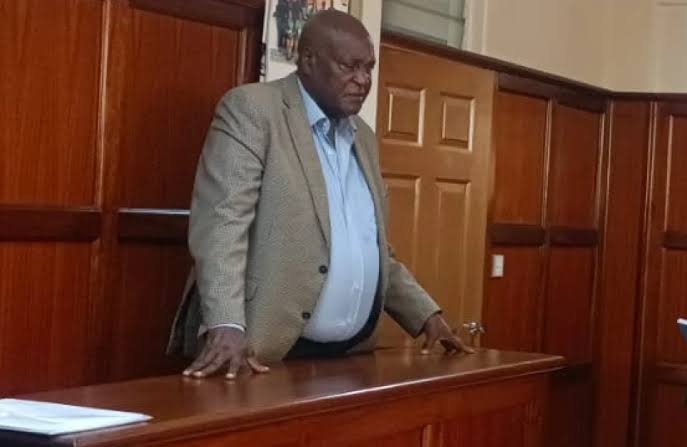
Former Nairobi Provincial Commissioner Davis Nathan Chelogoi Convicted in KSh 1.35 Billion Land Fraud Case
Former Nairobi Provincial Commissioner Davis Nathan Chelogoi has been convicted in a KSh 1.35 billion land fraud case involving a 7.39-hectare parcel in Lower Kabete, Nairobi. The court found him guilty on five counts, including conspiracy to defraud, forcible detainer and forgery, following a trial in which the prosecution presented 19 witnesses and documentary evidence challenging the authenticity of land ownership documents. The disputed property was claimed by businessmen Ashok Rupshi Shah and Hitenkumar Amritlal Raja. Following the conviction, the court cancelled Chelogoi’s bond and ordered him to remain in custody pending sentencing, which is scheduled for November 2, 2026. The court also directed the cancellation of parallel titles or registration details relating to the property. His co-accused, former Assistant Deputy Director of Lands Administration Andrew Aseri Kirungu, was acquitted after the court found insufficient evidence to convict him.
Former Nairobi Provincial Commissioner Davis Nathan Chelogoi has been convicted in a KSh 1.35 billion land fraud case involving a 7.39-hectare parcel of land in Lower Kabete, Nairobi, following a ruling by the Milimani Law Courts on Friday, October 16, 2026.
Chief Magistrate Dolphina Alego found Chelogoi guilty on five counts, including conspiracy to defraud, forcible detainer, two counts of forgery and uttering a forged document. The court ruled that the prosecution had proved its case beyond reasonable doubt, relying on testimony from witnesses and documentary evidence presented during the trial.
The property at the centre of the case is situated along Lower Kabete Road and is valued at approximately KSh 1.35 billion. The disputed land was claimed by businessmen Ashok Rupshi Shah and Hitenkumar Amritlal Raja, who maintained that their ownership rights had been challenged through documents the prosecution alleged were fraudulent.
Following the conviction, the court cancelled Chelogoi’s bond terms and ordered that he remain in custody pending mitigation and sentencing, which is scheduled for November 2, 2026. The court also directed the relevant land registry to cancel parallel titles or registration details issued over the disputed property.
Court Finds Chelogoi Guilty on Five Counts
In delivering the judgment, Magistrate Alego found Chelogoi guilty on all five counts brought against him in connection with the disputed property.
The charges included conspiracy to defraud, forcible detainer, two counts of forgery and knowingly presenting a forged document as genuine.
The prosecution’s case centred on allegations that Chelogoi used documents purportedly relating to an earlier allocation of the land to support his claim to the property. Investigators and witnesses challenged the authenticity of the documents, arguing that they did not establish a legitimate ownership history.
The prosecution called 19 witnesses, including officials associated with the State Department for Lands and Physical Planning, land registry personnel and other individuals whose testimony addressed the records and documents linked to the parcel.
The witnesses provided evidence on the alleged allocation, registration history and authenticity of the paperwork used to support competing claims to the land.
The court found that the prosecution’s evidence undermined Chelogoi’s claim to the property and established the offences charged against him.
The conviction marks a significant development in the long-running dispute over the valuable property, which has been the subject of competing ownership claims and legal proceedings.
Disputed Land Worth KSh 1.35 Billion
The property involved in the case measures approximately 7.39 hectares and is identified in reports as Nairobi/Block/80/44, with references also made to land reference number LR No. 18485.
Located along Lower Kabete Road, the parcel is considered valuable because of its location within Nairobi’s wider urban property market.
The dispute arose from competing claims over who had lawful ownership of the land and whether the documents relied upon to establish those claims were authentic.
Shah and Raja maintained that the property belonged to them, while the prosecution presented evidence challenging the documents used to support Chelogoi’s claim.
Land ownership disputes can involve complex historical records, including letters of allotment, title deeds, survey plans, registry entries and other documents intended to establish how a property was allocated and transferred over time.
In this case, the prosecution relied on testimony from land officials and other witnesses to challenge the authenticity of records presented in support of Chelogoi’s claim.
The court’s findings addressed the alleged use of forged documents and the legal basis on which the disputed land was claimed.
The magistrate also ordered the cancellation of parallel titles or registration details associated with the property, a step intended to address the competing records relating to ownership.
Court Examines Alleged Forged Allocation Documents
A central issue during the trial was a letter of allotment dated January 31, 1995, which was presented as a document issued by the Commissioner of Lands.
The prosecution alleged that the letter had been forged and used to support Chelogoi’s claim to the property.
The court found that the allotment letter was not genuine. The magistrate also considered documents bearing signatures and official stamp impressions attributed to a land registrar, which were challenged during the proceedings.
Witnesses from the lands administration system reportedly raised concerns about the absence of reliable historical records supporting the alleged allocation.
Land surveyors and registry officials were unable to establish authentic historical survey records, deed plans or original registry entries that supported the ownership claim in the manner presented by the defence.
The prosecution further alleged that Chelogoi knowingly presented forged documents at the Directorate of Criminal Investigations headquarters along Kiambu Road on October 11, 2023.
The documents reportedly included the disputed letter of allotment and a certificate bearing a signature and stamp impression that the prosecution said had been forged.
The court considered this evidence alongside testimony from the witnesses before reaching its decision.
The findings underscore the importance of verifying land records and ensuring that documents used to establish ownership are authentic.
However, the conviction relates to the specific evidence and charges considered in this case and should not be taken as a finding about unrelated land transactions.
Nineteen Witnesses Presented by the Prosecution
The prosecution relied on the testimony of 19 witnesses to support the charges against Chelogoi.
The witnesses included officials familiar with land administration and records, whose evidence was used to examine the authenticity of the disputed documents and the history of the property.
Their testimony addressed inconsistencies in the paperwork and the absence of reliable historical records supporting the alleged allocation.
The prosecution also presented documentary and expert evidence in an effort to demonstrate that the documents used to support the claim were not genuine.
The magistrate found the evidence sufficient to establish Chelogoi’s guilt on the five counts.
The case highlights the role of documentary verification and expert testimony in criminal proceedings involving allegations of land fraud. Such cases can require courts to examine records created many years earlier and determine whether they can be authenticated through official registries and other reliable evidence.
The judgment followed proceedings in which Chelogoi had denied the charges against him.
The court’s decision means that the case has now moved to the sentencing stage, during which the court will consider the appropriate punishment after hearing mitigation.
Former Lands Official Acquitted
While Chelogoi was convicted, his co-accused, former Assistant Deputy Director of Lands Administration Andrew Aseri Kirungu, was acquitted.
Kirungu had faced charges connected to the dispute, but the court found that the prosecution had not presented sufficient evidence to establish his criminal responsibility beyond reasonable doubt.
The magistrate reportedly observed that missing or destroyed files and correspondence at the Ministry of Lands created uncertainty about whether Kirungu knew of the existing court orders and competing ownership claims when the relevant documents were processed.
The court therefore gave him the benefit of the doubt.
The acquittal demonstrates that the court assessed the evidence against each accused person separately rather than treating the case as establishing equal responsibility for everyone involved.
While the evidence was found sufficient to convict Chelogoi, it did not meet the required legal threshold to convict Kirungu.
Bond Cancelled Ahead of Sentencing
Following the conviction, the court cancelled Chelogoi’s bond and ordered that he be remanded in custody pending mitigation and sentencing.
The next court date is scheduled for November 2, 2026.
During mitigation, the convicted person may present information and arguments that the court can consider when determining an appropriate sentence. The prosecution may also make submissions relevant to sentencing.
The final punishment will be determined by the court after considering the applicable law and the circumstances of the offences.
As of the delivery of the judgment on October 16, the sentence had not yet been announced.
The sentencing hearing will therefore be the next major stage in the criminal proceedings.
The court’s order concerning the land registry is also significant because it addresses the ownership records connected to the disputed parcel. By directing the cancellation of parallel titles or registration details, the court sought to resolve the competing records in accordance with its findings.
Implications for Land Ownership and Fraud Cases
The conviction brings renewed attention to the challenges surrounding land ownership disputes in Kenya, particularly cases involving valuable property and questions about the authenticity of historical records.
Land transactions rely on accurate documentation to establish ownership, confirm transfers and protect the rights of buyers and registered proprietors.
When documents are alleged to have been forged or used fraudulently, disputes can lead to criminal proceedings alongside separate questions about registration and ownership.
The Lower Kabete case illustrates how courts may rely on testimony from land officials, documentary records and expert evidence to determine whether a claim is supported by authentic documentation.
The cancellation of parallel registration details also highlights the importance of maintaining accurate land records and ensuring that competing entries are dealt with through lawful procedures.
For members of the public involved in property transactions, the case serves as a reminder of the importance of conducting proper searches and independently verifying ownership documents before purchasing or investing in land.
It also reinforces the need for public institutions responsible for land administration to maintain reliable records and follow procedures that protect legitimate ownership rights.
Sentencing Set for November 2
Chelogoi’s conviction is one of the key developments in the dispute over the 7.39-hectare Lower Kabete property valued at approximately KSh 1.35 billion.
The court found him guilty on five counts after considering the prosecution’s evidence, including testimony from 19 witnesses and documents challenging the authenticity of the records used to support his claim.
His co-accused, Andrew Aseri Kirungu, was acquitted after the court found insufficient evidence to establish his criminal responsibility.
The court has ordered the cancellation of parallel title or registration details relating to the property and directed that Chelogoi remain in custody pending sentencing.
All attention now turns to November 2, 2026, when the court is expected to hear mitigation and determine the sentence.
Until then, the final punishment remains undecided. The judgment, however, has established the outcome of the criminal trial against the former Nairobi Provincial Commissioner and marks a major step in the legal proceedings surrounding the disputed Lower Kabete land.

You Might Also Like
-
The reported turnout of thousands of job seekers at Wajose Smart Wears in Kericho has highlighted the urgency of addressing unemployment and the intense competition for available opportunities. While the precise details of the recruitment exercise remain independently unverified, the wider employmen
-
The National Transport and Safety Authority (NTSA) has urged motorists whose Smart Driving Licences are ready for collection to pick them up from their designated centres. The authority has also warned Kenyans against dealing with brokers and unauthorised intermediaries who claim to offer assistance
-
President William Ruto's October 16, 2026, engagements in West Pokot and Trans Nzoia form part of his wider North Rift development tour ahead of Mashujaa Day celebrations on October 20. The published programme includes the issuance of 11,493 title deeds in West Pokot, commissioning the Kapenguriaâ€
-
The participation of Dr Belio Kipsang in the Mashujaa Day thematic week panel discussion at Eldoret National Polytechnic highlights the importance of connecting national celebrations with practical issues affecting citizens. His contribution focused on border security, citizenship documentation, co
-
The reported site visit involving Roads and Transport Cabinet Secretary Davis Chirchir, Chepalungu MP Victor Koech and World Bank officials highlights the importance of rural road connectivity in Bomet County and the wider South Rift region. The proposed Chebole–Siongiroi–Labotiet–Gorgor impr
-
Health Cabinet Secretary Aden Duale has called on Muslims across Kenya to unite under the proposed Coalition of the Marginalised and rally behind President William Ruto ahead of the 2027 General Election. Duale says the initiative seeks to bring together communities that have historically felt exclu