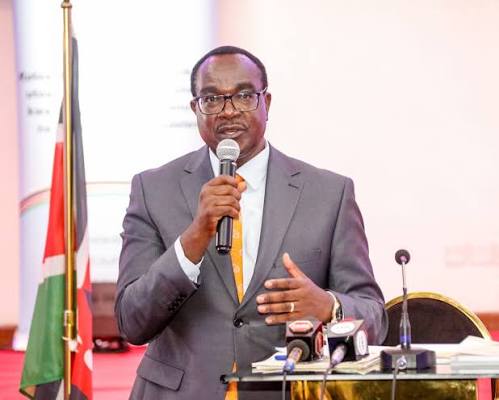
Government Moves to Review School Capitation Rates After Years of Unchanged Funding
Education Cabinet Secretary Julius Ogamba has acknowledged the need to reform Kenya’s school funding formula, directing a review of capitation rates that have remained unchanged since 2015. The move comes amid growing concerns from school administrators, teachers and parents over the rising cost of running public learning institutions and the increasing financial pressure facing schools. The proposed review is expected to examine whether the current allocations are sufficient to meet operational needs, support the implementation of the Competency-Based Education system and improve the quality of learning. Attention will also focus on how government funding can be distributed more effectively to address differences in school enrolment, infrastructure and regional needs. As education stakeholders await the outcome of the review, questions remain over whether revised capitation rates will ease financial challenges in public schools and reduce the burden on parents.
Education Cabinet Secretary Julius Ogamba has acknowledged that Kenya’s school funding formula is outdated and directed a review of capitation rates, which have remained unchanged since 2015. The proposed review is expected to address growing concerns over the adequacy of government funding to public schools amid rising operational costs and increasing demands within the education sector.
The announcement has renewed attention on the financial challenges facing learning institutions across the country, with school administrators, teachers and parents continuing to raise concerns about the resources available to support teaching and learning.
For years, public schools have depended on government capitation to finance essential operations, including the purchase of learning materials, payment of certain operational expenses, maintenance of facilities and support for day-to-day educational activities. However, the cost of running schools has continued to change, creating pressure on institutions whose funding allocations have not been adjusted in line with prevailing economic conditions.
The acknowledgement by the Education Cabinet Secretary that the existing funding formula requires review signals recognition of the concerns that have been raised by education stakeholders. It also highlights the need to assess whether the current allocation system adequately reflects the financial realities facing schools in different parts of the country.
Capitation is an important component of Kenya’s education financing framework. Through the programme, the government provides financial support to public learning institutions to help ensure that learners can access education without families being required to shoulder the entire cost of schooling.
The funding is intended to support the implementation of the national education curriculum and help schools meet essential operational requirements. It also plays a significant role in promoting access to education, particularly for children from households that may struggle to meet additional school expenses.
However, the amount required to operate a school has changed considerably over the years. Institutions must deal with rising costs of stationery, teaching and learning materials, electricity, water, maintenance, administration and other essential services.
As a result, school managers have increasingly faced the challenge of balancing limited resources against growing financial obligations. In some institutions, administrators have been forced to prioritise urgent expenses while postponing other important activities because the available funding cannot cover every requirement.
The situation has raised questions about whether the capitation rates established in 2015 remain sufficient to support the current education system. With inflation and other economic pressures affecting the cost of goods and services, the purchasing power of the funds allocated to schools may have declined over time.
A review of the funding formula is therefore expected to examine the amount allocated to each learner and determine whether adjustments are necessary to reflect the current cost of delivering education.
The review could also provide an opportunity to assess how government resources are distributed among different categories of schools. Institutions vary significantly in terms of enrolment, geographical location, infrastructure, available facilities and the needs of their learners.
Schools in rural and remote areas may face different operational challenges from those located in major towns and urban centres. Some institutions have large student populations and require substantial resources to maintain facilities and provide essential services, while smaller schools may struggle with limited enrolment and inadequate financial capacity.
A funding formula that takes these differences into account could help improve the distribution of resources and ensure that institutions receive support based on their actual needs.
Education stakeholders have consistently emphasised that adequate financing is essential for improving the quality of learning. Schools require sufficient resources to provide a conducive environment, maintain classrooms, acquire instructional materials and support teachers in implementing the curriculum effectively.
Where funding is inadequate, the effects can extend beyond financial difficulties faced by school administrators. Learners may experience shortages of essential materials, deteriorating facilities and interruptions in the provision of certain school services.
Teachers may also face additional pressure when institutions lack the resources required to support classroom activities and other academic programmes. This can affect the overall learning environment and make it more difficult for schools to achieve their educational objectives.
The proposed review is therefore expected to attract considerable interest from teachers, parents, school boards and education administrators who have been calling for a funding system that reflects the current needs of public institutions.
Parents are particularly concerned about the financial burden associated with educating their children. Although government capitation is intended to support access to education, schools still have operational expenses that must be addressed to maintain their facilities and provide essential services.
When government funding is insufficient, some institutions may find themselves under pressure to seek additional contributions from parents. This can create difficulties for families already dealing with the rising cost of living, especially those with several children attending school.
For low-income households, additional education-related expenses can become a major challenge and may affect the ability of parents to support their children's continued learning.
A more responsive capitation system could help reduce some of these pressures by ensuring that public schools receive funding that is better aligned with their operational requirements. However, the effectiveness of any review will depend on the recommendations adopted and the government's ability to provide the resources required to implement them.
The review also comes amid broader discussions about the financing and management of Kenya's education system. The government has been implementing changes aimed at improving access, strengthening learning outcomes and addressing challenges associated with the transition to the Competency-Based Education system.
These reforms require adequate financial support because schools must provide learning materials, develop appropriate facilities and ensure that teachers have the necessary resources to deliver the curriculum.
The transition to new learning approaches has also increased the importance of practical activities, learner-centred instruction and continuous assessment. Such approaches require schools to have access to appropriate materials and facilities that support different learning experiences.
Without sufficient financing, institutions may struggle to provide the resources needed to implement these changes effectively. This is why the review of capitation rates is being viewed as an important issue in the broader conversation about education quality and access.
The government will also need to consider the sustainability of any proposed increase in funding. Adjusting capitation rates would require additional public resources, making budget planning and responsible allocation essential.
A revised formula must therefore strike a balance between the financial needs of schools and the resources available to the government. It should also establish a clear framework for distributing funds, monitoring expenditure and ensuring that allocations are used for their intended purposes.
Accountability will be another important consideration. Increased funding must be accompanied by effective financial management to ensure that public resources reach learning institutions and benefit students.
School administrators and governing bodies have a responsibility to manage funds transparently, maintain proper financial records and prioritise expenditure according to the needs of their institutions.
The government, on its part, will need to strengthen oversight mechanisms to ensure that allocations are released on time and that schools receive the support they are entitled to. Delays in disbursement can disrupt planning and make it difficult for institutions to meet their financial obligations.
Timely funding is particularly important because schools operate according to academic calendars and must make arrangements for essential services throughout the school year. Uncertainty over the availability of funds can affect procurement, maintenance and the delivery of learning programmes.
The review could also provide an opportunity for the Ministry of Education to engage stakeholders and gather information about the challenges experienced by institutions. Input from school heads, teachers, parents and education experts would help ensure that the revised framework addresses practical concerns rather than relying solely on general estimates.
Such consultations could help identify the areas where funding gaps are greatest and determine the most appropriate way to distribute available resources.
The acknowledgement by Ogamba that the existing formula is outdated has consequently placed renewed focus on the need for reforms that respond to changing economic conditions and the evolving needs of schools.
For school administrators, the review represents an opportunity to address financial pressures that have affected institutional operations over the years. For parents, it raises expectations that improved government support could help ease the burden of additional school expenses.
Teachers and education stakeholders will also be watching closely to see whether the review translates into meaningful changes that improve the learning environment and strengthen the delivery of education.

You Might Also Like
-
German Federal President Frank-Walter Steinmeier is expected to arrive in Kenya on November 25–26, 2026, for a two-day official visit that will include high-level bilateral talks with President William Ruto at State House. The visit is expected to strengthen diplomatic relations between Kenya and
-
President William Ruto has renewed his criticism of opposition leaders who walked out of a consultative meeting with the Independent Electoral and Boundaries Commission (IEBC), accusing them of transferring their frustrations over disagreements on who should lead their presidential campaign to the e
-
Embakasi East MP Babu Owino has reaffirmed his political relationship with Nairobi Senator Edwin Sifuna, describing him as his brother and dismissing speculation that their individual political ambitions could create divisions within the Linda Mwananchi movement. Babu maintained that their political
-
A political party has moved to court seeking to suspend the recruitment of the Independent Electoral and Boundaries Commission (IEBC) Chief Executive Officer, citing alleged integrity concerns surrounding the selection process. The legal challenge comes at a critical time as the electoral commission
-
The Independent Electoral and Boundaries Commission (IEBC) has criticised opposition leaders for walking out of a consultative meeting on electoral preparedness ahead of the 2027 General Election. The commission accused the leaders of missing an important opportunity to raise concerns, discuss propo
-
Police Headquarters has ordered a mandatory nationwide physical headcount of all National Police Service officers following reports that some serving officers are allegedly being illegally recruited by foreign agencies to work as mercenaries abroad. The exercise is expected to establish the whereabo