Ruto Criticises Opposition Leaders Over Walkout From IEBC Consultative Meeting
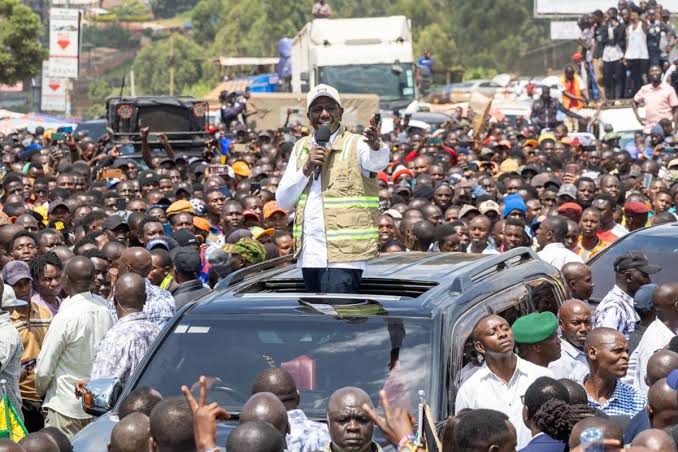
President William Ruto has renewed his criticism of opposition leaders who walked out of a consultative meeting with the Independent Electoral and Boundaries Commission (IEBC), accusing them of transferring their frustrations over disagreements on who should lead their presidential campaign to the electoral agency. Speaking in Funyula, Busia County, during his tour of the Western region, the President questioned the opposition's decision to abandon the meeting, suggesting that their internal leadership struggles should be resolved within their political formations rather than involving the electoral commission. The remarks have reignited debate over opposition unity, presidential ambitions and the relationship between political parties and the IEBC ahead of the 2027 General Election. As political realignments continue to take shape, attention is now turning to whether opposition leaders can overcome their differences, agree on a common political direction and maintain constructive engagement with institutions responsible for overseeing the country's electoral process.
Ruto Criticises Opposition Leaders Over Walkout From IEBC Consultative Meeting
President William Ruto has renewed his criticism of opposition leaders who walked out of a consultative meeting with the Independent Electoral and Boundaries Commission (IEBC), accusing them of turning their internal political disagreements into a dispute with the electoral agency.
Speaking in Funyula, Busia County, during his tour of the Western region, the President questioned the decision by the opposition leaders to leave the meeting, suggesting that their frustrations stemmed from their inability to agree on a suitable presidential candidate rather than concerns that should be directed at the electoral commission.
Ruto's remarks have added a new dimension to the ongoing political debate surrounding the engagement between the opposition and the IEBC as the country gradually moves towards the 2027 General Election.
The President appeared to challenge the opposition to resolve its political differences internally instead of involving an independent constitutional institution in disagreements over its leadership and presidential ambitions. His criticism comes at a time when political formations are increasingly positioning themselves ahead of the next general election, with questions surrounding unity, leadership and possible presidential candidates becoming more prominent.
The consultative meeting between the IEBC and political stakeholders was expected to provide an opportunity for discussions on electoral preparedness and matters relating to the management of future elections. Such engagements are important in creating an environment where political parties can present their concerns, seek clarification and contribute to discussions on strengthening the country's electoral system.
However, the decision by some opposition leaders to walk out of the meeting has exposed differences between the political players and the electoral commission, raising questions about how disagreements involving the institution should be addressed.
Ruto's latest remarks suggest that he believes the opposition's conduct was influenced by internal political challenges. By linking the walkout to disagreements over the selection of a presidential candidate, the Head of State appeared to dismiss the idea that the opposition's concerns should have resulted in abandoning the consultative engagement.
The President's criticism also highlights the growing political competition ahead of the 2027 polls. With different leaders seeking to establish their influence and political positions, the question of who will carry the opposition's presidential ticket is expected to remain a major subject of discussion.
The opposition has been facing the challenge of building a united political front capable of presenting a common candidate and coordinating its strategy ahead of the next election. Although different leaders may share similar political interests, agreeing on one candidate and establishing a common campaign structure can present significant challenges.
The process of identifying a presidential candidate is often influenced by individual ambitions, political parties, regional considerations and negotiations among influential leaders. These factors can complicate efforts to create a united opposition movement, particularly where several politicians believe they have the support and experience required to lead the country.
Ruto's comments have therefore placed renewed attention on the relationship between the opposition's internal political arrangements and its engagement with institutions mandated to oversee elections. His argument is that disagreements over political leadership should be addressed through discussions among the parties involved rather than being transferred to the electoral commission.
The IEBC, as an independent constitutional institution, plays a central role in organising and supervising elections in Kenya. Its responsibilities include managing electoral processes and ensuring that elections are conducted in accordance with the Constitution and relevant laws.
The commission is also expected to engage political parties and other stakeholders on matters affecting the credibility, transparency and efficiency of elections. Consultative meetings provide an opportunity for different political players to raise concerns and discuss issues that may influence the electoral environment.
Such engagements are particularly important as Kenya prepares for the 2027 General Election. Political parties and leaders have an interest in ensuring that the electoral process is transparent, credible and trusted by voters. The commission, on its part, is expected to maintain its independence while responding to legitimate concerns raised by stakeholders.
The disagreement surrounding the consultative meeting demonstrates the difficult balance between political interests and institutional responsibilities. Political leaders have a right to question decisions and raise concerns about the electoral process, while the IEBC is expected to carry out its mandate without undue political interference.
Ruto's criticism has also brought the opposition's unity into focus. The ability of opposition leaders to agree on a common presidential candidate could have a significant influence on their political strategy ahead of the next general election. A divided opposition may face difficulties coordinating its activities, presenting a common message and mobilising support across different regions.
However, reaching an agreement requires political compromise and negotiations among leaders with different ambitions. Some politicians may prefer to pursue individual presidential ambitions, while others may support a coalition arrangement that allows different parties to work together under one candidate.
These discussions are likely to continue as the political environment develops. The opposition will need to determine how to balance individual interests with the broader objective of establishing a strong political alternative. The process may involve consultations, coalition negotiations and discussions on leadership arrangements.
The President's remarks in Funyula come against this wider background of political positioning. His criticism reflects the increasing attention being paid to the opposition's preparedness and ability to organise itself ahead of the 2027 contest.
For the IEBC, the incident highlights the importance of maintaining open communication with political parties and ensuring that stakeholder engagements remain focused on electoral matters. The commission is expected to provide a platform where concerns can be presented and discussed, even where political disagreements exist among the participants.
The credibility of an election is influenced not only by the actual voting process but also by the level of confidence political parties and voters have in the institutions responsible for managing it. Building that confidence requires transparency, accountability, effective communication and respect for the independence of the electoral body.
Political parties also have a responsibility to participate constructively in discussions concerning electoral preparedness. Their involvement allows the commission to understand the concerns of different stakeholders while giving political formations an opportunity to seek clarification on issues affecting the election.
At the same time, the IEBC must remain impartial and ensure that its decisions are guided by the law rather than the political interests of any individual or party. Maintaining this independence is essential to protecting public confidence in the electoral process.
The opposition's walkout has consequently become part of a wider political discussion about the relationship between political parties and the electoral commission. While leaders may disagree on the manner in which consultations are conducted, the need for continued engagement remains important as preparations for the next election take shape.
Ruto's remarks have also drawn attention to the challenge facing opposition leaders as they seek to organise themselves into a coordinated political force. Beyond criticising the government, opposition formations must establish clear leadership structures, agree on their political priorities and determine how they intend to approach the next presidential election.
The process of selecting a presidential candidate is likely to be one of the most sensitive issues within the opposition. Where several leaders have presidential ambitions, negotiations can become complicated, particularly when different political parties and their supporters have competing expectations.
A successful coalition arrangement would require the participating leaders to agree on a common direction and establish mechanisms for managing disagreements. Without such arrangements, internal competition could weaken efforts to build a united political platform.
The President's comments have therefore placed the spotlight on the opposition's internal negotiations at a time when political activity is gradually gaining momentum. His suggestion that the leaders' frustrations were connected to their inability to agree on a presidential candidate raises questions about how the opposition intends to manage its leadership discussions.
Nevertheless, the wider electoral debate extends beyond the question of who will become the opposition's presidential candidate. Issues surrounding electoral preparedness, transparency, voter confidence and the independence of the IEBC remain central to the country's democratic process.
As the 2027 General Election approaches, political parties are expected to intensify their preparations and engage with the institutions responsible for overseeing the polls. The manner in which these engagements are handled could influence the political environment and the level of confidence stakeholders have in the electoral process.
Ruto's latest criticism has added to the ongoing exchanges between the President and opposition leaders over their conduct and political organisation. His remarks in Funyula have reinforced his position that disagreements over presidential ambitions should be resolved within political formations rather than being directed at the electoral commission.
The opposition, meanwhile, faces the task of addressing its internal differences while continuing to raise any concerns it may have about the IEBC and the preparations for the next election.
The unfolding debate is expected to remain part of the country's political conversation as leaders position themselves for the 2027 General Election. Whether the opposition will eventually settle on a common presidential candidate and establish a united political strategy remains a key question.
The focus will be on whether political leaders can maintain constructive engagement with the IEBC while managing their own political differences. With the next general election approaching, cooperation between stakeholders and respect for independent institutions will remain important in ensuring that electoral preparations proceed in a transparent and credible manner.

You Might Also Like
-
German Federal President Frank-Walter Steinmeier is expected to arrive in Kenya on November 25–26, 2026, for a two-day official visit that will include high-level bilateral talks with President William Ruto at State House. The visit is expected to strengthen diplomatic relations between Kenya and
-
Embakasi East MP Babu Owino has reaffirmed his political relationship with Nairobi Senator Edwin Sifuna, describing him as his brother and dismissing speculation that their individual political ambitions could create divisions within the Linda Mwananchi movement. Babu maintained that their political
-
A political party has moved to court seeking to suspend the recruitment of the Independent Electoral and Boundaries Commission (IEBC) Chief Executive Officer, citing alleged integrity concerns surrounding the selection process. The legal challenge comes at a critical time as the electoral commission
-
The Independent Electoral and Boundaries Commission (IEBC) has criticised opposition leaders for walking out of a consultative meeting on electoral preparedness ahead of the 2027 General Election. The commission accused the leaders of missing an important opportunity to raise concerns, discuss propo
-
Police Headquarters has ordered a mandatory nationwide physical headcount of all National Police Service officers following reports that some serving officers are allegedly being illegally recruited by foreign agencies to work as mercenaries abroad. The exercise is expected to establish the whereabo
-
Former Aldai Member of Parliament and Deputy Speaker of the National Assembly, Samuel Ng’eny, has passed away, marking the loss of a veteran public servant who made significant contributions to Kenya's education sector, parliamentary leadership and public administration. Ng’eny served as Aldai M