Government Showcases Soweto East Redevelopment as a Key Step in Transforming Kibera.
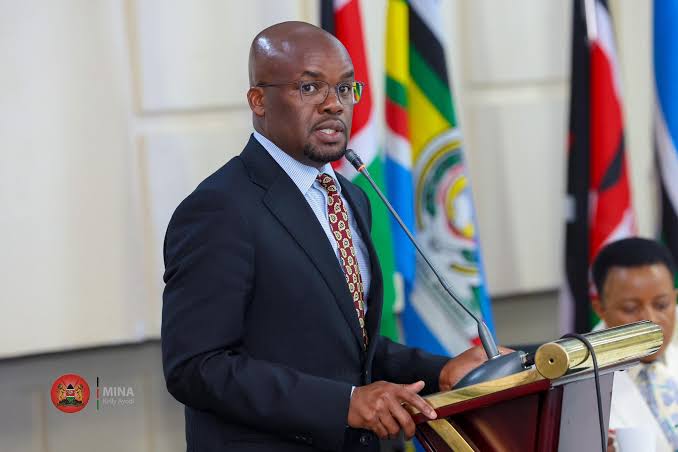
Interior Principal Secretary Raymond Omollo has highlighted the government's efforts to transform Kibera through the phased redevelopment of Soweto East under the Bottom-Up Economic Transformation Agenda (BETA). The initiative seeks to address longstanding housing challenges in informal settlements by providing residents with decent, affordable and dignified homes while improving access to essential services and better living conditions. The redevelopment is also expected to contribute to wider urban transformation through improved infrastructure, organised residential spaces and opportunities for economic growth. As the project progresses, attention remains on how the government will ensure that residents benefit from the housing programme while addressing the challenges associated with overcrowding, inadequate sanitation and limited infrastructure in informal settlements.
Government Highlights Soweto East Redevelopment as Part of Kibera's Transformation Agenda
Interior Principal Secretary Raymond Omollo has said the government's Bottom-Up Economic Transformation Agenda (BETA) is driving significant changes in parts of Kibera through the phased redevelopment of Soweto East, an initiative aimed at improving living conditions and providing residents with decent and dignified housing.
Omollo said the ongoing redevelopment forms part of the government's wider commitment to addressing challenges facing residents of informal settlements while creating better living environments for communities that have experienced inadequate housing and limited access to essential services.
The initiative is expected to transform the physical appearance of Soweto East while providing residents with improved housing facilities and a more organised residential environment. It also reflects the government's broader approach to urban development, which places emphasis on improving the quality of life for low-income households.
For many years, Kibera has faced significant challenges associated with informal settlement living. These include overcrowding, inadequate sanitation, limited access to clean water, poor drainage systems and insufficient infrastructure to support the growing population.
The redevelopment programme is intended to address some of these challenges by replacing inadequate housing structures with more organised residential facilities. Through the phased approach, the government seeks to ensure that the transformation takes place in stages while taking into consideration the needs of affected residents.
The Soweto East project is part of broader efforts to improve housing conditions in urban areas and expand access to decent accommodation for households that may struggle to secure quality housing through the private market.
Omollo's remarks highlight the government's position that affordable housing should not be viewed merely as the construction of residential buildings but as an important component of social and economic transformation.
The government maintains that improving housing conditions can contribute to better health outcomes, enhance household security and create an environment where families can live with dignity.
In informal settlements such as Kibera, housing challenges are often connected to other social and economic difficulties. Many residents live in congested neighbourhoods where access to basic services can be limited. Poor sanitation and inadequate drainage can also expose households to health risks, particularly during periods of heavy rainfall.
The redevelopment of Soweto East is therefore expected to go beyond providing new residential units. The wider objective is to create a more organised settlement with improved infrastructure and better access to essential services.
The phased implementation is also important because large-scale urban redevelopment involves several logistical and social considerations. These include identifying affected households, planning residential arrangements, coordinating construction activities and ensuring that residents understand the process.
Such projects require effective communication between government agencies, local administrators and community representatives to minimise disruption and address concerns raised by residents.
The government's affordable housing programme is one of the major components of the Bottom-Up Economic Transformation Agenda. The initiative is designed to expand access to housing while creating employment opportunities and stimulating economic activities in the construction sector.
Through the programme, the government aims to increase the supply of affordable homes for Kenyans, particularly those in lower and middle-income categories.
The construction industry also provides opportunities for workers, suppliers, transport operators, small businesses and other service providers. Housing projects can therefore support economic activity beyond the immediate construction sites.
The redevelopment of Soweto East is expected to contribute to this broader objective by creating demand for construction materials, labour and related services. Such activities can provide opportunities for local businesses and workers, depending on how the projects are implemented and how communities participate in the process.
The Bottom-Up Economic Transformation Agenda places emphasis on improving the economic position of ordinary households by expanding opportunities in sectors that support livelihoods. Affordable housing, alongside agriculture, micro and small enterprises, healthcare and digital services, forms part of the government's wider economic strategy.
The administration argues that investment in housing can help address the shortage of decent accommodation while supporting job creation and improving urban infrastructure.
However, the success of the programme will depend on whether the completed developments remain accessible to the intended beneficiaries. Affordability, allocation procedures, construction standards and the availability of essential services are important factors that will determine the long-term impact of such projects.
For residents of Soweto East, the redevelopment represents an opportunity to access improved housing conditions and a more organised residential environment. Many households in informal settlements face difficulties securing homes that meet basic standards of safety, sanitation and comfort.
Improved housing can also provide children with a better environment for studying and families with greater security. Access to reliable water, proper sanitation and adequate living space can contribute to healthier households and improved living standards.
Urban redevelopment, however, must also consider the social and economic networks that residents have established over the years. Informal settlements are not simply residential locations; they are also communities where people operate businesses, access employment and maintain social relationships.
Any transformation programme must therefore pay attention to how changes in the physical environment affect residents' livelihoods and daily activities.
Community engagement is particularly important in ensuring that redevelopment projects address the actual needs of the people expected to benefit from them. Residents need clear information about construction timelines, relocation arrangements where applicable, eligibility requirements and the procedures for accessing the completed housing units.
Transparency in these processes can help build public confidence and reduce uncertainty among households affected by redevelopment.
The government will also need to ensure that the new residential developments are supported by adequate infrastructure. Housing facilities must be accompanied by reliable water supply, electricity, sanitation, drainage, access roads and other essential services.
Without these supporting facilities, new buildings may not fully address the challenges that residents experience in informal settlements.
The provision of schools, healthcare facilities, public spaces and other social amenities is also important in creating sustainable residential communities. As populations continue to grow in urban areas, planning must take into account the needs of families and the wider community.
Kibera's redevelopment also highlights the wider challenge of managing rapid urbanisation in Kenya. Nairobi continues to attract people seeking employment, education and business opportunities, placing pressure on housing and public infrastructure.
The demand for affordable accommodation has increased the importance of government policies that encourage planned urban development and improve access to decent housing.
For many low-income households, the cost of renting or purchasing homes in formal residential areas remains a major challenge. Informal settlements have consequently continued to accommodate large populations despite the difficulties associated with inadequate infrastructure.
The government's housing programme seeks to address this situation by increasing the availability of affordable residential units and improving conditions in selected urban communities.
The phased redevelopment of Soweto East is one example of how the administration intends to approach the transformation of informal settlements. Its progress will be important in determining how similar initiatives can be implemented in other parts of the country.
The government is also expected to maintain coordination among the agencies responsible for housing, urban planning and local administration to ensure that redevelopment activities are carried out effectively.
Proper planning, financial management and monitoring will be essential in ensuring that resources allocated to the programme produce the intended results.
As the project progresses, residents and other stakeholders will be keen to assess whether the new developments meet the standards promised and whether the benefits reach the households that need them most.
The initiative has also renewed discussion about the role of affordable housing in addressing inequality and improving living standards. Access to decent accommodation remains an important concern for families across the country, particularly those living in densely populated urban settlements.

You Might Also Like
-
German Federal President Frank-Walter Steinmeier is expected to arrive in Kenya on November 25–26, 2026, for a two-day official visit that will include high-level bilateral talks with President William Ruto at State House. The visit is expected to strengthen diplomatic relations between Kenya and
-
President William Ruto has renewed his criticism of opposition leaders who walked out of a consultative meeting with the Independent Electoral and Boundaries Commission (IEBC), accusing them of transferring their frustrations over disagreements on who should lead their presidential campaign to the e
-
Embakasi East MP Babu Owino has reaffirmed his political relationship with Nairobi Senator Edwin Sifuna, describing him as his brother and dismissing speculation that their individual political ambitions could create divisions within the Linda Mwananchi movement. Babu maintained that their political
-
A political party has moved to court seeking to suspend the recruitment of the Independent Electoral and Boundaries Commission (IEBC) Chief Executive Officer, citing alleged integrity concerns surrounding the selection process. The legal challenge comes at a critical time as the electoral commission
-
The Independent Electoral and Boundaries Commission (IEBC) has criticised opposition leaders for walking out of a consultative meeting on electoral preparedness ahead of the 2027 General Election. The commission accused the leaders of missing an important opportunity to raise concerns, discuss propo
-
Police Headquarters has ordered a mandatory nationwide physical headcount of all National Police Service officers following reports that some serving officers are allegedly being illegally recruited by foreign agencies to work as mercenaries abroad. The exercise is expected to establish the whereabo