



KINDIKI LEADS MULTI-AGENCY MEETING TO STRENGTHEN FIGHT AGAINST ILLICIT ALCOHOL AND DRUGS
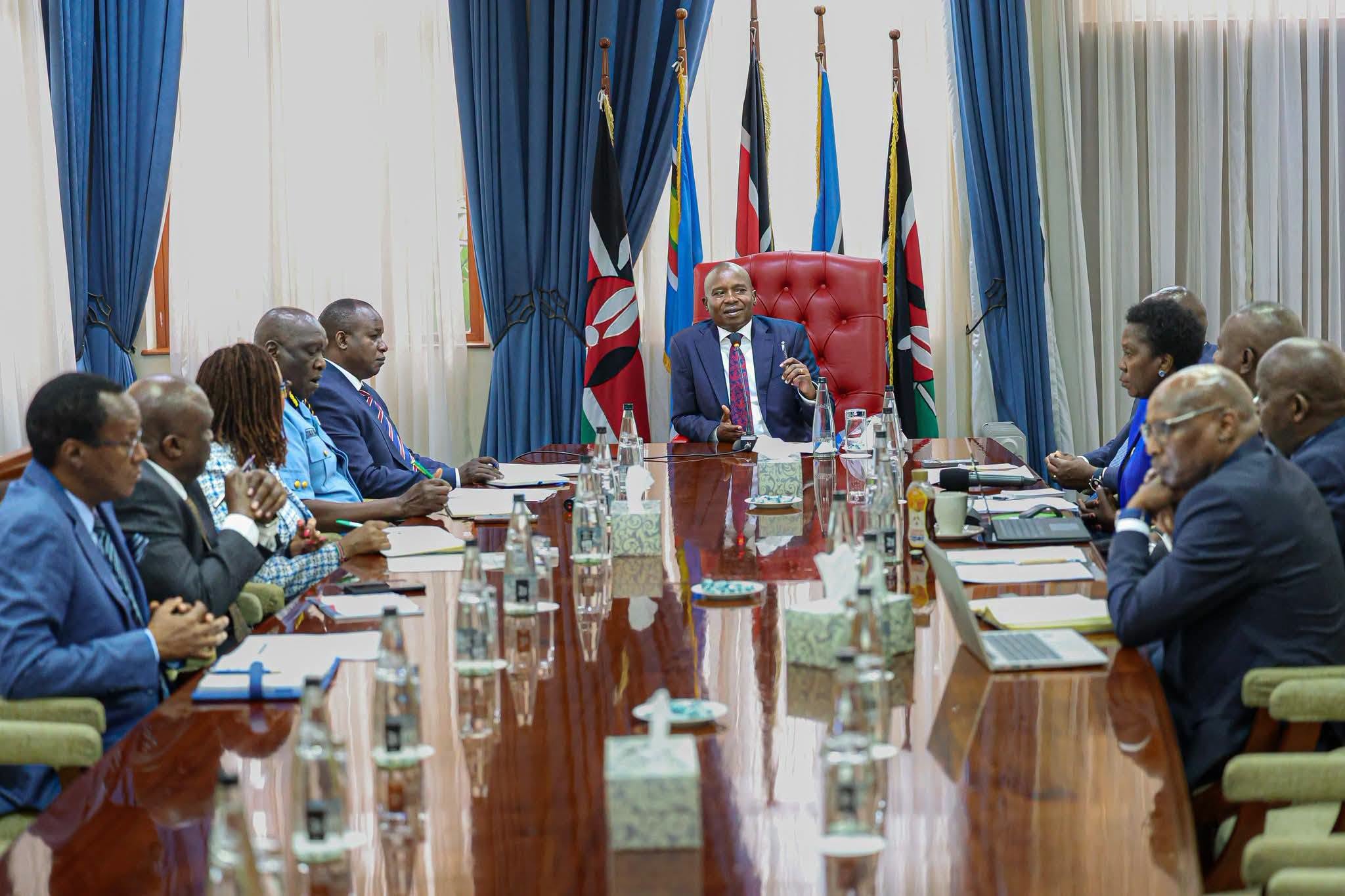
Deputy President Kithure Kindiki has chaired a multi-agency meeting with Interior CS Kipchumba Murkomen, Inspector General of Police Douglas Kanja and regulatory agencies to strengthen the government’s crackdown on illicit alcohol, drugs and illegal trade across the country.
Deputy president Kithure Kindiki has chaired a high-level multi-agency meeting bringing together senior security officials and regulatory agencies as the government moves to strengthen the fight against illicit alcohol, counterfeit beverages and drug abuse in the country.
The meeting brought together Interior Cabinet Secretary Kipchumba Murkomen, Inspector General of Police Douglas Kanja and heads of key regulatory agencies involved in enforcing standards, controlling illegal trade and protecting consumers.
The discussions focused on strengthening coordination between security agencies and regulators while reviewing existing measures being used to combat the manufacture, distribution and sale of illicit alcoholic drinks and drugs.
The meeting comes amid renewed government concern over the circulation of alcoholic beverages that fail to meet required safety and quality standards.
Kindiki had earlier announced plans for the multi-agency meeting while speaking in Nyeri County on September 25. He said the government would intensify efforts to deal with alcoholic products that pose risks to consumers, particularly young people.
The Deputy President said the government could not allow harmful alcoholic products to continue circulating in the market, warning that stronger measures were necessary to protect communities.
The meeting brings together agencies with different responsibilities in the fight against illicit trade. These include security institutions under the Ministry of Interior, the Kenya Revenue Authority, the Anti-Counterfeit Authority and the Kenya Bureau of Standards, among other agencies.
The multi-agency approach is intended to address the problem across the entire supply chain, from production and importation to distribution and retail.
The Kenya Revenue Authority plays a significant role in controlling excisable goods and addressing illicit trade, while the Kenya Bureau of Standards is responsible for standards and conformity assessment. The Anti-Counterfeit Authority, on the other hand, is mandated to combat counterfeit goods.
Security agencies are expected to support enforcement operations against individuals and businesses found to be manufacturing, distributing or selling products in violation of the law.
The latest meeting therefore seeks to bring the different institutions together so that enforcement efforts can be better coordinated.
GOVERNMENT TARGETS ILLICIT ALCOHOL
The renewed crackdown follows concerns over the continued availability of illicit and potentially harmful alcoholic beverages in different parts of the country.
Kindiki has particularly highlighted concerns in the Mount Kenya region, where he said elders had raised the issue of illicit alcohol and its effects on communities.
While addressing residents in Chaka, Nyeri County, the Deputy President announced that he would convene a meeting involving security agencies and regulators to develop a stronger response to the problem.
He has described some alcoholic products being sold to the public as harmful and said the government would ensure that beverages available to consumers meet the required standards.
The government's position is that enforcement should not only target people selling illicit alcohol but also those involved in its production, distribution and wider supply chain.
Inspector General of Police Douglas Kanja has separately directed police commanders to intensify operations against illicit alcohol and drugs.
According to reports, Kanja warned that commanders would be held accountable for persistent cases of illicit alcohol and drug abuse within their jurisdictions. He also directed police stations to provide regular reports on arrests and seizures arising from enforcement operations.
The police directive demonstrates that the crackdown is expected to involve both national-level coordination and enforcement at the local level.
FOCUS ON DRUGS
The meeting also comes against the backdrop of intensified government action against narcotics.
Interior CS Kipchumba Murkomen and senior security officials recently oversaw the destruction of more than 1,000 kilogrammes of methamphetamine valued at approximately KSh8.2 billion.
The narcotics had been seized during a multi-agency operation in the Indian Ocean, highlighting the role of security agencies in disrupting international drug trafficking networks.
The government has continued to describe drug trafficking and substance abuse as major security and social challenges.
The involvement of senior security officials in the latest meeting signals an effort to link the fight against illicit alcohol with the broader campaign against narcotics and substance abuse.
The government is also expected to focus on identifying gaps that allow illegal substances and non-compliant alcoholic products to reach consumers.
CONCERN OVER YOUNG PEOPLE
A major concern raised by Kindiki has been the effect of harmful alcoholic beverages and substance abuse on young people.
The Deputy President has repeatedly said that the government must protect young Kenyans from products that could damage their health and future.
The 2022 National Survey on the Status of Drugs and Substance Use by NACADA found significant levels of alcohol and substance use in Kenya. The survey recorded an alcohol-use-disorder prevalence of 9.9 per cent in the Central region, according to The Star.
The statistics have contributed to continued calls for stronger prevention, enforcement, rehabilitation and public awareness programmes.
However, the government's response is not limited to policing and seizures. Addressing substance abuse also requires public education, treatment and rehabilitation for people struggling with addiction.
Kenya has previously established rehabilitation programmes through the National Authority for the Campaign Against Alcohol and Drug Abuse and other institutions.
The challenge, therefore, requires cooperation between law enforcement agencies, regulators, health institutions, communities and families.
STRENGTHENING ENFORCEMENT
The meeting chaired by Kindiki is expected to help government agencies identify weaknesses in the current enforcement system and establish ways of closing those gaps.
A coordinated approach can allow agencies to share intelligence, conduct joint operations and follow illegal products through different stages of the supply chain.
The government has previously conducted raids targeting illegal brewing facilities and seized illicit alcohol and narcotics in different parts of the country.
Police commanders have also been directed to take stronger action against dealers operating within their jurisdictions.
The latest discussions could therefore result in increased inspections, seizures, arrests and prosecutions where violations of the law are established.
At the same time, enforcement agencies will have to ensure that their operations comply with the law and that legitimate businesses are not unfairly targeted.
The government has maintained that its objective is to ensure that products reaching consumers meet the required safety and quality standards.
A NATIONAL CHALLENGE
Although the current push has received particular attention in Mount Kenya, the issue of illicit alcohol and drug abuse extends beyond one region.
Different parts of Kenya have experienced challenges associated with illicit brews, counterfeit alcohol and narcotics.
Kindiki has indicated that the government's response will cover Mount Kenya and other parts of the country.
The involvement of national regulatory and security agencies is therefore intended to make the campaign broader and more coordinated.
For communities affected by substance abuse, the success of the campaign will ultimately depend on whether enforcement is sustained and whether harmful products are prevented from returning to the market after short-term crackdowns.
The government will also face the challenge of balancing enforcement with support for people affected by addiction and ensuring that legitimate alcohol businesses continue to operate within the law.
As the multi-agency campaign progresses, attention will now turn to the measures agreed upon by the security and regulatory agencies and how they will be implemented across the country.
The meeting chaired by Deputy President Kithure Kindiki places the fight against illicit alcohol and drugs firmly back on the national agenda.
With Interior CS Kipchumba Murkomen, Inspector General Douglas Kanja and regulatory agencies involved, the government is seeking a more coordinated approach to enforcement.
The immediate focus is on disrupting the production, distribution and sale of illicit alcohol and drugs while strengthening controls designed to protect consumers.
For communities concerned about the impact of substance abuse, the coming weeks will show how effectively the government's renewed strategy is translated into action on the ground.

You Might Also Like
-
Ameliah Cherotich from Keringet, Kuresoi South, is battling a serious heart condition and urgently needs specialised treatment in India. Her family is seeking KSh 2.5 million and is appealing to leaders, well-wishers and the community for support.
-
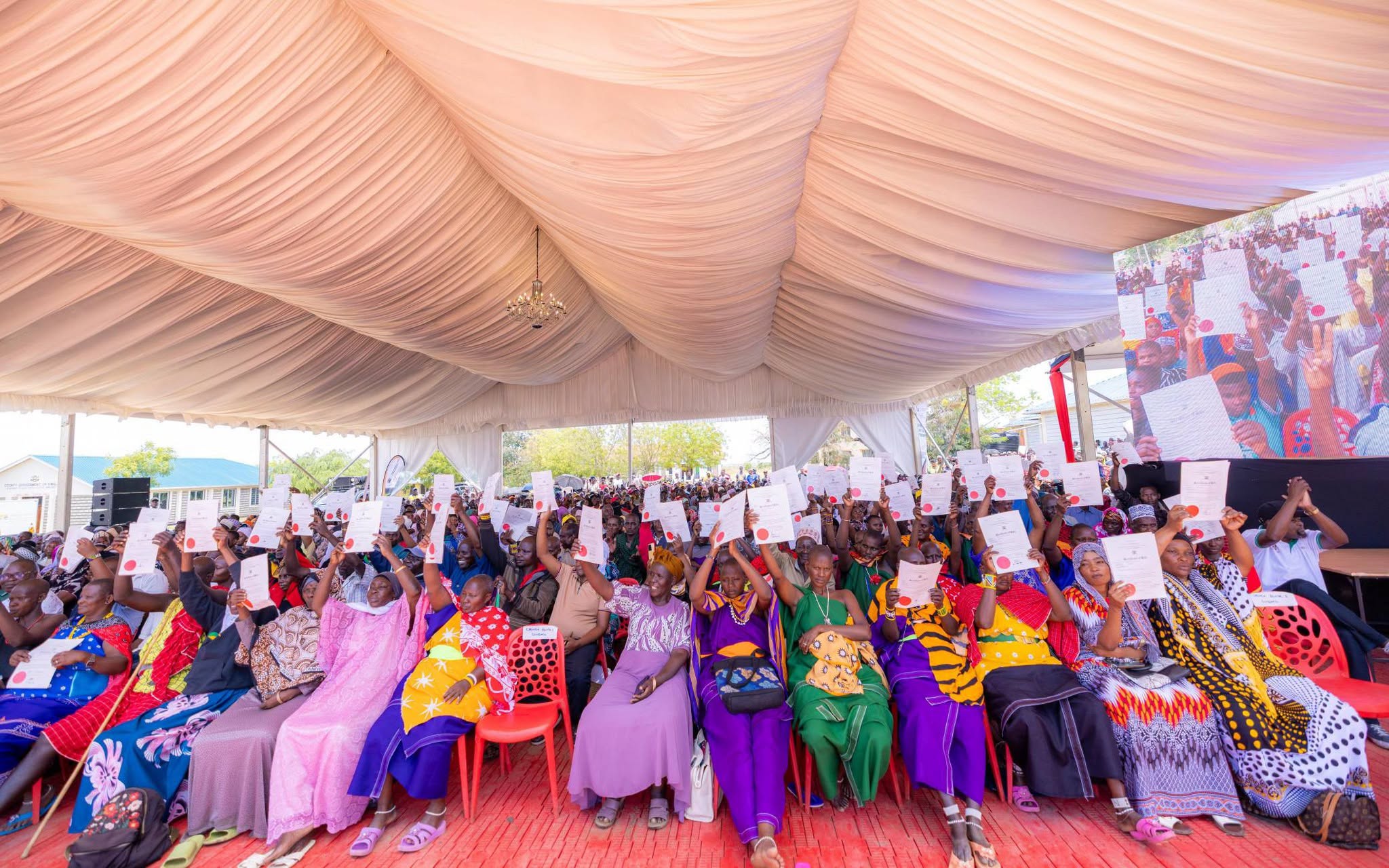
The government is targeting the issuance of at least 500,000 more title deeds in the Coastal region, building on an ongoing programme aimed at strengthening land ownership, resolving historical disputes and improving security of tenure.
-
The latest NTSA developments show that Kenya's matatu sector is entering another phase of regulatory and professional reforms. The authority is currently emphasizing qualified drivers and crew, roadworthy vehicles, proper licensing, maintenance records, authorised routes and responsible management o
-
Kenyan TikTok personality Patrick Mbacio, popularly known as “Patrick The Truth,” has died after being found dead inside his home in Nakuru, bringing to an abrupt end the life of a social-media figure who rose to fame through viral videos about his relationships, lifestyle and interactions with
-
Aliko Dangote's journey has moved from commodity trading to one of Africa's largest industrial empires. His businesses now span cement, fertiliser, sugar, food products, petrochemicals, oil refining, logistics and related industries. Forbes currently estimates his wealth at approximately $31.4 billi
-
Lang’ata MP Jalang’o has announced a candle-lighting ceremony at Uhuru Park this Friday to commemorate the life and legacy of the late Raila Odinga.