



NTSA Unveils Tough New Matatu Rules: Drivers, SACCOs and Vehicle Owners Face Major Changes in Kenya
The latest NTSA developments show that Kenya's matatu sector is entering another phase of regulatory and professional reforms. The authority is currently emphasizing qualified drivers and crew, roadworthy vehicles, proper licensing, maintenance records, authorised routes and responsible management of PSV businesses. At the same time, proposed legislation could give NTSA a stronger role in regulating the inspection and conformity assessment of matatus and other PSVs. However, those proposed changes remain subject to the legislative process and public participation. For passengers, the central issue is safety and reliability. For matatu operators, the developments mean greater attention to compliance, documentation, vehicle maintenance, driver qualifications and professional management. The coming weeks will be important as public views on the proposed law are collected and Parliament considers the future regulatory framework for Kenya's public transport sector.
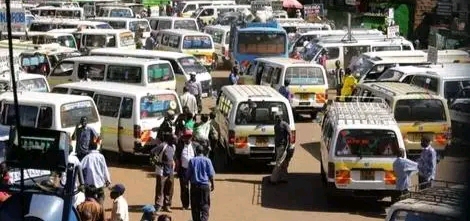
The National Transport and Safety Authority (NTSA) has intensified efforts to improve safety and professionalism in Kenya’s matatu sector, with operators facing renewed requirements concerning drivers, vehicles, routes and management. The latest developments come as the authority continues implementing reforms aimed at reducing road crashes and improving the way public service vehicles (PSVs) operate across the country.
NTSA’s latest message to matatu operators
As of September 29, 2026, NTSA’s current focus is on ensuring that public service vehicle operators comply with existing safety requirements while broader reforms affecting the matatu industry are being considered.
The authority recently directed PSV operators to make sure that their drivers and other crew members are properly qualified, verified and supervised. It also emphasized that matatus must be properly licensed, inspected and maintained in roadworthy condition.
Operators are expected to keep proper maintenance records showing that vehicles are regularly checked. The requirements are part of efforts to shift the sector towards a more professional system where responsibility for the safety of passengers can be clearly established.
NTSA also wants operators to ensure that their vehicles use authorised routes and make lawful stops. Under the Traffic Act, a PSV driver who picks up or drops off passengers at an unauthorised bus stop or designated terminal can face a KSh3,000 fine.
Proposed changes to matatu inspection
One of the major developments currently attracting attention is a proposed amendment to the NTSA law that would give the authority a stronger role in regulating how matatus and other PSVs are assessed for safety and conformity.
The NTSA Amendment Bill, 2026 is currently going through the legislative process, meaning the proposed changes should not be treated as already fully operational law.
The Senate's Standing Committee on Roads and Transportation has opened public participation on the proposal and invited Kenyans, including matatu operators and motorists, to submit their views. The deadline given is October 8, 2026, at 5 p.m.
Under the proposed framework, NTSA would register and license inspectors responsible for checking whether PSV bodies meet the required technical standards.
The proposed system would also seek to ensure that inspectors are independent. An assessor seeking a licence would not be allowed to have interests in the design, manufacture, supply, installation, purchase, ownership or maintenance of the vehicle being assessed.
The proposal would further allow NTSA to establish criteria for conformity assessments, designate assessors to inspect PSVs every three years and conduct periodic audits of licensed assessors.
Why the reforms matter to matatu owners
Matatus are a critical part of Kenya's public transport system, carrying millions of passengers every day. However, safety concerns, vehicle conditions, reckless driving and poor management have continued to generate concern.
NTSA's latest approach therefore places responsibility not only on individual drivers but also on the companies, SACCOs and other operators managing public transport vehicles.
The authority has emphasized that operators need clear management structures showing who is responsible for different parts of the business. This includes responsibility for drivers, vehicles, routes and operational compliance.
This means that matatu operators cannot simply view compliance as the responsibility of the driver alone. Owners and managers are also expected to ensure that vehicles and crews meet the necessary requirements.
Training for thousands of matatu workers
Another major component of the current reforms is professional training.
NTSA launched a nationwide capacity-building programme in September targeting more than 4,000 matatu drivers, SACCO managers and transport company supervisors.
The programme is intended to improve professionalism and strengthen the safety culture within the PSV sector. NTSA has linked the training to the need to address behavioural, vehicle-related and operational factors that contribute to preventable road crashes.
The second phase of the training began on September 28 and is scheduled to run until October 1, 2026, covering Nakuru, Uasin Gishu and Trans-Nzoia counties. Both PSV drivers and operators are being targeted.
The training programme represents an attempt to address the sector through education and professional development rather than relying exclusively on roadside enforcement.
What passengers should expect
For passengers, the reforms are particularly important because the condition of a matatu, the qualifications of its driver and the manner in which it operates directly affect their safety.
NTSA's requirements mean passengers should increasingly encounter vehicles that are properly licensed, inspected and maintained. Drivers are also expected to be properly qualified and supervised.
The emphasis on authorised routes and lawful passenger pick-up points is also intended to reduce dangerous roadside stopping and other practices that can expose passengers and other road users to unnecessary risks.
The issue of matatu inspection
The proposed inspection reforms come amid concerns about the existing arrangement for assessing PSV bodies.
According to information presented during the public participation process, the Kenya Association of Bus Manufacturers currently handles safety and conformity assessments for PSVs. Parliament has raised concerns about the potential conflict of interest in such an arrangement.
The proposed amendment would establish a framework under which assessors would need NTSA licences and would have to meet independence requirements.
If eventually enacted, the changes could significantly alter how new and existing PSV bodies are assessed for compliance.
However, because the amendment is still going through the legislative process, matatu owners and passengers should distinguish between current NTSA requirements and proposals contained in the Bill.
Earlier NTSA regulations faced parliamentary action
The current debate comes after Parliament dealt with several NTSA regulations earlier this month.
On September 8, 2026, the Senate annulled three statutory instruments, including the Traffic (Motor Vehicle Inspection) Rules, 2026 and the NTSA (Operation of Commercial Vehicles) Regulations, 2026, after concerns about public participation.
The development illustrates the importance of public participation in transport regulations. New requirements affecting drivers, vehicle owners and passengers must go through the applicable legal and parliamentary processes.
The Ministry of Roads and Transport had previously presented regulations covering vehicle inspection, school transport, drink-driving and commercial service vehicles, with the stated objective of improving road safety and accountability.
Matatu graffiti and tinted windows
NTSA's enforcement efforts have also extended to the appearance and modification of matatus.
Earlier this year, the High Court upheld NTSA's directive concerning PSVs fitted with graffiti, artistic designs and tinted windows. The authority argued that excessive artwork could obscure important identification details such as the SACCO or company information, route details and the continuous yellow line identifying licensed PSVs.
The court's decision cleared the way for enforcement of the directive.
This is part of a wider approach in which NTSA is seeking to ensure that public service vehicles remain easily identifiable and comply with prescribed safety and operational requirements.
What matatu operators need to pay attention to
With NTSA intensifying reforms, operators should pay close attention to several areas.
First, drivers and crew should have the necessary qualifications and documentation. Second, vehicles should remain properly licensed, inspected and maintained. Third, operators should keep maintenance records and ensure vehicles remain roadworthy.
Fourth, operators should ensure that their businesses are properly registered and managed. Fifth, vehicles should operate on authorised routes and use designated passenger pick-up and drop-off points.
Finally, operators should follow developments surrounding the proposed NTSA Amendment Bill and participate in the public participation process where relevant.

You Might Also Like
-
Ameliah Cherotich from Keringet, Kuresoi South, is battling a serious heart condition and urgently needs specialised treatment in India. Her family is seeking KSh 2.5 million and is appealing to leaders, well-wishers and the community for support.
-
The government is targeting the issuance of at least 500,000 more title deeds in the Coastal region, building on an ongoing programme aimed at strengthening land ownership, resolving historical disputes and improving security of tenure.
-
Kenyan TikTok personality Patrick Mbacio, popularly known as “Patrick The Truth,” has died after being found dead inside his home in Nakuru, bringing to an abrupt end the life of a social-media figure who rose to fame through viral videos about his relationships, lifestyle and interactions with
-
Aliko Dangote's journey has moved from commodity trading to one of Africa's largest industrial empires. His businesses now span cement, fertiliser, sugar, food products, petrochemicals, oil refining, logistics and related industries. Forbes currently estimates his wealth at approximately $31.4 billi
-
Lang’ata MP Jalang’o has announced a candle-lighting ceremony at Uhuru Park this Friday to commemorate the life and legacy of the late Raila Odinga.
-
Kalonzo Musyoka has highlighted his long political partnership with the late Raila Odinga, recalling his support for Raila in successive presidential elections as he seeks to connect with Nyanza voters.