



KINDIKI URGES THOSE WHO LOSE TO REMAIN HOPEFUL FOR ANOTHER OPPORTUNITY
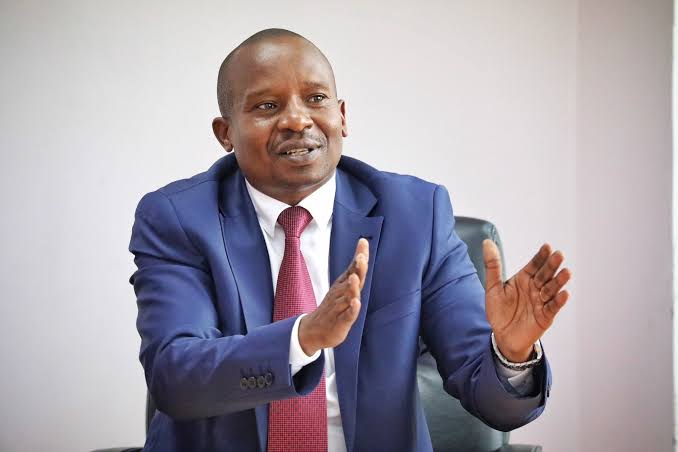
Deputy President Kithure Kindiki has urged those who may lose in the current political contests to remain hopeful, saying that God may give them another opportunity in the future.
Deputy President Kithure Kindiki has urged Kenyans who may not achieve their political or personal ambitions at the current stage to remain hopeful, saying that losing an opportunity today does not mean the end of the road.
Kindiki said those who fail to succeed should remain patient and trust that they could receive another opportunity in the future.
The Deputy President's remarks come at a time when political activity in the country is gaining momentum ahead of the 2027 General Election, with politicians across the political divide positioning themselves for various elective and leadership positions.
His message appeared to focus on the changing nature of political fortunes, where individuals may succeed at one point and lose at another, while opportunities can arise again in the future.
Kindiki urged those who may not achieve their desired goals to accept the outcome and continue believing that another chance could come their way.
The Deputy President's remarks also touched on the unpredictable nature of leadership and public service. In politics, candidates compete for positions, and not everyone who seeks an elective seat can emerge successful.
The statement therefore carried a message of patience to individuals who may face disappointment as political contests become more competitive.
According to Kindiki, those who lose should not necessarily view the setback as a permanent defeat. Instead, they should remain hopeful and wait for another opportunity.
He invoked faith in God, suggesting that those who do not succeed at one point could be given another chance in the future.
The remarks come against the backdrop of growing political competition as parties and politicians prepare for the next General Election.
Across the country, potential candidates are increasingly making their ambitions known, while political parties continue to reorganise and build alliances ahead of the polls.
The political environment has already witnessed increased mobilisation, public meetings and discussions about possible candidates and coalitions.
For many politicians, winning an election represents an important opportunity to serve the public, implement policies and pursue their political ambitions.
However, electoral competition also means that some candidates will inevitably lose.
Kindiki's message suggests that such losses should not necessarily mark the end of a political career.
Instead, unsuccessful candidates can continue engaging with their communities, strengthening their networks and waiting for future opportunities.
Kenyan politics has historically seen individuals lose elections and later return to political contests, sometimes successfully.
Political careers can therefore take different paths, with some leaders moving in and out of elective positions over time.
The Deputy President's remarks can also be viewed in the broader context of leadership and public service, where opportunities are not always available at the time an individual desires them.
A candidate may fail to secure a party nomination, lose an election or miss out on an appointment, but that setback does not necessarily prevent them from pursuing another opportunity later.
Kindiki's emphasis on hope and patience comes as political actors prepare for what is expected to be another highly competitive election cycle.
The 2027 General Election will involve contests for the presidency, Parliament and county assemblies, creating numerous opportunities for political competition at both national and local levels.
Political parties are expected to nominate candidates for different positions, while independent candidates may also seek to participate in the elections.
For aspirants, the period leading to an election can be challenging because of the financial, organisational and political demands associated with campaigns.
Some candidates may also face stiff competition from experienced political figures.
Kindiki's message therefore offers a broader reminder that political ambitions can require patience and resilience.
Those who fail to secure a position at one stage can continue participating in public affairs and potentially seek another opportunity later.
The Deputy President's reference to God also reflects the role that faith often plays in public discourse in Kenya.
Political leaders frequently invoke faith when addressing supporters, particularly when discussing success, setbacks, leadership and the future.
For supporters and aspirants facing uncertainty, such messages can provide encouragement to remain engaged rather than abandoning their ambitions after one setback.
At the same time, political contests remain governed by constitutional and electoral processes. Candidates seeking elective positions must meet the requirements set out in Kenyan law and comply with the rules established by the Independent Electoral and Boundaries Commission.
Winning or losing an election ultimately depends on the votes cast by eligible voters and the outcome declared through the established electoral process.
Kindiki's statement does not change that reality, but instead speaks to how individuals can respond to political setbacks.
The message of waiting for another chance may particularly resonate with politicians who have previously contested elections without success or those who may fail to secure their preferred positions in the next election.
Kenyan political history contains numerous examples of leaders who experienced electoral defeats before returning to public office.
Such developments demonstrate that political careers can evolve over time.
An unsuccessful candidate may later seek another elective position, receive a party nomination or take part in public service through a different route.
However, the timing and circumstances of such opportunities are unpredictable.
For this reason, Kindiki encouraged those who lose to remain patient and hopeful rather than assuming that one setback determines their entire future.
The Deputy President's remarks also come at a period when political alignments are changing rapidly.
Leaders are forming new partnerships, parties are seeking stronger support and politicians are assessing their prospects ahead of the next election.
These changes mean that individuals who appear politically disadvantaged at one point could find new opportunities as alliances and circumstances change.
Similarly, those who currently hold influential positions may face competition when the country goes to the polls.
The political environment is therefore constantly evolving.
Kindiki's message of patience could be interpreted as an appeal to political actors to accept electoral outcomes and remain committed to peaceful democratic participation.
Elections are competitive by nature, and peaceful acceptance of results is an important part of democratic processes.
Candidates and supporters are expected to use established legal mechanisms when challenging electoral outcomes rather than resorting to violence or intimidation.
The message also places emphasis on the idea that leadership opportunities can arise at different stages of a person's life.
An individual who fails to secure a particular position today may pursue another opportunity tomorrow.
For aspiring leaders, setbacks can also provide an opportunity to reassess their strategies, strengthen their connection with voters and prepare for future contests.
The Deputy President's comments therefore come at a time when many political aspirants are already considering their next steps.
As the 2027 election approaches, some politicians will secure nominations while others will be forced to reconsider their plans.
Some will win elections, while others will lose.
Kindiki's message is that losing should not necessarily be viewed as the final chapter.
Instead, those who do not succeed should remain hopeful that another opportunity may come in the future.
His appeal for patience also reflects the reality that political opportunities can depend on changing circumstances, party structures, public opinion and electoral dynamics.
For supporters, the message is equally a reminder that political contests should not permanently divide communities.
Candidates compete for positions, but elections eventually end, and leaders and citizens must continue working together after the contest.
The Deputy President's remarks therefore provide a broader message about resilience, patience and hope.
Those who succeed have an opportunity to serve, while those who lose can continue contributing to their communities and preparing for future opportunities.
As Kenya moves closer to the 2027 General Election, political competition is expected to intensify.
More candidates are likely to announce their ambitions, parties will begin strengthening their structures, and alliances will continue to evolve.
The outcome of these political contests will determine who secures various elective positions.
But for those who do not succeed, Kindiki's message is clear: a political setback today does not necessarily mean that there will be no opportunity tomorrow.
He urged those who lose to remain hopeful and trust in the possibility of another chance in the future.
Ultimately, the Deputy President's remarks highlight the importance of resilience in public life. Political careers can experience victories and defeats, and opportunities can emerge at different times.
For those facing disappointment, Kindiki's message is to remain patient, maintain hope and continue looking toward the future.

You Might Also Like
-
Ameliah Cherotich from Keringet, Kuresoi South, is battling a serious heart condition and urgently needs specialised treatment in India. Her family is seeking KSh 2.5 million and is appealing to leaders, well-wishers and the community for support.
-
The government is targeting the issuance of at least 500,000 more title deeds in the Coastal region, building on an ongoing programme aimed at strengthening land ownership, resolving historical disputes and improving security of tenure.
-
The latest NTSA developments show that Kenya's matatu sector is entering another phase of regulatory and professional reforms. The authority is currently emphasizing qualified drivers and crew, roadworthy vehicles, proper licensing, maintenance records, authorised routes and responsible management o
-
Kenyan TikTok personality Patrick Mbacio, popularly known as “Patrick The Truth,” has died after being found dead inside his home in Nakuru, bringing to an abrupt end the life of a social-media figure who rose to fame through viral videos about his relationships, lifestyle and interactions with
-
Aliko Dangote's journey has moved from commodity trading to one of Africa's largest industrial empires. His businesses now span cement, fertiliser, sugar, food products, petrochemicals, oil refining, logistics and related industries. Forbes currently estimates his wealth at approximately $31.4 billi
-
Lang’ata MP Jalang’o has announced a candle-lighting ceremony at Uhuru Park this Friday to commemorate the life and legacy of the late Raila Odinga.