PCEA Narok Breaks Long-Standing Taboo as Unmarried Men Are Allowed to Serve in Church Leadership
The decision by the PCEA congregation in Narok to break a longstanding taboo restricting unmarried men from church leadership marks a notable development in local religious life.A report on October 20 and another on October 19, 2026, the move challenges a tradition that treated marriage as a prerequisite for men seeking certain church leadership positions. The development has opened a wider conversation about Christian service, fairness, tradition and the qualifications expected of church leaders. While marriage remains important to many Christian families and communities, the Narok decision raises the question of whether marital status alone should determine a person's ability to contribute to church leadership.
The Presbyterian Church of East Africa (PCEA) in Narok County has made headlines after officially breaking a long-standing tradition that prevented unmarried men from taking up leadership responsibilities in the church. The development marks a significant moment in the church's relationship with traditional beliefs, religious leadership and the participation of single men in church affairs.
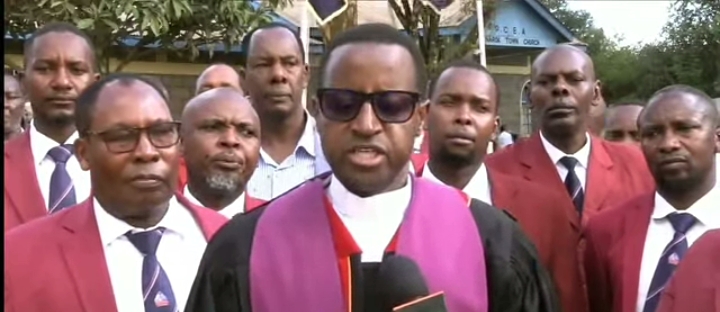
According to a report on October 20, 2026, the PCEA Narok congregation held a ceremony to formally break the longstanding taboo that had restricted unmarried men from serving in church roles. A separate report on October 19 also highlighted the decision to allow bachelors to assume church leadership positions.The Presbyterian Church of East Africa (PCEA) in Narok County has made headlines after officially breaking a long-standing tradition that prevented unmarried men from taking up leadership responsibilities in the church. The development marks a significant moment in the church's relationship with traditional beliefs, religious leadership and the participation of single men in church affairs.
According to a report on October 20, 2026, the PCEA Narok congregation held a ceremony to formally break the longstanding taboo that had restricted unmarried men from serving in church roles. A separate report on October 19 also highlighted the decision to allow bachelors to assume church leadership positions. The tradition that restricted unmarried men
For a long time, unmarried men in the affected PCEA community in Narok faced restrictions that prevented them from holding certain church leadership positions. Under the tradition, marriage was treated as an important condition for men who wanted to assume responsibilities in church affairs.
This meant that a man could be an active Christian, attend worship services, participate in church activities and demonstrate commitment to his faith, yet still face barriers to particular leadership roles because he had not married.PCEA Narok holds a ceremony to break the taboo
The decision was publicly marked through a ceremony that symbolised the end of the long-standing restriction against unmarried men serving in church leadership.
A report on October 20, 2026, that the church held an official ceremony to break the taboo. The event highlighted a shift away from a tradition that had prevented unmarried men from taking up certain church responsibilities.
Such a ceremony carries significance beyond the symbolic act itself. It communicates that the congregation is prepared to reconsider a practice that has shaped participation in church leadership for years.Why the decision is important to unmarried men
One of the most important aspects of the development is its potential impact on unmarried men who have remained committed to their church.
Many single men actively participate in Christian life through prayer, evangelism, Bible study, youth programmes, community outreach and other activities. Some may also have the education, leadership skills and personal qualities needed to undertake greater responsibilities.
A restriction based primarily on marital status can leave such individuals feeling excluded, even when they are willing and qualified to serve.The relationship between tradition and Christian teachings
The Narok development has brought attention to an important issue in religious life: the relationship between long-established traditions and the principles of Christian faith.
Church traditions can provide order, continuity and a shared identity among members. They can also reflect the historical experiences and cultural values of the communities in which congregations operate.
However, traditions may be reconsidered when church members question whether a particular practice is consistent with biblical teachings, fairness and the mission of the church.PCEA's wider approach to ministerial service
The issue also needs to be distinguished from the formal process of becoming an ordained minister in the PCEA.
According to the denomination's published information, candidates for ordained ministry undergo a structured process involving church-level assessment, theological training and practical preparation. The church has explained that student ministers complete practical service and undergo exit interviews before progressing toward licensing and ordination. Possible reactions from church members
The development is likely to generate different opinions among members, reflecting the importance of tradition in religious communities.
Some members may welcome the move as a progressive step that gives committed unmarried men a fairer opportunity to contribute to church leadership. They may argue that commitment to God, integrity, service and spiritual maturity should be more important than marital status alone.
Others may prefer the traditional approach, believing that marriage provides valuable experience for people entrusted with guiding families and advising members on domestic matters.What the decision means for the future
The breaking of the taboo could become an important reference point in future discussions about leadership, inclusion and religious traditions within the PCEA community.
It also raises broader questions about how churches can preserve their identity while reviewing practices that may limit participation.
For the change to have a lasting impact, the congregation will need clarity about which positions unmarried men can occupy, what qualifications are required and how those entrusted with responsibilities will be held accountable.It would also be useful for church officials to communicate whether the decision is specific to the Narok congregation or connected to wider denominational guidance.
Such clarification would prevent misunderstandings and help members distinguish between a local traditional practice and the formal rules of the wider church.
Ultimately, the value of the change will be measured not only by the ceremony that marked the breaking of the taboo, but also by how the congregation puts its decision into practice.

You Might Also Like
-
President William Ruto has honoured nurse Jacobeth Jeptoo for her courage, compassion, and selfless service following the tragic February helicopter crash in Nandi County that claimed the lives of Emurua Dikirr MP Johana Ng’eno and five other people. The recognition highlights the vital role playe
-
Inspector General Douglas Kanja's approval of promotions for 1,948 police officers marks a significant development in Kenya's police administration following the Court of Appeal's October 16, 2026, judgment. The ruling resolved a major dispute over the authority to manage uniformed police officers,
-
Governor Jonathan Bii's speech during the October 20, 2026, Mashujaa Day celebrations in Eldoret placed the protection of fertile agricultural land and support for farmers at the centre of an important national discussion. His appeal was for Kenyans to balance the growing demand for housing with th
-
Ethiopian Prime Minister Abiy Ahmed's address at the 2026 Mashujaa Day celebrations in Eldoret centred on a clear message: Kenya and Ethiopia should transform their historical friendship into shared economic progress. He called for stronger trade, improved opportunities for farmers and producers, c
-
President William Ruto has praised Kenya’s broad-based government, commending leaders who set aside political differences to promote cooperation and national development. He noted that the partnership demonstrates how political competition can coexist with collective efforts to address the country
-
President William Ruto has called for constructive political debate, greater accountability and transparency in government, emphasising that no public programme or leader should be exempt from scrutiny. He urged leaders and Kenyans to examine competing policies, question their costs and demand measu