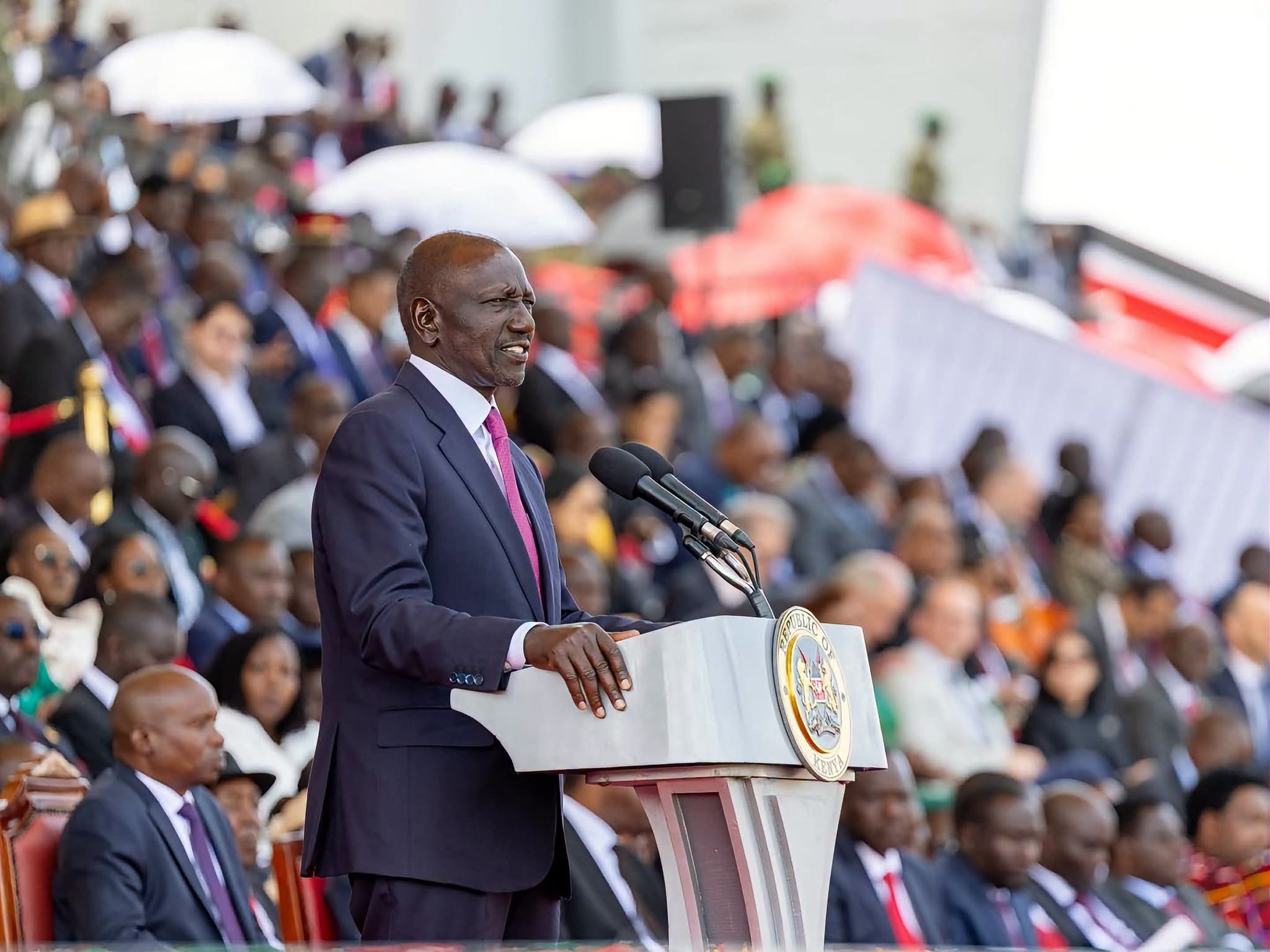
President William Ruto has praised Kenya’s broad-based government, describing it as an important milestone in the country’s political journey
President William Ruto has praised Kenya’s broad-based government, commending leaders who set aside political differences to promote cooperation and national development. He noted that the partnership demonstrates how political competition can coexist with collective efforts to address the country’s challenges. Ruto emphasised the importance of dialogue, unity and shared responsibility, while the success of the arrangement will ultimately depend on its ability to deliver meaningful results, strengthen governance and improve the lives of Kenyans.
President William Ruto has praised Kenya’s broad-based government, describing it as an important milestone in the country’s political journey and an opportunity for leaders from different political backgrounds to work together in pursuit of national development. The President commended those who chose to rise above partisan differences and embrace cooperation, saying their participation demonstrated that political competition does not have to prevent leaders from working together to address the country’s challenges.
Ruto’s remarks highlight the importance of dialogue, unity and shared responsibility in governance. He maintained that leaders can maintain different political beliefs and ambitions while still finding common ground on issues affecting the welfare of Kenyans. His message places emphasis on the need to prioritise national interests over political disagreements and create an environment in which different groups can contribute to the country’s development.
The establishment of the broad-based government marked a significant development in Kenya’s political landscape, bringing together leaders who had previously belonged to opposing political camps. The arrangement created an opportunity for greater consultation and cooperation at a time when the country was experiencing intense political debate over governance, economic policies and the cost of living.
By praising those who embraced the arrangement, Ruto sought to highlight the value of political maturity and the willingness to engage with people who hold different opinions. His remarks suggest that national progress requires more than competition for political power. It also depends on the ability of leaders to identify shared priorities, negotiate differences and cooperate in addressing issues that affect citizens across the country.
Kenya’s multiparty democracy allows political parties to compete for public support by presenting different policies and visions for the future. Such competition gives voters an opportunity to choose their preferred representatives and hold elected leaders accountable. However, the responsibility of governing requires consultation and collaboration, particularly when addressing challenges that demand long-term planning and coordinated action.
Ruto’s message reflects the view that political rivalry should not automatically lead to hostility or prevent cooperation on matters of national importance. Leaders can disagree over particular policies while still working together to improve infrastructure, strengthen public services, create employment opportunities and support economic growth.
For a country with diverse political interests and regional priorities, finding common ground can be important in maintaining stability and ensuring that development programmes continue despite changes in political alliances. Cooperation can also provide opportunities for leaders to exchange ideas and consider different approaches to addressing complex national problems.
The broad-based government has been presented as an opportunity to encourage this kind of collaboration. By bringing together political figures from different backgrounds, the arrangement can create a platform for dialogue and joint decision-making. However, its effectiveness will ultimately depend on whether the cooperation produces practical improvements in governance and the lives of ordinary Kenyans.
Political agreements alone cannot resolve the challenges facing the country. They must be accompanied by effective policies, responsible management of public resources and a clear commitment to delivering results. Citizens will continue to judge their leaders according to their ability to respond to pressing concerns, including unemployment, rising living costs, access to healthcare, education, housing and opportunities for businesses to grow.
Employment remains a major concern for many Kenyans, particularly young people entering the labour market and seeking reliable sources of income. Cooperation among political leaders could create opportunities to discuss policies that support investment, strengthen small businesses and improve access to vocational training. Such efforts could help expand economic opportunities and enable more people to participate in productive activities.
Agriculture is another area where cooperation can contribute to national development. The sector supports millions of livelihoods and plays an important role in food production, trade and economic activity. Farmers require reliable access to markets, affordable inputs, suitable infrastructure and information that can help them improve productivity. Policies designed to address these needs require planning, adequate funding and coordination among different government institutions.
Healthcare and education also remain important priorities for households across the country. Improving access to quality medical services, ensuring the availability of essential medicines and strengthening health facilities require sustained attention. Similarly, improving education depends on appropriate infrastructure, sufficient learning resources and policies that respond to the needs of students and teachers.
Political cooperation can help create an environment in which these priorities receive attention beyond party divisions. Leaders who share responsibility for national governance can work towards common objectives while bringing different perspectives to policy discussions. Nevertheless, cooperation must not become a substitute for accountability or prevent the public from questioning government decisions.
Ruto’s remarks also underline the importance of stability in governance. Political confrontation can sometimes create uncertainty and make it difficult to maintain consistent policies, particularly when development projects require several years to complete. An environment that encourages dialogue may help leaders resolve disagreements and focus on programmes that require sustained attention.
Stability can also be important for businesses and investors, who often need predictable policies and clear regulations when making financial decisions. When government institutions operate effectively and political disputes are managed through established procedures, businesses may find it easier to plan for the future and assess investment opportunities.
However, stability should not be interpreted as the absence of criticism. A healthy democracy depends on the freedom of citizens, political parties, journalists and civil society organisations to question government actions and demand explanations. Political cooperation should therefore coexist with strong oversight and respect for democratic principles.
The broad-based government must also demonstrate that its decisions are guided by public interests rather than the personal ambitions of political leaders. Citizens expect political arrangements to produce meaningful benefits, not simply create opportunities for individuals or parties to gain influence. Transparency in decision-making and the responsible use of public resources are essential to maintaining public confidence.
Ruto’s appreciation for leaders who embraced cooperation also draws attention to the role of dialogue and compromise in resolving political differences. In a diverse political environment, leaders may have contrasting views about taxation, economic policy, public spending and the management of government programmes. These differences are part of democratic politics, but they do not have to prevent the search for practical solutions.
Dialogue allows political actors to explain their positions, understand competing perspectives and identify areas where agreement is possible. Compromise can help bridge disagreements when leaders recognise that achieving a shared objective may require adjustments to their original positions.
For such cooperation to remain meaningful, however, political agreements must respect the Constitution, established institutions and the rights of citizens. Leaders should also be prepared to explain the decisions they make and demonstrate how those decisions serve the public interest. Transparency can help ensure that cooperation strengthens governance rather than weakens accountability.
The opposition also has an important role in Kenya’s democratic system. Opposition leaders are expected to scrutinise government policies, identify weaknesses and present alternative approaches to national challenges. Their participation helps ensure that decisions are examined from different perspectives and that the government remains answerable to the public.
Constructive criticism can improve policymaking when it is supported by evidence and accompanied by practical recommendations. At the same time, the government has a responsibility to listen to legitimate concerns and respond with explanations rather than dismissing every criticism as political hostility.
The ability to balance cooperation with scrutiny is essential to the success of any broad-based political arrangement. Political parties should retain the freedom to express different views and prepare alternative policies, while leaders should remain willing to work together where national interests require collective action.
Kenyans also have an important role in determining whether political cooperation delivers the expected benefits. Citizens can participate in public consultations, engage their elected representatives and raise concerns about the delivery of services in their communities. Their feedback can help authorities identify problems and make decisions that better reflect local needs.
Public participation is particularly important when government programmes affect essential services, local development projects and the allocation of public resources. Communities need reliable information about proposed projects, implementation timelines and the results achieved. Such information allows citizens to assess whether government commitments are being fulfilled.
Accountability should remain a continuous process rather than an activity limited to election periods. Leaders must explain their decisions, provide updates on their commitments and address shortcomings when programmes fail to achieve their objectives. Cooperation among political groups should strengthen these responsibilities instead of allowing them to become less clear.
The broad-based government also faces the challenge of ensuring that different regions and communities benefit fairly from national development. Kenya’s citizens have diverse economic circumstances and development needs, and public policies should respond to these differences without unfairly excluding particular groups.
National unity does not require every citizen to support the same political party or agree with every government decision. Instead, it requires respect for different opinions, peaceful engagement and a shared commitment to the country’s constitutional principles. Political leaders can contribute to this environment by encouraging responsible debate and avoiding unnecessary hostility.
Ruto’s remarks present cooperation as a way of demonstrating that political differences need not become permanent barriers to national progress. The broader message is that leaders can compete for political support while still recognising their shared responsibility to serve the public.
Nevertheless, the success of the arrangement will be measured by its practical outcomes. Kenyans will want to see improvements in service delivery, responsible management of public funds, expanded economic opportunities and policies that respond to the challenges facing households and businesses. They will also expect leaders to remain accountable for the decisions they make.
As the country continues to navigate its political and economic challenges, the ability of leaders to engage constructively will remain important. Cooperation can create opportunities for shared planning and problem-solving, but it must be supported by transparency, effective institutions and a clear commitment to public welfare.
Ultimately, President William Ruto’s praise of the broad-based government reflects the importance of finding common ground in a competitive political environment. By commending leaders who set aside partisan differences, he has highlighted the possibility of combining democratic competition with cooperation on national priorities.
The lasting value of the arrangement will depend on whether it delivers tangible improvements in the lives of Kenyans, strengthens public trust and ensures that government decisions remain open to scrutiny. Political alliances may create opportunities for dialogue, but meaningful progress requires effective leadership, responsible policymaking and a willingness to listen to citizens.
For Kenya, the central challenge is to ensure that cooperation translates into practical solutions for the country’s economic and social needs. Leaders must continue to respect political differences while working together where shared interests demand collective action. If guided by accountability, transparency and a genuine commitment to national development, cooperation can contribute to stronger institutions and a more responsive government.
Ruto’s message ultimately reinforces the idea that political competition and national cooperation can exist side by side. The responsibility now rests with leaders and institutions to demonstrate that this principle can produce lasting benefits for the people of Kenya.

You Might Also Like
-
The decision by the PCEA congregation in Narok to break a longstanding taboo restricting unmarried men from church leadership marks a notable development in local religious life.A report on October 20 and another on October 19, 2026, the move challenges a tradition that treated marriage as a pre
-
President William Ruto has honoured nurse Jacobeth Jeptoo for her courage, compassion, and selfless service following the tragic February helicopter crash in Nandi County that claimed the lives of Emurua Dikirr MP Johana Ng’eno and five other people. The recognition highlights the vital role playe
-
Inspector General Douglas Kanja's approval of promotions for 1,948 police officers marks a significant development in Kenya's police administration following the Court of Appeal's October 16, 2026, judgment. The ruling resolved a major dispute over the authority to manage uniformed police officers,
-
Governor Jonathan Bii's speech during the October 20, 2026, Mashujaa Day celebrations in Eldoret placed the protection of fertile agricultural land and support for farmers at the centre of an important national discussion. His appeal was for Kenyans to balance the growing demand for housing with th
-
Ethiopian Prime Minister Abiy Ahmed's address at the 2026 Mashujaa Day celebrations in Eldoret centred on a clear message: Kenya and Ethiopia should transform their historical friendship into shared economic progress. He called for stronger trade, improved opportunities for farmers and producers, c
-
President William Ruto has called for constructive political debate, greater accountability and transparency in government, emphasising that no public programme or leader should be exempt from scrutiny. He urged leaders and Kenyans to examine competing policies, question their costs and demand measu