Police Arrest Mombasa Woman for Allegedly Preventing Daughter from Sitting KPSEA Over Number 666
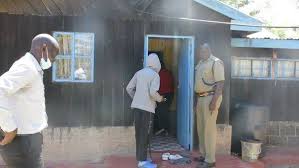
Police in Mombasa have reportedly arrested a woman accused of preventing her daughter from sitting the Kenya Primary School Education Assessment (KPSEA) after objecting to the examination number assigned to the child, claiming that it contained the satanic number 666. The incident has sparked debate about religious beliefs, parental responsibility and the right of every child to access education. The KPSEA assessment is an important milestone for Grade Six learners as they prepare to transition to junior school under the Competency-Based Curriculum. The case highlights the importance of parents seeking clarification from school administrators and examination authorities when concerns arise over registration details. Authorities are expected to establish the circumstances surrounding the incident, while the child's welfare and continued access to education remain key concerns. An arrest does not amount to a conviction, and the allegations will need to be addressed through the appropriate legal process.
Police in Mombasa have reportedly arrested a woman accused of preventing her daughter from sitting the Kenya Primary School Education Assessment (KPSEA) after she allegedly objected to the examination number assigned to the child, claiming it was satanic because it contained the number 666.
The incident has drawn attention to the challenges that can arise when personal beliefs and interpretations of religious symbols interfere with children's access to education. It has also raised questions about parental responsibility, the protection of learners' rights and the importance of helping parents understand examination procedures.
The Kenya Primary School Education Assessment is an important part of the country's competency-based education system. It is administered to Grade Six learners as they complete the primary school level and prepare to transition to junior school. The assessment helps evaluate learners' progress under the Competency-Based Curriculum (CBC).
For learners, sitting the assessment is an important educational milestone. Parents, teachers and education officials are expected to work together to ensure that children participate without unnecessary disruption.
In the Mombasa incident, the woman is reported to have objected to the number allocated to her daughter, reportedly interpreting 666 as a satanic symbol. Her alleged refusal to allow the child to sit the assessment prompted police intervention.
The circumstances surrounding the incident highlight the importance of understanding that examination numbers are administrative identifiers used to distinguish candidates and organise assessment processes. Such numbers are generally assigned through established procedures and do not, in themselves, carry any religious or spiritual meaning.
The incident has also renewed discussions about the relationship between religious beliefs and formal education in Kenya. While freedom of religion is protected under the Constitution, concerns arise when a child's education is interrupted because of beliefs held by a parent or guardian.
Kenya's education system brings together learners from different religious, cultural and social backgrounds. Schools are expected to provide an environment where children can learn and progress academically while their families continue to observe their religious beliefs.
The challenge in situations such as the one reported in Mombasa is finding a way to address parental concerns without compromising the child's right to education. Education officials, school administrators and child protection agencies may be required to intervene where a learner's access to education is threatened.
The right to education is recognised under Article 53 of Kenya's Constitution, which provides that every child has the right to free and compulsory basic education. The Constitution also states that the best interests of a child are of paramount importance in every matter concerning the child.
These provisions place a responsibility on parents, guardians, schools and government institutions to protect children from circumstances that could interfere with their education and development.
For parents, supporting a child through national assessments involves ensuring that the learner attends school, receives the necessary preparation and participates in the examinations according to the established guidelines. Parents also play an important role in helping children manage anxiety and understand that assessments are part of their academic journey.
The KPSEA assessment is designed to evaluate learners' progress rather than determine their entire future through a single examination. The results contribute to understanding learners' educational development and informing their transition to the next stage of learning.
The assessment process requires coordination between the Kenya National Examinations Council, schools, teachers and parents. Candidate registration and identification procedures help examination officials organise the exercise, maintain accurate records and ensure that learners are properly identified.
Consequently, a candidate's allocated number should be treated as an administrative reference unless there is evidence of an actual error in the registration process. If a parent believes that a learner's examination details are incorrect, the appropriate response is to contact the school administration or the relevant examination authorities for clarification.
This approach allows genuine concerns to be addressed through established channels without disrupting a child's participation in the assessment.
The Mombasa case also highlights the importance of communication between schools and families. Parents may sometimes misunderstand examination procedures or become concerned about information they do not fully understand. Clear explanations from teachers and school administrators can help resolve such concerns before they escalate.
Schools can support parents by explaining how candidates are registered, how examination numbers are allocated and what the numbers mean in the assessment process. Such communication can reduce confusion and help families make informed decisions concerning their children's education.
Religious leaders can also contribute by encouraging parents to support children's learning while addressing spiritual concerns in ways that do not deprive minors of essential services and opportunities. Dialogue between families, educators and religious communities can help prevent misunderstandings from developing into situations that require police intervention.
However, the circumstances of the reported arrest must be established through the appropriate authorities. It is important to distinguish between allegations made against a parent and facts confirmed through an official investigation or court process.
An arrest does not automatically establish guilt. The woman is entitled to due process, and any decision concerning possible criminal responsibility must be made in accordance with the law and based on the evidence presented.
At the same time, the child's welfare remains a central concern. Authorities responsible for child protection may need to establish whether the learner missed the assessment, whether arrangements can be made to address any disruption and what support may be necessary to safeguard the child's continued education.
Where a child has missed an examination, the relevant school and examination authorities would need to clarify the available procedures and any applicable requirements. It would be inappropriate to assume that a special sitting or another remedy is automatically available without confirmation from the responsible authorities.
The incident comes as Kenya continues implementing the Competency-Based Curriculum, which places emphasis on learners' abilities, practical skills and progressive development. The system requires cooperation among schools, families and education authorities to ensure that children receive the support needed to advance through the various learning stages.
Assessments are part of this process, helping teachers and education officials understand learners' progress and identify areas where additional support may be required. Ensuring that children participate in scheduled assessments is therefore an important part of maintaining continuity in their education.
The reported dispute over the number 666 illustrates how misunderstandings surrounding symbols and numbers can affect decisions with consequences for children. Although individuals may attach personal or religious interpretations to particular numbers, examination registration numbers serve an administrative purpose within the education system.
Parents who have questions about an assigned number can seek clarification from the relevant institutions rather than making decisions that could prevent their children from participating in school activities.
The case also offers a wider lesson about protecting children's interests when disagreements arise between parents and institutions. Children depend on adults to make decisions that support their safety, education and development. When adult concerns threaten to interrupt those opportunities, constructive intervention may be necessary.
As investigations into the reported incident proceed, further information from police, education officials or the child's school would help clarify the circumstances surrounding the alleged refusal and the steps taken to resolve the matter.
For now, the case has brought renewed attention to the importance of parental cooperation, accurate information and the protection of learners' educational rights. It also underlines the need for authorities to handle such incidents carefully, balancing the rights of parents with the responsibility to safeguard children.
Every learner deserves an opportunity to pursue education without unnecessary disruption. Parents, teachers, religious leaders and government institutions all have a role to play in ensuring that personal disagreements or misunderstandings do not prevent children from accessing learning and assessment opportunities.
The reported incident in Mombasa serves as a reminder that concerns about examination procedures should be addressed through proper channels, with the child's best interests remaining the priority.

You Might Also Like
-
Police are hunting a 25-year-old man accused of killing his elder brother and stabbing his wife in Gisambai, Hamisi Sub-County, Vihiga County, over suspected infidelity. The incident has raised concerns about family conflicts and domestic violence. Authorities are investigating the circumstances sur
-
President William Ruto has departed for Russia to seek new markets for Kenyan products, attract foreign investment and strengthen economic ties between the two countries. The visit aims to create opportunities for Kenyan exporters, promote business partnerships and encourage investment in key sector
-
Somalia’s Defence Ministry has announced that 75 Al-Shabaab militants were killed and 56 others wounded during clashes with government forces in southern Somalia. The fighting comes amid ongoing military operations aimed at weakening the insurgent group and improving security in areas affected by
-
Authorities have confirmed that 20 people remain unaccounted for following the collapse of a multi-storey building in Eastleigh, Nairobi. The incident has raised concerns over building safety and emergency response as efforts continue to establish the whereabouts of those missing. The tragedy has re
-
IEBC's participation in multi-agency engagement on the 2027 General Election reflects the importance of early preparation, cooperation and prevention in protecting Kenya's democratic process. The effort to secure political parties' commitment to a peace charter seeks to establish a shared standard a
-
Foreign Affairs Principal Secretary Korir Sing’Oei says Kenya will engage Nigeria through diplomatic and political channels to address visa challenges affecting Kenyan travellers. The planned talks aim to resolve the concerns, improve communication on visa procedures and make travel arrangements m