



The 2027 Opposition Battle: An Internal Tug-of-War for Leadership
Opposition leaders are increasingly divided over who should lead the challenge against President William Ruto in the 2027 General Election, despite calls for a united front.
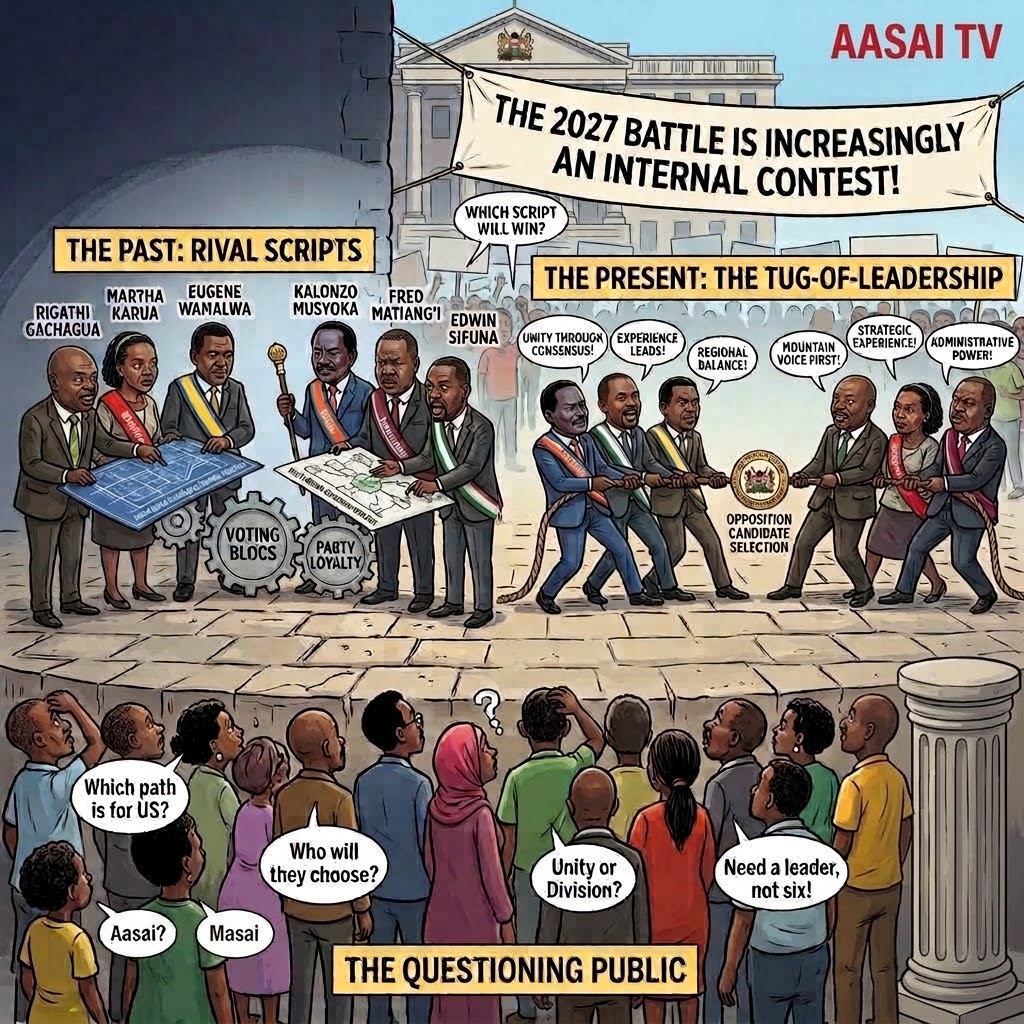
The political contest ahead of Kenya’s 2027 General Election is increasingly taking shape not only as a competition between the government and opposition, but also as a battle within the opposition itself.
Several opposition leaders have expressed a common desire to challenge President William Ruto at the ballot, but disagreements over leadership, political parties, coalition structures and the timing of selecting a presidential candidate continue to shape the emerging political landscape.
With the next General Election approaching, opposition leaders are under increasing pressure to agree on how they will organise themselves and who will ultimately lead their presidential campaign.
The question of a common presidential candidate has become one of the most sensitive issues in the opposition camp. Different political formations have been holding meetings, consultations and rallies as they seek to build a broad coalition, but there is yet to be a universally agreed candidate.
Among the prominent figures involved in the opposition discussions are former Deputy President Rigathi Gachagua, Wiper leader Kalonzo Musyoka, Nairobi Senator Edwin Sifuna and former Cabinet Secretary Fred Matiang’i, among other political leaders.
The different camps have expressed support for opposition cooperation, although their preferred political structures and approaches to selecting a presidential candidate differ.
Recent reports indicate that some opposition leaders favour settling on a candidate early, while others appear to prefer continuing consultations before making a final decision. The disagreement over timing has added another layer to the discussions.
Kalonzo Musyoka has continued to position himself as a central figure in the opposition discussions. His political camp has been working on plans to consolidate several parties and leaders under a common political vehicle ahead of the election.
Reports have indicated that Kalonzo's allies are pushing for him to be considered for the presidential ticket, with some proposing that Edwin Sifuna could serve as his running mate. These reports have not resulted in a final opposition-wide agreement.
Kalonzo has also argued that opposition leaders should not spend too much time creating new political structures when existing ones could be rebranded or reorganised.
The Wiper leader has supported the revival or restructuring of the Azimio la Umoja coalition, arguing that an existing political vehicle could provide a foundation for opposition cooperation.
However, not all opposition leaders agree with that approach.
Some politicians have opposed efforts to revive Azimio, arguing that the opposition should establish a new political vehicle instead. The disagreement has created another point of division among leaders who otherwise share the objective of challenging the current administration.
Nairobi Senator Edwin Sifuna has emerged as another major figure in the evolving opposition politics.
Sifuna has openly spoken about his interest in contesting the presidency in 2027 and has called for opposition leaders to work together. During a Linda Mwananchi mobilisation rally in Nairobi, he said the opposition would need to work with leaders including Kalonzo and Gachagua if it is to mount a serious challenge.
Linda Mwananchi has subsequently identified Sifuna as its preferred presidential candidate. Suba South MP Caroli Omondi said the movement would first nominate Sifuna before engaging other opposition formations over the possibility of a broader coalition.
The decision has added a new dimension to the opposition negotiations because Sifuna's endorsement does not automatically translate into support from the other opposition camps.
Instead, it places another candidate into an already crowded political conversation.
Former Deputy President Rigathi Gachagua is also positioning himself as a major player in the opposition. His Democracy for the Citizens Party has been involved in the broader discussions surrounding the formation of a united opposition.
Gachagua has continued to advocate for political change and has outlined his own vision for the country, while his supporters have maintained that he should play a central role in determining the opposition's direction.
The relationship between Gachagua and Sifuna has attracted particular attention. Analysts quoted in recent reports have described their relationship as potentially important to the future of opposition cooperation, although political positions and alliances remain subject to change.
Other leaders, including Fred Matiang’i, Martha Karua, Justin Muturi and Eugene Wamalwa, have also featured prominently in opposition consultations and political activities.
Their involvement demonstrates the broad range of political interests that any opposition coalition would have to accommodate.
One of the biggest challenges facing the opposition is therefore not simply agreeing on the need for political change, but determining how different leaders and parties will share responsibilities within a united structure.
The question of the presidential candidate is particularly important because several leaders have presidential ambitions.
A coalition seeking to present one candidate would therefore have to develop a process through which the different aspirants can negotiate, compromise or agree on a common ticket.
This process could also involve discussions over the position of deputy president, cabinet appointments, parliamentary representation and the distribution of political responsibilities.
The opposition's current divisions are not limited to personalities. There are also disagreements over the political vehicle through which the coalition should contest the election.
The debate over Azimio la Umoja illustrates this challenge. While Kalonzo has supported the idea of using or rebranding the existing coalition, other leaders have argued for a completely new organisation.
The dispute has also extended to proposed names for new political formations.
Recent reports have highlighted disagreements between different camps over the use of the name “Ukombozi,” with competing political interests seeking to establish their preferred political vehicle.
Such disputes demonstrate the logistical and legal challenges that opposition leaders must resolve before the election.
Beyond the political structures, opposition leaders are also under pressure to present a clear policy platform to voters.
A presidential coalition would need to explain what it intends to do differently on issues such as the economy, employment, healthcare, education, taxation, agriculture, infrastructure and governance.
For voters, the debate over personalities is only one part of the electoral process. The policies and programmes presented by political formations will also be important as the campaign develops.
Some opposition leaders have already called for the parties to put aside individual ambitions in favour of a common strategy.
People's Party of Kenya leader Ndindi Nyoro, for example, has publicly called on opposition leaders to unite and select one presidential candidate. He argued that personal political interests should not prevent opposition parties from working together.
Similarly, Saboti MP Caleb Amisi has urged Kalonzo to support Sifuna, arguing that opposition unity should take precedence over individual ambitions. His position illustrates the competing proposals within the opposition over who should lead the ticket.
Sifuna himself has repeatedly called for cooperation among opposition leaders.
His message has been that leaders such as Kalonzo, Gachagua and others should work together rather than compete separately.
At the same time, the political activity of individual leaders indicates that the question of who will ultimately lead the opposition remains unresolved.
The opposition is therefore facing a delicate balancing act.
On one side is the need to maintain unity among different parties and personalities. On the other is the need to accommodate individual political ambitions and ensure that supporters of each leader remain engaged.
The choice of presidential candidate could become the defining moment in this process.
If leaders reach an agreement, they will then have to establish a campaign structure capable of coordinating activities across Kenya's 47 counties.
They will also need to mobilise supporters, identify parliamentary and county-level candidates and communicate a coherent message to voters.
The 2027 election is still ahead, meaning that the current alliances and political arrangements can change.
Kenyan politics has historically been characterised by shifting alliances, coalition negotiations and last-minute political agreements. The opposition's current discussions therefore remain part of an ongoing process rather than a final settlement.
The emergence of multiple presidential contenders also means that the opposition leadership question is likely to remain at the centre of political debate for months to come.
Kalonzo continues to push for a central role, while Sifuna has gained support within Linda Mwananchi. Gachagua remains an influential opposition figure, while other politicians are also seeking a place within the emerging coalition.
The opposition's challenge will be to transform these separate political ambitions into a workable structure.
For now, the political landscape remains fluid.
The various camps agree on the importance of organising ahead of the 2027 General Election, but they have not reached a single agreement on the presidential ticket, coalition vehicle or leadership structure.
The coming months are therefore likely to feature more consultations, rallies, negotiations and political realignments.
As the election approaches, opposition leaders will have to decide whether they can settle their differences and establish a common political platform, or whether separate formations will continue pursuing their individual strategies.
What remains clear is that the contest is no longer only about the opposition versus the government. Increasingly, the opposition itself is engaged in an internal contest over leadership, strategy and political direction.
The outcome of those discussions will determine how the different opposition formations approach the 2027 General Election and whether they eventually present a common presidential candidate or continue with separate political arrangements.
For Kenyan voters, the coming period is likely to provide a clearer picture of the competing candidates, their policy positions, coalition arrangements and political priorities as the country moves closer to the 2027 polls.

You Might Also Like
-
Homa Bay Governor Gladys Wanga and fellow ODM leaders have rallied Kisumu residents to support President William Ruto’s re-election bid, citing ongoing government development projects in the region.
-
The Kilibwoni incident has left Nandi residents demanding answers after 52-year-old Julius Malel was shot during a police operation to arrest a KDF soldier. The latest available report says Malel was injured in the right thigh and hand and was in stable condition after being transferred to a special
-
President William Ruto’s attendance at the Sunday church service in Mwatate on September 27, 2026, provided an opportunity for him to worship with residents while continuing his wider development engagements in Taita Taveta County. The service came after announcements on major infrastructure proj
-
The decision by boda boda riders in Litein, Kericho County, to repair potholes ahead of the expected El Niño-related rainfall has drawn attention to the importance of early preparation. Their intervention is aimed at making roads safer and more passable while highlighting concerns about damaged ro
-
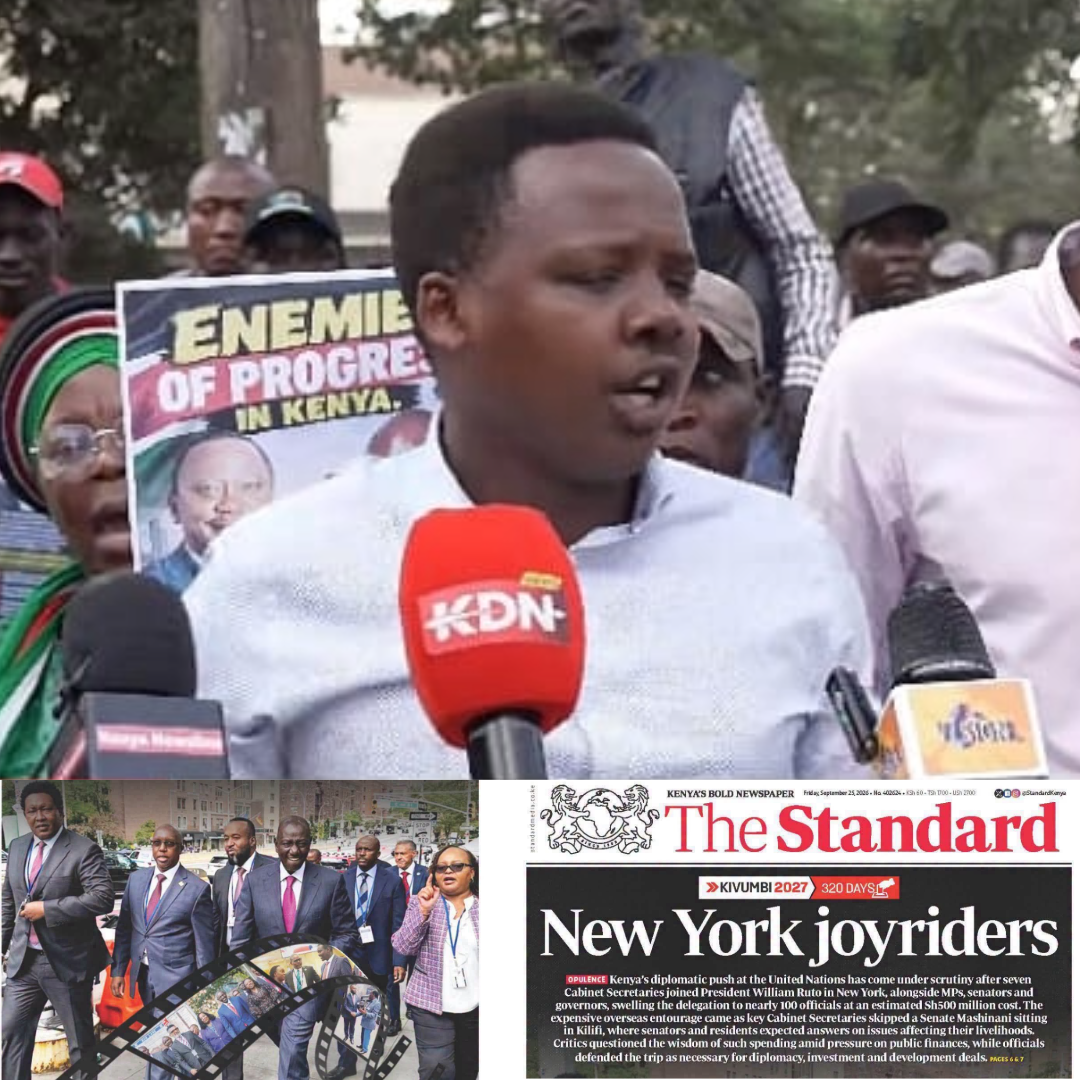
Galgado vows to protest against Standard Media, accusing the newspaper of using its headlines to unfairly target the government with propaganda.
-
Linda Mwananchi has named Nairobi Senator Edwin Sifuna as its preferred presidential candidate for the 2027 General Election.