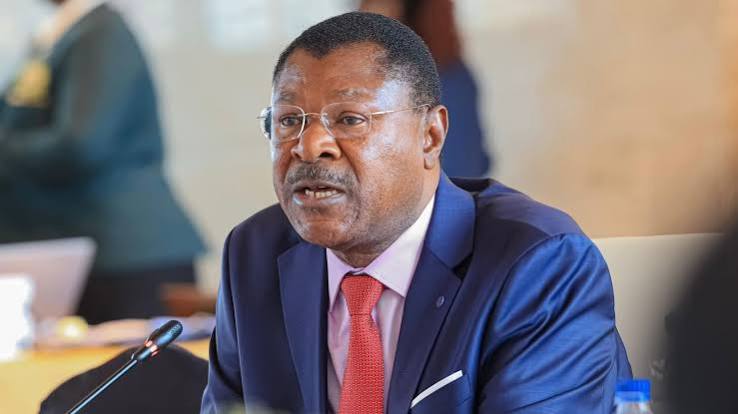
WETANGULA DECLARES INTEREST IN SUCCEEDING RUTO AFTER HIS SECOND TERM
National Assembly Speaker Moses Wetangula has expressed interest in succeeding President William Ruto after the completion of his second term, declaring that he has the energy, experience and commitment required to lead the country. Wetangula says he is prepared to build on the development progress initiated under Ruto's administration while protecting the achievements made during the President's leadership. His remarks have added a new dimension to the ongoing political discussions surrounding Kenya's future leadership and possible succession arrangements beyond the 2027 General Election. The Speaker's statement comes as political leaders continue positioning themselves ahead of the next electoral contest, with attention also shifting towards the country's leadership beyond Ruto's presidency. Wetangula's potential presidential ambitions are likely to attract political attention as Kenyans await further clarity on his plans and the direction he intends to take.
The remarks by National Assembly Speaker Moses Wetangula expressing his interest in succeeding President William Ruto after the completion of his second term have added another dimension to the political conversations surrounding Kenya's future leadership ahead of the 2027 General Election and beyond.
Wetangula has presented himself as a potential successor to Ruto, arguing that he possesses the experience, energy and commitment required to lead the country and continue the development agenda initiated by the current administration.
In his remarks, the Speaker indicated that he believes he would be a suitable person to take over the country's leadership once Ruto completes his constitutional two-term limit. He maintained that his experience in public service and understanding of national affairs would place him in a position to build on the progress made under the current government.
Wetangula also expressed his intention to protect the gains achieved during Ruto's leadership while ensuring that ongoing development programmes continue benefiting Kenyans. His statement suggests that he would seek to maintain continuity in government policies while pursuing additional initiatives aimed at addressing the country's development priorities.
The remarks come at a time when political leaders are increasingly positioning themselves within the country's evolving political landscape. Although the next General Election is scheduled for August 2027, discussions about succession and possible leadership arrangements after Ruto's tenure have already started attracting attention.
Wetangula's statement is particularly significant because of his current position as Speaker of the National Assembly, one of the country's senior constitutional offices. His responsibilities place him at the centre of parliamentary affairs, where he oversees proceedings, maintains order during debates and ensures that legislative business is conducted according to established rules.
His experience in Parliament has also given him an opportunity to interact with leaders from different political parties and participate in discussions involving national legislation, government policies and public affairs.
Before becoming Speaker of the National Assembly, Wetangula served in several senior government and political positions. His political career includes service as a Member of Parliament, Cabinet Secretary for Foreign Affairs and leader of the Ford Kenya party.
These roles have contributed to his experience in national leadership and public administration. His time in the Foreign Affairs docket also exposed him to international relations, diplomatic engagements and discussions involving Kenya's position in regional and global affairs.
As a senior political figure, Wetangula has remained active in national conversations concerning governance, development and the direction of the country. His latest remarks indicate that he is considering a bigger role in Kenya's political future.
However, expressing interest in succeeding a sitting president is different from securing the support required to become a presidential candidate. Any potential presidential bid would involve consultations with political allies, party structures, supporters and other stakeholders.
Kenya's political environment is characterised by competition among leaders and parties seeking to influence the country's direction. As the 2027 elections approach, different political figures are expected to outline their ambitions and preferred leadership arrangements.
Wetangula's comments have therefore introduced another name into the broader conversation about the country's future leadership. His position also raises questions about how senior figures within the current political establishment may approach succession after Ruto's tenure.
The Speaker has emphasised continuity, suggesting that he would seek to preserve the development programmes and policies associated with the current administration. This position places his proposed leadership approach within discussions about whether the next government should maintain existing priorities or introduce significant policy changes.
Among the issues that are likely to feature in any future national leadership debate are economic growth, employment creation, infrastructure development, education, healthcare, agriculture and the cost of living.
Kenyans continue to demand solutions to economic challenges affecting households and businesses. Questions surrounding employment opportunities, access to affordable healthcare, public debt, taxation and the cost of essential goods remain central to national political discussions.
Any leader seeking to occupy the presidency would therefore face expectations to explain how they intend to address these issues and improve the lives of ordinary citizens.
Wetangula's reference to building on the progress initiated by Ruto suggests that he would favour a leadership approach that maintains some of the existing government's development priorities. He has also indicated that protecting the gains made under the current administration would form part of his proposed vision.
However, the specific policies he would prioritise if he eventually pursued the presidency have not been fully outlined in the remarks provided.
His statement also comes amid broader discussions about the future of the political alliance that supported Ruto during the 2022 General Election. Leaders associated with the ruling establishment are expected to continue engaging over political strategies, party interests and possible leadership arrangements in the coming years.
Such discussions could influence how political alliances evolve and which figures emerge as potential candidates for different elective positions.
The question of succession is particularly important because the Constitution limits a president to two terms in office. Ruto, who assumed office in September 2022, would be constitutionally limited to two terms if re-elected in 2027.
Consequently, discussions about leadership beyond his presidency are likely to become more prominent as political parties and influential leaders consider the country's long-term political direction.
Wetangula's remarks indicate that he is willing to be part of that conversation. By presenting himself as a possible successor, he has communicated his confidence in his leadership experience and ability to take on the responsibilities of the presidency.
Nevertheless, the country's political future will ultimately be shaped by constitutional processes, political party decisions and the choices made by Kenyan voters during elections.
For now, Wetangula continues serving as Speaker of the National Assembly, where his primary responsibilities revolve around parliamentary leadership and the management of legislative proceedings.
His latest comments are likely to attract attention among political observers as they assess the ambitions of leaders within the current administration and the possible candidates who could seek national leadership in the future.
The remarks also provide an opportunity for discussions about continuity in government, the role of experienced political leaders and the policies that should guide Kenya's development in the years ahead.
As the country approaches the 2027 General Election, attention will remain focused on political alliances, emerging presidential ambitions and the strategies different leaders intend to pursue.
Wetangula has now made his position clear, saying he believes he has the energy, experience and commitment needed to lead Kenya after Ruto completes his second term. He has also expressed his intention to continue the development agenda associated with the current administration while safeguarding the gains made during Ruto's leadership.

You Might Also Like
-
President William Ruto and Democratic Republic of Congo (DRC) President Félix Tshisekedi have agreed to restore full diplomatic relations and strengthen cooperation between their two countries following high-level talks in Oyo, Republic of the Congo. The agreement was reached during the Quadriparti
-
DCP Leader Rigathi Gachagua has given the Independent Electoral and Boundaries Commission (IEBC) until January 2027 to address concerns raised by the Opposition ahead of the August 2027 General Election, warning that failure to act could trigger nationwide protests. Gachagua wants the commission to
-
Democratic Party (DP) Leader Justin Muturi has announced that his party and its supporters have settled on Wiper Patriotic Front (WPF) Leader Kalonzo Musyoka as their preferred presidential candidate among the United Opposition leaders ahead of the 2027 General Election. Muturi's declaration adds a
-
Nairobi Senator Edwin Sifuna has officially opened the first international office of the Linda Mwananchi Movement in Hackettstown, New Jersey, USA, marking a major milestone in the movement's efforts to expand its political influence beyond Kenya. The November 21, 2026, launch was part of Sifuna's d
-
The attendance of Public Health Principal Secretary Mary Muthoni and Internal Security Principal Secretary Raymond Omollo at St. Thomas More Kairuri Parish in Embu North Sub-County on Sunday, November 22, 2026, brought together senior national and county government officials for a religious gatherin
-
A heartbreaking incident has been reported in Morogo, Chemaner, Bomet East, where a middle-aged man identified as Nicholas Rop has been arrested over allegations that he killed his two children, aged four and seven, before attempting to take his own life. The suspect is accused of slitting the throa