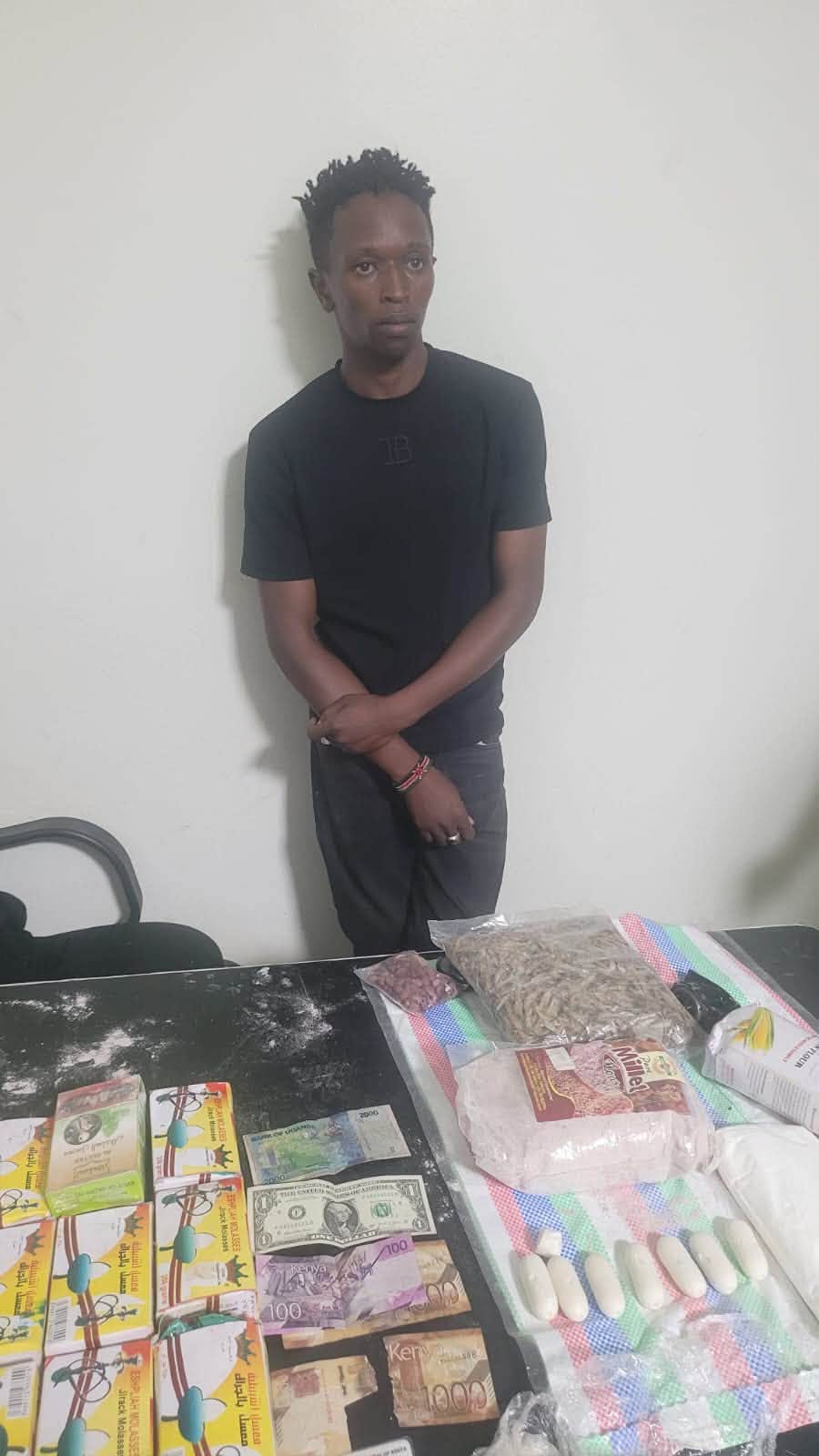
A suspect has been arrested over the alleged trafficking of cocaine valued at approximately Sh2.19 million through the Malaba border crossing
A suspect has been arrested for allegedly trafficking cocaine valued at Sh2.19 million through the Malaba border crossing between Kenya and Uganda. The incident highlights ongoing efforts by security agencies to curb the illegal movement of narcotics and strengthen border surveillance. Authorities are expected to investigate the circumstances surrounding the alleged offence, while the suspect remains presumed innocent until proven guilty in court.
A suspect has been arrested over the alleged trafficking of cocaine valued at approximately Sh2.19 million through the Malaba border crossing, in an incident that highlights ongoing efforts by authorities to combat the illegal movement of narcotic drugs across Kenya's borders.
The arrest brings renewed attention to the challenges facing law enforcement agencies as they work to prevent prohibited substances from entering or passing through the country. Border crossing points are important for regional trade, passenger movement and commercial transportation, but they also require effective monitoring to prevent criminal activities, including drug trafficking.
The alleged incident at Malaba has raised concerns about the methods used to transport illegal substances and the need for continued vigilance by security agencies responsible for protecting the country's borders.
The suspect is accused of trafficking cocaine worth Sh2.19 million, although the allegations will need to be addressed through the appropriate legal process. An arrest does not in itself establish guilt, and the suspect remains entitled to the protections provided under Kenyan law, including the presumption of innocence until proven guilty.
The case is likely to draw attention to the wider fight against drug trafficking, which remains a concern for countries seeking to protect communities from the harmful effects of illegal narcotics while preventing criminal networks from exploiting international transport routes.
Malaba is a major border crossing between Kenya and Uganda. It serves as an important gateway for commercial vehicles, public transport, travellers and goods moving between the two countries and other destinations in the region. Its strategic position makes it significant to regional economic activity and cross-border movement.
Because of the volume of traffic passing through such a crossing, border management requires coordination among different agencies, effective inspection procedures and intelligence-led security operations. Authorities must facilitate legitimate travel and trade while identifying suspicious activities that could threaten public safety.
The alleged cocaine trafficking case underscores the importance of maintaining these safeguards and ensuring that suspected criminal activity is investigated thoroughly.
Drug trafficking can involve complex networks that operate across several locations and jurisdictions. Individuals may be recruited to transport substances, while other participants may organise shipments, arrange payments or coordinate distribution. Investigations are therefore often necessary to establish whether an arrested individual acted alone or was connected to a wider operation.
In cases involving suspected narcotics trafficking, investigators may seek to establish the origin of the drugs, the intended destination, the method of transportation and the identities of other people who may have been involved.
However, the specific circumstances surrounding the Malaba arrest, including how the cocaine was allegedly concealed or transported, would need to be established through verified investigative information and evidence presented during the legal process.
The reported value of Sh2.19 million provides an indication of the financial scale attributed to the seized substance. Nevertheless, the valuation of illegal drugs can vary according to purity, quantity, market conditions and the method used by authorities to estimate their worth.
The importance of the case extends beyond the monetary value associated with the alleged consignment. Cocaine trafficking is a serious criminal concern because the substance carries significant health risks and can contribute to wider social and economic problems when distributed illegally.
Cocaine is a powerful stimulant that affects the central nervous system. Its use can lead to serious health complications, including increased heart rate, elevated blood pressure, anxiety and potentially life-threatening cardiovascular problems. Repeated use may also contribute to dependence and other long-term health difficulties.
The risks can be intensified when people consume substances of unknown purity or when cocaine is mixed with other potentially dangerous chemicals. People experiencing substance-related problems may require medical care, counselling and other forms of professional support.
The illegal distribution of narcotics can also affect families and communities. Substance misuse may contribute to financial difficulties, strained relationships, reduced productivity and additional pressure on healthcare and social support services.
These concerns explain why governments and law enforcement agencies continue to prioritise the prevention of illegal drug distribution. At the same time, effective responses require more than arrests alone. Public education, accessible treatment services, prevention programmes and community engagement can help address the broader consequences associated with substance misuse.
The arrest at Malaba also highlights the role of border security in preventing the movement of prohibited goods. Kenya's position as a regional transport and commercial hub means that large quantities of cargo and significant numbers of travellers move through its border points every day.
Authorities must therefore maintain procedures that allow them to identify potential criminal activity without unnecessarily disrupting legitimate commerce. This can involve cooperation between customs officials, police officers, immigration personnel and other relevant agencies.
Information sharing is particularly important when suspected offences involve cross-border movement. Criminal investigations may require officials to establish whether goods originated in another country, whether they were intended for a domestic market or whether they were being transported to a different destination.
Cooperation between neighbouring countries can help investigators exchange relevant information, coordinate enforcement activities and address criminal networks that operate across national boundaries.
Drug trafficking can be difficult to investigate because those involved may use intermediaries, false identities or complicated transport arrangements. Some operations may rely on individuals who carry substances without having complete information about the wider network behind a shipment.
For that reason, investigators may need to examine communications, travel records, financial transactions and other evidence where legally authorised and relevant to the case. Such inquiries can help establish the facts surrounding an alleged offence and determine whether additional suspects should be investigated.
Any further details concerning the Malaba incident would need to be established by the relevant authorities. It would be inappropriate to assume that the arrested individual was part of an organised trafficking network without supporting evidence.
The case also draws attention to the importance of due process in criminal investigations. Authorities are responsible for gathering evidence lawfully, documenting seizures properly and ensuring that suspects are handled in accordance with the law.
The prosecution must establish the allegations against an accused person through the applicable legal procedures. The court then considers the evidence and determines whether the charges have been proved to the required standard.
This process is important not only for protecting the rights of the accused but also for ensuring that cases involving serious allegations are resolved fairly and reliably.
Where suspected narcotics are recovered, the handling and examination of the substance can be an important part of the investigation. Relevant procedures may include documenting the seizure, preserving the material, conducting laboratory analysis and maintaining records that support its identification and evidentiary value.
Proper handling helps establish whether the substance is an illegal drug and supports the integrity of evidence presented in court.
The reported arrest may also encourage renewed discussion about the resources available to agencies responsible for border surveillance and drug enforcement. Effective enforcement requires trained personnel, suitable inspection equipment, reliable communication systems and the ability to respond to intelligence about suspected criminal activity.
Technology can support these efforts by helping officials assess cargo, identify irregularities and coordinate information across different agencies. However, technological systems must be supported by trained officers, clear procedures and appropriate oversight.
Security operations also benefit from cooperation with transport companies, commercial operators and members of the public who may have information relevant to suspected illegal activities. Reporting concerns through appropriate channels can help authorities identify potential risks while reducing the likelihood of unnecessary interference with lawful activities.
Public awareness is another important element of efforts to address drug trafficking. Communities can benefit from information about the consequences of illegal narcotics, the risks associated with substance misuse and the importance of seeking professional assistance when problems arise.
Young people, in particular, may require accurate information about the health and social risks associated with drugs. Schools, families, healthcare providers and community organisations can contribute by promoting prevention, encouraging informed decisions and helping people access support when needed.
At the same time, drug prevention programmes should avoid treating every person affected by substance use as a criminal. People experiencing addiction may require medical and psychological support, while individuals suspected of trafficking must be dealt with through the appropriate criminal justice procedures.
Balancing enforcement with prevention and treatment can help address both the supply of illegal drugs and the harm associated with their use.
The alleged trafficking incident at Malaba also illustrates why regional cooperation remains important in combating organised crime. Kenya and Uganda share extensive commercial and transport links, and activity at their common border affects both countries.
Effective cooperation can help authorities identify suspicious shipments, investigate cross-border offences and prevent criminal groups from taking advantage of differences in enforcement procedures.
Such efforts must be conducted within the relevant legal frameworks and with respect for the rights of individuals travelling or conducting business across the border.
For traders and transport operators, predictable border procedures are essential to maintaining the movement of legitimate goods. Security measures that are well coordinated can help protect communities while supporting regional commerce.
As the case proceeds, the key issues will include the evidence supporting the allegations, the circumstances of the arrest and any further findings made by investigators. Any additional charges or links to other suspected offences would need to be established through the appropriate legal process.
The reported value of the cocaine may attract public attention, but the investigation's wider significance will depend on the facts established by authorities and the outcome of the proceedings.
For law enforcement agencies, the case presents another opportunity to demonstrate the importance of vigilance, proper evidence handling and cooperation in tackling suspected narcotics offences. For the public, it serves as a reminder of the continued challenges associated with illegal drug trafficking and the need for coordinated responses.
Ultimately, preventing the movement of illegal narcotics requires a combination of effective border management, credible investigations, fair judicial proceedings and sustained efforts to reduce the demand for harmful substances.
The arrest of a suspect over cocaine allegedly worth Sh2.19 million at the Malaba crossing marks a development in the ongoing effort to combat drug trafficking. However, the final determination of responsibility rests with the legal process, and the allegations must be assessed on the evidence presented.
As authorities continue addressing suspected drug-related offences, maintaining public safety, protecting individual rights and supporting legitimate cross-border trade will remain important considerations.

You Might Also Like
-
The National Assembly has passed the Sexual Offences (Amendment) Bill No. 78 of 2023, aimed at promoting public awareness, protecting victims’ right to education and aligning existing laws with the Constitution of Kenya. The proposed amendments highlight the importance of safeguarding victims’ r
-
The Kenya Meteorological Department's forecast for October 20–26, 2026, indicates that rainfall is expected in parts of 45 counties across western Kenya, the Rift Valley, Central Kenya, the Coast, the eastern region and the north-eastern counties. Afternoon thunderstorms are particularly relevant
-
Felix Koskei's participation in the Global Trust Summit 2026 placed Kenya's public service leadership within a major conversation about the relationship between institutions and the people they serve. The summit's first day focused on rebuilding trust from the frontline, examining democracy, publi
-
The October 21 protest by public health officers in Nairobi has brought renewed attention to the connection between workers' welfare, adequate staffing and Kenya's preparedness for infectious disease outbreaks. As their nationwide strike entered its 92nd day, the officers demanded the signing of a
-
Governor Patrick Ole Ntutu's reported peace message during the Mashujaa Day celebrations at Esoit Naibor Primary School highlights the importance of unity, security and cooperation in Trans Mara South. The gathering came amid concerns about inter-clan disputes and the need to prevent ethnic incitem
-
Deputy President Kithure Kindiki's development agenda in Gatundu North highlights two important areas: modern market infrastructure and improved road connectivity. Kanyoni Market represents the importance of supporting small-scale traders and farmers, while the inspection of the Thika–Magumu Mau M