Ebola Alert: Health Officers Take to the Streets Over Poor Preparedness, Staff Welfare and Delayed Payments
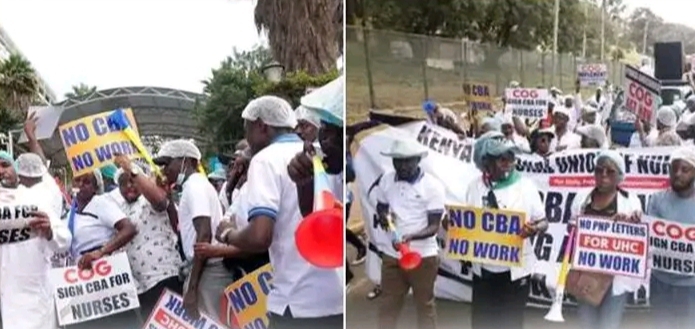
The October 21 protest by public health officers in Nairobi has brought renewed attention to the connection between workers' welfare, adequate staffing and Kenya's preparedness for infectious disease outbreaks. As their nationwide strike entered its 92nd day, the officers demanded the signing of a collective bargaining agreement, recruitment of more personnel, payment of interns, improved allowances and stronger staffing at border points. They warned that unresolved grievances could undermine preventive health services at a time when the country is responding to Ebola.
Kenya's preparedness to respond to the Ebola threat has become a major concern for health workers, with questions surrounding the availability of protective equipment, emergency response resources, staff welfare and the safety of frontline personnel. Protests by health officers over Ebola preparedness and their working conditions highlight the challenges that can arise when medical workers are expected to respond to a dangerous infectious disease while also demanding adequate protection and support.
The concerns come at a time when Kenya is focusing on strengthening disease surveillance, improving emergency response systems and protecting communities from the spread of infectious diseases. Health officers play a critical role in identifying suspected cases, collecting samples, monitoring contacts, educating the public and ensuring that patients receive appropriate care.Public health officers take to the streets in Nairobi
On Wednesday, October 21, 2026, public health officers demonstrated in Nairobi as their nationwide strike entered its 92nd day. The officers, represented by the Kenya Environmental Health and Public Health Practitioners Union (KEHPHPU), called on the government to address their long-standing grievances, warning that the industrial dispute could weaken Kenya's ability to prevent and detect infectious diseases, including Ebola.
The demonstration reflected growing frustration among public health professionals who say their concerns about employment, working conditions and disease prevention have not received sufficient attention.Why the officers are protesting
One of the central issues raised by the public health officers is the prolonged delay in resolving their employment and welfare grievances.
The union wants the government to sign a Collective Bargaining Agreement that formally establishes employment terms and conditions. Such agreements can provide a framework for addressing matters such as salaries, allowances, working hours, career progression and other employment-related concerns.
The officers maintain that resolving these issues is important not only for their personal welfare but also for the stability of public health services.The protest comes as Kenya deals with an Ebola outbreak that has increased pressure on the country's disease surveillance and emergency response systems.
By October 20, 2026, Kenya had confirmed nine Ebola cases linked to the initial case identified earlier in October. The first patient had travelled from the Democratic Republic of Congo through Uganda to Nairobi and later died. Several subsequent infections were linked to the same cluster, including infections among healthcare workers.
The outbreak has raised questions about how quickly suspected cases can be identified, how contacts can be traced and monitored, and whether health facilities have sufficient trained personnel to respond safely.Demand for more health officers at border points
Border surveillance is one of the key issues in the dispute.
Kenya has extensive international travel connections through airports, land borders and other points of entry. These routes support trade, tourism and the movement of families, but they also require effective public health monitoring when dangerous infectious diseases are circulating in neighbouring countries or elsewhere in the region.
Public health officers are trained to support screening, identify potential public health risks and coordinate with other agencies when further assessment is necessary.Interns demand payment and employment opportunities
Another major concern raised during the protest was the payment of interns and the employment of trained public health professionals.
The union called for interns who have completed or are undertaking their required placements to receive their stipends and for qualified personnel to be recruited into public service. It also called for stronger funding for preventive health services.
The issue highlights the difficulties that can arise when a health system depends on trained professionals but does not have sufficient personnel in permanent positions.The protest has also highlighted questions about the welfare of personnel who work in potentially hazardous environments.
The union is seeking a review of risk allowances for public health officers and minimum wages for community health promoters. These demands form part of the wider dispute over the conditions under which preventive health services are delivered.
During an infectious disease emergency, frontline personnel may be required to work in demanding circumstances, including conducting surveillance, responding to reports of suspected infections and supporting investigations.Why public health officers are important in preventing Ebola
Public health officers are an important part of the wider health system because they help prevent disease transmission before hospitals become overwhelmed.
Their responsibilities may include:
Disease surveillance: Identifying and reporting unusual patterns of illness and potential outbreaks.
Contact tracing support: Helping authorities identify people who may have been exposed to a confirmed case and ensuring that appropriate follow-up takes place.
Environmental health: Inspecting environments and supporting measures that reduce public health risks.
Community education: Explaining prevention measures and directing people towards reliable information and medical services.
Coordination: Working with healthcare facilities and other agencies to support effective outbreak responses.Possible areas of concern include routine inspections, disease surveillance, environmental health activities and public education.
For example, delayed investigations into suspected outbreaks could make it harder for authorities to identify emerging risks promptly. Reduced staffing at border points could also place additional pressure on the personnel who remain on duty.Government and union dialogue remains important
The way forward requires meaningful engagement between the government and the public health officers' union.
The Ministry of Health, county governments and relevant public service authorities need to establish which demands can be addressed immediately and which require longer-term administrative or budgetary decisions.
A negotiated settlement could include a timetable for signing the outstanding collective agreement, a clear plan for recruitment, resolution of pending intern payments and discussions on allowances and other employment conditions.At the same time, the parties need to agree on practical arrangements for maintaining essential public health functions while the dispute continues.
Given the Ebola situation, strengthening communication between health authorities and frontline workers is particularly important. Professionals responsible for disease surveillance should have a clear channel through which they can report gaps in staffing, equipment or operational procedures.
There has also been movement on the separate issue of union representation in Ebola planning. On October 20, reports indicated that KMPDU had been offered a seat on the national Ebola response task force following its complaints about exclusion from preparedness discussions.

You Might Also Like
-
The National Assembly has passed the Sexual Offences (Amendment) Bill No. 78 of 2023, aimed at promoting public awareness, protecting victims’ right to education and aligning existing laws with the Constitution of Kenya. The proposed amendments highlight the importance of safeguarding victims’ r
-
The Kenya Meteorological Department's forecast for October 20–26, 2026, indicates that rainfall is expected in parts of 45 counties across western Kenya, the Rift Valley, Central Kenya, the Coast, the eastern region and the north-eastern counties. Afternoon thunderstorms are particularly relevant
-
Felix Koskei's participation in the Global Trust Summit 2026 placed Kenya's public service leadership within a major conversation about the relationship between institutions and the people they serve. The summit's first day focused on rebuilding trust from the frontline, examining democracy, publi
-
Governor Patrick Ole Ntutu's reported peace message during the Mashujaa Day celebrations at Esoit Naibor Primary School highlights the importance of unity, security and cooperation in Trans Mara South. The gathering came amid concerns about inter-clan disputes and the need to prevent ethnic incitem
-
Deputy President Kithure Kindiki's development agenda in Gatundu North highlights two important areas: modern market infrastructure and improved road connectivity. Kanyoni Market represents the importance of supporting small-scale traders and farmers, while the inspection of the Thika–Magumu Mau M
-
Deputy President Kithure Kindiki's latest meeting in Karen on October 21, 2026, forms part of an intensified national campaign against illicit alcohol and drug cartels. The government reports that multi-agency teams carried out 125 raids over ten days, while new legislative proposals seek to strengt