



Burundians Stranded in Kenya as Hundreds Seek Travel Documents to Return Home Amid Crackdown
The gathering of Burundian nationals at their embassy in Nairobi is one of the most visible consequences of Kenya's new crackdown on certain foreign-operated small-scale businesses. Some Burundians are seeking emergency travel documents because they want to return home, while others are seeking clarification and assistance concerning their legal status in Kenya. Burundi has reportedly begun preparing measures to facilitate voluntary return, including free laissez-passer documents and buses for citizens wishing to go home. At the same time, Kenya has announced a temporary registration window for undocumented East African nationals, particularly Burundians, giving those who enter the process an opportunity to regularise their status and receive temporary legal protection during registration. The situation demonstrates the complicated relationship between immigration enforcement, small-scale trade, employment, regional integration and the rights of foreign nationals. For affected Burundians, the most important steps are to obtain accurate information from the Burundi Embassy and Kenyan authorities, maintain proper documentation, and avoid acting on rumours or misinformation. The developments are still unfolding, and further announcements from both the Kenyan and Burundian governments are likely to clarify how the registration and repatriation processes will work in the coming days.
A developing situation in Kenya has seen large numbers of Burundian nationals gather at the Embassy of Burundi in Nairobi seeking travel documents that would enable them to return home. The situation follows a Kenyan government directive targeting foreign nationals involved in certain small-scale businesses, particularly those operating without the required work permits. The developments have created anxiety among some Burundian traders and other nationals who fear that they could be forced to leave Kenya or face difficulties proving their legal status.
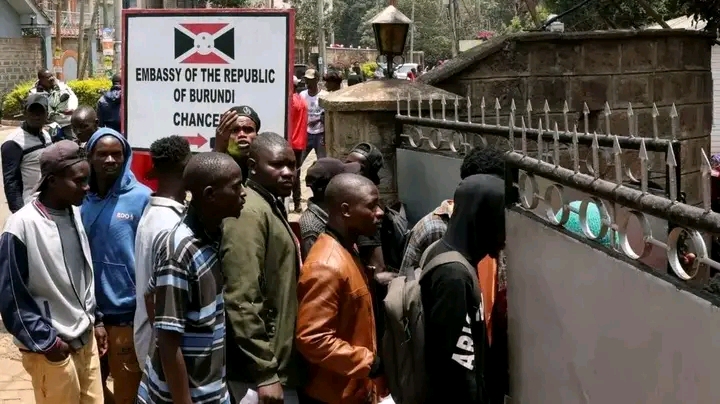
Recent reports indicate that hundreds of Burundians have gone to the Burundi Embassy in Nairobi seeking emergency travel documents. The situation became particularly visible on September 7, 2026, when large crowds were reported outside the embassy. Some people arrived with luggage, apparently preparing to leave Kenya, while others were seeking clarification about their status and the documentation needed to travel.
What is happening to Burundians in Kenya?
The current situation is connected to a directive issued by President William Ruto on September 2, 2026, concerning foreign nationals operating small-scale businesses in Kenya. The directive followed concerns raised by Kenyan traders about competition from foreign nationals in sectors such as hawking and small-scale retail.
The government subsequently began enforcing the directive on September 7. According to reports, the focus is particularly on foreigners operating businesses without the necessary work permits. The development has caused uncertainty among some foreign traders, including Burundian nationals who have lived and worked in Kenya for extended periods.
For many Burundians, the immediate concern has not necessarily been that they have been formally expelled from Kenya, but rather the uncertainty surrounding their legal status, businesses and ability to remain in the country.
This explains why some have turned to their embassy for assistance.
Why are Burundians seeking travel documents?
One of the major issues facing some of the affected Burundians is documentation.
People who do not have valid passports or other acceptable travel documents can encounter difficulties when attempting to cross international borders. Consequently, some Burundians in Nairobi have reportedly been seeking emergency documents from their embassy so that they can return to Burundi.
The Embassy of Burundi has therefore become an important point of contact for citizens who want to leave Kenya voluntarily or who need assistance regularising their documentation.
Reports indicate that the Burundian government is preparing to facilitate the return of its citizens. According to information attributed to Burundi's Ministry of Foreign Affairs, Burundi is preparing buses to transport citizens from Kenya and the embassy is expected to issue free laissez-passer travel documents to eligible citizens who wish to return home.
A laissez-passer is essentially an emergency or temporary travel document that can be used in circumstances where a citizen does not possess a valid passport but needs to travel back to their country.
This development could help many people who are worried that they cannot travel because their passports have expired, been lost or are otherwise unavailable.
Is this a visa problem?
It is important to distinguish between a visa problem and a travel-document problem.
The current reports primarily concern Burundians seeking documentation to leave Kenya and return to Burundi. A Burundian citizen returning to Burundi is not in the same position as a foreign tourist seeking permission to enter Burundi.
Therefore, describing the situation simply as Burundians "waiting for a visa to go home" may not be entirely accurate. Many are seeking emergency travel documents or laissez-passer documents from their embassy.
This distinction matters because a visa normally gives a foreign national permission to enter another country. A passport or emergency travel document, on the other hand, establishes identity and nationality and allows the holder to travel.
The immediate issue reported in Nairobi is therefore largely about documentation and repatriation, rather than Burundian citizens needing a conventional visa to enter their own country.
Crowds at the Burundi Embassy
The situation outside the Burundi Embassy in Nairobi has attracted considerable attention.
Reports and images from September 7 showed large numbers of Burundian nationals gathered outside the diplomatic mission. Some were reportedly carrying luggage, while others waited for assistance with travel documents. Reuters also reported that Burundian nationals gathered outside their embassy as they sought documents to return to Burundi.
The large crowds demonstrate the level of anxiety among some members of the Burundian community.
For people who depend on small businesses for their livelihoods, the government's new policy has created difficult choices. Some may decide to close their businesses and return home, while others may seek to regularise their status and continue living in Kenya legally.
Kenya announces a temporary registration window
An important development is that the Kenyan government has announced a temporary registration and documentation window for undocumented Burundian nationals and other East African Community citizens.
Government spokesperson Charles Owino said undocumented EAC nationals, particularly Burundians, should present themselves to their respective high commissions as authorities work to regularise their status. The Ministry of Foreign Affairs is expected to cooperate with the Burundi Embassy and other regional partners in handling the cases.
This is significant because it suggests that the government is not simply asking all undocumented foreigners to leave immediately.
Instead, authorities are providing an opportunity for some undocumented nationals to identify themselves, register and clarify their status.
The government has also indicated that people undergoing the registration process will be presumed legally present in Kenya during the designated registration period.
That assurance could help reduce fears among Burundians who have been uncertain about whether they can safely approach authorities.
Why some Burundians are choosing to leave
Despite the registration option, some Burundians have decided that returning home is the safest or most practical choice.
Many foreign nationals involved in small-scale trading depend heavily on their businesses for income. If those businesses are affected by the new regulations, remaining in Kenya could become financially difficult.
Some Burundians may also lack the documentation necessary to continue operating businesses legally. Rather than risk arrest, fines, business closure or other enforcement measures, they may prefer to return to Burundi.
Reports indicate that Burundian nationals have also been seen at transport centres with luggage as they prepare to travel home. There have been reports of travellers seeking buses towards the Kenya-Uganda border, including the Malaba crossing, which is a major route for people travelling between Kenya and Uganda and onward to Burundi.
Concerns about harassment and xenophobia
Another important aspect of the situation is fear of harassment.
Some Burundians reportedly expressed concern after the announcement of the crackdown. Reuters reported that some individuals said they had been threatened by neighbours following the president's remarks.
The Kenyan government has responded by emphasizing that foreign nationals should not be subjected to harassment, intimidation or xenophobia.
The administration has reportedly stated that there is "absolute zero tolerance" for harassment and xenophobia and encouraged undocumented East African nationals to register through their respective diplomatic missions.
This is important because a government effort to enforce immigration and work-permit rules should be distinguished from discrimination against people because of their nationality.
Burundians living in Kenya remain entitled to appropriate protection under Kenyan law, while Kenyan authorities have the responsibility to enforce immigration and labour regulations fairly.
Impact on families and businesses
The situation has significant economic and social implications.
Some Burundian nationals have lived in Kenya for years. They may have families, businesses, homes, employees, customers and other connections within Kenyan communities.
For such people, leaving Kenya is not as simple as buying a bus ticket.
A trader who has operated a shop for several years may have stock worth thousands or millions of shillings. A person returning to Burundi may need to dispose of property, close accounts, sell stock, settle debts and make arrangements for family members.
Children may also be affected when parents decide to return home.
The situation could therefore create uncertainty not only for individual traders but also for families that have established themselves in Kenya.
The role of the Burundi government
The Burundian government has an important responsibility in assisting its citizens during the situation.
The reported plan to provide free laissez-passer documents and arrange buses is significant because it reduces some of the financial and administrative difficulties associated with returning home.
The embassy can also help determine whether individuals are Burundian citizens, process documentation and coordinate with Kenyan authorities.
For people without passports, embassy assistance may be particularly important.
Citizens affected by the situation should therefore obtain information directly from the Burundi Embassy rather than relying entirely on rumours circulating through social media.
The importance of proper documentation
The current crisis highlights the importance of maintaining valid immigration and identification documents while living abroad.
Foreign nationals living and working in Kenya should have appropriate identification, passports and, where necessary, work permits or other authorisations.
At the same time, people whose documents are missing or expired should not automatically assume that they have no options.
Diplomatic missions exist partly to help citizens facing such circumstances.
Burundians who wish to return home can seek assistance from their embassy regarding emergency travel documents, while those who want to remain in Kenya can seek information about regularising their immigration and employment status.
The wider East African Community dimension
The situation also has implications for regional integration.
Kenya and Burundi are both members of the East African Community, which promotes regional economic integration and the movement of people, goods and services.
The fact that undocumented citizens from East African countries are being offered a registration mechanism shows the importance of regional cooperation in handling cross-border migration.
The Kenyan government has said it is working with the Ministry of Foreign Affairs, the Burundi Embassy and regional partners to address the issue.
The situation therefore goes beyond a simple immigration dispute. It involves trade, employment, regional integration, migration and diplomatic relations between neighbouring African countries.
What Burundians in Kenya should do
Burundian nationals who are currently worried about their situation should avoid relying on unverified information.
Those who want to return to Burundi should contact the Burundi Embassy to establish the requirements for obtaining a travel document and to find out whether they qualify for the reported repatriation arrangements.
Those who want to remain in Kenya should seek information about the registration and documentation window announced by the Kenyan government.
Individuals should also keep copies of their identification documents, business records and other important paperwork.
Anyone facing threats or harassment should seek appropriate assistance from Kenyan authorities and their diplomatic representatives.
A developing situation
The situation remains fluid, and the number of Burundians seeking to leave Kenya could change as the government's enforcement programme develops.
The temporary registration initiative could provide an alternative for people who want to regularise their status rather than return to Burundi. Meanwhile, the Burundian government's reported plan to provide travel documents and buses could assist those who have already decided to go home.
It is also important not to portray every Burundian in Kenya as undocumented or affected by the crackdown. Many Burundian citizens may have valid immigration documents and legal businesses. The current developments primarily raise questions about foreign nationals operating businesses without the required authorisation.
UNHCR data also shows that Kenya hosts a substantial Burundian refugee and asylum-seeker population, estimated at around 16,000. That population should not automatically be equated with Burundian traders or other foreign nationals affected by the current business-related enforcement measures.

You Might Also Like
-
President William Ruto's assent to the four Bills today represents an important development in Kenya's legislative and governance landscape. The National Council for Population and Development Bill, Air Passenger Service Charge Amendment Bill, Public Finance Management Amendment Bill 2025 and Trust
-
The September 7, 2026 prayers and dedication of the Dr Joyce Laboso Memorial Mother and Child Wellness Centre marked an important moment in Bomet's healthcare journey. The dedication church service, scheduled for 7:30 a.m. at the hospital grounds, provided an opportunity to pray for the institution
-
The latest weather outlook provides a mixed picture for Kenya. Most parts of the country are expected to remain generally dry, while selected areas—especially parts of Lamu, Kilifi, Tana River, Mombasa, Kwale, Narok and Bomet—have a higher likelihood of rainfall. Afternoon showers and thundersto
-
Bomet’s worsening water shortage is forcing students and residents to fetch water late at night as limited supply and low daytime pressure make access increasingly difficult. The situation is disrupting daily routines and raising concerns over safety and access to essential water services.
-
This major healthcare facility aimed at improving medical services for mothers and children in Bomet County. Named in honour of the late Dr. Joyce Laboso, the centre represents a lasting investment in better healthcare for families and future generations.
-
The mpox outbreak in Kenya remains an active public-health concern as of 7 September 2026. Today's reports indicate that Kenya has recorded 1,298 confirmed cases, with the disease spreading to 40 counties. The Ministry of Health has flagged seven counties as high-risk, with Nairobi among the areas r