



President Ruto Assents to Four Transformative Bills: What the New Laws Mean for Kenyans
President William Ruto's assent to the four Bills today represents an important development in Kenya's legislative and governance landscape. The National Council for Population and Development Bill, Air Passenger Service Charge Amendment Bill, Public Finance Management Amendment Bill 2025 and Trust Administration Bill now have the President's approval and can move into the implementation phase. The four laws address issues that may appear separate but are actually central to Kenya's development. Population planning determines how the country prepares for its future citizens. Aviation regulations influence connectivity, tourism and infrastructure. Public finance rules determine how taxpayers' money is managed and accounted for. Trust legislation affects how individuals, families and organisations hold and administer assets. The most important question now is not simply whether the laws have been signed, but how effectively they will be implemented. For Kenyans, successful implementation should ultimately translate into better planning, stronger accountability, improved institutional coordination and clearer legal rules. The government, Parliament, oversight institutions and the public will therefore have an important role in monitoring the implementation of these laws and ensuring that the reforms deliver the intended benefits. The President's assent today is consequently not the end of the process. It is the beginning of a new phase in which the institutions responsible for these areas must turn the new legal provisions into practical action.
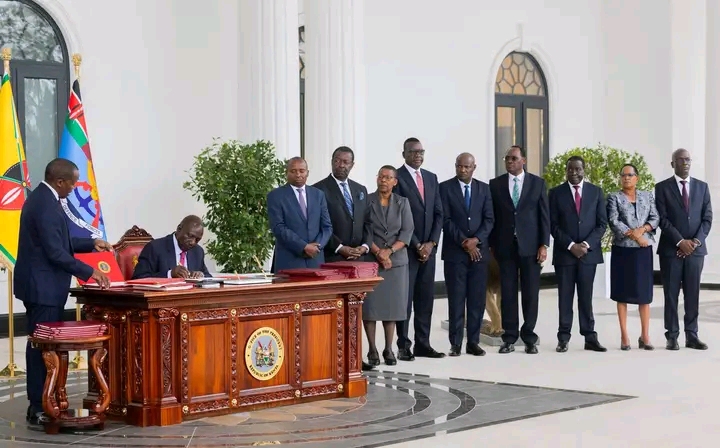
President William Ruto has today, Tuesday, September 8, 2026, assented to four Bills passed by Parliament, giving them the force of law. The four pieces of legislation touch on important areas of Kenya’s governance and economy: population and development planning, aviation, public finance management, and trust administration. The signing took place at State House, Nairobi, and marks the completion of the parliamentary process for the four Bills.
The four laws are the National Council for Population and Development Bill, the Air Passenger Service Charge Amendment Bill, the Public Finance Management Amendment Bill 2025, and the Trust Administration Bill. Although they deal with different sectors, their common objective is to improve the legal and institutional framework through which important public and private affairs are managed in Kenya.
The presidential assent is particularly significant because a Bill passed by Parliament does not become an enforceable law merely because MPs and Senators have approved it. Presidential assent is an important final stage of the legislative process. With the President's approval, the four Bills can now proceed to implementation in accordance with their respective commencement provisions.
1. National Council for Population and Development Bill
One of the most important pieces of legislation signed today is the National Council for Population and Development Bill. The new law gives the National Council for Population and Development a statutory foundation and provides a clearer legal framework for its work.
The Council is expected to play an important role in coordinating population policies and programmes in Kenya. Population issues are closely connected to almost every aspect of national development, including education, healthcare, housing, employment, food security, infrastructure and social protection.
For example, when a country's population grows rapidly, the government needs to anticipate increased demand for schools, hospitals, roads, housing, water and employment. Similarly, changes in the age structure of the population can influence government planning. A country with a large youth population needs policies that create jobs, expand skills training and support entrepreneurship.
The new law therefore seeks to strengthen the relationship between demographic information and national development planning. It is expected to support evidence-based planning and provide advice on population growth, demographic trends and their effects on economic and social development.
This could be particularly important as Kenya develops its long-term development agenda beyond Vision 2030. The government has increasingly emphasised the need for long-term planning based on reliable data and changing economic and demographic realities.
The law could also help policymakers understand population trends across different counties and regions. Such information can assist in determining where new schools, health facilities, water projects and other public services are most urgently required.
2. Air Passenger Service Charge Amendment Bill
The second legislation signed by President Ruto concerns air passenger service charges.
Air passenger service charges are collected from travellers using Kenya's airports. The new law updates and clarifies the legal framework governing the collection and administration of these charges.
The changes are significant because aviation is an important part of Kenya's economy. Airports support tourism, international trade, investment, business travel and regional connectivity. Nairobi, Mombasa, Kisumu and other airports serve millions of passengers and play a major role in connecting Kenya with the rest of Africa and the world.
According to reports on the new legislation, the amendments provide a framework through which proceeds from passenger service charges can support several institutions involved in the aviation and related sectors. These include the Kenya Airports Authority, Kenya Civil Aviation Authority, Kenya Meteorological Department and Tourism Fund.
This is important because the aviation sector depends on several institutions working together.
For instance, the Kenya Airports Authority is responsible for airport infrastructure and operations, while the Kenya Civil Aviation Authority plays a regulatory and safety role. Meteorological information is also essential for aviation because airlines and airports require accurate weather information for safe operations.
Tourism is similarly connected to aviation. International tourists frequently arrive in Kenya by air, making efficient and reliable airport services an important component of the tourism industry.
The amendment therefore seeks to establish a clearer framework for the management of passenger service charge revenues while supporting aviation infrastructure, regulation, weather services and tourism.
For ordinary travellers, the development will also attract attention because passenger service charges form part of the overall cost associated with air travel. The practical impact on travellers will depend on how the amended framework is implemented and whether future changes affect the amount or administration of charges.
3. Public Finance Management Amendment Bill 2025
The Public Finance Management Amendment Bill 2025 is arguably one of the most consequential of the four laws because it concerns the management and oversight of public money.
Public Finance Management laws determine how government institutions plan, allocate, spend and account for public resources. They apply to both national and county governments.
The new amendments are intended to strengthen accountability and oversight and ensure that public institutions act on recommendations made by constitutional oversight bodies.
One notable change reported following the President's assent concerns officials and public entities that fail to implement recommendations contained in reports from the Auditor-General and Controller of Budget, including recommendations adopted by Parliament or county assemblies. The amendments also introduce changes relating to the submission of financial statements.
This is potentially significant for the fight against misuse of public resources.
The Auditor-General examines how public funds are used and reports irregularities, weaknesses and other concerns. The Controller of Budget, meanwhile, plays an important role in overseeing withdrawals from public funds and reporting on budget implementation.
However, the existence of an audit report does not automatically mean that identified problems are corrected. The new provisions seek to strengthen the consequences and mechanisms surrounding implementation of recommendations.
This could increase pressure on public institutions to respond to audit findings rather than simply receiving reports without taking corrective action.
For taxpayers, stronger public finance management is important because government revenue ultimately comes from citizens and businesses through taxes, fees and other sources. Better accountability can help ensure that public money is used for its intended purposes.
The law could therefore have implications for projects involving roads, hospitals, schools, water, agriculture, infrastructure, county services and other government programmes.
Nevertheless, the effectiveness of the legislation will depend heavily on implementation. Laws can create strong rules, but institutions must enforce those rules consistently for citizens to see meaningful improvements.
4. Trust Administration Bill
The fourth legislation is the Trust Administration Bill, which establishes a more comprehensive legal framework for the administration of trusts in Kenya.
Trusts are arrangements in which assets are held and managed by trustees for beneficiaries or for specified purposes. They can be used in estate planning, management of family property, charitable activities and other arrangements involving assets.
Before the new framework, aspects of trust administration were governed under different pieces of legislation. The new law seeks to provide a more unified framework.
According to The Standard, the new legislation repeals the Trustees (Perpetual Succession) Act and the Trustee Act, replacing them with a single principal statute for trust administration.
This could make the legal environment easier to understand for trustees, beneficiaries, lawyers and other people involved in trust arrangements.
For families, the legislation could be especially relevant to estate planning. People who want to preserve property for children or other beneficiaries can use trusts as part of their long-term asset-management arrangements.
A clearer legal framework may also reduce uncertainty over the responsibilities of trustees and the rights of beneficiaries.
However, as with the other three laws, the real impact will depend on regulations, institutional capacity and how courts and relevant authorities interpret and enforce the new provisions.
*Why the Four Laws Matter*
Although the four Bills address different subjects, they share a common theme: strengthening Kenya's legal and institutional systems.
The population law focuses on better planning.
The aviation law focuses on improving the legal framework for passenger service charges and supporting institutions involved in aviation and related services.
The public finance law focuses on accountability and responsible management of government resources.
The Trust Administration law focuses on creating clearer rules for managing trusts and assets.
Taken together, the legislation demonstrates how laws passed by Parliament can affect areas ranging from government budgeting to air travel, population planning and family property.
The signing also comes at a time when the government is emphasising institutional reforms and long-term economic transformation. President Ruto has repeatedly described 2026 as a year of transformation and has stressed the importance of strengthening institutions and delivering measurable results.
*What Kenyans Should Expect Next*
The presidential assent does not mean that every change will be felt immediately by the public.
Implementation will now become the critical stage. Government departments, agencies and other institutions responsible for the respective laws will need to put the new provisions into practice. The precise timing will depend on the commencement provisions contained in each law.
For the population law, Kenyans can expect stronger institutional coordination around demographic planning.
For aviation, attention will focus on how passenger service charge revenue is collected, administered and distributed among relevant institutions.
For public finance, citizens and oversight bodies will watch closely to see whether the new measures lead to stronger action on audit recommendations and greater accountability.
For trusts, lawyers, trustees, beneficiaries and families will need to understand the new framework and how it affects existing and future trust arrangements.

You Might Also Like
-
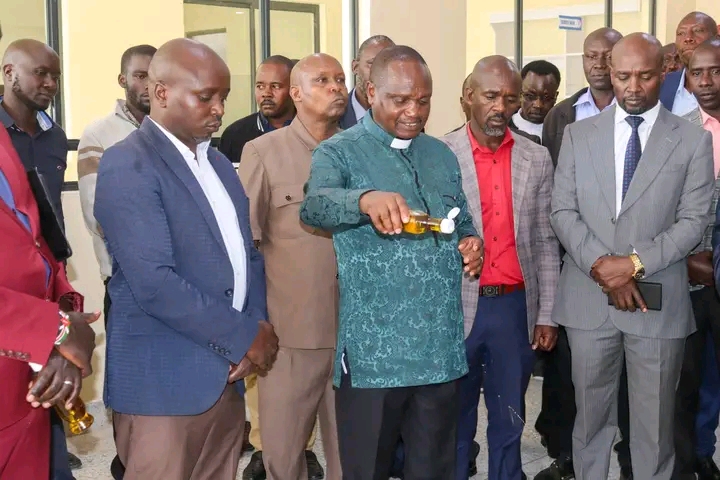
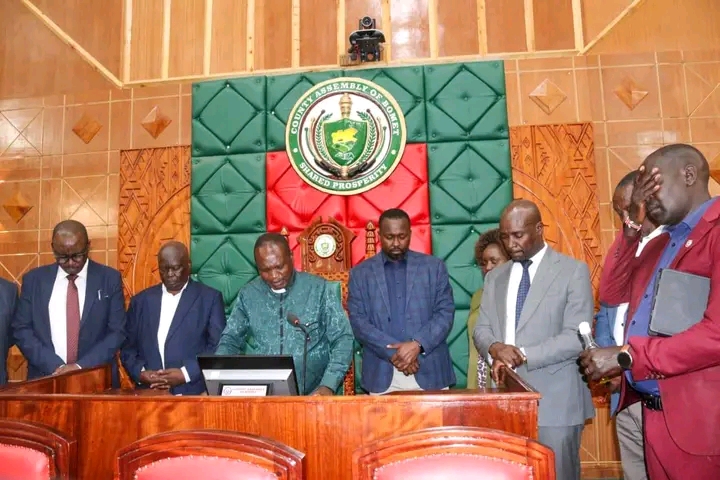 The September 7, 2026 prayers and dedication of the Bomet County Assembly, involving Governor Professor Hillary Barchok, represented an important intersection of faith, leadership and county governance. The occasion came as Bomet prepared for the President's development tour, during which the new C
 -
The September 7, 2026 prayers and dedication of the Dr Joyce Laboso Memorial Mother and Child Wellness Centre marked an important moment in Bomet's healthcare journey. The dedication church service, scheduled for 7:30 a.m. at the hospital grounds, provided an opportunity to pray for the institution
-
The gathering of Burundian nationals at their embassy in Nairobi is one of the most visible consequences of Kenya's new crackdown on certain foreign-operated small-scale businesses. Some Burundians are seeking emergency travel documents because they want to return home, while others are seeking cla
-
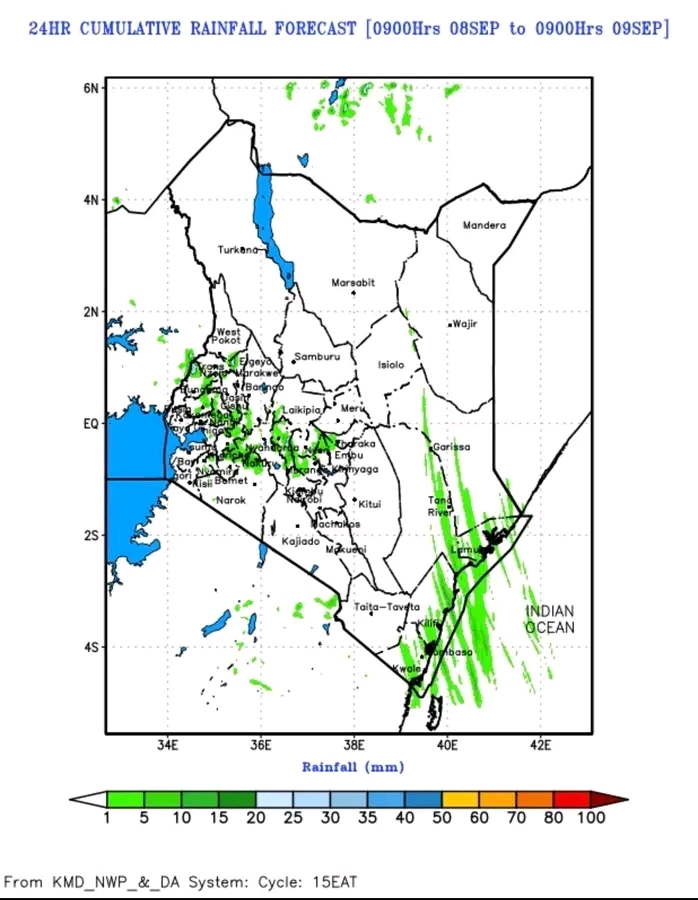
The latest weather outlook provides a mixed picture for Kenya. Most parts of the country are expected to remain generally dry, while selected areas—especially parts of Lamu, Kilifi, Tana River, Mombasa, Kwale, Narok and Bomet—have a higher likelihood of rainfall. Afternoon showers and thundersto
-
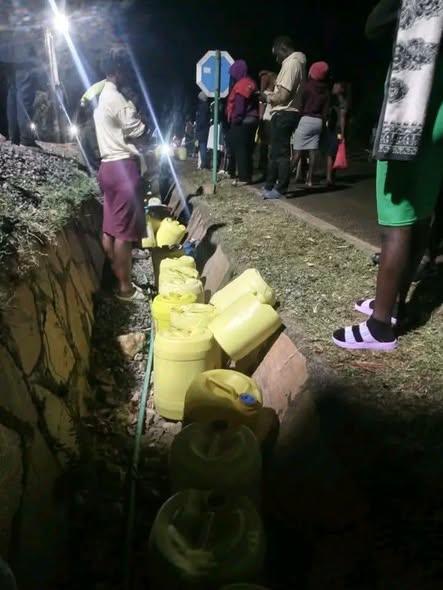
Bomet’s worsening water shortage is forcing students and residents to fetch water late at night as limited supply and low daytime pressure make access increasingly difficult. The situation is disrupting daily routines and raising concerns over safety and access to essential water services.
-
This major healthcare facility aimed at improving medical services for mothers and children in Bomet County. Named in honour of the late Dr. Joyce Laboso, the centre represents a lasting investment in better healthcare for families and future generations.