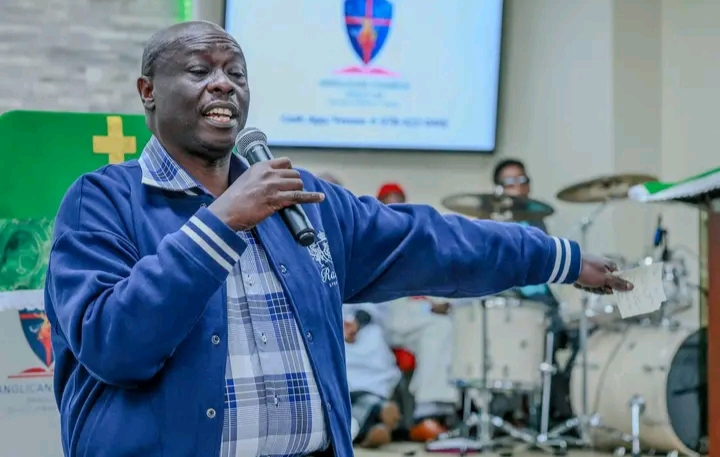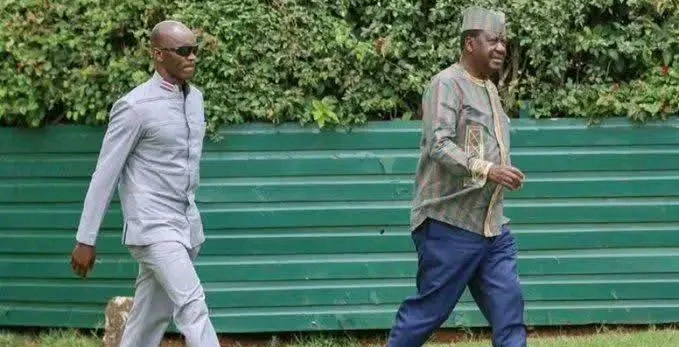
Chilling Revelation: Raila Odinga’s Former Bodyguard Recalls How 11 Bullets Rained on His Car in Terrifying Assassination Attempt
Maurice Ogeta’s revelations have brought renewed attention to the dangers he says he and Raila Odinga faced during Kenya’s politically turbulent periods. The most striking account concerns the 2023 confrontation in which Raila’s vehicle was reportedly struck by 11 bullets. Ogeta recalled fearing that Raila had been killed, describing how the security team attempted to shield him and escape the danger. His subsequent reported abduction further illustrates the difficulties he says he experienced while serving the former opposition leader. The revelations are significant because they come from a longtime member of Raila’s inner security circle who says he personally experienced these events.
The security surrounding the late Raila Amolo Odinga was one of the most closely watched aspects of his political life. As one of Kenya’s most influential opposition leaders, Raila spent decades at the centre of intense political competition, mass demonstrations, controversial elections and confrontations with successive governments. His public appearances often attracted large crowds, while his political activities sometimes took place in tense security environments.
Claims by a former bodyguard about alleged attempts on Raila’s life are therefore an important subject for public interest, particularly if the account sheds light on the threats he faced, the precautions taken by his security team and the incidents that left those protecting him concerned about his safety.However, there is an important distinction between a bodyguard’s personal recollection, an allegation of an assassination attempt and an incident independently confirmed by investigators. Without the original interview or a reliable report identifying the former bodyguard and quoting his precise words, it would be misleading to present specific incidents, names of alleged attackers or details of supposed plots as established facts.
The following account examines the historical and political context surrounding Raila’s security, the significance of testimony from people who worked closely with him, and the questions that must be answered to establish the full details of the reported revelations.The former bodyguard at the centre of the revelations is Maurice Ogeta, who served Raila for nearly three decades. In an interview published by Citizen Digital on October 9, 2026, Ogeta spoke about frightening encounters during political demonstrations, including an incident in which Raila’s vehicle came under heavy gunfire.
Ogeta’s account offers a perspective from someone who was not merely observing Raila’s political life from a distance. As a member of his security team, he was responsible for helping protect him during public appearances and politically charged situations.One of the most alarming episodes described by Ogeta involved Raila’s vehicle during anti-government demonstrations in 2023.
According to reports published following his interview, the incident occurred during the demonstrations associated with the Azimio la Umoja coalition. Raila was participating in politically tense public activities when his security team encountered a dangerous confrontation.
Ogeta recalled seeing an officer approach the windscreen of Raila’s vehicle as gunfire erupted. He said the windscreen was struck repeatedly until it cracked, after which more shots were fired at the car.In his account, the violence was so intense that the security team feared Raila had already been killed.
Ogeta recalled hearing the officer commanding the security team in the lead vehicle say that they had killed Mzee, referring to Raila. The statement reflected the panic and uncertainty inside the convoy at that moment.
The former bodyguard said he was deeply frightened, but the priority remained keeping Raila alive. He described the situation as one in which the security officers had to think quickly despite the noise, confusion and apparent danger surrounding the vehicle.
Another report by Pulse Kenya, published on October 12, 2026, reported Ogeta's account that 11 bullets struck Raila’s car. The report said the bodyguard recalled the team pushing Raila down inside the vehicle and using whatever protection they could find to shield him. Ogeta’s account provides an insight into the split-second decisions that security personnel may have to make when protecting a high-profile political figure.
During the shooting, he said the team attempted to keep Raila low inside the vehicle to reduce his exposure to the gunfire. The priority was to prevent him from being seen or struck while the team sought a way out of the confrontation.
According to the account reported by Pulse Kenya, members of the security team used their bodies and available objects inside the vehicle to provide additional protection. Ogeta described the officers as being prepared to put themselves in danger to give Raila a better chance of surviving.The situation was complicated by the presence of tear gas and water cannons, which Ogeta said made it difficult to see clearly through the vehicle’s windscreen. The team also faced the challenge of manoeuvring an armoured vehicle in an environment where people had surrounded it.
Ogeta recalled considering whether to confront an individual who was approaching the vehicle, but he recognised that doing so could provoke further violence. He described the difficulty of making such a decision when Raila was vulnerable and the security team did not know what the attackers might do next.One of the most emotional parts of the interview concerned Ogeta’s realisation that he might not survive a confrontation while protecting his employer.
He explained that the demonstrations were unpredictable and that security personnel could not always know whether they would leave a particular location safely.
Ogeta described the fear in deeply personal terms, saying that he believed he would be the first to die because he was the person responsible for protecting Raila.His reasoning was straightforward: if attackers wanted to reach Raila, the bodyguard and the driver could become their first obstacles.
The account reveals the psychological burden associated with close-protection duties. Security officers are trained to assess threats and protect those under their care, but they can still experience fear when confronted with overwhelming danger.
Ogeta’s recollections also demonstrate how political demonstrations can become dangerous environments when confrontations escalate and the people involved cannot easily distinguish between an immediate threat and an attempt to disperse a crowd.To understand Ogeta’s testimony, it is necessary to examine the political climate in which the reported confrontation occurred.
In 2023, Kenya experienced a series of opposition-led demonstrations against the government of President William Ruto. The protests were associated with the Azimio la Umoja coalition, which Raila led, and were driven by grievances that included the cost of living and political disagreements.
The demonstrations attracted significant public attention and were accompanied by confrontations between protesters and security personnel.Another significant part of Ogeta’s story concerns his own reported abduction in July 2023.
According to reporting by The Kenya Times, Ogeta said he was seized on July 19, 2023, during the period of anti-government demonstrations. He described being restrained and moved between vehicles before being held in a room where he was questioned about Raila’s movements and plans.
His disappearance caused concern among people close to him. The reports said legal intervention followed, including a High Court order requiring authorities to produce him before the court and account for his detention.The testimony has renewed interest in the risks Raila faced throughout his political career.
For many Kenyans, Raila was a prominent opposition leader whose political activities frequently placed him at the centre of national controversies. His supporters viewed him as a persistent advocate for political reform, while his opponents disagreed with many of his political positions.
Whatever their political opinions, Ogeta’s account highlights the importance of protecting public figures and ensuring that security operations during demonstrations are conducted lawfully.Beyond the frightening security incidents, Ogeta’s interview revealed the personal relationship that developed between him and Raila over many years.
According to Nation’s October 11, 2026, report, Ogeta said their relationship began in 1997 and continued for nearly 29 years. He described Raila as someone whose life extended beyond politics and whose death left him struggling to adjust to life without the man he had served for so long.
The length of their association meant Ogeta had witnessed Raila in different circumstances: during political campaigns, public gatherings, private moments and periods of uncertainty.That proximity helps explain why the bodyguard’s recollections are emotionally charged. He was describing not only a public figure he had been assigned to protect, but also a person with whom he had developed a long-standing relationship.
Ogeta also recounted Raila’s final moments in India in October 2025. He said they had followed their normal morning routine before Raila suddenly stopped walking and appeared unwell. Ogeta tried to support him and called for assistance as his condition deteriorated. He recalled that Raila took his final breath while being supported by him.
These recollections add a deeply personal dimension to the former bodyguard’s testimony.

You Might Also Like
-
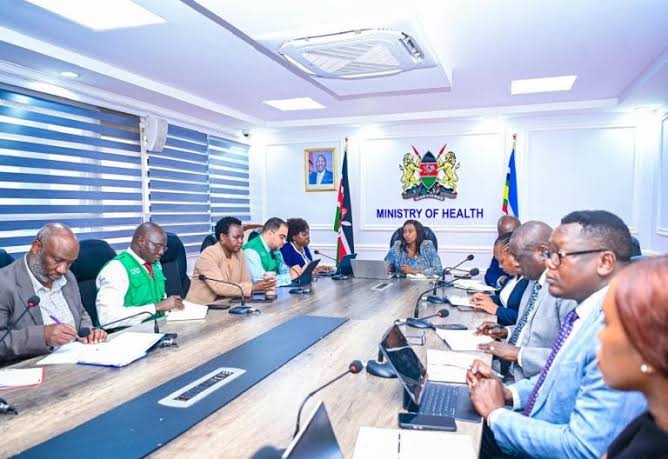 Ps mary muthoni leads the national multi-agency ebola taskforce in reviewing response operations, coordinating resources and strengthening preparedness measures following an imported ebola case in kenya, as authorities intensify efforts to prevent further transmission and protect public health.
 -
Two police officers attached to kinjo police patrol base in meru county have been arrested over allegations of defiling a three-year-old girl. the suspects are expected to appear before the githongo law courts as investigations continue.
-
President william ruto announces ksh850 million for the construction of small-scale tea factories, aiming to support tea farmers, boost local processing and create employment opportunities in tea-growing regions.
-
Deputy President Kithure Kindiki's visit to Othaya Constituency in Nyeri County on October 12, 2026, centred on two major development activities: the launch of the Kihuro–Kirio–Kianjogu Last Mile Electrification Project and the inspection of the Gathunguri–Waihara–Kabebero road. The electri
-
The kenya kwanza administration is accelerating infrastructure development in nandi county, with 350km of roads under construction, 23,000 households targeted for electricity connectivity, 15 modern markets, 3,500 affordable housing units and 6,000 student hostel units. president william ruto and ot
-
Rigathi Gachagua's latest assurance that the opposition will field one presidential candidate against President William Ruto in 2027 has placed unity at the centre of Kenya's emerging election debate. The DCP leader has maintained that opposition leaders must be prepared to put aside personal ambit