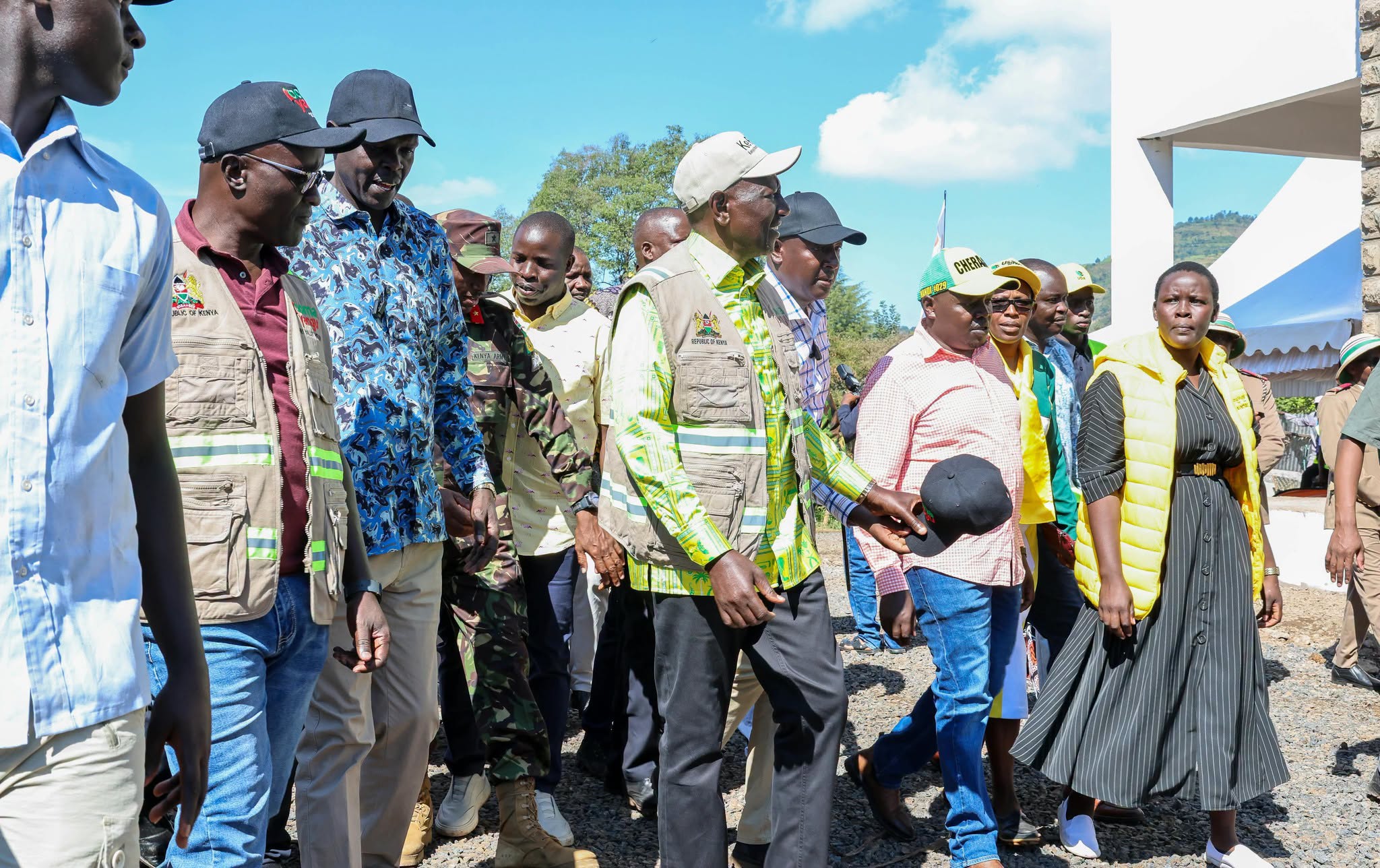
kenya kwanza steps up infrastructure development in nandi county as ruto launches north rift tour
The kenya kwanza administration is accelerating infrastructure development in nandi county, with 350km of roads under construction, 23,000 households targeted for electricity connectivity, 15 modern markets, 3,500 affordable housing units and 6,000 student hostel units. president william ruto and other leaders launched the north rift development tour at maraba, tinderet, highlighting the government's commitment to infrastructure expansion, job creation and improved livelihoods.
The kenya kwanza administration has intensified its infrastructure development agenda, with major investments in road construction, electricity connectivity, modern markets, affordable housing and student accommodation forming part of its broader plan to transform communities across the country.
in nandi county, the government says 350 kilometres of roads are under construction, while approximately 23,000 households are being connected to electricity. the county is also witnessing the construction of 15 modern markets, 3,500 affordable housing units and 6,000 student hostel units.
these projects were highlighted as president william ruto and other leaders gathered at maraba in tinderet constituency, nandi county, to mark the commencement of the north rift development tour.
the tour is intended to highlight ongoing government projects, assess development priorities and engage residents on infrastructure and other initiatives aimed at improving livelihoods across the region.
the administration maintains that expanding infrastructure is central to stimulating economic activity, creating employment opportunities and improving access to essential services for kenyans in both rural and urban areas.
government intensifies road construction
road infrastructure remains one of the major priorities of the kenya kwanza administration, with the government seeking to improve connectivity between communities, trading centres, farms and major economic destinations.
in nandi county, 350 kilometres of roads are under construction, a programme expected to improve transportation and strengthen links between rural communities and important service centres.
good roads play a significant role in supporting agriculture, which remains a major source of income for many households in the north rift region. farmers depend on reliable transport networks to move agricultural produce from farms to collection centres, markets and processing facilities.
poor road conditions can increase transportation expenses, delay the delivery of farm produce and expose farmers to losses, particularly when perishable commodities take too long to reach their destinations.
improved roads can help reduce these challenges by making it easier for farmers, traders and transport operators to move goods more efficiently.
the road projects are also expected to improve access to schools, hospitals, markets and other public facilities, especially for residents living far from major towns.
during periods of heavy rainfall, some rural roads become difficult to use, affecting the movement of people and essential supplies. better road infrastructure can help improve mobility, although the long-term benefits will depend on proper drainage, construction quality and regular maintenance.
for businesses operating in nandi county, reliable roads can make it easier to access customers, receive supplies and expand operations.
the construction programme also presents opportunities for local workers and businesses involved in the supply of construction materials, transport and other services.
however, residents will be keen to see the projects completed within the expected timelines and maintained to ensure that the investments deliver lasting benefits.
23,000 households targeted for electricity connectivity
electricity connectivity is another major component of the government's development agenda in nandi county.
according to the figures highlighted during the development tour, approximately 23,000 households are being connected to electricity through the ongoing expansion programme.
access to electricity can transform daily life by improving lighting, supporting household activities and creating opportunities for small businesses to operate more efficiently.
for families that have relied on alternative sources of lighting, electricity can provide a more convenient option for studying, working and carrying out domestic activities after sunset.
students may benefit from improved lighting at home, giving them more time to study, while shops and other small businesses can extend their operating hours where appropriate.
electricity is also important for enterprises that depend on powered equipment, refrigeration and digital services.
in rural trading centres, reliable power can support businesses such as barbershops, cybercafes, retail shops, milk collection facilities and small-scale processing enterprises.
for farmers, electricity can also support agricultural value addition, refrigeration and other activities that help improve the handling and marketing of produce.
the expansion of electricity connectivity is therefore expected to contribute to economic activity beyond individual households.
nevertheless, connecting homes to the national grid is only one part of the process. affordability of electricity, reliability of supply and the cost of connecting appliances remain important considerations for many families.
the government and relevant agencies will need to ensure that the expansion programme translates into practical benefits for households and businesses.
15 modern markets under construction
the construction of 15 modern markets is another key investment being undertaken in nandi county.
markets provide an important link between farmers, traders, consumers and other participants in the local economy. they create spaces where agricultural produce, household goods and other commodities can be bought and sold.
for many small-scale traders, market facilities are an important source of income and an entry point into business.
however, traders operating in poorly equipped markets can face challenges associated with inadequate shelter, limited sanitation facilities, poor drainage and insufficient space for customers.
modern markets are intended to provide better trading environments through improved infrastructure and more organised business spaces.
depending on their design and facilities, such markets can include designated stalls, sanitation facilities, water access, drainage systems and areas for loading and unloading goods.
these facilities can help improve hygiene, organisation and the overall trading experience for both sellers and customers.
for farmers in nandi county, better markets could provide additional opportunities to sell agricultural produce closer to home and connect with buyers more conveniently.
the facilities could also support the growth of small businesses by creating organised spaces where traders can reach a wider customer base.
the construction programme is expected to contribute to employment during the building phase and create opportunities for traders once the markets become operational.
however, the success of the projects will depend on proper allocation of trading spaces, affordable charges, effective management and regular maintenance.
traders will also be interested in how the facilities will be allocated and whether the completed markets will offer practical improvements compared with existing trading areas.
affordable housing programme expands
the government is also undertaking the construction of 3,500 affordable housing units in nandi county as part of its wider housing agenda.
affordable housing has been presented by the administration as a way of addressing the demand for decent accommodation while creating employment opportunities in the construction industry.
housing development can stimulate economic activity by generating demand for building materials, transport services, skilled labour and other supplies required throughout the construction process.
the programme may also create opportunities for artisans, including masons, electricians, plumbers, carpenters and other workers involved in building projects.
beyond employment, the provision of adequate housing remains an important development priority as communities grow and demand for accommodation increases.
well-planned residential developments can improve access to basic infrastructure and create more organised living environments.
however, affordability remains central to the success of any housing programme.
potential beneficiaries will be interested in the cost of the units, payment arrangements, eligibility requirements and the process for allocating completed homes.
the government will also need to ensure that housing developments are supported by essential services such as water, sanitation, electricity, access roads and nearby social facilities.
the construction of 3,500 units in nandi county forms part of the wider effort to expand housing opportunities beyond major urban centres.
if implemented effectively, the programme could contribute to local economic growth while helping eligible households access decent accommodation.
6,000 student hostel units planned
education infrastructure is another area receiving attention, with 6,000 student hostel units under construction in nandi county.
the initiative comes as institutions of higher learning continue to face the need for adequate accommodation for students pursuing various courses.
access to safe and reasonably priced accommodation is an important consideration for students, particularly those studying away from their family homes.
where institutions have limited hostel capacity, some students may be forced to seek housing in surrounding communities, potentially increasing their living expenses and transport costs.
additional hostel accommodation could help ease pressure on existing facilities and provide more housing options for students.
well-planned student hostels can also improve the learning environment by offering convenient access to educational institutions and, where available, essential amenities.
the construction of the units may create employment opportunities for construction workers and suppliers while stimulating economic activity in surrounding areas.
local businesses, including food vendors, shops and transport operators, could also benefit from increased activity once the accommodation facilities become operational.
however, the final impact will depend on the institutions and students served by the projects, the cost of accommodation and the quality of the completed facilities.
students and their families will be looking for accommodation that is not only accessible but also safe, affordable and suitable for academic life.
the government and relevant institutions will therefore need to ensure that the hostel projects respond to actual accommodation needs and are completed to the required standards.
north rift development tour begins in tinderet
president william ruto and other leaders gathered at maraba in tinderet constituency, nandi county, for the commencement of the north rift development tour.
the tour provides an opportunity for the administration to showcase ongoing projects and communicate its development priorities to residents across the region.
the north rift is an important agricultural and economic area, with many communities depending on farming, livestock production, trade and related activities for their livelihoods.
investments in roads, electricity, markets, housing and education infrastructure are intended to strengthen the region's capacity to support economic activity and improve access to essential services.
the tour also places attention on the government's delivery record and its commitment to continuing development projects in different parts of the country.
as leaders engage residents, communities are likely to focus on the progress of announced projects, the availability of public services and the practical impact of development spending.
for residents, the most important measure of progress will be whether the projects are completed and deliver the benefits they were intended to provide.
roads must remain usable, electricity connections must be accessible, markets must support traders and housing projects must meet the needs of eligible beneficiaries.
the development tour is therefore an opportunity to highlight government plans while bringing renewed attention to the implementation of projects across the region.
infrastructure investment and job creation
the range of projects highlighted in nandi county reflects the government's wider argument that infrastructure investment can support economic growth and employment creation.
road construction, housing developments, market facilities and student accommodation require workers, construction materials, transport services and other supplies.
these activities can create direct employment during construction and generate indirect opportunities for businesses supplying goods and services.
once completed, the projects may also support longer-term economic activity by improving transportation, expanding electricity access and providing facilities for trade and education.
for example, a trader operating in a modern market may benefit from improved access to customers, while a farmer may find it easier to transport produce using better roads.
similarly, a business connected to electricity may be able to use equipment that was previously unavailable or too expensive to operate.
such improvements can contribute to local economic development, although the scale of the benefits will depend on implementation, demand and the ability of residents to make productive use of the facilities.
infrastructure investment must also be accompanied by effective planning, accountability and maintenance to protect public resources.
communities will be looking for transparent information on project costs, completion schedules and the arrangements for managing facilities after construction.
residents await delivery of projects
as the north rift development tour gets underway, attention is turning to the progress of the various infrastructure projects and the benefits they are expected to deliver.
the figures highlighted in nandi county point to significant activity across road construction, electricity connectivity, market development, housing and student accommodation.
the construction of 350 kilometres of roads and the planned electricity connections for 23,000 households could improve access to essential services and strengthen economic links across the county.
meanwhile, the 15 modern markets, 3,500 affordable housing units and 6,000 student hostel units represent further investments in trade, accommodation and education infrastructure.
the ultimate success of these projects will depend on timely completion, quality construction, proper management and the ability of residents to access the resulting facilities.
as president william ruto and other leaders continue the north rift development tour, residents will be watching to see how the government's commitments translate into completed projects and improvements in their daily lives.
for nandi county and the wider north rift region, infrastructure development remains an important part of the broader conversation about economic opportunities, public services and the future of local communities.

You Might Also Like
-
 Ps mary muthoni leads the national multi-agency ebola taskforce in reviewing response operations, coordinating resources and strengthening preparedness measures following an imported ebola case in kenya, as authorities intensify efforts to prevent further transmission and protect public health.
 -
Two police officers attached to kinjo police patrol base in meru county have been arrested over allegations of defiling a three-year-old girl. the suspects are expected to appear before the githongo law courts as investigations continue.
-
President william ruto announces ksh850 million for the construction of small-scale tea factories, aiming to support tea farmers, boost local processing and create employment opportunities in tea-growing regions.
-
Deputy President Kithure Kindiki's visit to Othaya Constituency in Nyeri County on October 12, 2026, centred on two major development activities: the launch of the Kihuro–Kirio–Kianjogu Last Mile Electrification Project and the inspection of the Gathunguri–Waihara–Kabebero road. The electri
-
Rigathi Gachagua's latest assurance that the opposition will field one presidential candidate against President William Ruto in 2027 has placed unity at the centre of Kenya's emerging election debate. The DCP leader has maintained that opposition leaders must be prepared to put aside personal ambit
-
Chief Justice Martha Koome's visit to Kimana in Kajiado County for the International Day of the Girl Child on October 11, 2026, placed the protection and empowerment of vulnerable girls at the centre of national attention. The graduation of 200 rescued girls following skills and leadership training