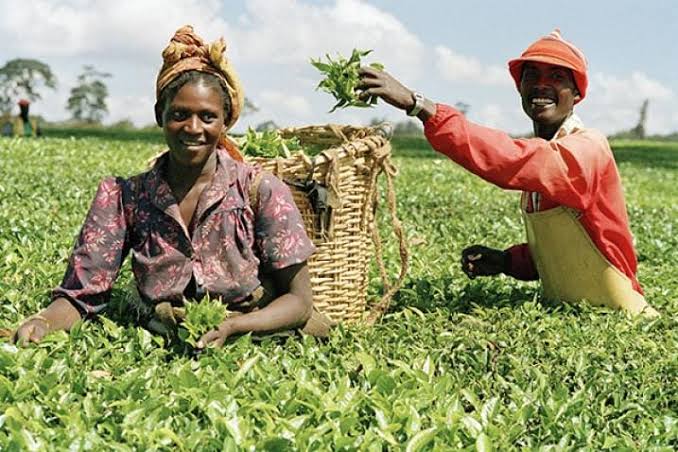
Ruto allocates ksh850 million for construction of small-scale tea factories
President william ruto announces ksh850 million for the construction of small-scale tea factories, aiming to support tea farmers, boost local processing and create employment opportunities in tea-growing regions.
President william ruto has announced an allocation of ksh850 million towards the construction of small-scale tea factories, in a move aimed at strengthening the tea sector, supporting farmers and expanding local processing capacity.
the planned investment is expected to attract attention among tea-growing communities, where farming remains a major source of income for households and an important contributor to the country's agricultural economy.
tea is one of kenya's key cash crops, supporting millions of livelihoods through cultivation, transportation, processing, trade and related economic activities. the sector also contributes to the country's export earnings, making its performance important to farmers, businesses and the wider economy.
the allocation is intended to support the development of smaller tea processing facilities, potentially creating opportunities for farmers to participate more directly in the value chain and improve access to processing services.
the announcement comes as the government continues to focus on agricultural transformation, with investments intended to improve production, support rural enterprises and strengthen the position of farmers in the national economy.
government targets growth in the tea sector
the tea industry plays a significant role in kenya's agricultural sector, particularly in counties where favourable climatic conditions support tea cultivation.
farmers in regions such as kericho, bomet, nandi, nyamira, kisii, murang'a and other highland areas depend on tea as a regular source of household income.
for many families, proceeds from tea sales help meet essential expenses, including school fees, food, healthcare, farm operations and other household needs.
however, farmers' earnings are influenced by several factors, including production costs, weather conditions, the quality of harvested leaves, processing expenses and prices in the tea market.
the proposed ksh850 million investment in small-scale tea factories is expected to support efforts to improve the infrastructure available to tea producers.
processing facilities are an important part of the tea value chain because freshly harvested tea leaves must be handled and processed appropriately to preserve their quality.
when processing facilities are accessible and operate efficiently, farmers can have better opportunities to deliver their produce without unnecessary delays.
the government is expected to pursue the investment as part of broader efforts to strengthen agricultural production and increase the economic opportunities available to rural communities.
the specific impact, however, will depend on the number of factories established, their locations, ownership arrangements, processing capacity and the terms under which farmers will access their services.
small-scale factories could improve access to processing
one of the main considerations in the development of small-scale tea factories is accessibility for farmers.
in tea-growing areas, farmers harvest fresh leaves regularly and must transport them to processing facilities within an appropriate period.
the distance between farms and factories can influence transportation expenses, the time required to deliver harvested leaves and the overall efficiency of the supply chain.
for farmers located far from established processing facilities, additional factories could help improve access to processing services if they are strategically located.
smaller facilities may also create opportunities for communities to organise production and explore locally managed agricultural enterprises.
depending on the design of the programme, the factories could support farmers operating through cooperatives or other organised groups.
such arrangements may help communities coordinate deliveries, manage production and participate in decisions concerning the operation of processing facilities.
however, the viability of a factory depends on more than its construction. a facility requires a sufficient supply of quality tea leaves, reliable electricity, trained personnel, appropriate machinery and effective management.
factories must also maintain the required processing standards to ensure that the tea produced can compete in domestic and international markets.
the government and relevant agricultural institutions will therefore need to consider these requirements when implementing the investment.
supporting tea farmers and rural livelihoods
tea farming provides employment and income for households across several agricultural regions in kenya.
the sector supports people working directly on farms as well as those involved in leaf collection, transportation, processing, packaging and distribution.
an investment in processing infrastructure could therefore have benefits beyond the farmers who supply the leaves.
the construction phase may create opportunities for contractors, construction workers, equipment suppliers and transport businesses.
once operational, the factories may require employees responsible for receiving tea leaves, operating machinery, maintaining equipment, managing records and overseeing quality control.
additional economic activity could also emerge around the facilities as farmers and traders seek supporting services.
for rural communities, such opportunities can contribute to household incomes and strengthen local business activity.
nevertheless, the number of jobs created will depend on the scale of each factory, the technology used and the amount of tea it processes.
the government will also need to ensure that the intended beneficiaries have a clear understanding of how the facilities will operate and how farmers can participate.
for tea-growing households, the central concern will be whether the investment translates into better access to processing, efficient services and improved returns from their agricultural activities.
adding value to locally produced tea
value addition remains an important consideration in agricultural development because processing can increase the range of economic activities associated with raw farm produce.
in the tea sector, harvested leaves undergo several stages of processing before the finished product reaches buyers.
these activities require specialised equipment, technical knowledge and quality control systems.
investing in processing facilities can help expand the infrastructure available to tea producers and strengthen the country's capacity to handle agricultural produce locally.
small-scale factories may provide opportunities to explore different production models, depending on their machinery, operational capacity and access to markets.
however, the establishment of a factory does not automatically guarantee higher earnings for farmers.
returns will also depend on production efficiency, the quality of the tea, operating costs, market demand and the prices received for the finished product.
factories must therefore be managed efficiently and linked to reliable markets to remain financially sustainable.
the proposed investment could contribute to the development of the tea value chain if it is accompanied by appropriate technical support, sound business planning and effective market access strategies.
tea industry faces production and market challenges
despite its importance to the economy, the tea sector continues to face challenges that can affect farmers' earnings and the long-term sustainability of production.
the cost of farm inputs and labour can place pressure on farmers, especially when market prices do not increase at the same pace as production expenses.
weather conditions also influence the amount and quality of tea harvested. changes in rainfall and temperature can affect crop growth and create uncertainty for producers.
farmers must also contend with the need to maintain healthy tea bushes, manage pests and diseases and ensure that harvested leaves meet the required quality standards.
beyond the farm, transportation and processing costs influence the overall performance of the industry.
the international market presents additional considerations because demand, competition and changing prices can affect the returns generated from tea exports.
these challenges demonstrate why investment in factories must be accompanied by broader measures to support farmers.
improving agricultural extension services, access to affordable inputs, infrastructure and market information could help farmers make informed decisions and manage production risks.
the government will also need to ensure that new processing facilities complement existing infrastructure rather than creating unnecessary competition for limited supplies of tea leaves.
importance of efficient factory management
the success of the proposed ksh850 million investment will depend significantly on how the factories are managed after construction.
processing facilities require adequate working capital to purchase or receive tea leaves, pay workers, meet electricity expenses and maintain machinery.
they also need transparent financial systems and clear procedures for managing supplies, processing operations and payments.
where farmers participate through cooperatives or organised groups, effective governance will be essential in protecting their interests.
clear accountability mechanisms can help reduce the risk of financial mismanagement and ensure that the facilities operate in the interests of their intended beneficiaries.
regular maintenance will also be necessary to prevent machinery breakdowns that could interrupt processing and affect the quality of tea.
in addition, factory operators will require technical training to ensure that equipment is used correctly and that production standards are maintained.
the government and relevant agricultural agencies could support the initiative through training, technical supervision and monitoring of the facilities.
such measures would help ensure that public investment produces lasting benefits rather than infrastructure that becomes underused or difficult to maintain.
access to markets remains essential
another important consideration is the availability of reliable markets for tea processed at the proposed factories.
tea production and processing must ultimately be connected to buyers willing to purchase the finished product at commercially sustainable prices.
without dependable market arrangements, a factory may struggle to generate sufficient revenue to cover operating expenses and provide value to participating farmers.
market access can be strengthened through appropriate partnerships with established buyers, marketing organisations and other participants in the tea trade.
quality assurance is equally important because buyers require products that meet recognised standards.
factories must therefore pay attention to processing methods, storage, handling and the consistency of the finished tea.
depending on their business models, some facilities may also explore opportunities to develop specialised products or reach additional market segments.
however, such opportunities would require investment in technical expertise, packaging, branding and distribution.
the government will need to consider these issues when determining how the factories will be established and supported.
ensuring that farmers benefit from the investment will require attention to the entire value chain, from cultivation and collection to processing and final sale.
implementation and accountability
as the government moves forward with the proposed allocation, attention will turn to the implementation process and the distribution of resources.
farmers and other stakeholders will be interested in knowing which areas will benefit, how the factories will be selected for development and when construction is expected to begin.
clear communication about the programme could help communities understand the opportunities available and the requirements for participation.
transparent procurement and financial management will also be important in ensuring that the funds are used for their intended purpose.
regular reporting on construction progress, expenditure and operational readiness could help the public assess whether the programme is delivering the expected results.
the government will also need to clarify the ownership and management structures of the factories, including responsibility for maintenance and operating expenses.
these arrangements will be particularly important if farmers' organisations or cooperatives are expected to participate in running the facilities.
effective implementation could help ensure that the investment contributes to stronger processing capacity and sustainable economic opportunities in tea-growing communities.
expectations among tea-growing communities
the announcement of ksh850 million for small-scale tea factories places renewed attention on the government's efforts to support agricultural production and rural development.
for farmers, the expected benefits will depend on whether the new facilities improve access to processing services, reduce logistical challenges and provide commercially viable opportunities.
communities will also be watching for information about the locations of the proposed factories, the implementation timetable and the criteria used to identify beneficiaries.
the construction of processing facilities could support local employment and strengthen agricultural enterprises, provided the projects are properly planned and managed.
at the same time, farmers will continue to require support in dealing with production costs, weather-related risks, quality requirements and fluctuations in market prices.
the allocation therefore represents a proposed investment whose wider impact will depend on how effectively it is implemented and integrated into the existing tea industry.
as kenya continues to pursue agricultural transformation, the tea sector remains an important part of the country's efforts to support rural livelihoods, generate export earnings and expand economic opportunities.
the proposed ksh850 million investment could provide additional processing infrastructure for tea-growing communities, while its long-term success will depend on transparency, efficient management, reliable markets and meaningful benefits for farmers.

You Might Also Like
-
 Ps mary muthoni leads the national multi-agency ebola taskforce in reviewing response operations, coordinating resources and strengthening preparedness measures following an imported ebola case in kenya, as authorities intensify efforts to prevent further transmission and protect public health.
 -
Two police officers attached to kinjo police patrol base in meru county have been arrested over allegations of defiling a three-year-old girl. the suspects are expected to appear before the githongo law courts as investigations continue.
-
Deputy President Kithure Kindiki's visit to Othaya Constituency in Nyeri County on October 12, 2026, centred on two major development activities: the launch of the Kihuro–Kirio–Kianjogu Last Mile Electrification Project and the inspection of the Gathunguri–Waihara–Kabebero road. The electri
-
The kenya kwanza administration is accelerating infrastructure development in nandi county, with 350km of roads under construction, 23,000 households targeted for electricity connectivity, 15 modern markets, 3,500 affordable housing units and 6,000 student hostel units. president william ruto and ot
-
Rigathi Gachagua's latest assurance that the opposition will field one presidential candidate against President William Ruto in 2027 has placed unity at the centre of Kenya's emerging election debate. The DCP leader has maintained that opposition leaders must be prepared to put aside personal ambit
-
Chief Justice Martha Koome's visit to Kimana in Kajiado County for the International Day of the Girl Child on October 11, 2026, placed the protection and empowerment of vulnerable girls at the centre of national attention. The graduation of 200 rescued girls following skills and leadership training