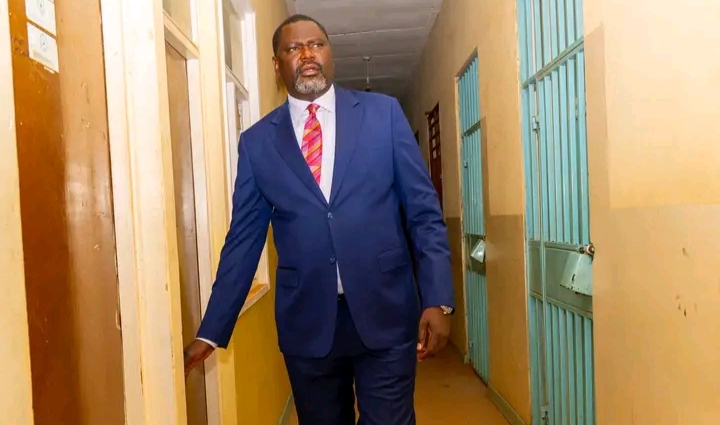
CS Ruku Sounds Alarm in Kajiado: Over 70% of Public Servants Missing as He Warns Against Early Christmas Break
CS Geoffrey Ruku's impromptu visit to government offices in Kajiado on November 2, 2026, has renewed the national conversation about accountability and discipline in the public service. The reported discovery that more than 70 per cent of public servants were absent from their workstations, alongside the observation that nearly 90 per cent of those present were interns, raised serious concerns about supervision and commitment among some government employees. His warning against taking an early Christmas break serves as a reminder that public servants must continue fulfilling their responsibilities until their officially approved leave begins. Ruku has also warned that officers found neglecting their duties will face disciplinary action, with human resource managers and senior supervisors expected to take greater responsibility.
The government has raised fresh concerns over absenteeism and discipline in public offices following an impromptu inspection by Public Service Cabinet Secretary Geoffrey Ruku in Kajiado County, where he reportedly found more than 70 per cent of public servants absent from their workstations.The surprise visit was aimed at assessing the attendance, commitment and accountability of government employees while ensuring that public offices remain operational and accessible to Kenyans seeking essential services.
According to the reported findings, the high number of employees who were missing from their workstations raised questions about how public institutions are being managed and whether government workers are fulfilling their responsibilities during official working hours.
CS Ruku expressed concern over the situation and warned public servants against abandoning their duties, particularly as the Christmas holiday season approaches. He cautioned government employees against taking an unofficial early Christmas break at the expense of service delivery to citizens.The inspection took place on Monday, November 2, 2026, when CS Ruku arrived at government offices in Kajiado after 9:00 a.m. without giving employees prior notice. He explained that he had received reports suggesting that some government officers were not taking their responsibilities seriously and wanted to establish whether the complaints were accurate.
During the inspection, Ruku moved around different offices to establish whether public servants were present and attending to members of the public. The findings reportedly showed that more than 70 per cent of the expected employees were absent from their workstations.
The Cabinet Secretary expressed disappointment, saying that government employees are expected to demonstrate commitment and professionalism regardless of whether their supervisors are physically present. He maintained that public offices should remain operational throughout official working hours because Kenyans depend on government institutions for essential services.One of the most concerning findings was that nearly 90 per cent of the employees who had reported to work were government interns. This raised questions about the commitment of senior officers who are expected to guide, supervise and support younger employees working in government departments.
Ruku questioned why interns and attachment students appeared to be more committed to reporting to work on time than some permanent government employees. He observed that young people joining the public service need guidance from experienced officers, but such mentorship becomes difficult when their supervisors are absent.
According to the report, the Cabinet Secretary also discovered that some human resource managers, who are responsible for monitoring attendance and ensuring discipline in government offices, were themselves missing from their workstations. He said this was particularly worrying because human resource departments are expected to ensure that government employees comply with established workplace regulations.Following the findings, Ruku warned that the government would not tolerate absenteeism, negligence and failure by public servants to observe official working hours.
He indicated that disciplinary measures would be taken against officers found neglecting their responsibilities. He specifically mentioned that two officers under his ministry would face immediate action, alongside other senior members of staff whose conduct had raised concerns during the inspection.
The CS emphasised that government employment comes with responsibilities that must be respected. He argued that public servants receive salaries funded by taxpayers and must therefore demonstrate accountability by ensuring that citizens receive the services they need.He also questioned the effectiveness of supervision in offices where employees can remain absent without their supervisors taking action. According to him, human resource managers and departmental heads must take responsibility for monitoring attendance and ensuring that every employee performs their assigned duties.
Ruku's warning was also directed at senior officers who might assume that their positions give them the freedom to report to work whenever they wish. He stressed that leadership positions come with additional responsibility, including setting a good example for junior employees.
The Cabinet Secretary's message was clear: public service is not simply about holding an office or receiving a monthly salary; it is about being available to serve citizens and fulfilling the responsibilities attached to government employment.With December approaching, the CS warned government employees against taking an unofficial early Christmas break or abandoning their workstations because they are preparing for the festive season.
He reminded public servants that the Christmas holiday season does not give them automatic permission to stop working before the authorised leave period.
Government offices are expected to continue providing services during November and December, except on gazetted public holidays and approved leave arrangements. Employees who wish to take time off must follow the established procedures and obtain the necessary authorisation from their supervisors.
Ruku's warning comes at a time when many Kenyans depend on government offices to complete important transactions before the end of the year. These include applications for official documents, administrative services, registration procedures and other government-related activities.Similar Incidents in Other Counties
The Kajiado inspection is not the first time Geoffrey Ruku has raised concerns about absenteeism in government offices.
In previous inspections, the Cabinet Secretary has visited several government institutions across the country to assess attendance and service delivery.
In January 2026, during an impromptu inspection at the Nyanza regional headquarters in Kisumu, he expressed concern after finding that only approximately 20 per cent of national government offices were open by the official reporting time of 8:00 a.m.He also raised concerns about employees who were absent while members of the public waited for assistance.
During the inspection, he commended officers at Huduma Kenya and the Immigration Department for reporting on time and providing services to citizens.
Similarly, in May 2026, Ruku visited government offices in Garissa and found that only one officer had reported to the regional offices by 8:00 a.m., despite citizens waiting to be served.
These inspections demonstrate that the Cabinet Secretary has been placing considerable attention on punctuality, accountability and the general performance of public institutions.
His latest visit to Kajiado adds to the government's efforts to address absenteeism and improve the working culture within government offices.Public Servants Reminded of Their Constitutional Responsibilities
The concerns raised by Ruku are closely connected to the values and principles of public service contained in the Constitution of Kenya.
Article 232 outlines the principles that should guide public servants, including professionalism, accountability, transparency, efficient use of public resources and the provision of services that are responsive to the needs of citizens.
These principles require government employees to perform their duties with integrity and ensure that public resources are used for the benefit of Kenyans.
Public offices are established to serve citizens, and employees are expected to be available during official working hours unless they have been authorised toHow Absenteeism Affects Ordinary Kenyans
The absence of government employees from their workstations has consequences that extend beyond the offices where the problem occurs.
Many Kenyans travel long distances to access government services. Some spend money on transport, accommodation and other expenses before reaching the offices where they expect to receive assistance.
When they arrive and find that the responsible officers are missing, they may be forced to return home without completing their transactions.
For example, citizens seeking identity documents, birth certificates, administrative assistance and other government services may experience delays when the relevant departments are not fully staffed.Government Expected to Strengthen Attendance Monitoring
The Kajiado inspection is likely to renew attention on the need for stronger systems to monitor attendance and employee performance in public institutions.
One of the measures previously discussed by the Ministry of Public Service is the introduction of improved attendance monitoring systems, including biometric tracking, to help establish whether employees are reporting to work as required.
Such systems could help government departments maintain accurate records and identify repeated cases of absenteeism.
However, effective monitoring must also be accompanied by proper supervision, fair disciplinary procedures and opportunities for employees to explain genuine reasons for their absence.

You Might Also Like
-
A court has summoned Inspector General of Police Douglas Kanja to appear and provide information regarding the alleged abduction of Tanzanian activist Twaha Mwaipaya. The police chief is expected to clarify what the National Police Service knows about the incident and the steps taken to establish th
-
A Nairobi court has ordered four suspects arrested in connection with the murder of 86-year-old Dorita Macharia to remain in police custody for 10 days as detectives continue investigations. The suspects, Thande Malaika Gitau, Emmanuel Munyeki, Jimmy Macharia and Regina Wangui Macharia, will be held
-
 The accident along the Narok-Nakuru Highway near Enengetia Centre has left six people dead and five others seriously injured, marking another painful moment for families affected by road tragedies in Kenya. The Isuzu FRR lorry was travelling from Nakuru towards Narok when it reportedly lost control
-
Former Mombasa Governor Ali Hassan Joho has declared that the next President of Kenya after William Ruto should come from the Orange Democratic Movement (ODM). His remarks have reignited discussions about ODM's presidential ambitions and its political direction ahead of the 2027 General Election. Jo
-
Democratic Party of Kenya leader Justin Muturi has urged opposition leaders to put aside personal ambitions, political supremacy battles and internal disagreements as they prepare for the 2027 General Election. Muturi maintains that no single politician or community can independently secure the pres
-
Agriculture Cabinet Secretary Mutahi Kagwe has highlighted opportunities for Kenya and Australia to strengthen cooperation in agricultural research, livestock technology and youth skills development. The proposed partnership could help Kenya benefit from Australia's agricultural expertise through sc