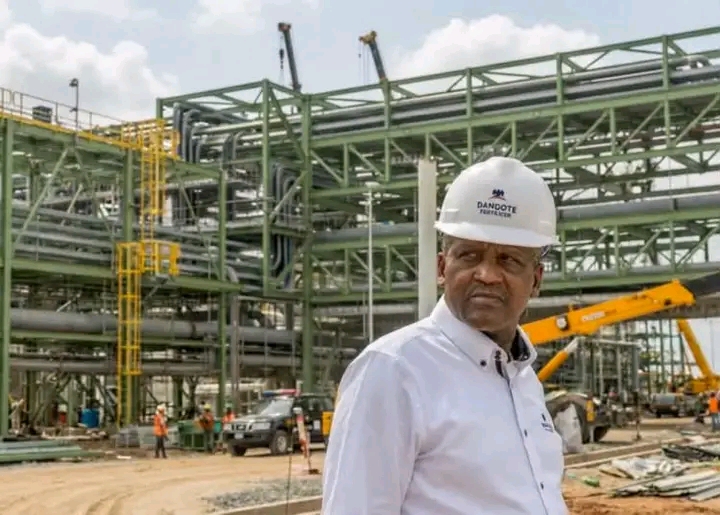
Dangote Reveals September 30 Date for Trillion-Shilling Lamu Oil Refinery Groundbreaking
Aliko Dangote has confirmed September 30, 2026, as the groundbreaking date for his proposed Lamu oil refinery in Kenya. The project is estimated at roughly KSh2.2 trillion to KSh2.59 trillion depending on the components included, and the refinery is planned to process up to 700,000 barrels of crude oil per day. Construction is expected to take about three years or potentially less than four years, with the facility intended to supply Kenya and other East African markets. The project is also expected to create tens of thousands of jobs, boost Lamu's infrastructure and strengthen Kenya's position as a regional petroleum and logistics hub.
Saved Content

Nigerian billionaire and industrialist Aliko Dangote has revealed September 30, 2026, as the date for the groundbreaking ceremony of the proposed massive oil refinery and petrochemical complex in Lamu, Kenya. The announcement marks a major step forward for a project that has been discussed for months and is expected to transform Kenya's petroleum industry and strengthen East Africa's position as an energy-producing and refining region.

Dangote confirmed the September 30 date on Thursday, September 3, while speaking to investors and analysts during a visit to Botswana. According to reports, Dangote stated that the project would be launched on September 30. The latest announcement provides a specific date after earlier statements had only indicated that groundbreaking would happen in September or by October. 

The proposed refinery, which will be located at Lamu, is expected to become one of the largest private-sector investments in Kenya's history. Estimates circulating around the project have placed the total investment at approximately KSh2.2 trillion to KSh2.59 trillion, depending on whether additional port infrastructure and related facilities are included. Other reports have put the refinery investment itself at about US$16 billion, while a broader refinery and port infrastructure package has been valued at about US$20 billion. 

Why September 30 is important

The September 30 groundbreaking will be more than a ceremonial event. It is expected to signal the transition from planning and negotiations to actual implementation of the Lamu refinery project.

For several months, the Kenyan government and Dangote Industries have been working on issues surrounding the location, financing, infrastructure, crude oil supply, regional participation and government support. President William Ruto had earlier confirmed that a groundbreaking date had been established, although the exact date had not initially been made public. 

Dangote's latest announcement therefore removes much of the uncertainty surrounding the project's immediate timeline.

Construction is expected to follow the groundbreaking, with earlier statements indicating that the facility could take roughly 30 months to three years to construct, although Dangote has also previously indicated that the overall completion period could be less than four years. 

A 700,000-barrel-per-day refinery

One of the most significant aspects of the proposal is its planned size.

The Lamu refinery is expected to have a processing capacity of approximately 700,000 barrels of crude oil per day. That would make it an enormous facility by African standards and place it in a position to serve not only Kenya but also petroleum markets across East Africa. 

The scale is particularly important because Kenya currently depends heavily on imported refined petroleum products. A large domestic refinery could change the country's position in the regional petroleum supply chain.

Instead of importing large quantities of finished fuel, Kenya could potentially process crude oil closer to the markets that consume it. The refinery could produce products such as petrol, diesel, jet fuel and other petroleum derivatives, although the exact product mix will depend on the final design and operating configuration.

The project is also expected to incorporate petrochemical activities, making it broader than a conventional refinery. This could create opportunities for industries that use petroleum-derived products as raw materials.

Why Dangote chose Lamu

The decision to establish the refinery in Lamu represents an important development in Kenya's ambitions to become a major logistics and energy hub.

Lamu offers a strategic location on the Indian Ocean. The area is connected to the wider Lamu Port development, which is intended to provide Kenya with another major gateway for international trade.

The refinery's location near the coast would also make it easier to receive crude oil and export refined petroleum products to other markets.

Earlier in the year, Tanzania had also been mentioned as a possible location for Dangote's East African refinery. Kenya's Mombasa was also discussed during the period when the location was still uncertain. The final decision to settle on Lamu ended much of that speculation. 

The choice of Lamu could therefore strengthen the economic importance of the Kenyan coast and accelerate investment in supporting infrastructure.

Massive investment for Kenya

The financial value of the project is one of the reasons it has attracted so much attention.

Kenyan officials have described the refinery as potentially one of the largest investments in the country's history. President Ruto previously described it as a KSh2.2 trillion investment, while other estimates, particularly when port infrastructure is included, have placed the total at around KSh2.59 trillion. 

The difference in figures is important to understand. Headlines may refer to a "KSh2.2 trillion refinery" or a "KSh2.59 trillion refinery and infrastructure project," but these figures do not necessarily represent conflicting announcements. The final cost depends partly on what is included in the investment package.

For Kenya, an investment of this magnitude could have significant implications for construction, manufacturing, transport, logistics, energy and financial services.

It could also attract other private investors who want to establish businesses around the refinery.

Thousands of jobs expected

Another major attraction is employment.

President William Ruto has previously said that the project could create approximately 60,000 jobs, particularly for young Kenyans. The employment opportunities would not be limited to refinery workers. They could emerge in construction, engineering, transportation, logistics, security, manufacturing, maintenance, hospitality and other support services.

During the construction phase, there could be demand for engineers, technicians, electricians, welders, machinery operators, construction workers, surveyors and other specialists.

Once the refinery becomes operational, permanent jobs could include refinery operators, laboratory technicians, engineers, mechanics, safety officers, administrative workers and logistics professionals.

The project could therefore become an important source of employment in Lamu and the wider coastal region.

Potential benefits to Lamu County

Lamu County could experience significant economic changes if the project is successfully implemented.

Large industrial investments generally require roads, electricity, water, housing, telecommunications, security and other public and private infrastructure. The development of these facilities can stimulate surrounding businesses.

Small businesses could benefit from increased demand for accommodation, food, transportation, retail goods and professional services.

The refinery could also encourage the development of industrial parks and other businesses around Lamu.

However, the scale of the project also means that local communities will want clear information about land, environmental protection, employment opportunities and compensation where applicable.

Regional energy security

Perhaps the most important long-term objective of the refinery is to strengthen East Africa's energy security.

Kenya imports substantial quantities of refined petroleum products, while countries such as Uganda, Rwanda, South Sudan and others also depend heavily on imported fuel.

A large refinery in Lamu could therefore serve a regional market rather than Kenya alone.

Dangote has said the project is intended to help African countries become more self-sufficient in energy. Reports indicate that the refinery is expected to supply Kenya and other East African countries. 

If the refinery achieves its proposed capacity, it could significantly alter petroleum trade patterns in the region.

East African countries could potentially obtain more of their fuel from a refinery within the region instead of relying primarily on imports from distant markets.

Regional ownership and financing

Another interesting element is the possibility of East African participation in the project.

President Ruto's economic adviser David Ndii previously said Dangote Industries had offered East African countries a 30 percent equity stake in the project. Kenya was reportedly offered a 10 percent stake, while Ethiopia and Rwanda had expressed interest in participating. 

The reported value of Kenya's proposed stake was approximately KSh64.74 billion, while the wider regional share was estimated at approximately KSh194 billion.

Such participation could allow regional governments and institutions to benefit financially from the refinery while also strengthening their commitment to purchasing its products.

The financing structure will be another major issue to watch as construction begins.

Government support

The Kenyan government has already established structures to coordinate its involvement in the project.

President Ruto appointed Deputy President Kithure Kindiki to chair a government committee responsible for working with private investors and coordinating implementation of the refinery project. 

The government has also discussed supporting infrastructure and creating an environment in which the refinery can compete successfully with imported petroleum products.

This is particularly important because a refinery of this scale requires a reliable supply of crude oil, transportation infrastructure, energy, water, storage facilities and access to domestic and regional markets.

Competition from imported fuel

Dangote has previously raised concerns about competition from imported petroleum products.

A major refinery requires a stable market to justify its enormous investment. If cheaper refined products from other countries enter East African markets at prices significantly below locally produced fuel, the Lamu refinery could face commercial pressure.

This is why the Kenyan government's policy decisions will be closely watched.

The government will have to balance consumer interests, affordable fuel prices and the need to support domestic industrial investment.

Protecting a refinery from competition could help the investor, but policymakers must also ensure that consumers benefit through reliable supplies and competitive prices.

Lessons from Dangote's Nigerian refinery

The Lamu project will draw considerable attention because of Dangote's experience with his refinery in Nigeria.

The Dangote Petroleum Refinery in Nigeria has become Africa's largest refinery, with a stated capacity of 650,000 barrels per day and tests reaching higher output levels. Reuters recently reported that the facility had reached its full 650,000-barrel-per-day capacity in February and had tested production as high as 700,000 barrels per day. 

The Nigerian refinery has also increased Nigeria's petroleum product exports. Reuters, citing the U.S. Energy Information Administration, reported in August 2026 that Nigeria's seaborne petroleum-product exports had risen sevenfold since 2023, driven by production from the Dangote refinery. 

This experience provides an important example of what a large-scale refinery can potentially do to a country's energy industry.

Dangote's decision to replicate a similarly large model in East Africa demonstrates the company's ambition to expand beyond Nigeria.

What the refinery could mean for fuel prices

There is considerable public interest in whether the Lamu refinery will reduce fuel prices.

The answer will depend on several factors, including the cost of crude oil, financing expenses, refinery operating costs, taxes, transportation costs and market conditions.

Local refining does not automatically mean that petrol and diesel will become dramatically cheaper.

However, producing fuel closer to the final market could reduce some logistics costs and improve supply security. It could also reduce exposure to international disruptions affecting refined-product shipments.

For consumers, the biggest potential benefit may therefore be greater supply stability rather than an immediate and dramatic fall in pump prices.

Environmental and community concerns

Despite its potential economic benefits, the project is also likely to attract environmental scrutiny.

Lamu is environmentally sensitive, and large industrial developments must be carefully managed to avoid damage to marine ecosystems, fisheries, coastal habitats and local livelihoods.

A refinery also involves emissions, industrial waste, storage of petroleum products and other environmental risks.

Consequently, environmental assessments, regulatory approvals, emergency-response systems and community engagement will be crucial.

The government and investors will need to demonstrate that economic development can take place while protecting the environment and ensuring that local communities benefit from the project.

A new chapter for Kenya's energy sector

The September 30 groundbreaking represents an important milestone for Kenya.

If construction proceeds as planned, the country will be moving closer to having one of Africa's largest petroleum-processing facilities. The proposed 700,000-barrel-per-day capacity would give the project the potential to become a major supplier for Kenya and the wider East African region.

For Lamu, the refinery could accelerate industrialisation and infrastructure development. For Kenya, it could strengthen the country's ambitions to become a regional energy and logistics hub. For East Africa, it could reduce dependence on imported refined petroleum products.

However, the success of the project will ultimately depend on more than the groundbreaking ceremony. Financing, construction, crude supply, infrastructure, environmental compliance, regional participation and the ability to compete in the petroleum market will all determine whether the ambitious plans are fully realised.

The immediate milestone is now clear: Aliko Dangote says the Lamu refinery will be launched with a groundbreaking ceremony on September 30, 2026. Construction is then expected to proceed toward completion over the following several years. With an estimated investment running into trillions of Kenyan shillings and a planned capacity of about 700,000 barrels of crude oil per day, the project has the potential to become one of the most consequential industrial developments in Kenya and East Africa in the coming years.

You Might Also Like

Stay Connected

Get Newsletter