Deputy President Kithure Kindiki Receives Briefings on National Honours and Kenya’s Preparations for Commonwealth Summit
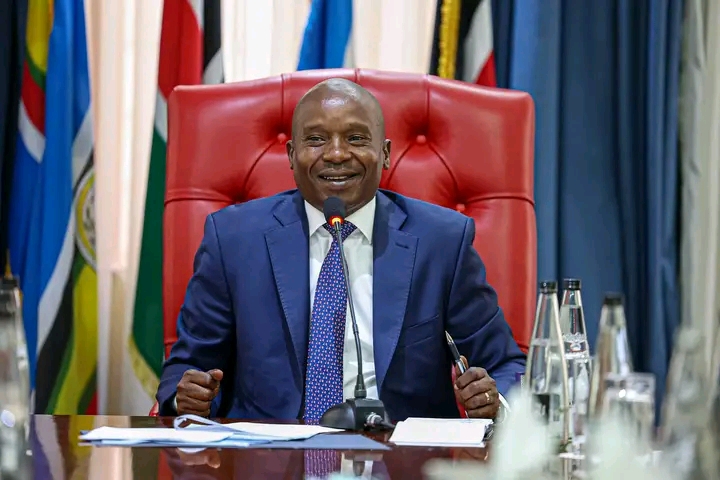
The deputy president Kithure Kindiki held meetings today in Karen, Nairobi,where received briefing from officials of the ministry of foreign affairs on Kenya's preparation for the 28 th Commonwealth heads of government meeting,1-4 th November 2026. Additionally,he was briefed by the national honours committee on the ongoing process to identify and vet recipients of the 2026 National Honours.The National and County governments,the judiciary, parliament, public service,the security and defence forces represented.
Kenya’s Deputy President, Professor Kithure Kindiki, held official engagements in Karen, Nairobi, on Wednesday, October 28, 2026, where he was briefed by the National Honours Committee and received updates from officials of the Ministry of Foreign and Diaspora Affairs on preparations for the 28th Commonwealth Heads of Government Meeting (CHOGM), scheduled for November 1–4, 2026.
The engagements concern two important areas of government responsibility: the recognition of outstanding service to the country through national honours and Kenya’s participation in high-level international diplomacy. Both require coordination among government institutions, careful planning and adherence to established procedures.
The briefing on national honours relates to the process through which individuals who have made significant contributions to Kenya may be recognised for their service. Meanwhile, the discussions with foreign affairs officials focused on preparations for the upcoming Commonwealth summit, where leaders from member countries will meet to discuss shared political, economic and development priorities.One of the key activities during the Deputy President’s engagements in Karen was receiving a briefing from the National Honours Committee. The committee plays an important role in the national process of recognising individuals whose service, achievements and contributions have benefited Kenya.
National honours are an important part of the country’s system of acknowledging exceptional service. They provide a formal way of appreciating people who have contributed to public service, national development, leadership, community welfare and other areas of national importance.
The briefing gave the Deputy President an opportunity to receive information on the committee’s work and matters relating to the administration of national honours. However, specific details about the agenda, names of potential award recipients, proposed honours or decisions made during the meeting were not independently confirmed in the available reporting.The national honours process is significant because it reflects the country's commitment to recognising exemplary service. Public servants, professionals, community leaders and other individuals may make important contributions to society that deserve national recognition.
For such a process to retain public confidence, it is important that the relevant institutions follow established procedures and ensure that recommendations are handled transparently and consistently with the applicable rules.
National honours also serve as a reminder that national development depends on the contributions of people working in different sectors. While senior government officials may provide policy direction, progress also depends on teachers, healthcare workers, security personnel, researchers, entrepreneurs, farmers and community volunteers.
The recognition of outstanding service can encourage a culture of responsibility, patriotism and dedication to public duty.Briefing on Kenya’s preparations for CHOGM 2026
The second major issue during Kindiki’s engagements was a briefing from officials of the Ministry of Foreign and Diaspora Affairs on Kenya’s preparations for the 28th Commonwealth Heads of Government Meeting.
The summit is scheduled to take place from November 1 to November 4, 2026, in St John’s, Antigua and Barbuda. It will bring together leaders and representatives from the Commonwealth’s 56 member countries to discuss matters affecting their citizens and the wider international community.The 2026 Commonwealth summit will be held under the theme “Accelerating Partnerships and Investment for a Prosperous Commonwealth.” The theme places investment and cooperation at the centre of discussions about the future of member countries.
According to the Commonwealth Secretariat, the meeting will provide an opportunity for leaders to explore ways of strengthening partnerships, attracting investment and addressing common development challenges.
For Kenya, these discussions are relevant to its efforts to expand economic opportunities, strengthen international trade and attract investment into productive sectors.
Investment can support the construction of infrastructure, the development of industries, the creation of jobs and the expansion of services. However, the benefits depend on the quality of projects, the availability of financing and the ability of governments and private-sector partners to implement agreed programmes.One of the issues relevant to Kenya’s participation in CHOGM 2026 is the need to strengthen trade and investment links with other Commonwealth members.
Kenya has an established role in regional and international trade, with economic activity spanning agriculture, manufacturing, tourism, financial services, technology and transport.
International meetings can provide opportunities for governments to discuss barriers affecting businesses, explore market access and promote cooperation between investors and local enterprises.
For Kenyan businesses, stronger trade relationships could create opportunities to reach new customers, establish distribution networks and attract capital for expansion. Small and medium-sized enterprises may also benefit when international partnerships provide access to technology, expertise and financing.Many member states face challenges associated with droughts, flooding, rising temperatures, environmental degradation and pressure on agricultural production. Small island states, in particular, face serious risks associated with rising sea levels and extreme weather events.
Kenya also has a strong interest in international cooperation on climate resilience because rainfall variability and extreme weather can affect agriculture, infrastructure, water supplies and household incomes.
Cooperation between Commonwealth countries can support the sharing of knowledge, climate adaptation strategies and approaches to mobilising finance for environmental programmes.Investment in resilient infrastructure, water management, renewable energy and sustainable agriculture can help countries reduce their vulnerability to climate-related shocks.
For Kenya, participation in discussions on these matters can help strengthen its engagement with development partners and countries that have experience in climate adaptation.
The important question is how international commitments can be converted into practical projects that reach communities.
This includes ensuring that resources are available, responsibilities are clearly defined and projects are monitored to determine whether they deliver the intended results.
The summit's focus on climate resilience and sustainable development makes these matters relevant to Kenya's diplomatic priorities. The ministry is responsible for supporting Kenya’s foreign relations and coordinating engagement with other governments and international institutions.
Before a summit, such preparations may include consultations on the issues to be discussed, the development of national policy positions and coordination with relevant government departments.
The ministry also plays a role in ensuring that Kenya’s representatives have the information necessary to engage effectively with their counterparts.
International summits involve more than formal speeches. They provide opportunities for bilateral discussions, ministerial consultations and engagement with institutions working on shared priorities.The two briefings cover different responsibilities, but both demonstrate the importance of coordination within government.
The National Honours Committee briefing concerns the recognition of outstanding service and the administration of national honours. The Ministry of Foreign and Diaspora Affairs briefing concerns Kenya’s external relations and preparations for engagement with other Commonwealth countries.
In both cases, accurate information and established procedures are important.
For national honours, the focus is on ensuring that recognition is handled appropriately and that the process maintains public confidence.Kenyans will have an interest in whether diplomatic discussions contribute to tangible benefits, including investment, business opportunities, employment, technology transfer and stronger international partnerships.
The government’s participation can also help Kenya share its development experiences and learn from approaches adopted by other Commonwealth countries.
Nevertheless, the benefits of international meetings should be assessed through concrete results rather than announcements alone.
Any proposed partnerships will need appropriate follow-up, including the identification of responsible institutions, financing arrangements, implementation timelines and mechanisms for measuring progress.

You Might Also Like
-
William Owuor Ochieng’, popularly known on Facebook as “William Jahome,” has been arrested in Nairobi’s Central Business District over allegations of online threats, incitement to violence and ethnic hostility. The arrest has renewed attention on the growing concerns surrounding the misuse o
-
A multi-agency security team has seized and destroyed more than 1,000 litres of kangara during a crackdown on suspected chang’aa brewing sites along the Katine River in Matungulu Sub-County, Machakos County. The operation targets the production of illicit alcohol and aims to prevent dangerous drin
-
Police are hunting a 25-year-old man accused of killing his elder brother and stabbing his wife in Gisambai, Hamisi Sub-County, Vihiga County, over suspected infidelity. The incident has raised concerns about family conflicts and domestic violence. Authorities are investigating the circumstances sur
-
President William Ruto has departed for Russia to seek new markets for Kenyan products, attract foreign investment and strengthen economic ties between the two countries. The visit aims to create opportunities for Kenyan exporters, promote business partnerships and encourage investment in key sector
-
Somalia’s Defence Ministry has announced that 75 Al-Shabaab militants were killed and 56 others wounded during clashes with government forces in southern Somalia. The fighting comes amid ongoing military operations aimed at weakening the insurgent group and improving security in areas affected by
-
Authorities have confirmed that 20 people remain unaccounted for following the collapse of a multi-storey building in Eastleigh, Nairobi. The incident has raised concerns over building safety and emergency response as efforts continue to establish the whereabouts of those missing. The tragedy has re