



Dr David Silverstein Dies at 82: The Long-Serving Personal Doctor Who Cared for President Daniel arap Moi
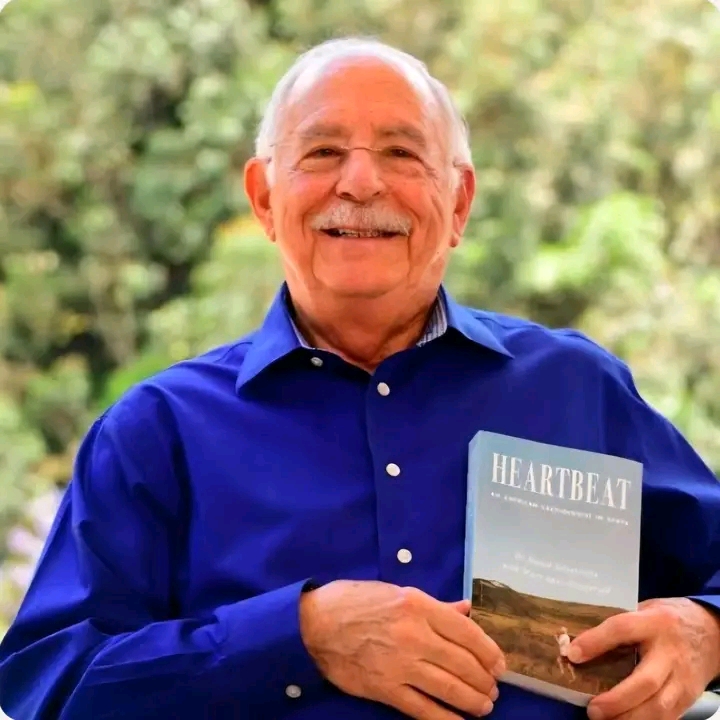
The death of Dr David Silverstein at the age of 82 on September 13, 2026, brings to an end the life of a physician whose story was deeply intertwined with Kenya's political and medical history. He will particularly be remembered as the longtime personal physician of the late President Daniel arap Moi, a role he performed for decades and continued even after Moi left State House. Beyond the Moi family, however, Silverstein leaves behind a broader medical legacy. He was among the pioneers of specialised cardiac care in Kenya and played an important role in establishing the country's first cardiac catheterisation laboratory at Kenyatta National Hospital. His work helped strengthen the foundations of modern cardiology in Kenya and contributed to the development of medical expertise in the country. His death has prompted tributes from Gideon Moi and President William Ruto, among others. The messages of condolence have focused on his compassion, professionalism, dedication and contribution to healthcare. For many Kenyans, Dr David Silverstein will therefore be remembered not only as President Daniel arap Moi's personal doctor, but also as a physician who devoted much of his life to medicine in Kenya and helped shape the country's cardiac-care landscape. His story remains an important part of both Kenya's medical history and the history of the Moi era.
Dr David Silverstein, the renowned American-born cardiologist who served as the personal physician of Kenya’s second President, the late Daniel arap Moi, has died at the age of 82. His death was announced on Sunday, September 13, 2026, by KANU National Chairman and former Baringo Senator Gideon Moi, who paid tribute to the doctor for his decades of service to his father and his wider contribution to Kenya’s medical profession.
Silverstein’s death has attracted widespread attention because his career was closely connected with some of the most important chapters in Kenya’s political and medical history. For decades, he was not only a respected cardiologist but also a trusted physician to President Moi. His relationship with the former Head of State extended well beyond the conventional doctor-patient relationship, with members of the Moi family remembering him for his compassion, attention to detail and personal commitment to the wellbeing of the former president.
*Death of Dr David Silverstein*
Reports published on Sunday confirmed that Dr Silverstein had died aged 82. The Standard reported that he died while undergoing treatment at an undisclosed hospital, although details surrounding the illness or immediate cause of death had not been publicly disclosed at the time of reporting. It is therefore important not to speculate about the cause of his death until his family or another authoritative source provides further information.
The announcement was followed by messages of condolence from people who knew Silverstein and recognised his contribution to Kenya. Gideon Moi described him as a physician who left a lasting impression on the people he treated.
President William Ruto also mourned Silverstein, describing him as a distinguished medical practitioner whose contribution to Kenya’s healthcare sector touched many lives. Ruto particularly recognised his contribution to cardiology and the development of modern medical practice in Kenya.
His death therefore represents the loss of a physician whose professional life stretched across more than five decades of Kenya's history.
*Dr Silverstein and President Daniel arap Moi*
Perhaps the most widely remembered part of Silverstein's career was his role as the personal physician of the late President Daniel arap Moi.
According to reports, Silverstein served as Moi's doctor for more than four decades. Their professional relationship began in the late 1970s, with reports placing its beginnings in 1977, when Silverstein was working at Kenyatta National Hospital. He continued caring for Moi during his years as President and after Moi retired from the presidency.
Moi ruled Kenya from 1978 until 2002, meaning that Silverstein's medical relationship with him covered a substantial part of Moi's presidency as well as his retirement years. The doctor consequently became a familiar figure around the former president and his family.
Gideon Moi's tribute suggests that Silverstein viewed his responsibilities as more than simply treating a prominent political figure. He described the doctor as someone who saw Moi as a human being whose health, dignity and wellbeing were important to him.
That description is significant because being the personal doctor to a sitting president carries enormous responsibility. Such a physician must deal with highly sensitive medical information while maintaining professionalism and confidentiality. Silverstein's long association with Moi demonstrates the level of trust that existed between the doctor and the former president.
A relationship that continued after State House
Silverstein's association with Moi did not end when Moi left office in 2002.
Reports indicate that he continued serving as Moi's physician during the former president's retirement. This made their relationship one of the longest-running doctor-patient associations involving a Kenyan head of state.
Moi died in February 2020 at the age of 95. Silverstein was among those closely associated with the former president during his later years and was remembered as an important member of the medical team that cared for him.
His connection to the Moi family consequently lasted for decades.
Gideon Moi's statement following Silverstein's death reflected that personal connection. Rather than describing him simply as a doctor, Gideon remembered him as someone who had become closely connected to the family through years of medical care.
Silverstein's contribution to cardiology in Kenya
While his role as Moi's personal physician made him widely known, Silverstein's importance to Kenya extended far beyond State House.
He was one of the pioneers of specialised cardiac medicine in the country. Reports indicate that he played a major role in establishing Kenya's first cardiac catheterisation laboratory at Kenyatta National Hospital.
The establishment of such a facility was an important development for Kenyan medicine because cardiac catheterisation enables doctors to examine the heart and blood vessels and perform certain diagnostic and interventional procedures.
At a time when specialised cardiac services were still developing in Kenya, Silverstein contributed to the growth of expertise and infrastructure needed to treat patients with serious heart conditions.
For this reason, some accounts have referred to him as one of the pioneers or fathers of cardiology in Kenya.
From an American doctor to a major figure in Kenyan medicine
Silverstein was born in the United States and trained as a physician before making Kenya an important part of his professional life. He arrived in Kenya in the 1970s and went on to spend decades working in the country.
His career illustrates how international medical expertise became connected with the development of Kenya's healthcare system.
Rather than limiting his work to treating wealthy or politically influential patients, reports about his career emphasise his broader contribution to medicine, including the training and mentoring of younger medical professionals.
His professional legacy therefore includes both individual patient care and institutional development.
His connection with other prominent personalities
Silverstein's medical career also brought him into contact with prominent figures outside Kenya.
Reports published following his death have highlighted his treatment of internationally known personalities, including former South African President Nelson Mandela and former Libyan leader Muammar Gaddafi.
These associations demonstrate the international reputation that Silverstein developed during his career.
However, his connection with Moi remains particularly important in Kenya because it placed him close to the country's political history for several decades.
*Why his death is significant to Kenya*
The death of Dr Silverstein is significant for several reasons.
First, it marks the passing of a doctor who played a unique role in the personal history of one of Kenya's longest-serving presidents.
Second, his death represents the loss of a medical pioneer who helped develop specialised cardiac care in Kenya.
Third, Silverstein's career represents an important period in the evolution of Kenya's healthcare sector. He worked in the country for decades and witnessed significant changes in medical technology, specialist care and professional training.
His life therefore connects Kenya's medical history with its political history.
Tributes from the Moi family
The Moi family has remembered Silverstein with considerable affection.
Gideon Moi said the doctor demonstrated attention to detail and empathy and described his relationship with his father as extending beyond the ordinary relationship between a doctor and a patient.
Such a tribute highlights the personal trust that developed over many years.
For the Moi family, Silverstein was not simply a medical professional who attended to their father's health. He was someone who remained involved in Moi's life for decades and continued providing care after the former president left office.
His passing is therefore likely to be remembered by the family as the loss of a trusted physician and longtime associate.
*President Ruto's tribute*
President William Ruto also joined those mourning Silverstein.
Ruto recognised the late doctor as a distinguished medical practitioner and highlighted his contribution to Kenya's healthcare sector. He particularly pointed to Silverstein's role in advancing cardiology and helping shape modern medical practice in the country.
The President's tribute underscores that Silverstein's legacy went beyond his association with the Moi family.
His contribution was also felt in the wider medical profession, where his work helped expand the country's capacity to diagnose and manage heart-related illnesses.
*A legacy beyond politics*
Although Silverstein became famous because he was President Moi's personal doctor, reducing his life solely to his relationship with the former president would overlook a major part of his contribution.
He was first and foremost a physician and cardiologist whose career helped shape medical practice in Kenya.
His work in cardiac care, his involvement in developing specialised facilities and his interaction with younger medical professionals all contributed to the growth of Kenya's healthcare system.
His career also demonstrates the importance of doctors who remain committed to their profession for many decades. From his arrival in Kenya in the 1970s to his later years, Silverstein remained associated with medical practice and patient care.

You Might Also Like
-
President William Ruto's visit to Kisumu today marks the beginning of an important four-day development tour of Nyanza. The President started the day at the Voice of Salvation and Healing Church, where he worshipped alongside senior national and county leaders, including Governor Anyang' Nyong'o, Go
-
President William Ruto’s visit to Chebunyo in Bomet County on Saturday, September 12, 2026, marked an important moment in his four-day South Rift development tour. The laying of the foundation stone for the Chebunyo Mother and Child Hospital was the major highlight of the visit. The planned Level
-
President William Ruto's visit to Kericho on September 12, 2026, marked the conclusion of his four-day development tour of the South Rift and brought a mixture of development announcements, project launches, political engagements and meetings with local leaders. The launch of the Chelimo Special Ec
-
Tension erupted at a UDA meeting after hundreds of youths reportedly attempted to force their way into a gathering restricted to invited officials. The confrontation allegedly led to the burning of several vehicles, with two people feared dead and others reportedly injured as security efforts to con
-
The Kenya Dairy Board's warning about declining milk supplies comes at a critical time for Kenya's agricultural sector. The country is not facing a situation where milk has completely disappeared, but there is a genuine reduction in formal milk deliveries and supply constraints in several parts of t
-
Kenya is entering another period of uncertainty in the petroleum market. While pump prices under the current EPRA cycle have remained relatively stable, international crude oil prices have surged above $100 per barrel because of geopolitical tensions, tanker disruptions and fears of tighter global s