DUALE: KENYA TO CHAMPION LOCAL MEDICINE PRODUCTION AND BETTER HEALTHCARE ACROSS AFRICA
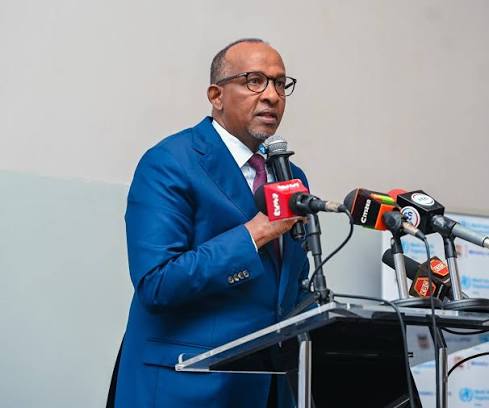
Health Cabinet Secretary Aden Duale has reaffirmed Kenya's commitment to strengthening healthcare systems across Africa, saying the country will use its position on the Africa CDC Governing Board to champion local production of medicines and medical supplies, enhance cross-border health security and promote equitable access to quality primary healthcare. The initiative seeks to reduce Africa's dependence on imported pharmaceutical products, strengthen preparedness against disease outbreaks and ensure more people can access essential healthcare services regardless of their location or economic status.
Health Cabinet Secretary Aden Duale has reaffirmed Kenya's commitment to advancing Africa's healthcare agenda, saying the country will use its representation on the Africa Centres for Disease Control and Prevention (Africa CDC) Governing Board to champion local production of medical and pharmaceutical supplies, strengthen cross-border health security and promote equal access to quality primary healthcare across the continent.
Duale said Kenya intends to use its position within the continental health institution to advance policies and initiatives that address some of the major challenges facing healthcare systems across African countries. He emphasised the importance of strengthening Africa's capacity to manufacture essential medical products locally while improving cooperation among countries in responding to public health threats.
The Health CS noted that increased local production of medical and pharmaceutical supplies is an important step towards reducing Africa's dependence on imported healthcare products. For many years, several African countries have relied heavily on external manufacturers to obtain essential medicines, medical equipment, vaccines and other supplies needed by hospitals and healthcare facilities.
This dependence has exposed healthcare systems to supply disruptions, increased procurement costs and challenges in accessing essential products, particularly during periods of international emergencies. Strengthening local manufacturing capacity could therefore help African countries become more self-reliant and better prepared to respond to their healthcare needs.
Kenya's participation in the Africa CDC Governing Board is expected to provide an opportunity to contribute to discussions and policy decisions aimed at strengthening the continent's public health systems. Through this platform, the country intends to support initiatives that encourage investment in pharmaceutical manufacturing, promote innovation and improve the availability of essential medical products.
Local production is also considered an important component of Africa's broader economic and industrial development. Expanding pharmaceutical manufacturing could create employment opportunities, encourage technology transfer and strengthen the continent's industrial capacity.
African countries have continued to face challenges associated with accessing affordable medicines and medical supplies. In some instances, healthcare facilities experience shortages of essential products, affecting the delivery of services to patients and placing additional pressure on already stretched health systems.
By promoting local manufacturing, Kenya hopes to contribute to efforts aimed at establishing more reliable supply chains and ensuring that essential medical products are readily available when needed. The approach would also support the development of stronger regional manufacturing partnerships, allowing countries to share expertise, resources and production capacity.
Another key priority highlighted by Duale is strengthening cross-border health security. The Health CS stressed the importance of cooperation among African countries in preventing, detecting and responding to disease outbreaks and other public health emergencies.
Health threats do not respect national boundaries, making cooperation between neighbouring countries essential in protecting populations. Infectious diseases can spread across borders through human movement, trade and travel, creating challenges that cannot be addressed effectively by individual countries acting independently.
Strengthening cross-border health security requires improved disease surveillance, timely sharing of information, coordinated emergency responses and stronger collaboration between national health institutions.
The Africa CDC plays an important role in supporting African countries to improve their capacity to prevent and respond to public health emergencies. Through continental cooperation, countries can strengthen preparedness, share technical expertise and coordinate responses when health threats emerge.
Kenya's intended contribution to this agenda reflects the need for African governments to invest in stronger health surveillance systems and improve coordination between their respective health authorities.
Effective disease surveillance is particularly important because early detection can help prevent outbreaks from spreading into larger public health emergencies. Countries need reliable systems for identifying unusual disease patterns, conducting investigations and communicating relevant information to neighbouring states.
Cooperation is also essential in ensuring that countries have the necessary resources and technical capacity to respond to emergencies. This includes trained healthcare personnel, laboratory facilities, medical supplies and emergency response systems.
Duale's third major priority is promoting equal access to quality primary healthcare across Africa. The Health CS maintained that healthcare services should be accessible to all people regardless of their geographical location or economic circumstances.
Primary healthcare remains the foundation of an effective health system because it provides communities with access to essential services, including disease prevention, early diagnosis, treatment and health education.
Strong primary healthcare systems can reduce pressure on major hospitals by ensuring that common medical conditions are identified and managed at an early stage. They also play an important role in improving maternal and child health, controlling infectious diseases and supporting the management of long-term illnesses.
However, access to quality healthcare remains uneven across many African countries. Rural and underserved communities often experience challenges related to inadequate healthcare facilities, shortages of medical professionals, limited equipment and difficulties accessing essential medicines.
These challenges can prevent vulnerable populations from receiving timely medical attention, increasing the risk of complications and poor health outcomes.
Kenya's position on the Africa CDC Governing Board is therefore expected to support discussions aimed at addressing these inequalities and strengthening healthcare delivery across the continent.
Promoting equitable access to primary healthcare requires sustained investment in health infrastructure, human resources, medical technology and essential supplies. Governments also need to develop policies that ensure healthcare services reach communities that have historically experienced difficulties accessing medical facilities.
The emphasis on quality healthcare also highlights the importance of ensuring that expanding access does not come at the expense of service standards. Healthcare facilities must have qualified personnel, appropriate medical equipment and reliable supplies to provide effective treatment.
For Kenya, participating in continental health discussions provides an opportunity to share experiences and contribute to collective efforts aimed at improving healthcare delivery. It also creates room for stronger partnerships with other African countries in addressing common challenges affecting the health sector.
The three priorities outlined by Duale are closely connected. Local manufacturing can improve the availability of essential medical products, stronger cross-border cooperation can help countries respond to health emergencies, while accessible primary healthcare can ensure that communities receive essential services.
Together, these priorities form part of a broader effort to strengthen Africa's ability to manage its healthcare needs and reduce vulnerabilities associated with dependence on external systems.
The push for local pharmaceutical manufacturing is particularly important as African countries seek to establish more sustainable healthcare supply chains. Developing domestic production capacity could help reduce delays in obtaining essential products while supporting regional cooperation in the pharmaceutical industry.
At the same time, stronger health security arrangements would enable countries to respond more effectively to emerging threats through coordinated surveillance, information sharing and emergency preparedness.
Equitable primary healthcare would complement these efforts by ensuring that the benefits of stronger health systems reach ordinary citizens, including those living in remote and underserved areas.
Duale's remarks underline Kenya's intention to play an active role in shaping Africa's healthcare priorities through its representation on the Africa CDC Governing Board.
The country is expected to use the platform to support discussions that place greater emphasis on self-reliance, regional cooperation and improved healthcare delivery.
As African countries continue working towards stronger and more resilient health systems, collaboration between governments and continental institutions remains essential. Addressing challenges such as medical supply shortages, disease outbreaks and unequal access to healthcare requires coordinated action and sustained commitment.
Kenya's proposed priorities reflect the importance of building a continent that can manufacture more of its own medical products, respond collectively to health emergencies and provide quality healthcare services to all its citizens.

You Might Also Like
-
The Ethics and Anti-Corruption Commission (EACC) has outlined several corruption-related cases scheduled to proceed in courts across Kenya this week, with various matters lined up for hearings, rulings, judgments and mentions. The proceedings form part of ongoing efforts to address corruption allega
-
A man from Nyando, Kisumu County, has been sentenced to life imprisonment after being convicted of defiling a three-year-old girl whom he allegedly lured into his house under the pretence of offering her tea in July 2025. The court found the prosecution had proved the case beyond reasonable doubt be
-
National Assembly Speaker Moses Wetangula has expressed interest in succeeding President William Ruto after the completion of his second term, declaring that he has the energy, experience and commitment required to lead the country. Wetangula says he is prepared to build on the development progress
-
President William Ruto and Democratic Republic of Congo (DRC) President Félix Tshisekedi have agreed to restore full diplomatic relations and strengthen cooperation between their two countries following high-level talks in Oyo, Republic of the Congo. The agreement was reached during the Quadriparti
-
DCP Leader Rigathi Gachagua has given the Independent Electoral and Boundaries Commission (IEBC) until January 2027 to address concerns raised by the Opposition ahead of the August 2027 General Election, warning that failure to act could trigger nationwide protests. Gachagua wants the commission to
-
Democratic Party (DP) Leader Justin Muturi has announced that his party and its supporters have settled on Wiper Patriotic Front (WPF) Leader Kalonzo Musyoka as their preferred presidential candidate among the United Opposition leaders ahead of the 2027 General Election. Muturi's declaration adds a