Eastleigh Building Collapse: Death Toll Rises to Five as Families Mourn Victims of Tragic Disaster
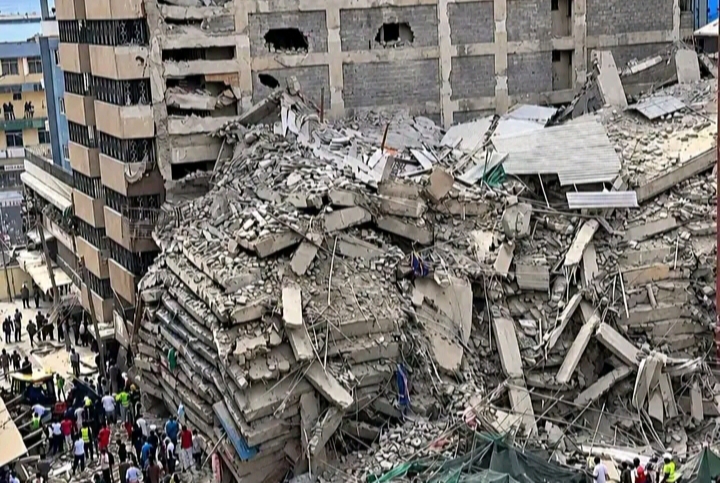
Five bodies recovered following the devastating Eastleigh building collapse are undergoing postmortem examinations and identification procedures at the Nairobi City Mortuary as authorities work to establish the identities of the victims and inform their families. The tragedy occurred on October 23, 2026, when a multi-storey building under construction collapsed along 9th Street in Eastleigh, trapping several people beneath tonnes of concrete and debris. The death toll subsequently rose to six, according to a later update, while four people were rescued alive. Rescue teams have continued clearing the remaining debris as investigations focus on possible construction failures, negligence and compliance with building safety regulations. The tragedy has left families grieving and renewed calls for stronger enforcement of construction standards across the country.
The tragedy, which occurred on October 23, 2026, has triggered an extensive multi-agency rescue and recovery operation involving government security agencies, disaster management teams, medical personnel, the Kenya Red Cross and other emergency responders. The building collapsed while construction work was still ongoing, trapping workers and other people beneath tonnes of concrete, steel and construction debris.
The recovery of the bodies has been one of the most difficult moments for families who have been camping near the disaster scene, hoping that their loved ones would be found alive. For many of them, the prolonged rescue operation has been accompanied by uncertainty, emotional distress and unanswered questions about the fate of relatives who were reportedly inside the building when it came down.Postmortem examinations at City Mortuary
Five bodies recovered from the collapsed building were undergoing procedures at the Nairobi City Mortuary on Thursday to establish their identities and facilitate the necessary legal processes.
The postmortem examinations are an important part of the recovery operation because some of the bodies were recovered after remaining trapped beneath heavy construction materials for several days. Identification has therefore become a priority for authorities, particularly because families have reported different relatives missing since the incident.
Medical professionals are expected to examine the remains to establish the circumstances surrounding the deaths, document relevant findings and assist investigators with the identification process.DNA sampling is also expected to play a significant role in confirming the identities of victims where visual identification may be difficult. Samples collected from the deceased can be compared with those provided by close relatives to establish biological relationships.
Authorities have urged families who believe their relatives were trapped inside the building to cooperate with the identification process by providing the necessary information and biological samples.
The process is particularly important in preventing cases of mistaken identity and ensuring that each family receives the correct information about their missing loved ones.
According to reports published on November 5, authorities had informed some families about possible identities, but final confirmation was still subject to the required verification procedures. No bodies had been released to families at the time of the latest update. The number of people confirmed dead following the Eastleigh building collapse has continued to increase as rescue teams make progress in clearing the remaining sections of the destroyed structure.
On Thursday, November 5, emergency responders recovered additional bodies during overnight operations. The recoveries were made as the multi-agency team continued searching through the rubble, particularly in sections where heavy concrete slabs had made access difficult.
Different reports published during the day gave slightly different figures as the recovery operation progressed. The initial report that five people had died, while a later update by another placed the death toll at six. Authorities also reported that five bodies were at the City Mortuary undergoing identification procedures. These figures reflect developments at different stages of the operation. Some victims were reportedly trapped beneath large concrete slabs, requiring rescuers to carefully remove the materials to reach them. Emergency personnel have had to work cautiously to avoid causing additional damage to the bodies during recovery.
The operation has involved excavators, specialised rescue equipment and trained personnel working together to access sections that would otherwise be difficult to reach.
The recovery of the bodies has also raised concerns about the number of people who may still be missing following the incident.Among those rescued was a pregnant woman who was taken to Kenyatta National Hospital for medical attention.
The survival of the four victims provided a moment of relief during an otherwise painful rescue operation. Their rescue demonstrated the importance of coordinated emergency response and the need to continue searching even when conditions at a disaster scene appear extremely difficult.
The rescue operation involved several government agencies working together to locate people who might still be trapped beneath the debris.
The National Disaster Management Unit, National Disaster Operations Centre, Kenya Defence Forces, Kenya Red Cross and Nairobi County Government have been among the institutions involved in the response.However, the process can take time, particularly where the condition of recovered bodies makes identification more difficult.
DNA testing provides a scientific method of establishing identity by comparing biological samples from the deceased with samples from their relatives.
Authorities have encouraged families to remain patient and cooperate with the relevant agencies as the identification exercise continues.
The government has also recognised the emotional difficulties facing affected families, particularly those who have spent days waiting for information.
The recovery operation is not only about removing debris and retrieving bodies. It also involves ensuring that victims are properly identified, families are informed and the deceased are handled with dignity.As rescue and recovery efforts continue, attention has increasingly shifted towards determining what caused the multi-storey building to collapse.
The incident has raised serious questions about construction standards, building approvals, structural inspections and enforcement of safety regulations in Nairobi.
The National Construction Authority previously identified the developer, contractor, architect and structural engineer associated with the project.The Eastleigh tragedy has renewed national debate about the safety of buildings in Nairobi and other rapidly growing urban centres.
Kenya has experienced several incidents involving buildings collapsing during construction or after occupation. These incidents have raised concerns about whether developers are following approved building plans and whether government agencies are conducting sufficient inspections.
The collapse of the Eastleigh building has particularly attracted attention because it involved a multi-storey structure that was still under construction.
Residents and business operators have raised concerns about the safety of buildings in densely populated neighbourhoods, where construction activities are taking place close to homes, shops and other commercial establishments.By Thursday, November 5, the rescue operation had entered its 14th day, with emergency teams making progress towards clearing the remaining debris.
Authorities reported that the operation was approximately 95 per cent complete, although some sections still required careful attention.
The basement area remained particularly important because rescuers believed additional victims could have been trapped beneath the collapsed structure.
The recovery teams have continued using heavy machinery and specialised equipment to remove concrete and other construction materials.
The operation has required cooperation between national government agencies, Nairobi County officials, emergency responders and other supporting organisations.Psychological and emotional impact on affected families
Beyond the physical destruction, the Eastleigh building collapse has left families facing serious emotional and psychological challenges.
For relatives who have spent nearly two weeks waiting for information, every recovery announcement brings mixed emotions.
The discovery of a body can provide an answer about a missing relative, but it also confirms the painful loss of someone they loved.
Other families are still hoping that their relatives will be found alive or that the authorities will finally establish their whereabouts.
The prolonged uncertainty has affected children, spouses, parents and other relatives who depend on the missing individuals.Importance of accountability and preventing future disasters
The Eastleigh incident has become an important reminder of the need to strengthen construction safety in Kenya.
Investigations into the collapse should establish whether the building was constructed according to approved plans and whether the responsible professionals followed the required standards.If negligence or violations are established, appropriate legal action should follow in accordance with the law.
The incident also demonstrates why building inspections should not be treated as a mere administrative exercise. They are essential safeguards intended to prevent loss of life.
Developers must ensure that construction projects are handled by qualified professionals, while contractors should follow approved structural designs and safety requirements.
County governments and national regulatory agencies must also ensure that inspections are conducted effectively and that violations are addressed before they result in disasters.
The government will also need to examine whether existing penalties and enforcement mechanisms are sufficient to discourage unsafe construction practices.

You Might Also Like
-
The Ministry of Health, through the Pharmacy and Poisons Board, has warned Kenyans against misleading social media claims that cetirizine can be used for vaginal tightening. The board clarifies that the medication is intended to treat allergic conditions such as allergic rhinitis and urticaria, with
-
The family of 18-year-old Gideon Kiprop Ngeno is mourning his sudden death after he was found unresponsive at their home in Mogogosiek, Konoin Sub-County, Bomet County. The Ngererit Senior School student was preparing to sit for his KCSE examinations when tragedy struck. According to the family, Gid
-
The Government of Kenya has launched the NYOTA Access to Government Procurement Opportunities (AGPO) digital training programme targeting at least 600,000 entrepreneurs across the country, in a major initiative aimed at empowering young people, women and persons with disabilities to access governmen
-
Residents of Manyatta B in Kisumu County have been left shocked following the discovery of the body of an unidentified man dumped inside a damaged septic tank near Yellow Bridge on November 3, 2026. The discovery was reportedly made by a local resident, Willy Otiende, who was searching for his missi
-
Democrats have taken control of both the United States House of Representatives and the Senate following the November 3, 2026 midterm elections, marking a major political setback for President Donald Trump and the Republican Party. The Democratic victories across several states have shifted the bala
-
The Seventh Principal Secretaries’ Forum of 2026 in Malindi, Kilifi County, was an important government coordination meeting focused on national development, accountability and improved service delivery. Chaired by Chief of Staff and Head of Public Service Felix Koskei, the forum addressed critic