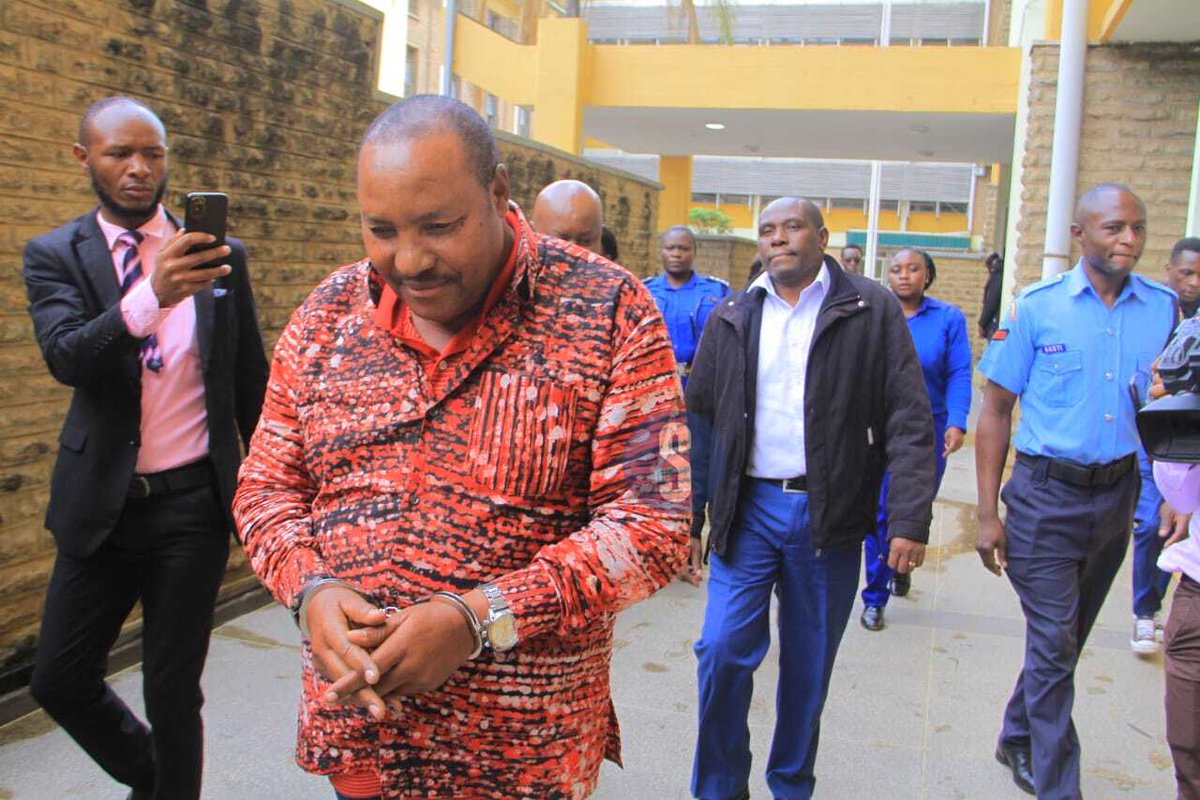
Former Kiambu Governor Ferdinand Waititu Sentenced to 13 Years in Prison Over KSh588 Million Corruption Case
Former Kiambu Governor Ferdinand Waititu has been sentenced to 13 years in prison, with an alternative fine of KSh21 million, following his conviction in a KSh588 million corruption and money laundering case. The sentencing at Milimani Law Courts marks a major development in the high-profile case involving the former county boss. The ruling has renewed debate about corruption, accountability and the management of public resources in Kenya's county governments. Waititu's conviction highlights the legal consequences facing public officials found guilty of financial misconduct. The case has also attracted attention from Kenyans as the country continues to demand transparency and responsible leadership in the use of taxpayers' money.
Former Kiambu Governor Ferdinand Waititu has been sentenced to 13 years in prison, with an alternative fine of KSh21 million, following his conviction in a KSh588 million corruption and money laundering case.
The sentencing marks a significant development in the legal proceedings involving the former county boss, whose case has attracted considerable public attention because of the amount of money involved and the allegations surrounding the handling of public funds.
Waititu appeared before the court at Milimani Law Courts in Nairobi, where the sentence was delivered following his conviction. The case involved allegations of corruption and money laundering connected to public procurement activities during his time in office as Kiambu Governor.
The court's decision brings another major chapter to the legal challenges facing the former governor, who served as the head of Kiambu County Government before leaving office.
The 13-year prison sentence, alongside the alternative financial penalty, reflects the seriousness of the offences for which he was convicted. The case has also renewed discussions about accountability in public office and the responsibility of elected leaders to ensure that public resources are managed in accordance with the law.
The corruption case against Waititu revolves around transactions valued at approximately KSh588 million that were investigated over allegations of irregularities in the handling of public funds.
The proceedings examined financial transactions and procurement arrangements linked to Kiambu County Government during Waititu's administration.
Public procurement is one of the most important areas of county government operations because it determines how public institutions acquire goods, services and infrastructure projects.
Under Kenya's public procurement framework, government officials are expected to follow established procedures when awarding tenders and approving payments.
These procedures are designed to promote transparency, accountability and fairness while ensuring that public resources are used for their intended purposes.
However, allegations of corruption involving procurement processes have continued to feature in several high-profile investigations involving public institutions.
The Waititu case became one of the prominent corruption matters involving a former county governor, attracting attention from political leaders, legal observers and members of the public.
The KSh588 million figure attached to the case highlights the financial significance of the transactions examined during the proceedings.
Ferdinand Waititu rose to national prominence through his political activities in Nairobi and Kiambu counties.
Before becoming Kiambu Governor, he served as the Member of Parliament for Embakasi Central and later represented Nairobi as a politician before shifting his political focus to Kiambu County.
In 2017, Waititu was elected Governor of Kiambu, defeating incumbent William Kabogo in the gubernatorial contest.
His election placed him in charge of one of Kenya's economically significant counties, which has a large population and a growing urban and agricultural economy.
As governor, Waititu was responsible for overseeing county government operations, including healthcare, roads, water services, agriculture, markets and other development programmes.
His administration operated in a county with significant public expectations, particularly concerning infrastructure development and the delivery of essential services.
However, his time in office was also marked by political disagreements, controversies and legal challenges.
The corruption case eventually became one of the major developments associated with his administration.
The sentencing has once again brought attention to the broader issue of accountability in Kenya's devolved system of government.
Since the introduction of devolution, county governments have been entrusted with substantial financial resources to support development and improve service delivery.
These funds are allocated to different sectors, including healthcare, agriculture, education-related programmes, infrastructure and local economic development.
Governors and other county officials play important roles in ensuring that public resources are managed responsibly.
The Constitution and various public finance laws establish procedures intended to promote responsible financial management and prevent the misuse of public funds.
Institutions such as the Ethics and Anti-Corruption Commission, the Office of the Director of Public Prosecutions and the Judiciary are among the bodies involved in addressing corruption-related matters.
The Waititu case demonstrates the legal consequences that can follow when public officials are convicted of corruption-related offences.
It also highlights the importance of investigations and court processes in determining whether individuals entrusted with public responsibilities have complied with the law.
For residents, the management of county finances remains an important issue because public resources directly affect the availability and quality of essential services.
The KSh588 million case has also renewed attention on the importance of procurement procedures within government institutions.
Public procurement accounts for a significant portion of government expenditure, making it an area that requires strict oversight.
County governments regularly award contracts for road construction, hospital equipment, medical supplies, building projects and other essential services.
The procurement process is expected to ensure that contractors are selected through transparent procedures and that payments are made for properly delivered goods and services.
When procurement systems are compromised, public institutions risk losing money through irregular payments, inflated costs and questionable contractual arrangements.
Such practices can also affect development projects by reducing the amount of money available for essential services.
For this reason, public procurement laws require government institutions to maintain proper documentation and follow established financial procedures.
The Waititu case has brought these issues back into public discussion, particularly concerning the responsibility of senior officials in overseeing county government expenditure.
The 13-year prison sentence represents a major legal consequence for the former governor following his conviction.
The alternative fine of KSh21 million provides a financial option attached to the sentence, in accordance with the court's determination.
The case also illustrates how corruption and money laundering offences can attract substantial penalties when established through judicial proceedings.
For individuals who hold or have previously held public office, the outcome reinforces the principle that public responsibilities come with legal obligations.
Former governors and other senior officials remain subject to the country's laws even after leaving office.
The judiciary has the responsibility of examining evidence, considering the applicable laws and determining appropriate sentences where criminal charges have been proven.
Waititu's sentencing has therefore attracted attention beyond Kiambu County because of its implications for public accountability and the fight against corruption.
The case also serves as a reminder that individuals involved in managing public resources are expected to maintain transparency in their decisions and financial dealings.
Corruption cases involving senior government officials can influence public confidence in government institutions.
Residents expect elected leaders to manage public funds responsibly and ensure that development projects benefit the communities they represent.
When allegations of financial misconduct arise, questions are often raised about the effectiveness of oversight systems and the ability of institutions to protect public resources.
For Kiambu residents, the case has particular significance because it concerns transactions associated with the county government during Waititu's administration.
County governments are responsible for delivering services that directly affect people's daily lives.
These include access to healthcare facilities, properly maintained roads, clean water, agricultural support and functioning markets.
The responsible management of public finances is therefore essential in ensuring that development programmes are implemented effectively.
The outcome of the Waititu case has renewed conversations about the need for strong financial controls and accountability mechanisms within devolved governments.
It has also highlighted the importance of ensuring that public officials understand the consequences of failing to comply with financial and procurement regulations.
Kenya has continued to face challenges related to corruption, particularly in the management of public resources and government procurement.
Successive administrations have pledged to strengthen accountability systems and address financial misconduct within public institutions.
Despite these efforts, corruption investigations and prosecutions involving public officials continue to feature in the country's legal and political landscape.
The fight against corruption requires cooperation between investigative agencies, prosecutors, courts and institutions responsible for public financial management.
It also depends on effective oversight by Parliament, county assemblies and other accountability bodies.
Citizens equally have a role in demanding transparency and questioning how public resources are spent.
The Waititu case adds to the growing number of high-profile corruption matters that have attracted national attention.
Its outcome is likely to remain part of wider discussions about the responsibility of elected leaders and the need to safeguard taxpayers' money.
The sentencing of former Kiambu Governor Ferdinand Waititu to 13 years in prison, with an alternative fine of KSh21 million, marks a significant development in the KSh588 million corruption and money laundering case.
The proceedings have brought attention to allegations involving public procurement, financial accountability and the management of county government resources.
Waititu's political career, which saw him rise from parliamentary leadership to the Kiambu governorship, has now been overshadowed by the legal consequences of the corruption case.
The court's decision also reinforces the importance of accountability among individuals entrusted with public responsibilities.
As the country continues to strengthen its anti-corruption efforts, the case highlights the need for transparency in government transactions and proper management of public finances.
For Kiambu residents and Kenyans at large, the outcome provides another opportunity to reflect on the importance of responsible leadership and the protection of public resources.
The former governor's 13-year sentence and alternative KSh21 million fine now stand as the latest major development in one of the high-profile corruption cases involving a former county governor in Kenya.

You Might Also Like
-
A court has summoned Inspector General of Police Douglas Kanja to appear and provide information regarding the alleged abduction of Tanzanian activist Twaha Mwaipaya. The police chief is expected to clarify what the National Police Service knows about the incident and the steps taken to establish th
-
A Nairobi court has ordered four suspects arrested in connection with the murder of 86-year-old Dorita Macharia to remain in police custody for 10 days as detectives continue investigations. The suspects, Thande Malaika Gitau, Emmanuel Munyeki, Jimmy Macharia and Regina Wangui Macharia, will be held
-
 The accident along the Narok-Nakuru Highway near Enengetia Centre has left six people dead and five others seriously injured, marking another painful moment for families affected by road tragedies in Kenya. The Isuzu FRR lorry was travelling from Nakuru towards Narok when it reportedly lost control
-
Former Mombasa Governor Ali Hassan Joho has declared that the next President of Kenya after William Ruto should come from the Orange Democratic Movement (ODM). His remarks have reignited discussions about ODM's presidential ambitions and its political direction ahead of the 2027 General Election. Jo
-
CS Geoffrey Ruku's impromptu visit to government offices in Kajiado on November 2, 2026, has renewed the national conversation about accountability and discipline in the public service. The reported discovery that more than 70 per cent of public servants were absent from their workstations, alongsi
-
Democratic Party of Kenya leader Justin Muturi has urged opposition leaders to put aside personal ambitions, political supremacy battles and internal disagreements as they prepare for the 2027 General Election. Muturi maintains that no single politician or community can independently secure the pres