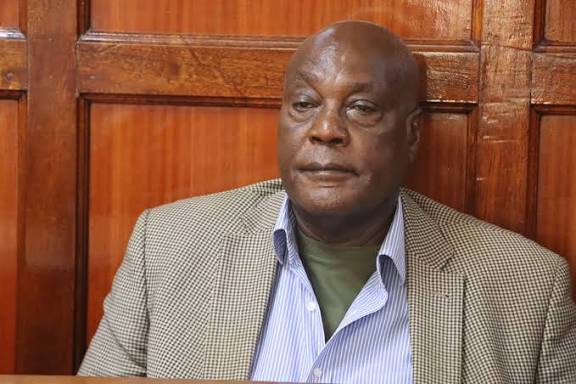
Former PC Davis Chelogoi Sentenced to 13 Years in Prison Over KSh1.35 Billion Lower Kabete Land Fraud
Former Provincial Commissioner Davis Chelogoi has been sentenced to 13 years in prison over a KSh1.35 billion Lower Kabete land fraud case involving businessman Ashok Shah. The case has drawn attention to allegations of fraudulent land dealings and the protection of property ownership in Kenya. The court's decision highlights the importance of accountability in high-value property transactions. The case also raises concerns about land fraud and the security of ownership documents. Chelogoi's sentencing marks a significant development in the long-running legal dispute.
Former Provincial Commissioner Davis Chelogoi has been sentenced to 13 years in prison following his involvement in a KSh1.35 billion land fraud case involving businessman Ashok Shah over a disputed property in Lower Kabete, Nairobi.
The sentence marks a significant development in the long-running legal dispute surrounding the ownership and fraudulent acquisition of the valuable parcel of land. The case has attracted attention because of the substantial amount of money involved and the individuals linked to the alleged fraudulent transaction.
Chelogoi's sentencing follows court proceedings in which his role in the controversial land transaction was examined. The case revolves around allegations of fraud involving property in Lower Kabete, an area known for its valuable real estate and high demand for land.
The KSh1.35 billion value attached to the disputed property highlights the financial significance of the case and the serious consequences associated with fraudulent land dealings.
The former Provincial Commissioner will now serve a 13-year prison sentence following the court's decision, bringing another major development to the dispute that has involved questions about property ownership, documentation and the legality of transactions.
The case concerns a parcel of land situated in Lower Kabete, Nairobi, which became the centre of a controversial transaction involving businessman Ashok Shah and former Provincial Commissioner Davis Chelogoi.
Land ownership disputes have remained a major concern in Kenya, particularly in areas where property values have increased significantly over the years. Lower Kabete is among the locations where land has become highly valuable because of its location, accessibility and growing demand for residential and commercial development.
The disputed property was valued at approximately KSh1.35 billion, making the alleged fraudulent dealings particularly significant.
The case brought attention to the processes involved in land ownership transfers, including the verification of ownership documents, the registration of property and the responsibilities of individuals involved in transactions.
Land transactions in Kenya are expected to follow established legal procedures to protect property owners and ensure that ownership changes are properly documented.
However, fraudulent land dealings can occur when individuals manipulate documents, misrepresent ownership or participate in transactions that do not meet legal requirements.
The Lower Kabete case has once again highlighted the importance of protecting property ownership rights and ensuring that land transactions are conducted transparently.
Davis Chelogoi, a former Provincial Commissioner, became a central figure in the legal proceedings surrounding the disputed Lower Kabete property.
His previous position in public administration has added another dimension to the case, given the responsibilities associated with senior government offices.
Provincial Commissioners previously played important roles in government administration, security coordination and the implementation of government policies within their respective regions.
The involvement of a former senior government official in a high-value land fraud case has therefore attracted considerable attention.
The 13-year prison sentence represents the punishment imposed by the court following the proceedings.
The case also raises broader questions about accountability among individuals who have previously held positions of public responsibility.
Public officials and former government administrators are expected to operate within the law, particularly when dealing with matters that may affect property rights and public confidence in government institutions.
The outcome demonstrates the seriousness with which courts approach criminal offences involving valuable property and alleged fraudulent transactions.
Businessman Ashok Shah is among the individuals connected to the Lower Kabete land dispute.
The property, valued at KSh1.35 billion, has remained at the centre of the legal controversy that culminated in Chelogoi's sentencing.
The financial value involved makes the matter particularly important in discussions about property rights and the protection of investments.
For many Kenyans, land represents one of the most important forms of investment, with individuals and businesses spending substantial amounts to acquire property for residential, agricultural and commercial purposes.
Cases involving fraudulent land transactions can create significant financial losses and undermine confidence in the property market.
Investors generally depend on the integrity of land registration systems and the availability of reliable documentation when purchasing property.
When ownership documents are manipulated or transactions are conducted fraudulently, genuine property owners can face lengthy legal battles while attempting to protect their investments.
The Lower Kabete case therefore provides another example of the challenges associated with land ownership disputes in the country.
Land fraud has remained a major concern in Kenya, with disputes involving private individuals, companies and public officials regularly attracting attention.
The country's property sector has experienced significant growth, particularly in urban areas where demand for residential and commercial land continues to influence prices.
As land values increase, fraudulent schemes targeting valuable properties can become financially attractive to individuals seeking to benefit illegally.
Some disputes involve claims of forged title deeds, illegal transfers, double allocation of land and the use of questionable ownership documents.
These practices can affect genuine property owners, investors and developers who may spend years and substantial financial resources attempting to resolve ownership disputes.
The situation has also raised questions about the effectiveness of systems used to verify land ownership and protect property records.
A transparent and reliable land administration system is important in ensuring that property owners can confidently invest without fear of losing their land through fraudulent dealings.
The sentencing of Chelogoi comes against this wider background of concerns surrounding land ownership and property-related offences.
The Lower Kabete case highlights the importance of ensuring that land ownership transactions are conducted according to the law.
Individuals purchasing property are expected to carry out proper due diligence before completing transactions.
This includes confirming the authenticity of title documents, verifying ownership records and ensuring that the property has no outstanding legal disputes.
Professional assistance from qualified advocates, surveyors and relevant land officials can also help reduce the risks associated with property purchases.
However, the responsibility of protecting land ownership does not rest entirely with individual buyers.
Institutions responsible for land administration and registration also have an important role in ensuring that records are accurate, accessible and protected from manipulation.
Effective oversight can help prevent fraudulent transfers and make it easier to identify irregularities before they result in substantial financial losses.
The case has also brought attention to the importance of accountability among individuals who participate in land transactions, regardless of their professional background or previous positions in government.
The judiciary plays an important role in resolving disputes involving property ownership and prosecuting criminal offences connected to fraudulent transactions.
Courts are responsible for examining evidence presented during legal proceedings and determining whether the charges brought against individuals have been established.
In criminal cases involving land fraud, proceedings may involve the examination of ownership documents, transaction records and other evidence relevant to the disputed property.
The sentencing of Chelogoi to 13 years in prison demonstrates the consequences imposed following the court's determination in the case.
Such decisions also form part of broader efforts to address criminal activities involving property and protect individuals from financial exploitation.
For victims of land fraud, obtaining justice can be a lengthy process involving investigations, court appearances and legal expenses.
The outcome of the Lower Kabete case therefore draws attention to the need for effective investigations and timely determination of property-related criminal cases.
It also reinforces the importance of ensuring that individuals involved in fraudulent transactions are held accountable through established legal procedures.
The KSh1.35 billion Lower Kabete land fraud case is likely to attract attention among property investors, particularly those dealing in high-value land transactions.
Kenya's real estate sector remains an important part of the economy, creating opportunities for investors, developers, construction companies and other businesses.
However, confidence in the sector depends heavily on the security of property ownership and the reliability of legal documentation.
Investors need assurance that properties being offered for sale belong to the individuals or organisations claiming ownership.
They also need confidence that land records can be independently verified and that any irregularities can be addressed through the appropriate legal channels.
Cases involving valuable properties can create uncertainty among potential investors, especially when disputes take several years to resolve.
The Lower Kabete case highlights why due diligence remains essential before committing money to property purchases.
It also demonstrates the potential financial and legal consequences associated with participating in fraudulent land dealings.
For individuals planning to invest in real estate, verifying ownership and ensuring compliance with legal requirements remain important steps in protecting their investments.
Chelogoi's sentencing has also brought attention to the principle that individuals who previously held senior public positions remain accountable under the law.
Public office comes with responsibilities that require integrity, professionalism and respect for the rights of citizens.
Former government officials are not exempt from legal accountability when allegations of criminal conduct arise.
The case demonstrates that previous positions in government do not remove an individual's responsibility to answer to the law.
It also highlights the importance of maintaining public confidence in institutions responsible for administration, land management and the protection of property rights.
For many Kenyans, land is more than an investment. It represents family security, a source of livelihood and an asset that can be passed from one generation to another.
Fraudulent transactions involving property can therefore have consequences that extend beyond financial losses.
Families may lose valuable assets, businesses may face uncertainty and investors may become reluctant to commit resources to projects when ownership cannot be guaranteed.
Addressing such cases remains important in protecting the country's property market and strengthening confidence in the justice system.
The sentencing of former Provincial Commissioner Davis Chelogoi to 13 years in prison marks a significant development in the KSh1.35 billion Lower Kabete land fraud case involving businessman Ashok Shah.
The case has drawn attention to the challenges surrounding land ownership, the protection of property rights and the consequences of fraudulent dealings involving valuable assets.
It also highlights the importance of accountability, particularly when individuals with previous public responsibilities become involved in criminal proceedings.
As the country continues to address land-related disputes, the case serves as a reminder of the need for transparency in property transactions and effective protection of ownership records.
The KSh1.35 billion value attached to the disputed property further demonstrates the financial stakes involved in high-value land dealings.
Chelogoi's 13-year prison sentence now stands as the latest major outcome in the controversy, bringing renewed attention to the fight against land fraud and the protection of legitimate property ownership in Kenya.

You Might Also Like
-
A court has summoned Inspector General of Police Douglas Kanja to appear and provide information regarding the alleged abduction of Tanzanian activist Twaha Mwaipaya. The police chief is expected to clarify what the National Police Service knows about the incident and the steps taken to establish th
-
A Nairobi court has ordered four suspects arrested in connection with the murder of 86-year-old Dorita Macharia to remain in police custody for 10 days as detectives continue investigations. The suspects, Thande Malaika Gitau, Emmanuel Munyeki, Jimmy Macharia and Regina Wangui Macharia, will be held
-
 The accident along the Narok-Nakuru Highway near Enengetia Centre has left six people dead and five others seriously injured, marking another painful moment for families affected by road tragedies in Kenya. The Isuzu FRR lorry was travelling from Nakuru towards Narok when it reportedly lost control
-
Former Mombasa Governor Ali Hassan Joho has declared that the next President of Kenya after William Ruto should come from the Orange Democratic Movement (ODM). His remarks have reignited discussions about ODM's presidential ambitions and its political direction ahead of the 2027 General Election. Jo
-
CS Geoffrey Ruku's impromptu visit to government offices in Kajiado on November 2, 2026, has renewed the national conversation about accountability and discipline in the public service. The reported discovery that more than 70 per cent of public servants were absent from their workstations, alongsi
-
Democratic Party of Kenya leader Justin Muturi has urged opposition leaders to put aside personal ambitions, political supremacy battles and internal disagreements as they prepare for the 2027 General Election. Muturi maintains that no single politician or community can independently secure the pres