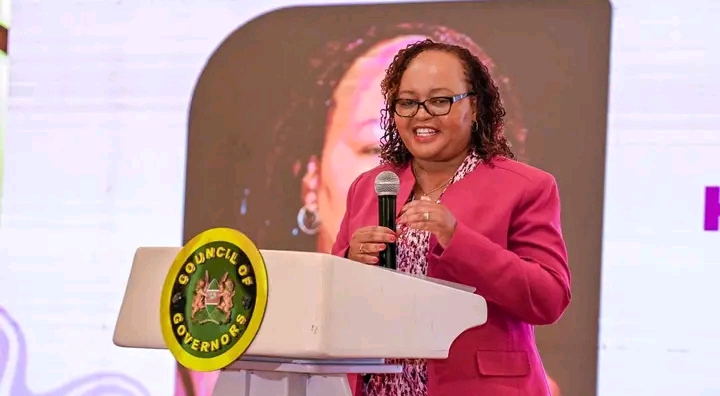
G7 Women Governors Sound Alarm Ahead of 2027 Polls, Demand Two-Thirds Gender Rule Enforcement and Urge More Women to Vie for Power
Female governors and the G7 movement are intensifying their campaign for women to seek elective leadership positions and for the full implementation of Kenya's two-thirds gender principle ahead of the 2027 General Election. Through the G7 National Women Leadership Forum in Nairobi, women leaders have called for unity, stronger political participation and practical action to remove barriers that continue to prevent women from attaining leadership positions. Their campaign seeks to expand women's representation beyond existing achievements and encourage them to compete for positions ranging from county assemblies to Parliament and governorships.
Kenya’s women leaders are stepping up calls for greater female participation in elective and appointive positions as the country prepares for the 2027 General Election. Female governors and members of the G7 women’s leadership movement are advocating for more women to contest for political office, win elections and take up influential leadership roles across the country.
At the centre of their campaign is the demand for the full implementation of the constitutional two-thirds gender principle, which seeks to ensure that no more than two-thirds of the members of elective or appointive bodies are of the same gender. The principle is intended to address the historical underrepresentation of women in political leadership and public decision-making.Their message is that women should not be viewed merely as campaign supporters, mobilisers or voters. Instead, they should be recognised as serious political candidates capable of leading counties, representing constituencies, shaping national policy and influencing decisions on the country's development priorities.
The push for gender equality also raises questions about political party nominations, campaign financing, violence against women in politics and the willingness of institutions to implement constitutional provisions that have remained a subject of debate for years.
As the 2027 polls approach, the campaign by female governors and the G7 movement could become an important part of the wider discussion about political inclusion, democratic representation and equal opportunities in Kenya.The G7 movement brings together Kenya's seven women governors elected in the 2022 General Election. They are Fatuma Achani of Kwale, Gladys Wanga of Homa Bay, Susan Kihika of Nakuru, Wavinya Ndeti of Machakos, Cecily Mbarire of Embu, Anne Waiguru of Kirinyaga and Kawira Mwangaza of Meru.
Their election represented progress for women in county leadership. However, the group wants the next general election to produce a much larger number of women governors and increase female representation at other levels of government.Women may be represented in county assemblies but remain underrepresented in governorships, national parliamentary leadership and other powerful decision-making positions. The G7 campaign therefore seeks a wider transformation across the political system.
Women aspirants are being encouraged to identify constituencies and counties where they can build support, engage residents, communicate their policy priorities and prepare for competitive party nominations.
They are also being urged to develop strong political organisations and participate in party structures before election campaigns intensify.
For many aspiring female leaders, party primaries can be as challenging as the general election. Political parties determine who receives nominations in many races, making internal party democracy and transparent nomination procedures important to women's electoral prospects.The demand for implementation of the two-thirds gender rule is among the most important issues facing Kenya's political system ahead of 2027.
Article 27(8) of the Constitution directs the State to take legislative and other measures to ensure that no more than two-thirds of members of elective or appointive bodies are of the same gender. Article 81(b) establishes the same principle as one of the general requirements governing the electoral system.
Despite these constitutional commitments, implementing the principle in national elective bodies has remained a longstanding challenge.Challenges facing women seeking political office
Although Kenya has made progress in electing women to leadership positions, aspiring female politicians continue to encounter several challenges that can affect their chances of winning elections.
1. Limited campaign financing
Political campaigns require significant financial resources for mobilisation, transport, publicity, campaign agents and meetings with voters. Women who lack access to financial networks or established political sponsors may find it difficult to compete against wealthy and well-connected candidates.2. Gender-based violence and intimidation
Women in politics can face harassment, threats, abusive online comments and intimidation. Such experiences can discourage potential candidates from entering politics or remaining active after an unsuccessful election campaign.
The October 2026 gender-equality discussions also identified violence and intimidation as barriers requiring stronger prevention and response mechanisms.
3. Cultural stereotypes
Some communities continue to associate political leadership more strongly with men. Female candidates may be judged according to their marital status, appearance or family responsibilities rather than their qualifications and development plans.First-time candidates may lack experience in campaign planning, public speaking, fundraising and negotiating within political parties. Experienced female governors, senators and MPs can help address these challenges through mentorship and professional networks.
These obstacles demonstrate why the campaign for women's representation requires coordinated action from political parties, government agencies, security institutions and society.First-time candidates may lack experience in campaign planning, public speaking, fundraising and negotiating within political parties. Experienced female governors, senators and MPs can help address these challenges through mentorship and professional networks.
These obstacles demonstrate why the campaign for women's representation requires coordinated action from political parties, government agencies, security institutions and society.Women may face challenges obtaining party nominations, especially in constituencies where established political networks favour particular candidates. Transparent nominations and fair treatment by political parties will be essential if more women are to compete successfully in 2027.
5. Limited mentorship and political networks
First-time candidates may lack experience in campaign planning, public speaking, fundraising and negotiating within political parties. Experienced female governors, senators and MPs can help address these challenges through mentorship and professional networks.
These obstacles demonstrate why the campaign for women's representation requires coordinated action from political parties, government agencies, security institutions and society.Role of IEBC and gender equality institutions
The Independent Electoral and Boundaries Commission (IEBC) and the National Gender and Equality Commission (NGEC) have important responsibilities in efforts to improve women's political participation.
The IEBC oversees elections and has highlighted its role in electoral processes, including gender top-up seats in county assemblies, political party nomination procedures and voter education. Its Gender and Social Inclusion Policy also addresses participation by women, young people, persons with disabilities and marginalised groups. The G7 initiative is likely to remain an important part of discussions about women's political representation as Kenya approaches the next general election.
Its success will depend on whether more women decide to contest elective positions, whether parties nominate competitive female candidates and whether voters support women across different levels of leadership.
The ambition to increase the number of female governors from seven to 16 is one measurable target. However, the wider objective is to increase women's representation in Parliament, county assemblies and other public institutions.The campaign could also encourage more young women to consider public service as a viable career. By providing mentorship and opportunities to learn from serving leaders, the G7 movement can help develop a new generation of female political aspirants.
At the same time, implementing the two-thirds gender principle remains a constitutional issue that cannot be resolved solely through voluntary campaigns. Legislative action, institutional accountability and fair electoral practices will be important in turning the constitutional promise into reality.
The 2027 elections will therefore provide an important opportunity to assess whether Kenya's political institutions have made meaningful progress towards gender equality.

You Might Also Like
-
The Energy and Petroleum Regulatory Authority (EPRA) has announced a significant increase in fuel prices, with diesel rising by KSh 9.90 to KSh 227.76 per litre, super petrol increasing by KSh 12.93 to KSh 226.96, and kerosene recording the largest increase of KSh 28.49 to retail at KSh 219.87 per l
-
Kenya’s Ministry of Health has confirmed a second case of Ebola Virus Disease involving a close family member of the first patient, prompting intensified contact tracing and surveillance efforts to prevent further infections. Health authorities are monitoring individuals who may have been exposed
-
The Ethics and Anti-Corruption Commission (EACC) has arrested Turkana County Government nurse Gilbert Suleiman Eskuku and his business associate, Abass Abdi Yusuf, over an alleged conflict of interest involving contracts worth KSh2.76 million awarded to their company, Ekwang Suppliers Company Limite
-
Nairobi Governor Johnson Sakaja has called on the Senate to review existing building laws and introduce tougher penalties for developers who disregard approved construction plans. He is also pushing for county governments to be given a greater role in prosecuting construction-related offences, argui
-
British High Commissioner Matt Baugh has delivered two significant messages for Kenya: confidence in the country's ability to respond to Ebola and a commitment by the United Kingdom to engage Kenyan political stakeholders in support of peaceful, free and fair elections in 2027. His assessment of Ke
-
Raila Odinga's first death anniversary is a significant moment for his family, supporters and Kenyans reflecting on his decades in public service. Today's candle-lighting ceremony at Kang’o ka Jaramogi is scheduled to begin at 6:00 pm on Wednesday, October 14, 2026, with Ida Odinga leading the tr