Kenya Confirms Second Ebola Case as Close Family Member of First Patient Tests Positive
Kenya’s Ministry of Health has confirmed a second case of Ebola Virus Disease involving a close family member of the first patient, prompting intensified contact tracing and surveillance efforts to prevent further infections. Health authorities are monitoring individuals who may have been exposed to the virus and strengthening preparedness measures as investigations continue to establish the extent of possible transmission. The government has urged Kenyans to remain calm, maintain proper hygiene, follow official public health guidance and seek medical attention if they develop symptoms after possible exposure. Members of the public have also been advised to avoid spreading unverified information and rely on updates from the Ministry of Health as the country works to contain the situation and protect communities.
Kenya has confirmed a second case of Ebola Virus Disease after a 39-year-old close family member of the first patient tested positive while in quarantine, raising fresh concerns about the risk of further infections as health authorities intensify surveillance and contact tracing across the country.
The Ministry of Health confirmed the latest development on Wednesday, October 14, 2026, with Director-General for Health Dr Patrick Amoth reporting that 113 out of 128 identified contacts had been traced. Authorities have indicated that there is no evidence of wider community transmission at this stage.
The confirmation comes barely days after Kenya reported its first imported case of the Bundibugyo strain of Ebola, involving a Kenyan citizen who had been living in the Democratic Republic of Congo (DRC). The patient travelled through Uganda before arriving in Nairobi, where he was admitted to hospital after becoming unwell. He later died, prompting the government to launch an extensive contact-tracing operation to establish whether anyone else had been exposed to the virus.
The second case marks a significant development in Kenya’s response to the disease, as health officials work to contain the infection and prevent further transmission. The patient’s identification while in quarantine highlights the importance of monitoring people who have had close contact with confirmed cases throughout the virus’s incubation period.
Second patient identified during quarantine
According to information published by the Daily Nation, the second patient is a 39-year-old close family member of the first Ebola patient. The individual tested positive while in quarantine, demonstrating why people who have been exposed to the virus must remain under medical observation even when they initially appear healthy.
Quarantine and contact tracing are among the principal measures used to control Ebola outbreaks. Health authorities identify individuals who may have been exposed to an infected person, establish the nature of their contact and monitor them for symptoms during the period in which the disease could develop.
The confirmation of the second infection does not, by itself, establish that the virus has spread widely within the community. Health officials have reported no evidence of wider community transmission so far, while continuing to trace and monitor the people linked to the two confirmed cases.
Authorities are expected to continue assessing the patient’s movements and exposure history to determine whether any additional individuals may have come into contact with the virus. Such investigations help public health teams establish the possible chain of transmission and identify people who may require testing or further medical assessment.
The Ministry of Health has not, in the available initial report, provided comprehensive details about the second patient’s symptoms, current condition or treatment. These details should be confirmed through subsequent official updates rather than assumed.
Kenya’s first imported case
Kenya confirmed its first imported case of Bundibugyo Ebola Virus Disease on October 6, 2026, following laboratory tests conducted after a patient presented with symptoms consistent with the infection.
According to the Ministry of Health, the first patient was a Kenyan citizen who had lived in the Democratic Republic of Congo for approximately seven years. The patient reportedly became ill about a month before arriving in Kenya and received treatment at several health facilities while still in the DRC.
The patient subsequently travelled by road to Kampala, Uganda, before boarding Jambo Jet flight 8523 to Nairobi on October 3. The flight arrived at Jomo Kenyatta International Airport at approximately 1:10 p.m.
After arriving at the airport, the patient was transported by a relative and a friend to Nairobi Hospital, where medical staff assessed the condition and isolated the patient. Samples were collected and tested by the National Virology Reference Laboratory and the Kenya Medical Research Institute, with both laboratories confirming Bundibugyo Ebola Virus Disease.
Despite receiving supportive medical care, the patient died. The Ministry of Health said arrangements were made for a safe and dignified burial in line with public health protocols designed to minimise the risk of infection.
Following the first confirmation, the government began identifying and monitoring individuals who had contact with the patient, including family members, healthcare workers and people who travelled on the same flight.
The discovery of the second case has increased the importance of those investigations, particularly in establishing whether other close contacts were exposed and whether the infection remains confined to the known transmission chain.
Contact tracing and surveillance intensified
Contact tracing is a critical part of the government’s response. It involves identifying people who may have been exposed to an infected person, recording their details, assessing their level of risk and monitoring them for symptoms.
The Ministry of Health has reported that 128 contacts had been identified in connection with the developing situation, with 113 traced by the time the second case was announced.
The remaining contacts are important to the investigation because public health teams need to establish their whereabouts, assess potential exposure and determine whether they require monitoring or other protective measures.
People who have had close contact with an Ebola patient may be required to undergo a period of observation lasting 21 days after their last relevant exposure. This period reflects the recognised incubation window during which symptoms can develop following infection.
Anyone under quarantine should follow instructions from health authorities, report any symptoms immediately and avoid exposing other people if illness develops. Monitoring is especially important because a person may not show symptoms immediately after exposure.
Health officials must also verify information about contacts and follow up with individuals who may have travelled between different locations. Such work can involve hospitals, households, transport operators, airport personnel and other people whose activities may have brought them into contact with an infected individual.
The authorities’ ability to locate contacts promptly and maintain regular communication with them will be central to limiting the risk of further infections.
What is Bundibugyo Ebola Virus Disease?
Bundibugyo Ebola Virus Disease is caused by the Bundibugyo virus, a member of the group of viruses responsible for Ebola disease. It can cause a severe illness and requires rapid identification, appropriate clinical care and strict infection-prevention measures.
Ebola does not spread through ordinary casual contact in the same way as airborne respiratory infections. Transmission primarily occurs through direct contact with the blood or other bodily fluids of an infected person who is showing symptoms, or through contaminated objects and materials.
The risk can also arise when people handle the bodies of individuals who have died from the disease without appropriate protective measures. This is why safe and dignified burial procedures are essential during an Ebola response.
Early symptoms may include fever, severe weakness, fatigue, headache and muscle pain. Other symptoms can include sore throat, vomiting, diarrhoea and abdominal pain. In severe cases, unexplained bleeding or bruising may occur.
However, these symptoms are not unique to Ebola and can occur in other illnesses. Anyone experiencing concerning symptoms should seek medical assessment rather than attempting to diagnose the disease independently.
A person’s travel history and possible exposure to a confirmed case are important considerations when health professionals assess suspected Ebola infection. Laboratory testing is necessary to establish a diagnosis.
Members of the public should not assume that every person with a fever has Ebola. Equally, individuals who believe they have been exposed should not ignore symptoms or delay contacting a recognised health facility.
Government strengthens preparedness
Kenya had already stepped up Ebola preparedness before the second case was confirmed, following the detection of the first imported infection.
The Ministry of Health previously reported that more than 652,000 travellers had been screened and 267 samples tested as of October 6. At that point, the first patient was the only confirmed positive case among those samples.
The government had also trained 4,971 healthcare workers in Ebola prevention and management, while strengthening surveillance at airports and land-border crossings.
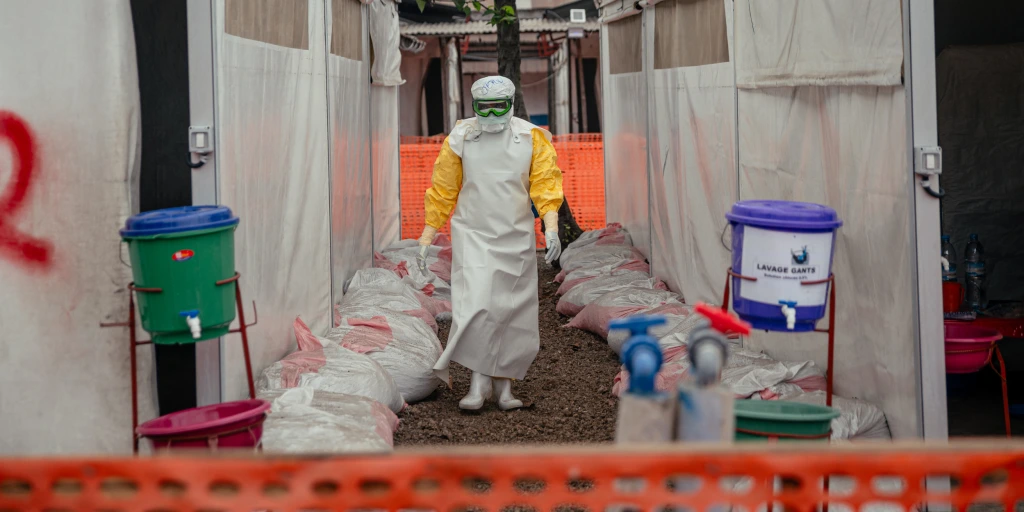
Authorities identified isolation and treatment facilities in several locations, including Nairobi, Eldoret and Mombasa, to support the management of suspected and confirmed cases. The facilities were intended to provide designated areas where patients could be assessed and treated while reducing the risk of exposure to other patients and healthcare workers.
The Ministry also reported that Kenya had 15 isolation and treatment units, with plans to expand the capacity to 22 facilities, prioritising counties considered to face higher risks.
The confirmation of a second case makes it increasingly important for the government to ensure that healthcare workers have appropriate protective equipment, laboratory services remain available and suspected cases are referred promptly for assessment.
Hospitals and other health facilities must maintain infection-prevention and control procedures, including appropriate protective equipment, safe handling of potentially infectious materials and separation of suspected cases from other patients where necessary.
The government is also expected to continue coordinating with international public health partners, including the World Health Organization and Africa Centres for Disease Control and Prevention, to support surveillance, technical guidance and information sharing.
Public urged to remain vigilant
The Ministry of Health has repeatedly urged Kenyans to remain calm while observing public health guidance. The second confirmed case makes accurate information and responsible public behaviour particularly important.
Members of the public are advised to maintain good personal hygiene, wash their hands regularly with soap and water or use an alcohol-based hand rub, and avoid direct contact with the bodily fluids of anyone who is sick with suspected Ebola.
Anyone who believes they have been exposed to a confirmed case should contact health authorities and follow their instructions. People who develop symptoms after possible exposure should seek medical attention promptly and disclose their exposure history to healthcare workers.
The public should also avoid spreading unverified claims about suspected infections, affected households or the locations of patients. False information can create unnecessary fear, expose families to stigma and interfere with contact-tracing efforts.
People should rely on updates from the Ministry of Health and recognised public health organisations rather than rumours circulating on social media or messaging platforms.
The Ministry has previously advised members of the public to call the toll-free health information line 719 for guidance on Ebola and other health concerns.
Importance of the next 21 days
The period following confirmation of a case is particularly important because health authorities must establish whether the infection has spread to anyone else.
The 21-day monitoring period is counted from the last relevant exposure for each contact. People who remain symptom-free during the observation period can be assessed for clearance in accordance with public health protocols.
The discovery of a second infection among a close family member shows why monitoring cannot end simply because initial contacts appear well. It also reinforces the need for health teams to maintain accurate records and ensure that every identified contact receives appropriate follow-up.
Authorities will need to continue reviewing the exposure history of both patients, tracing additional contacts and monitoring people who may have been exposed during travel or while receiving medical care.
The absence of evidence of wider community transmission is an important distinction, but it does not mean the risk has disappeared. The situation will depend on the results of ongoing investigations, laboratory testing and the health status of people under observation.
The public should therefore expect further official updates as more information becomes available.
Conclusion
Kenya’s confirmation of a second Ebola case involving a 39-year-old close family member of the first patient is a significant development in the country’s public health response.
With 113 of 128 identified contacts reportedly traced, health authorities are continuing efforts to establish the full extent of possible exposure and prevent further infections. Officials have reported no evidence of wider community spread in the initial update, although investigations remain important.
The government’s priorities include tracing outstanding contacts, monitoring people under quarantine, maintaining laboratory testing capacity and ensuring healthcare facilities follow appropriate infection-prevention procedures.
For Kenyans, the key message is to remain alert without panicking, follow official public health advice and seek prompt medical attention if symptoms develop after possible exposure.
The coming days will be important in determining whether the two confirmed cases remain limited to the known chain of infection. Continued cooperation between health authorities, healthcare workers, affected families and the public will be essential in containing the risk and protecting communities across the country.

You Might Also Like
-
The Energy and Petroleum Regulatory Authority (EPRA) has announced a significant increase in fuel prices, with diesel rising by KSh 9.90 to KSh 227.76 per litre, super petrol increasing by KSh 12.93 to KSh 226.96, and kerosene recording the largest increase of KSh 28.49 to retail at KSh 219.87 per l
-
The Ethics and Anti-Corruption Commission (EACC) has arrested Turkana County Government nurse Gilbert Suleiman Eskuku and his business associate, Abass Abdi Yusuf, over an alleged conflict of interest involving contracts worth KSh2.76 million awarded to their company, Ekwang Suppliers Company Limite
-
Female governors and the G7 movement are intensifying their campaign for women to seek elective leadership positions and for the full implementation of Kenya's two-thirds gender principle ahead of the 2027 General Election. Through the G7 National Women Leadership Forum in Nairobi, women leaders ha
-
Nairobi Governor Johnson Sakaja has called on the Senate to review existing building laws and introduce tougher penalties for developers who disregard approved construction plans. He is also pushing for county governments to be given a greater role in prosecuting construction-related offences, argui
-
British High Commissioner Matt Baugh has delivered two significant messages for Kenya: confidence in the country's ability to respond to Ebola and a commitment by the United Kingdom to engage Kenyan political stakeholders in support of peaceful, free and fair elections in 2027. His assessment of Ke
-
Raila Odinga's first death anniversary is a significant moment for his family, supporters and Kenyans reflecting on his decades in public service. Today's candle-lighting ceremony at Kang’o ka Jaramogi is scheduled to begin at 6:00 pm on Wednesday, October 14, 2026, with Ida Odinga leading the tr