Historic KCSE Year: CS Julius Ogamba Oversees Examination Distribution in Borabu as Record 1,048,355 Candidates Sit for 2026 National Exams
The supervision of KCSE examination distribution by Education Cabinet Secretary Julius Migos Ogamba at Borabu Sub-County in Nyamira County marks an important moment as Kenya begins the 2026 main written national examinations. With 1,048,355 candidates registered, the country faces a major responsibility in ensuring that examination materials are distributed securely and that every learner receives a fair opportunity to demonstrate their academic abilities. The government's investment in examination security, including smart electronic padlocks, colour-coded materials and expanded examination storage facilities, is intended to protect the credibility of the exercise. As candidates begin their examinations, parents, teachers and education stakeholders will be watching closely, hoping for a smooth and credible process.
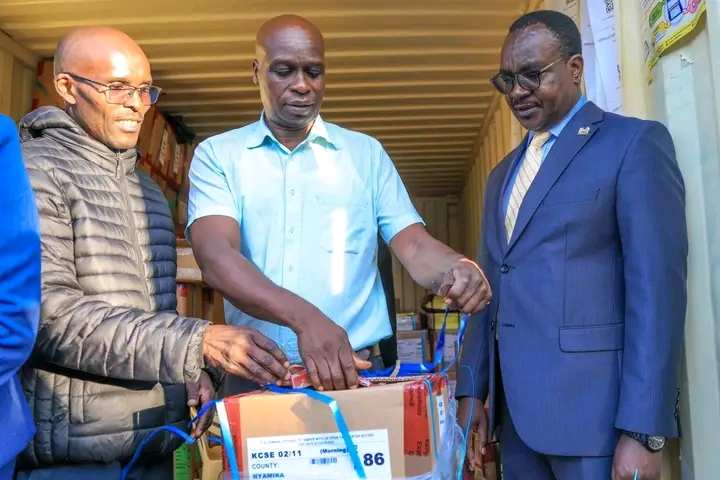
Education Cabinet Secretary Julius Migos Ogamba has overseen the distribution of the 2026 Kenya Certificate of Secondary Education (KCSE) examination papers at Borabu Sub-County in Nyamira County as the country begins another important national examination period. The Cabinet Secretary used the occasion to highlight the government's preparedness, the importance of examination security and the need to maintain integrity throughout the exercise.
Ogamba announced that a total of 1,048,355 candidates have registered to sit for this year's KCSE examinations, making the 2026 examination one of the largest in the country's history. For the first time since the introduction of the KCSE examination, the number of registered candidates has crossed the one-million mark.
The Education CS witnessed the opening of the Kenya National Examinations Council (KNEC) examination container at the Borabu Deputy County Commissioner's office in Nyamira County on Monday, November 2, 2026. The exercise marked an important part of the nationwide distribution of examination materials to schools and examination centres.
The distribution exercise is designed to ensure that examination papers reach candidates securely and on time. It also demonstrates the government's commitment to coordinating education officials, national administration officers and security agencies to protect the credibility of the national examinations.This translates to an increase of approximately 5.27 per cent, demonstrating the growing number of learners reaching the secondary school examination level.
The increase in candidature presents an important responsibility for the Ministry of Education and KNEC. More candidates require additional examination papers, examination personnel, storage facilities, transport arrangements and security measures.
The government must therefore coordinate the entire exercise carefully to ensure that every registered candidate gets an equal opportunity to sit the examination without unnecessary interruptions.
The record candidature also reflects the importance of secondary education in preparing young Kenyans for higher education, professional training and employment opportunities.The Ministry of Education has introduced and strengthened several measures intended to improve the security of examination papers from storage facilities to examination centres.
Among the measures highlighted by Ogamba is the installation of smart electronic padlocks in examination storage containers. These security systems are intended to strengthen access control and ensure that examination materials are handled only by authorised personnel.
The government has also introduced colour coding of examination and assessment materials. In addition, personalised question papers are being used to help protect candidates' identities and strengthen the management of examination scripts.These measures are important because examination malpractice has remained a concern for education authorities over the years. Cases involving examination leaks, impersonation, unauthorised materials and collusion can undermine the credibility of national examinations.
The government wants to ensure that every candidate receives the same examination paper under controlled conditions and that the final results reflect individual performance.
Ogamba has repeatedly warned that examination malpractice will not be tolerated and that anyone found participating in irregularities should face the consequences provided under the law.Why the Borabu examination distribution exercise matters
The presence of the Education Cabinet Secretary at Borabu demonstrates the importance the government attaches to the proper administration of national examinations.Opening an examination container is an important stage in the process because it allows authorised officials to access and distribute examination materials according to the established procedures.
The examination materials must be accounted for at every stage. Officials involved in the process are expected to observe the required security guidelines and ensure that the papers reach the designated examination centres without interference.
Borabu Sub-County, in Nyamira County, was among the locations where the national examination distribution process was being monitored.
The involvement of national administration officers and education officials is essential in maintaining order during the exercise. Their responsibilities include coordinating the collection and transportation of examination papers, monitoring their arrival at centres and ensuring that candidates begin their papers at the scheduled time.The use of mobile phones and other unauthorised communication devices during examination sessions is prohibited. Candidates and examination officials are expected to follow the instructions provided by KNEC.
Ogamba has also cautioned Kenyans against fraudsters who may attempt to exploit parents and candidates by claiming that they can provide leaked examination papers or influence examination results in exchange for money.
Parents have been encouraged to protect their children from such schemes and remind them that success should come through preparation, discipline and hard work.KCSE examination timetable and the importance of the 2026 papers
The main written KCSE examinations began on Monday, November 2, and are scheduled to conclude on November 20, 2026.
The examination season had already started on October 19 with oral, practical and low-candidature papers.
The commencement of the main written papers therefore represents a major stage in the examination calendar.
On the opening day, candidates were scheduled to sit English Paper One in the morning and Chemistry Paper One in the afternoon.
Candidates across the country are expected to follow the official timetable issued by KNEC and report to their respective examination centres as required.Those who perform well may qualify for university admission, depending on the applicable entry requirements, while others may pursue diploma courses, technical training, vocational education and other professional opportunities.
The examination also provides an opportunity for learners to demonstrate the knowledge and skills they have acquired throughout their secondary school education.
For parents and guardians, the period is equally important because they hope their children will achieve results that open doors to further education and future employment.Special attention to candidates with special needs
Another important issue during the 2026 examination preparations is ensuring that candidates with special needs are not disadvantaged.
The Ministry of Education has emphasised the need to provide appropriate arrangements for candidates living with disabilities and those requiring medical attention.
Some candidates may require additional assistance, accessible examination facilities or special arrangements to enable them to complete their papers comfortably.
The government has also highlighted the importance of supporting candidates in areas experiencing difficult weather conditions, flooding and other logistical challenges.
Ogamba has called on education officials to ensure that no candidate is disadvantaged because of circumstances beyond their control.The Ministry of Education reported a combined registration of 3,634,846 learners and candidates across the three major national examination and assessment categories.
The figures were:
Examination/assessment Registered candidates
KPSEA 1,380,463
KJSEA 1,206,028
KCSE 1,048,355
Total 3,634,846
These numbers demonstrate the enormous responsibility facing the Ministry of Education, KNEC and other government agencies involved in administering national examinations.

You Might Also Like
-
DCP Deputy Party Leader Cleophas Malala has dismissed claims that he is being sidelined within the party, insisting that he remains confident in his leadership position. He has maintained that the growing influence of Nyandarua Senator John Methu does not threaten his role in the political outfit. H
-
Jubilee Party leader Fred Matiang’i has urged opposition leaders to embrace inclusivity as they pursue plans to form a united opposition ahead of the 2027 General Election. He has warned that sidelining certain political players could trigger internal disagreements, weaken the coalition and deepen
-
The funeral of Bernard Kiplangat Ngetich in Kipkelion became an important moment for leaders from Kericho County to raise concerns about insecurity and accountability within security institutions. Led by Senator Aaron Cheruiyot, the leaders demanded that the DCI investigate allegations that some of
-
Education Cabinet Secretary Julius Migos Ogamba has announced that 1,048,355 candidates are sitting the 2026 KCSE examinations, marking a historic milestone as the number surpasses one million for the first time in Kenya’s examination history. The candidature represents a 5.27% increase from the 9
-
Aden Duale's development engagements in Garissa, including presiding over the groundbreaking of the KMTC project and inspecting affordable housing developments, have placed healthcare education and decent accommodation at the centre of the county's development agenda. His condemnation of the heckli
-
His warning against examination irregularities sends a strong message to parents, teachers and individuals who attempt to exploit candidates by promising leaked examination papers. He has maintained that the government will not tolerate activities that threaten the future of learners or undermine t