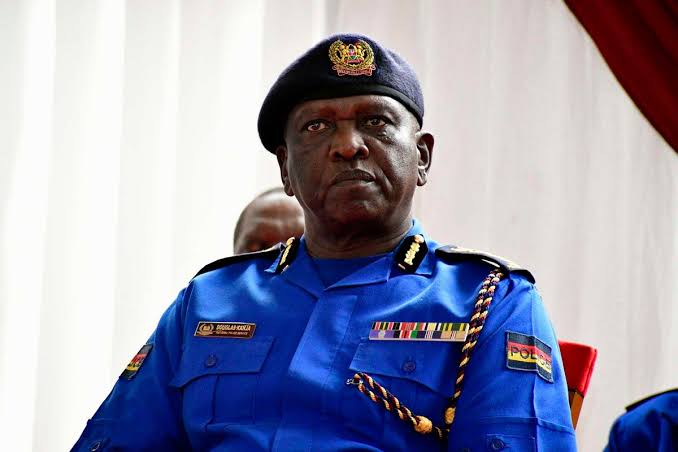
IG Douglas Kanja Denies Police Involvement in Disappearance of Tanzanian Activist Twaha Mwaipaya
Inspector General of Police Douglas Kanja has appeared in court to respond to concerns surrounding the disappearance of Tanzanian activist Twaha Mwaipaya, who was reportedly last seen in Nairobi's Kamulu area on October 25, 2026. During the court proceedings, Kanja denied allegations that police officers were involved in abducting the activist and maintained that Mwaipaya is not being held in police custody. His statement comes amid growing public concern over the activist's whereabouts and demands for answers from security agencies. The disappearance has raised serious questions about personal safety, human rights and the accountability of law enforcement officers when allegations of unlawful detention or abduction emerge. The court is expected to examine the circumstances surrounding the matter and seek clarification from the relevant authorities regarding the steps taken to establish Mwaipaya's whereabouts. The case has also attracted attention because it involves a Tanzanian national, highlighting the importance of protecting the rights of foreign citizens living or travelling in Kenya. As the proceedings continue, attention remains on the police response, the progress of investigations and efforts to determine what happened to the missing activist. Kenyans and human rights advocates will be watching closely as the court considers the matter and seeks answers to the questions surrounding his disappearance.
Inspector General of Police Douglas Kanja has appeared in court over the disappearance of Tanzanian activist Twaha Mwaipaya, where he denied allegations that the activist had been abducted by police officers and maintained that Mwaipaya is not in police custody. The court appearance comes amid growing concerns surrounding the activist's whereabouts and renewed calls for accountability from security agencies over reports of his disappearance.
Kanja's appearance before the court places the National Police Service at the centre of questions concerning the circumstances surrounding Mwaipaya's disappearance. The Inspector General was expected to address concerns about whether the activist had been arrested, detained or taken into custody by police officers. However, he denied the allegations of abduction and insisted that the missing Tanzanian national was not being held by the police.
The case has attracted attention because of the seriousness of the allegations and the uncertainty surrounding the activist's whereabouts. Reports indicate that Mwaipaya disappeared after an incident in Nairobi's Kamulu area on October 25, 2026. Since then, concerns have continued to emerge over his safety and the circumstances that led to his disappearance.
The allegations have raised important questions about the responsibility of law enforcement agencies when individuals are reported missing under circumstances that suggest possible involvement by security officers. In such situations, families, human rights organisations and members of the public often demand clear explanations from authorities, particularly where there are claims that the missing person may have been taken against their will.
Kanja's position that Mwaipaya is not in police custody is therefore an important part of the ongoing court proceedings. His statement seeks to clarify the position of the National Police Service regarding the activist's detention and whereabouts. However, the denial does not automatically resolve the concerns surrounding the disappearance, leaving the court process important in establishing what happened and whether further investigations are required.
The court's involvement provides an opportunity for the allegations to be examined through established legal procedures. It also allows questions to be directed to the relevant authorities concerning any information they may have about the activist's disappearance. The proceedings are expected to focus on establishing the circumstances surrounding the incident and determining whether the necessary steps have been taken to trace him.
The disappearance of a person, particularly where there are allegations of possible abduction, raises serious concerns about personal safety, individual rights and the responsibility of public institutions. Every individual is entitled to protection under the law, regardless of nationality, political opinions or involvement in activism. Law enforcement agencies are expected to respect these rights while carrying out their responsibilities of maintaining public order and enforcing the law.
Mwaipaya's Tanzanian nationality has also drawn attention to the wider regional dimension of the case. Kenya and Tanzania share close diplomatic, economic and social relations, with citizens from both countries frequently travelling across their common border for business, employment, education and other activities. Any incident involving the disappearance of a Tanzanian citizen in Kenya can therefore attract interest beyond the country's borders.
The case also highlights the importance of cooperation between authorities in the two neighbouring countries when dealing with matters involving their citizens. Where a foreign national is reported missing, relevant institutions may need to communicate and share information to establish the person's whereabouts. Such cooperation can help families obtain answers and ensure that investigations are conducted effectively.
For the family and people close to Mwaipaya, the most urgent concern remains knowing where he is and whether he is safe. The uncertainty surrounding a missing relative can cause considerable distress, particularly when there are unanswered questions about the events leading to the disappearance. Clear communication from authorities is therefore important in addressing concerns and preventing further uncertainty.
The National Police Service has a constitutional responsibility to protect the lives and property of all people within Kenya. Its duties include preventing crime, maintaining law and order, investigating offences and ensuring that individuals suspected of breaking the law are handled according to established legal procedures. These responsibilities must be carried out while respecting constitutional rights and freedoms.
Kenya's Constitution protects the right to life, personal liberty and human dignity. It also provides safeguards against arbitrary arrest and detention. Any person who is arrested must be informed of the reasons for the arrest and granted access to the protections provided under the law. These safeguards are intended to prevent abuse of authority and ensure that security agencies remain accountable for their actions.
Allegations of abduction by security officers are particularly serious because they raise questions about the use of state power and the protection of citizens and other people within the country's borders. Such claims require proper investigation, regardless of whether they are eventually established or dismissed. Investigations help establish the facts and ensure that any person responsible for wrongdoing is held accountable under the law.
The Inspector General's appearance in court also demonstrates the role of judicial oversight in matters involving the conduct of law enforcement agencies. Courts have the authority to examine complaints, demand explanations and issue appropriate directions where legal requirements have not been met. This oversight is an important part of ensuring that public institutions operate within the limits of the Constitution.
The proceedings are also likely to draw attention to the importance of maintaining accurate records within police stations and other detention facilities. Such records can help establish whether an individual was arrested, transferred, released or held at a particular location. Proper documentation is essential for accountability and can assist investigators and courts when examining allegations of unlawful detention.
When a person is reported missing, authorities are expected to take the complaint seriously and pursue available leads. This may involve reviewing information about the last known location, speaking to witnesses, examining relevant records and coordinating with other agencies where necessary. The aim should be to establish the person's movements and determine what happened after they were last seen.
The circumstances surrounding Mwaipaya's disappearance have therefore placed pressure on the relevant institutions to provide credible information. Kanja's denial that the activist is in police custody addresses one aspect of the allegations, but the broader question of his whereabouts remains central to the matter. The public interest in the case is likely to continue as the court examines the information presented.
The case also brings into focus the importance of protecting the rights of activists and individuals who participate in public affairs. Activism is part of democratic participation, allowing people to express opinions, raise concerns and advocate for social or political change. Individuals engaged in such activities are entitled to the same legal protections as everyone else.
At the same time, all allegations involving criminal conduct must be handled through lawful procedures. Where there is evidence of an offence, the appropriate authorities should investigate and take action in accordance with the law. However, no individual should be subjected to unlawful detention, intimidation or violence, and any allegations of misconduct should be examined impartially.
Human rights organisations often emphasise the need for transparency whenever individuals disappear under unclear circumstances. Their concerns are usually directed towards ensuring that complaints are properly recorded, investigations are conducted without unnecessary delays and families receive information about the progress of inquiries. These principles are important in maintaining public confidence in law enforcement institutions.
The disappearance of Mwaipaya also highlights the challenges that can arise when a person goes missing in an urban area. Nairobi and its surrounding neighbourhoods have large populations, extensive transport networks and numerous residential and commercial locations. Establishing the movements of a missing person may therefore require coordination among different investigative teams and the examination of available information from the area where the person was last seen.
The reported incident in Kamulu on October 25 remains an important point in the timeline of the case. Establishing what happened in the area on that date could help investigators understand the events that preceded the disappearance. Information from people who may have witnessed the incident could also assist in determining the circumstances surrounding Mwaipaya's last known movements.
The court proceedings are consequently significant not only for the immediate questions surrounding the activist but also for the wider issue of accountability within security institutions. Public trust in the police depends partly on their willingness to respond to complaints, cooperate with lawful investigations and provide explanations when serious allegations arise.
Kanja's position that the police are not holding Mwaipaya will remain an important statement for the court to consider alongside other available information. The judicial process will be expected to establish whether the authorities have fulfilled their responsibilities and what further action may be necessary to clarify the activist's whereabouts.
The matter also serves as a reminder that the protection of human rights is not limited to Kenyan citizens. Foreign nationals within the country are entitled to legal protection and access to justice. This principle is particularly important in a region where cross-border movement is common and where individuals regularly travel between neighbouring countries.
As the case continues, attention will remain on the steps taken by investigators and the information presented before the court. The immediate priority is to establish what happened to Twaha Mwaipaya and ensure that his safety and legal rights are protected.
The appearance of Inspector General Douglas Kanja marks an important stage in the legal efforts to address concerns surrounding the Tanzanian activist's disappearance. While Kanja has denied allegations of abduction and maintained that Mwaipaya is not in police custody, questions about the activist's whereabouts remain central to the case. The proceedings provide an opportunity for the court to examine the matter, seek accountability and ensure that the relevant authorities take appropriate steps to establish the truth.

You Might Also Like
-
More than 350 Kenyan workers who travelled to Saudi Arabia in search of employment have been forced to return home after being denied entry over concerns linked to the Ebola outbreak in Kenya. The unexpected development has disrupted their employment plans, leaving many uncertain about when they wil
-
Dr Raymond Omollo hosted the 5th Kenya-European Union (EU) Security and Defence Dialogue, bringing together key stakeholders to strengthen cooperation between Kenya and the European Union in addressing emerging security challenges. The discussions focused on combating terrorism and violent extremism
-
The Ministry of Health has confirmed the discharge of five Ebola patients after medical tests established that they had fully recovered from the disease. The development marks a significant step in Kenya’s efforts to contain the outbreak and prevent further infections. The recoveries highlight the
-
Health Cabinet Secretary Aden Duale has appeared before a parliamentary committee to respond to concerns surrounding Kenya's preparedness and response to the ongoing Ebola outbreak. During the engagement, Duale defended the government's containment measures, highlighting the successful tracing of al
-
Health Cabinet Secretary Aden Duale and Public Health Principal Secretary Mary Muthoni on Tuesday, November 3, 2026, held a high-level meeting with a UNICEF delegation led by Country Representative Shaheen Nilofer to review Kenya's ongoing response to the Ebola outbreak and strengthen collaboration
-
Former west pokot senator joined ODM.He was welcomed at Chungwa House in Nairobi on November 3, 2026, by ODM Deputy Party Leader Simba Arati and other party representatives. He was accompanied by a delegation of leaders from West Pokot County. His political move comes as he positions himself to con