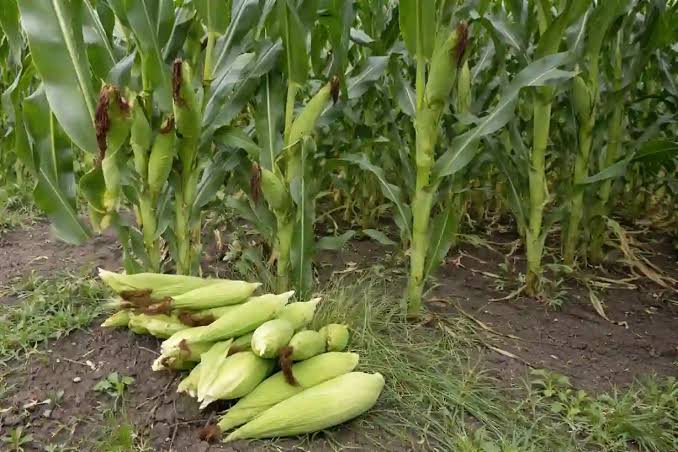
Kenya is facing the prospect of a significant decline in maize production, with output projected to fall by 39 per cent to approximately 2.2 million tonnes in the year ending June 2027.
Kenya’s maize production is projected to decline by 39 per cent to 2.2 million tonnes by June 2027, raising concerns over food security and the possibility of rising food prices ahead of the General Election year. The sharp drop, linked to extreme weather conditions, is the steepest decline below the five-year average in five decades, putting pressure on essential commodities and household budgets.
Kenya is facing the prospect of a significant decline in maize production, with output projected to fall by 39 per cent to approximately 2.2 million tonnes in the year ending June 2027. The anticipated reduction could place additional pressure on food prices, raising concerns about household spending, food security and the cost of living as the country approaches another General Election year.
The projected drop in production has been attributed to extreme weather conditions, which continue to pose challenges to agricultural activities across the country. The expected decline is particularly concerning because it represents the steepest reduction in maize output relative to the five-year average in 50 years, highlighting the potential severity of the current agricultural challenge.
Maize is one of Kenya’s most important staple foods, forming a central part of the daily diet for millions of households. It is consumed in various forms, with maize flour used to prepare ugali, a common meal across the country. The crop is also important to livestock farmers and businesses that rely on maize and its by-products for animal feed and other agricultural activities.
A significant reduction in maize production could therefore affect several parts of the economy, from smallholder farmers and grain traders to millers, retailers and ordinary consumers. If domestic supplies become insufficient to meet demand, prices could rise as households and businesses compete for the available grain.
The anticipated decline comes at a time when many households are sensitive to changes in the prices of essential commodities. Food accounts for a substantial share of spending for many families, particularly lower-income households, which often have limited room in their budgets to absorb sudden increases in the cost of basic goods.
A rise in maize prices would likely have consequences beyond the grain market itself. Maize flour producers may face higher costs when purchasing raw materials, potentially passing part of the increase on to consumers. Retailers may also adjust prices in response to changes in wholesale costs, transport expenses and the availability of supplies.
The effects could extend to other food products if higher maize prices contribute to increased costs across agricultural supply chains. Farmers who depend on purchased animal feed may face additional expenses, while food businesses may experience pressure on their operating costs. The actual impact will depend on the extent of the production shortfall, the availability of existing stocks, imports and developments in other agricultural markets.
Extreme weather conditions present a major challenge to Kenya’s agricultural sector, where many farmers depend on rainfall to support crop production. Changes in the timing, intensity and distribution of rainfall can affect planting schedules, crop growth and harvesting. Prolonged dry spells may leave crops without sufficient moisture, while excessive rainfall can cause waterlogging, soil erosion and damage to farms.
Maize production is particularly sensitive to weather conditions during important stages of crop development. Inadequate rainfall during planting and flowering can reduce yields, while severe weather can damage crops before they reach maturity. Where farmers experience repeated seasons of poor rainfall or other unfavourable conditions, their ability to recover financially may also be weakened.
For smallholder farmers, the consequences can be especially serious. Many rely on income from a successful harvest to meet household expenses, pay school fees, purchase farm inputs and prepare for the next planting season. A poor harvest can reduce their earnings while leaving them with fewer resources to invest in future production.
Farmers may also be forced to purchase additional food when their own harvests fail to meet household needs. This creates a double burden: they receive less income from selling their crops while facing higher costs when buying food from the market.
The projected decline in national maize production could therefore affect both food availability and rural livelihoods. Communities that depend heavily on agriculture may experience reduced economic activity when harvests are poor, particularly where farmers supply grain to local traders, markets and milling businesses.
The scale of the anticipated reduction also raises questions about the country's capacity to maintain adequate maize supplies throughout the period covered by the forecast. Domestic production is an important component of food security, but national availability also depends on existing stocks, trade flows, storage conditions and the ability to move grain from surplus areas to regions experiencing shortages.
Where production falls below demand, the country may need to rely more heavily on supplies from other markets. Imports can help bridge a domestic shortfall, although their effectiveness depends on the availability of grain in exporting countries, international prices, transport costs, exchange rates and the efficiency of import arrangements.
If several countries experience similar weather-related production challenges, the cost of obtaining grain from abroad could rise. Global market disruptions may also influence prices, making it important for Kenya to monitor international supply conditions alongside domestic harvest forecasts.
At the same time, the availability of grain within the country may vary from one region to another. Some agricultural areas may experience better harvests than others, meaning that effective storage, transport and distribution systems will be essential in ensuring that supplies reach consumers who need them.
The government and relevant agricultural agencies will need to assess the expected production shortfall carefully and monitor changes in market prices. Timely information about crop conditions, available stocks and projected demand can help guide decisions on imports, strategic reserves and other measures intended to reduce the risk of severe shortages.
The importance of such preparations is heightened by the possibility of renewed upward pressure on essential household commodities. A September survey involving 466 farmers, wholesalers and retailers identified milk, maize flour, wheat flour and cooking oil among the products facing potential price increases.
The findings point to concerns that the pressure on household budgets may extend beyond maize alone. If several essential commodities become more expensive at the same time, families may have difficulty maintaining their usual levels of consumption without reducing spending in other areas.
Milk is an important source of nutrition for many households, while wheat flour is used in products such as bread and other baked foods. Cooking oil is also widely used in food preparation. Increases in the prices of these products could therefore compound the effects of higher maize flour costs.
However, the expected price movements will depend on several factors, including production costs, market supply, transport expenses and consumer demand. The survey identifies commodities facing upward price pressure, but it does not necessarily mean that all the listed products will experience the same increases or that price rises are certain.
For households, even moderate increases in the cost of essential goods can have a noticeable effect when they occur repeatedly. Families may respond by buying smaller quantities, changing their diets, seeking cheaper alternatives or reducing expenditure on non-food necessities.
Low-income households are often particularly vulnerable because they spend a larger proportion of their earnings on food. Families with children, older people or other dependants may face difficult choices when food prices rise faster than their incomes.
Higher food prices can also affect businesses. Retailers may experience changes in customer purchasing patterns, while restaurants and other food service providers may need to adjust their menus or prices. Millers and wholesalers could face uncertainty over the cost and availability of raw materials, making it harder to plan their operations.
The approaching General Election year adds another dimension to the economic significance of the maize production outlook. Food prices are closely felt by the public, and changes in the cost of staple commodities can become a major issue in national discussions about household welfare and economic management.
For policymakers, maintaining food affordability will require a careful assessment of the available options. These may include monitoring grain stocks, improving distribution, supporting farmers and considering targeted interventions for households most affected by rising prices. Any measures adopted will need to take account of public finances, market conditions and the longer-term sustainability of food supply systems.
Strengthening agricultural production remains a central part of the response to recurring food supply challenges. Improved access to quality seeds, fertilisers, irrigation, extension services and reliable weather information can help farmers make better decisions and reduce some of the risks associated with unpredictable rainfall.
Investment in irrigation could be particularly important in areas where agricultural production depends heavily on seasonal rainfall. Reliable water access can allow farmers to manage dry periods more effectively, although irrigation projects require careful planning, suitable infrastructure and sustainable water management.
Climate-smart farming practices may also help farmers respond to changing weather patterns. These approaches can include conserving soil moisture, improving soil health, using crop varieties suited to local conditions and adjusting planting schedules according to weather forecasts.
Access to accurate and timely weather information can help farmers determine when to plant and which precautions to take during periods of adverse conditions. Agricultural extension officers can support this process by helping farmers understand available information and apply appropriate techniques on their farms.
Post-harvest management is another important area for improvement. Even when crops are successfully harvested, poor storage conditions can lead to losses caused by pests, mould and moisture. Better storage facilities and handling practices can help preserve grain and extend the period during which supplies remain available.
Reducing post-harvest losses would not eliminate the effects of a major production shortfall, but it could help increase the amount of grain reaching the market. Improved storage and distribution could also reduce some of the seasonal fluctuations that affect prices.
Farmers also need access to reliable markets where they can sell their produce at fair prices. Predictable marketing arrangements can encourage investment in farming and help producers plan for future seasons. At the same time, consumers benefit when grain markets operate transparently and supplies can move efficiently between producers and buyers.
Diversifying food production can provide another way to reduce dependence on a single staple crop. Encouraging the production and consumption of other suitable crops may help households manage periods when maize supplies are limited. Such diversification needs to reflect local growing conditions, cultural preferences and nutritional requirements.
Nevertheless, maize will continue to play a central role in Kenya's food system, making the protection of production capacity particularly important. A combination of improved farming practices, climate adaptation, effective grain storage and well-managed trade can help reduce vulnerability to future shortages.
As the country approaches the year ending June 2027, attention will remain focused on how weather conditions influence the maize harvest and whether the projected decline becomes reflected in market prices. Continued monitoring will be important in determining the size of the supply gap and identifying measures that can help protect consumers.
The anticipated 39 per cent fall to 2.2 million tonnes presents a serious concern because of maize's importance to food security and household budgets. The reported comparison with the five-year average also underscores the unusual scale of the projected decline, although the final outcome will depend on how agricultural conditions develop and what supplies are available from other sources.
Ultimately, the challenge is to ensure that a decline in production does not translate into an unnecessarily severe burden on households. Timely planning, reliable market information, support for farmers and effective distribution of available supplies will be important in managing the situation.
Kenya's ability to respond will depend on coordinated action across the agricultural sector, government institutions, traders and communities. While extreme weather cannot always be prevented, its impact on food availability and prices can be reduced through preparation, investment and policies that strengthen the resilience of farmers and food supply chains.
The coming months will therefore be important for assessing the maize outlook and preparing for possible price pressures. With maize remaining a central part of the national diet, the stakes extend beyond agricultural production to the everyday welfare of millions of Kenyans who depend on affordable food.

You Might Also Like
-
Kenya's banking sector recorded a historic KSh205.58 billion in total tax contributions in 2025, representing a 5.53 per cent increase from the KSh194.81 billion reported in 2024. The figure, published in the Kenya Bankers Association's Total Tax Contribution Report 2025, represented approximately 8