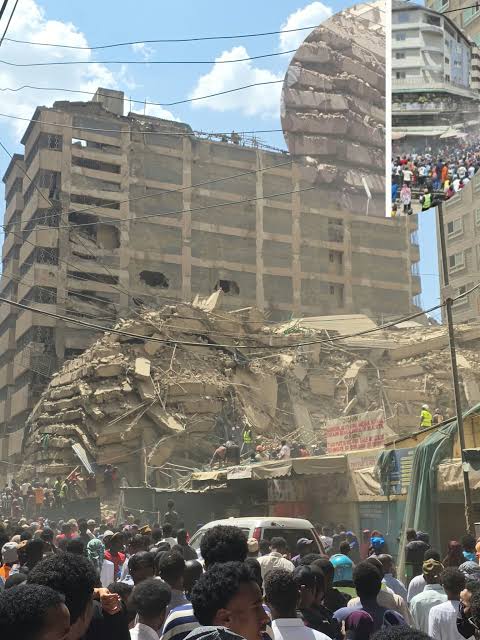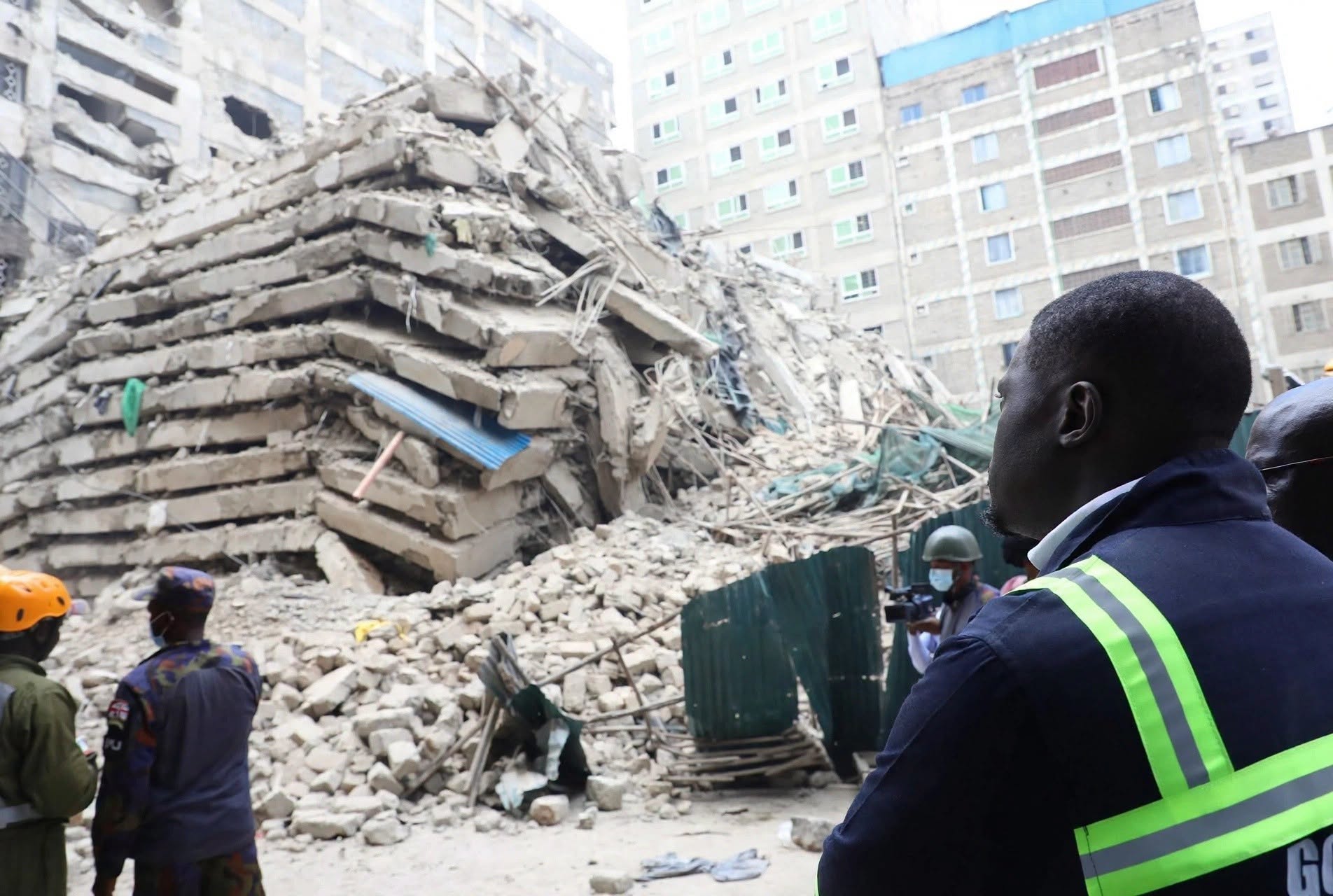
Eastleigh Building Collapse: Sakaja Reveals 18-Storey Structure Had No Occupation Certificate
Nairobi Governor Johnson Sakaja has revealed that the 16-storey building that collapsed in Eastleigh had no occupation certificate, raising concerns over compliance with construction regulations and building safety standards. Meanwhile, multi-agency rescue teams are using excavators and sniffer dogs to search through the rubble for possible survivors. The incident has renewed calls for stricter enforcement of building regulations, proper inspections and accountability in Nairobi’s construction sector as authorities work to establish the circumstances surrounding the collapse.
Nairobi Governor Johnson Sakaja has revealed that the 18-storey building that collapsed in Eastleigh did not have an occupation certificate, raising fresh concerns about compliance with building regulations and safety standards in the capital. The revelation comes as multi-agency rescue teams continue searching through the rubble for survivors, using excavators, sniffer dogs and other equipment to locate anyone who may remain trapped beneath the debris.
The collapse has drawn attention to construction safety in Nairobi, particularly in densely populated neighbourhoods where multi-storey buildings stand close to residential properties, businesses and busy roads. The possibility that people could be trapped beneath the collapsed structure has made the rescue operation urgent, while questions surrounding the building's approval and safety status have added to public concern.
An occupation certificate is an official document issued after a building has met the relevant requirements for occupation. It generally confirms that the necessary inspections and approvals have been completed and that the structure can be used for its intended purpose, subject to applicable regulations. The absence of such a certificate raises questions about whether the required procedures had been fulfilled before a building was occupied or put into use.
Governor Sakaja's remarks are likely to intensify scrutiny of the approvals and inspection processes governing construction projects in Nairobi. The authorities will need to establish the circumstances under which the building was developed, whether the necessary permits were obtained and whether all relevant safety requirements were followed during construction.
As rescue efforts continue, the immediate priority remains locating people who may have been caught in the collapse. The operation involves different agencies working together to search the site, clear debris and assess areas where survivors could be trapped. The use of excavators and sniffer dogs is intended to help responders identify possible locations where people may be buried beneath the collapsed materials.
Sniffer dogs can assist search teams by detecting human scent in areas that may be difficult to access. Their work can help guide rescuers towards particular sections of the rubble that require closer examination. Excavators, meanwhile, can move large amounts of concrete, soil and other debris that would be difficult to remove manually.
However, operating heavy machinery at a collapsed building requires careful coordination. The remaining structure may be unstable, and moving one section of debris could affect the balance of other materials. Rescue teams must therefore assess the site continuously and ensure that their actions do not expose survivors or emergency personnel to additional danger.
The search operation may involve examining collapsed floors, concrete slabs, stairwells and other spaces where people could have been caught. In some cases, small voids may remain between fallen materials, creating spaces in which a person could survive even after a major structural failure. Identifying these areas requires patience, technical expertise and close coordination among the teams involved.
Medical personnel may also be required to provide immediate assistance to anyone rescued from the rubble. People trapped beneath collapsed buildings can sustain serious injuries, including fractures, crush injuries and breathing difficulties. Even those who appear conscious and mobile may require urgent medical assessment because some injuries are not immediately visible.
The number of people affected and the full extent of the damage must be established by the relevant authorities as the operation progresses. Information from workers, residents, witnesses and people who may have been present at the site could help rescue teams determine who was inside the building when it collapsed.
The incident has also raised concerns about the safety of neighbouring structures. Buildings located close to a collapse may be affected by falling debris, ground movement or damage to adjoining walls and foundations. Authorities may need to assess nearby properties to determine whether they remain safe for occupation and whether access restrictions are necessary.
The absence of an occupation certificate, as reported by the governor, is one issue that investigators may examine. However, the lack of the document alone does not establish the precise cause of the collapse. A technical investigation will be needed to determine whether structural weaknesses, construction practices, foundation conditions, materials or other factors contributed to the failure.
Multi-storey buildings depend on properly designed foundations, columns, beams, slabs and supporting elements to carry the weight of the structure. These components must be constructed according to approved designs and appropriate engineering standards. If critical elements fail, the resulting damage can spread across several floors, creating a major emergency.
Construction safety also depends on the quality of materials and the way they are used. Concrete must be prepared and allowed to develop the required strength, reinforcement must be installed correctly, and structural components must be assembled in accordance with approved specifications. Poor workmanship or deviations from an approved design can compromise the stability of a building.
Supervision throughout the construction process is equally important. Architects, structural engineers, contractors, site supervisors and relevant authorities each have responsibilities that contribute to the safety of a project. Proper inspections can help identify problems before they become dangerous, while clear documentation can assist investigators in reviewing how a building was designed and constructed.
The collapse in Eastleigh is likely to renew calls for more effective enforcement of building regulations in Nairobi. The city continues to experience rapid urban development, driven by demand for housing, commercial premises and other facilities. While this growth supports economic activity and creates employment, it also increases the importance of ensuring that construction projects comply with safety requirements.
Building regulations are intended to protect occupants, workers and the public by establishing minimum standards for design, construction and use. These requirements are only effective when they are consistently applied and supported by inspections, transparent approval procedures and appropriate enforcement measures.
Authorities responsible for planning and construction oversight may need to examine whether the existing inspection systems are sufficient to identify unsafe buildings and prevent unauthorised occupation. Where shortcomings are found, improvements may be necessary to strengthen monitoring and ensure that projects meet the required standards before people are allowed to use them.
The incident also highlights the need for accountability when construction requirements are not followed. If an investigation establishes that regulations were breached, the relevant agencies will need to determine who was responsible and what action should be taken under the law. Any conclusions should be based on evidence gathered through a proper investigation rather than speculation.
For residents and businesses in Eastleigh, the collapse has created uncertainty and concern. The neighbourhood is an important commercial and residential area, with busy streets and a high concentration of businesses and buildings. An incident of this scale can disrupt movement, affect trading activities and create difficulties for people who live or work nearby.
Security measures and temporary restrictions around the site may be necessary to protect the public and allow rescue teams to operate. Residents should avoid entering restricted areas or approaching unstable sections of the building, even if they want to assist with the rescue effort. Uncontrolled access can obstruct emergency vehicles and place bystanders at risk.
Anyone with relevant information about people who may have been inside the building should share it with the authorities managing the response. Accurate information can help responders account for workers, visitors and other individuals who may have been present before the collapse.
The incident may also prompt property owners and developers to review their own compliance with building regulations. Obtaining the necessary approvals, ensuring proper supervision and following safety procedures are essential responsibilities in the development and use of multi-storey structures. These measures protect not only those who occupy buildings but also people who work or pass nearby.
Public confidence in construction oversight depends on authorities taking safety concerns seriously and responding transparently when accidents occur. Clear information about the investigation, the rescue operation and any subsequent regulatory action can help residents understand what happened and what steps are being taken to prevent similar incidents.
Following the rescue operation, investigators will need to establish the sequence of events leading to the collapse. This may involve examining the building's approved plans, construction records, inspection reports and the condition of the remaining structure. Technical experts may also need to assess the foundations, structural components and materials used in the project.
The findings could help determine whether the collapse resulted from structural deficiencies, construction errors, ground conditions or other contributing factors. They may also establish whether the building complied with the relevant requirements and whether any warning signs were identified before the incident.
If weaknesses are found in the approval or inspection process, authorities may need to strengthen procedures for monitoring construction projects and verifying compliance. This could include more frequent inspections, better coordination among regulatory agencies and improved systems for tracking building approvals and occupation certificates.
The tragedy underscores the importance of ensuring that urban development is accompanied by effective safety oversight. As Nairobi expands vertically, with more buildings accommodating residents, businesses and workers, compliance with construction standards becomes increasingly important.
For now, attention remains focused on the search for survivors and the efforts to secure the collapsed site. The use of excavators and sniffer dogs reflects the continuing work to locate anyone who may be trapped, while the governor's remarks have raised additional questions about the building's regulatory status.
The full circumstances of the collapse, including its cause and the number of people affected, must be confirmed through the ongoing response and subsequent investigations. The absence of an occupation certificate, as reported by Governor Sakaja, is a significant issue for authorities to examine, but it should not be treated as a definitive explanation for the structural failure.
Ultimately, the incident highlights two urgent responsibilities: reaching anyone who may still be trapped and establishing whether construction and occupation requirements were properly followed. A thorough investigation, transparent communication and appropriate enforcement will be essential in addressing the concerns raised by the collapse.
As rescue teams continue their work in Eastleigh, the priority is to protect lives, support those affected and ensure that the site remains safe for emergency personnel. In the longer term, the findings should inform efforts to strengthen building safety and prevent similar incidents in Nairobi and other rapidly growing urban areas across the country.

You Might Also Like
-
 The negotiations between Nyamira County ECDE teachers and the county government marked an important step towards resolving a dispute that had disrupted early childhood education. The September 21, 2026, agreement addressed the central issues of salary adjustments, formal recognition of KUNOPPET, re
-
The development agenda associated with Aden Duale and John Mbadi brings together two important areas of government responsibility: healthcare delivery and economic planning. Duale's portfolio is relevant to strengthening medical services and improving access to essential healthcare, while Mbadi's Tr
-
The proposed Dangote refinery in Lamu has the potential to become a significant part of Kenya's industrial and energy ambitions. Its planned capacity, scale of investment and potential regional market could create opportunities in petroleum processing, manufacturing, logistics and employment. Howev
-
A multi-storey building under construction has collapsed along 9th Street in Eastleigh, Nairobi, raising fears that several people may be trapped beneath the rubble. The incident has sparked concern among residents, traders and passers-by, with attention focused on rescue efforts and efforts to esta
-
The reported call by ACK Archbishop Jackson Ole Sapit for the government to strengthen measures against Ebola highlights the importance of preparedness, accountability and cooperation in protecting public health. Kenya needs adequate protective equipment, trained healthcare workers, functional isol
-
The Kenya Medical Association's call for adequate protective equipment highlights a fundamental requirement for effective Ebola prevention: healthcare workers must be protected before they can safely protect others. The government, county administrations and hospital managers need to ensure that PP