



Kenya Red Cross Warns of Heavy Rains and Severe Flooding Risks as El Niño Threat Grows
The Kenya Red Cross Society has warned Kenyans to prepare for potentially heavy rains and flooding, particularly during the October–December 2026 rainy season. The warning comes amid forecasts of above-normal rainfall and possible El Niño conditions, raising concerns about river flooding, flash floods, landslides, damage to roads and bridges, displacement of families, crop losses and disruption of essential services. Communities living near rivers, in low-lying areas and on steep slopes have been urged to closely monitor official weather alerts, prepare evacuation plans, protect important documents and belongings, and avoid crossing flooded roads or rivers. The Red Cross and government agencies are strengthening preparedness and early-warning measures to reduce loss of life and property as Kenya braces for the potentially severe rains.
The Kenya Red Cross Society has raised concern over the possibility of heavy and above-normal rainfall in Kenya, urging communities to prepare early for floods and other weather-related emergencies. The warning comes as Kenya approaches the October-November-December (OND) 2026 short-rains season, which meteorological forecasts indicate could be significantly wetter than normal in many parts of the country.
The Kenya Red Cross warning is particularly important because the country is still dealing with the effects of previous flooding episodes that affected homes, roads, farms, businesses and livelihoods. The humanitarian organisation says it is preparing for a potentially difficult rainy season and has highlighted several scenarios that could result from intense rainfall, including overflowing rivers, flash floods, landslides, destruction of infrastructure and displacement of families.
Kenya Red Cross raises the alarm
Kenya Red Cross Secretary General Ahmed Idris recently highlighted the potential dangers associated with the approaching rainy season. His warning followed the seasonal weather outlook issued by the Kenya Meteorological Service Authority, which points to enhanced rainfall during the October-to-December period.
One of the major concerns is the possibility of rivers bursting their banks. The Red Cross has specifically identified the Tana River Basin, including areas such as Garissa, Hola and Garsen, as locations where rising river levels could create serious flooding risks.
The concern is not limited to communities living immediately next to rivers. Heavy rainfall upstream can cause river levels to rise rapidly, meaning communities downstream can face flooding even when rainfall in their immediate location is not particularly intense.
The organisation is therefore encouraging Kenyans to take warnings seriously and prepare before the rains become severe rather than waiting until flooding has already occurred.
Why the warning is coming early
The early warning is part of a broader shift toward disaster preparedness and anticipatory action. Instead of waiting for floods to occur before responding, humanitarian organisations and government agencies are increasingly trying to identify vulnerable communities in advance and position emergency resources where they are likely to be needed.
Kenya has experienced several serious flooding events in recent years. During the 2026 March-April-May rains, the Kenya Red Cross reported extensive impacts across the country. Its flood-response information shows that flooding affected communities in 41 counties, with more than 85,000 households affected and over 18,587 people displaced as of May 2026. The organisation also reported distributing assistance and conducting rescue operations.
The experience from those floods has increased concern about what could happen if another period of unusually heavy rainfall hits communities that are already vulnerable.
The El Niño factor
A major reason for the heightened preparedness is the development of an El Niño climate pattern.
Recent weather outlooks have indicated that Kenya and other parts of the Greater Horn of Africa could experience wetter-than-normal conditions. The World Meteorological Organization has also warned of a strengthening El Niño during 2026, with the Greater Horn of Africa among regions expected to experience above-normal rainfall.
Kenya's meteorological authorities have similarly warned of enhanced rainfall during the OND season. Earlier forecasts indicated a high probability of El Niño conditions developing during the October-November-December period and warned that the combination of El Niño and other climate factors could increase the likelihood of flooding.
This does not mean that every part of Kenya will experience continuous heavy rainfall. Rainfall patterns can vary significantly from county to county. However, the overall risk of extreme rainfall events means that communities in flood-prone areas need to remain vigilant.
Areas that could face increased rainfall
The Kenya Meteorological Department's August-September-October outlook indicates that rainfall will not be distributed evenly across the country.
Some areas are expected to remain relatively dry during August and September, while parts of the Coast and northeastern Kenya could receive above-average rainfall, particularly as October approaches. Counties highlighted in the outlook include Mombasa, Kwale, Kilifi, Lamu, Tana River and Taita Taveta, as well as parts of Garissa, Mandera, Wajir and Marsabit.
This is particularly significant for coastal communities because heavy rainfall can quickly overwhelm drainage systems in urban areas and cause flooding in low-lying settlements.
The warning should therefore not be interpreted as applying only to one region. Different hazards can emerge in different parts of the country depending on rainfall intensity, terrain, river levels, drainage systems and the condition of infrastructure.
Risk of rivers overflowing
One of the biggest concerns raised by the Kenya Red Cross is overflowing rivers.
When rainfall becomes unusually heavy, rivers can rise rapidly and spill into surrounding areas. The danger is particularly high along major river systems such as the Tana River.
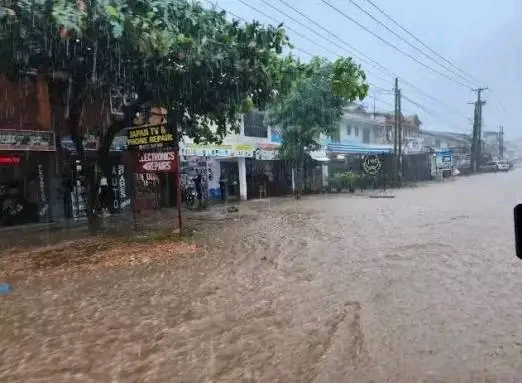
Riverine flooding can destroy homes, sweep away livestock, damage crops and cut off roads and bridges. In extreme cases, fast-moving floodwaters can trap families and make rescue operations difficult.
Communities living near rivers are therefore being encouraged to monitor official warnings and avoid assuming that familiar river levels mean they are safe. A river that appears normal in the morning can rise considerably following heavy rainfall upstream.
Flash floods and urban flooding
Another major threat is flash flooding.
Flash floods can occur with little warning when large quantities of rain fall within a short period. They are particularly dangerous in towns and cities where drainage systems cannot accommodate sudden volumes of water.
Urban areas can also suffer from blocked drainage channels, construction along waterways, poor waste disposal and development in flood-prone zones.
Nairobi, for example, has experienced serious flooding in previous rainy seasons. Authorities have identified hundreds of flood hotspots in the capital as part of preparations for the anticipated rains.
Flash floods can affect roads, homes, businesses, schools and public transport. Motorists are also at risk because floodwaters can conceal open drains, damaged roads and deep sections of water.
Landslides and mudslides
Heavy rainfall does not only create flooding.
In hilly and mountainous areas, prolonged or intense rainfall can saturate the soil and trigger landslides and mudslides. Such events can bury homes, destroy roads and isolate entire communities.
Areas with steep slopes, unstable soils and limited vegetation cover can be particularly vulnerable.
Residents living near hillsides are therefore advised to watch for warning signs such as cracks appearing on walls or the ground, unusual movement of soil, leaning trees or poles, blocked drainage channels and sudden changes in water flowing from the ground.
Where authorities advise evacuation, residents should leave vulnerable locations rather than waiting for a landslide to occur.
Threat to roads and transport
Heavy rains can have a major impact on transportation.
Floodwaters can cut off roads, damage bridges and make some routes impassable. This can affect the movement of food, medicine, fuel and other essential supplies.
The National Disaster Operations Centre has previously warned that transport disruption could be among the significant consequences of the expected heavy rains, particularly in parts of northeastern Kenya. The government has been preparing emergency mechanisms in response to the anticipated rainfall.
For ordinary motorists, the message is simple: do not attempt to cross flooded roads or bridges when the depth or strength of the water is uncertain.
Vehicles can easily be swept away by moving water, even when the water does not initially appear dangerous.
Impact on agriculture
The rains could bring benefits to farmers by improving water availability and supporting crop growth. However, excessive rainfall can also cause serious agricultural losses.
Floodwaters can destroy crops, wash away fertile soil and kill livestock. Farmers living in flood-prone areas are therefore encouraged to prepare drainage systems and consider moving livestock and valuable farm equipment to safer locations where possible.
Heavy rainfall can also increase the risk of crop diseases because excessive moisture creates favourable conditions for some pests and fungal infections.
The agricultural impact could therefore be mixed: while adequate rainfall can improve production, extreme rainfall can destroy farms and worsen food insecurity.
Kenya Red Cross preparedness
The Kenya Red Cross has experience responding to flooding emergencies across Kenya. During previous operations, the organisation has conducted search-and-rescue missions, distributed shelter materials and essential supplies, supported displaced communities and carried out public risk communication.
Its current flood-response information shows that it has already mobilised response teams and issued millions of early-warning SMS messages to communities considered at risk. The organisation says more than 26 million early-warning SMS alerts had been dispatched as part of its flood preparedness and response efforts.
The organisation has also worked with county governments and other partners to establish temporary camps and provide assistance to displaced households.
This demonstrates the importance of early warning. A message received before a flood can give a family enough time to move children, livestock, documents and other valuable belongings to safety.
*What Kenyans should do*
The Kenya Red Cross warning is not meant to create panic. Rather, it is a call for preparedness.
Residents should monitor information from the Kenya Meteorological Service, Kenya Red Cross, county governments, the National Disaster Operations Centre and other recognised authorities.
Families living in flood-prone areas should identify safer locations where they can move if water levels begin rising. Important documents should be kept in waterproof packaging, while emergency supplies such as drinking water, food, medication, torches and charged phones should be prepared where possible.
People should also avoid walking or driving through moving floodwater.
Parents should ensure children understand the dangers of playing near rivers, drainage channels, dams and flooded roads. Children are particularly vulnerable because they may underestimate the strength and depth of moving water.
The importance of early evacuation
One of the strongest messages emerging from the preparations is the importance of early evacuation.
People sometimes remain in dangerous locations because they believe the flooding will not become serious or because they do not want to leave their property.
However, once floodwaters rise rapidly, evacuation becomes much more difficult.
Families living in areas repeatedly affected by floods should have an evacuation plan before the rains begin. They should know where to go, how to get there and which vulnerable family members may need assistance.
Local leaders also have an important role in communicating warnings and helping identify vulnerable households.
Government preparations
The Red Cross warning comes as the Kenyan government and county administrations prepare for the expected rainy season.
The government has already placed 18 counties on heightened alert and activated multi-agency emergency teams in preparation for potentially strong El Niño rains. Officials have warned that millions of Kenyans could be affected if rainfall reaches the projected levels.
In Nairobi, authorities have also identified flood hotspots and begun preparations aimed at reducing the impact of flooding.
Such measures are important because disaster response cannot depend entirely on emergency rescue after flooding occurs. Drainage maintenance, clearing waterways, public education, early warning and planned evacuation can significantly reduce loss of life.
A warning for communities
The Kenya Red Cross message should therefore be viewed as a preparedness warning rather than a prediction that every Kenyan will experience flooding.
Weather conditions remain variable, and rainfall can differ considerably between counties. Some parts of the country may receive below-average rainfall while others experience intense downpours.
Recent forecasts have also indicated that some areas could remain relatively dry before the main October-to-December rainfall period begins.
Nevertheless, the possibility of extreme rainfall means communities should not wait until the first major flood before taking precautions.
Conclusion
The Kenya Red Cross has sounded an important warning as Kenya prepares for the 2026 October-November-December rainy season, with enhanced rainfall and flooding among the major risks being monitored. The organisation has particularly raised concern about rivers bursting their banks, including in the Tana River Basin, while broader forecasts point to increased rainfall risks in several parts of the country.
The warning comes after a year in which flooding has already affected tens of thousands of Kenyan households. The Kenya Red Cross says its teams are preparing, issuing early warnings and coordinating emergency responses with government and other partners.
For Kenyans, the most important message is early preparation. People living near rivers, in low-lying settlements, along drainage channels or on unstable slopes should pay close attention to official warnings. Families should prepare evacuation plans, protect important documents, avoid crossing flooded roads and rivers, and move to safer areas whenever authorities issue evacuation instructions.
With the possibility of El Niño-related heavy rainfall, preparedness could make the difference between a manageable weather event and a major humanitarian disaster. Kenya's experience with previous floods demonstrates that early warnings should be taken seriously, and communities should act before the situation becomes dangerous.

You Might Also Like
-
Kenyans Raise Over KSh261,000 in 24 Hours to Support Skater Kevin Kiarie’s Trip to Paraguay World Skate Games
-
Kericho Governor Erick Mutai has announced the recruitment of 150 emergency nurses to help restore healthcare services disrupted by the ongoing nurses’ strike. The newly recruited nurses are undergoing induction and orientation before deployment to county hospitals, with the governor saying outpat
-
Teachers across the country are increasingly expressing frustration and impatience over what they describe as repeated promises from the government that have yet to translate into meaningful improvements in their working conditions, salaries and career progression.
-
Ruto Gazettes Appointment of Wilson Sossion and Antonina Lentoijoni to TSC
-
Orange Democratic Movement (ODM) party leader and Siaya Senator Dr Oburu Oginga has reportedly been readmitted to hospital, with doctors and hospital management imposing strict restrictions on visitors as he receives medical attention.
-
The Teachers Service Commission (TSC) has re-advertised 1,631 promotional vacancies for serving teachers, comprising 1,470 Deputy Headteacher II positions, 132 Deputy Principal III positions and 29 Senior Master II positions. The applications opened on September 1, 2026, and close on September 14, 2