



Kericho County Executive Faces Questions Over KSh2.5 Billion Development Expenditure
The controversy surrounding KSh2.5 billion in Kericho County development expenditure highlights the continuing debate over accountability and financial management in devolved governments. The available official records show that Kericho County reported spending approximately KSh2.5 billion on development activities during the 2024/25 financial year. At the same time, the County Executive received an adverse audit opinion, and the Senate Public Accounts Committee raised serious concerns about the county's financial management and the failure of the Governor to appear before the committee. It is therefore more accurate to describe the situation as Kericho County facing serious audit and accountability questions surrounding its finances, rather than stating that the entire KSh2.5 billion has been proven to be unaccounted for. The matter remains important to residents because public money is intended to finance development and essential services. Transparent financial records, proper procurement, effective internal controls and physical verification of projects are essential if residents are to have confidence that county resources are being used for their intended purposes. The ongoing engagement between Kericho County and the Auditor-General's office, including discussions on strengthening financial statements and internal audit systems, could help address some of the weaknesses identified through the audit process. In short, the KSh2.5 billion figure represents reported development expenditure, while the adverse audit opinion represents serious problems identified in the county's financial reporting and accountability. Those two facts should not be conflated, and any allegation that the entire KSh2.5 billion was stolen or missing would require additional evidence beyond the audit opinion itself.
The management of public funds in Kericho County has come under renewed scrutiny following concerns raised by national oversight institutions over the county government's financial management and accountability. The matter has attracted attention because the county executive spent approximately KSh2.5 billion on development activities during the 2024/25 financial year, while the Auditor-General's audit of the County Executive resulted in an adverse opinion.
The issue is important because county governments manage large amounts of public money intended to provide services and development projects to residents. In Kericho, these resources are expected to support sectors such as healthcare, roads, agriculture, water, markets, infrastructure and other programmes designed to improve the lives of residents.
However, an adverse audit opinion does not by itself mean that the entire KSh2.5 billion was stolen or that the money has been conclusively established as missing. Rather, it indicates that the Auditor-General identified significant problems with the financial statements and supporting records. In the case of Kericho, the Senate's Public Accounts Committee subsequently raised serious concerns and recommended further action.
How the KSh2.5 billion figure came about
According to Kericho County's own Budget Review and Outlook Paper 2025, the County Executive spent a total of approximately KSh7.016 billion during the 2024/25 financial year.
Of this amount, about KSh3.317 billion went toward employee compensation, representing approximately 47.3 per cent of the County Executive's total expenditure. Another KSh1.199 billion was spent on operations and maintenance, while approximately KSh2.5 billion was spent on development activities. Development expenditure represented about 35.6 per cent of the County Executive's total spending.
The development expenditure included money allocated to various county programmes and projects. Such expenditure is normally intended to create or improve public assets and services, including roads, health facilities, water infrastructure, agricultural programmes and other capital projects.
Therefore, the KSh2.5 billion should primarily be understood as the amount reported by Kericho County as development expenditure, rather than an amount that has automatically been declared missing.
Why the audit opinion matters
The major concern is the adverse audit opinion issued regarding the Kericho County Executive's financial statements for the 2024/25 financial year.
The Senate Public Accounts Committee noted that the County Governor did not appear before the committee despite several invitations and summonses. The committee said the County Executive had been given an opportunity to be heard under oath but did not utilise that opportunity. As a result, the committee proceeded with its consideration of the Auditor-General's report without evidence from the County Executive.
The committee recommended that the Senate adopt the Auditor-General's reports relating to the County Executive, Receiver of Revenue and County Revenue Fund for the financial year 2024/25.
The committee also recommended a KSh500,000 personal fine against the Governor under the Parliamentary Powers and Privileges Act for failure to appear before the committee.
What an adverse audit opinion means
An adverse opinion is one of the most serious forms of audit opinion.
It does not necessarily mean that every transaction undertaken by an institution is illegal. Instead, it means that the Auditor-General has identified significant problems in the financial statements such that they do not fairly present the financial position of the entity.
The Auditor-General's explanation of audit opinions distinguishes an adverse opinion from a qualified opinion. Under the Auditor-General's framework, an adverse opinion is issued where financial statements contain significant and widespread misstatements or disagreements with the underlying accounting records or applicable standards.
This is why the Kericho case has attracted considerable attention.
Senate concerns over Kericho finances
The Senate's consideration of the Kericho County Executive's accounts has gone beyond simply looking at the amount spent on development.
During Senate proceedings, senators discussed the seriousness of the adverse audit opinion and the need for the County Executive to explain how public resources were managed.
On March 31, 2026, the Senate discussed the failure of the Kericho Governor to appear before the Public Accounts Committee. The Senate proceedings stated that the committee had invited the Governor several times and subsequently recommended sanctions. The Senate also discussed giving the County Executive a period within which to implement measures addressing the audit concerns.
The Senate proceedings also referred to the possibility of further action by investigative and prosecutorial agencies if the county failed to implement the required accountability measures.
These developments demonstrate the seriousness with which Parliament has treated the county's audit issues.
Earlier audit concerns
The latest concerns do not exist in isolation. Previous Auditor-General reports have also identified financial-management problems within the Kericho County Executive.
For example, the Auditor-General's report for the financial year ended June 30, 2022 identified concerns involving employee compensation, medical equipment and other areas of county expenditure.
The 2021/22 audit report indicated that employee compensation and social-security-related expenditure amounted to approximately KSh2.787 billion, equivalent to 41 per cent of total receipts cited in the report. The Auditor-General said this exceeded the fiscal responsibility requirements contained in the Public Finance Management regulations.
The same audit report also raised questions about leased medical equipment. It reported that approximately KSh153.3 million had been deducted at source for medical equipment leasing, but the county had not provided records detailing the utilisation of the equipment for audit purposes.
These historical concerns provide important background to the current debate about financial management in Kericho.
Travel expenditure also questioned
More recent reporting based on audit findings has raised questions about travel expenditure by the Kericho County Government.
The Standard reported that Kericho County could not account for more than KSh26 million spent on foreign and domestic travel and subsistence expenditure.
Such audit queries are important because public institutions are required to maintain documentation showing the purpose of official travel, officers involved, dates, approvals and payments.
When supporting documents are missing or inadequate, auditors cannot easily establish whether the expenditure was legitimate and represented value for money.
The difference between “unaccounted for” and “stolen”
This distinction is particularly important when reporting on the KSh2.5 billion figure.
If an audit report says that an expenditure cannot be adequately accounted for, it does not automatically mean that the money was stolen. It can mean that the institution did not provide sufficient documents to demonstrate how the money was used.
For example, if a county reports spending millions of shillings on a road, auditors can request the contract, tender documents, payment vouchers, inspection certificates, bills of quantities and evidence of work completed.
If those documents are missing, incomplete or inconsistent, the expenditure can become an audit query.
Further investigation may then establish whether the problem was poor record-keeping, an irregular procurement process, non-delivery of goods or services, overpayment or actual misappropriation.
This is why the KSh2.5 billion development figure should not be presented as money proven to have disappeared.
Kericho County's position and financial reforms
The County Government of Kericho has also acknowledged the importance of improving its relationship with the Office of the Auditor-General.
On September 8, 2026, Kericho County hosted a delegation from the Office of the Auditor-General led by Auditor-General Nancy Gathungu. County officials led by the Finance and Economic Planning CECM, Jackson Rop, met the delegation during a fact-finding mission.
According to the county government's statement, the discussions focused on improving the preparation of accurate financial statements, addressing pending bills, resolving audit-related challenges and strengthening internal audit capacity.
The meeting is significant because strong internal audit systems can help counties identify financial problems before they become major audit queries.
Development projects and public expectations
The KSh2.5 billion development expenditure also raises questions about what residents should expect to see on the ground.
Development expenditure is ultimately meant to translate into tangible public benefits.
Residents expect money allocated for roads to result in functioning roads. Money allocated to health should improve hospitals and health centres. Agricultural funding should benefit farmers, while water programmes should improve access to reliable water.
Consequently, accountability involves more than presenting figures in financial statements. The county must also demonstrate that projects were properly procured, implemented and completed according to the required standards.
Where projects are delayed or incomplete despite substantial expenditure, residents and oversight institutions have legitimate reasons to seek explanations.
Importance of the Auditor-General
The Office of the Auditor-General is constitutionally mandated to audit and report on the use and management of public resources.
Its reports provide Parliament and county assemblies with information that can be used to exercise oversight.
The Office of the Auditor-General maintains records of county executive audit reports covering successive financial years, including reports for Kericho County.
The audit process therefore provides an important mechanism through which county financial management can be examined independently.
What happens next?
The accountability process requires Kericho County officials to respond to audit concerns and provide supporting evidence where necessary.
The Senate has already recommended measures following the 2024/25 audit. The Public Accounts Committee recommended adoption of the Auditor-General's reports and set out measures concerning the Governor's failure to appear before the committee.
If audit issues remain unresolved, relevant constitutional and statutory institutions can take further steps within their mandates.
The ultimate objective should be to establish what happened to public resources, correct weaknesses in financial management and ensure that county funds deliver services to residents

You Might Also Like
-
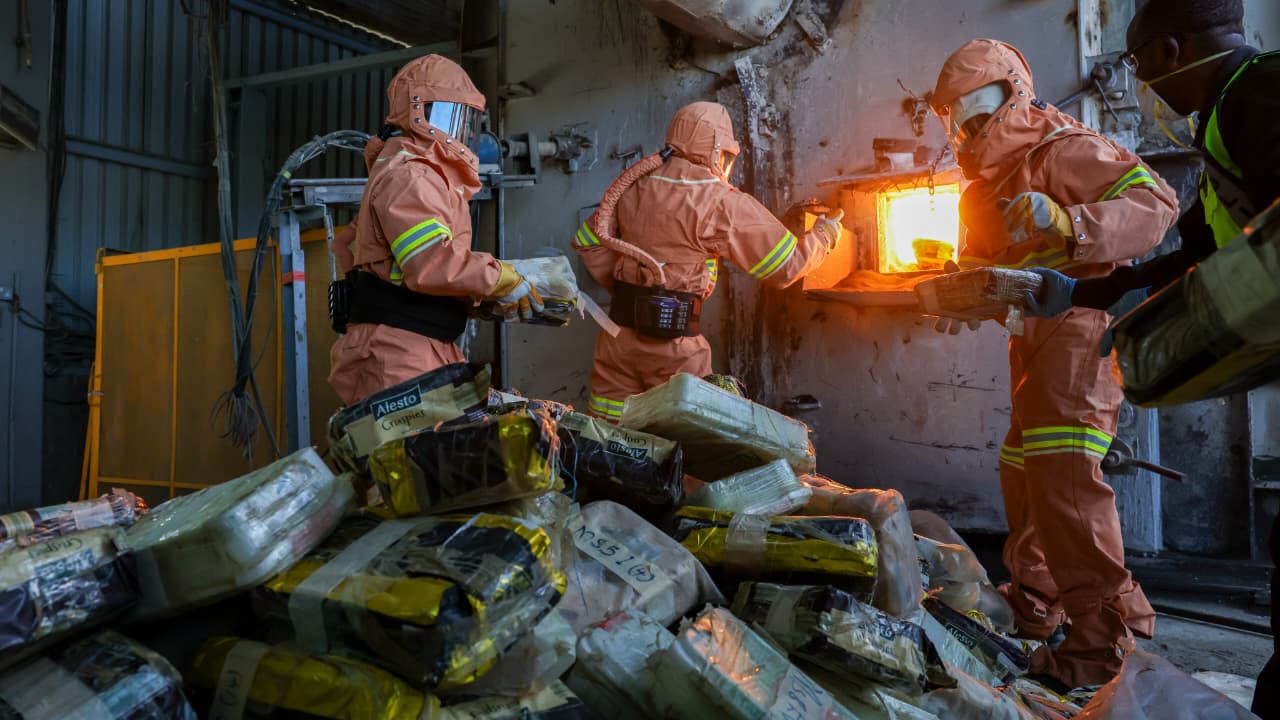
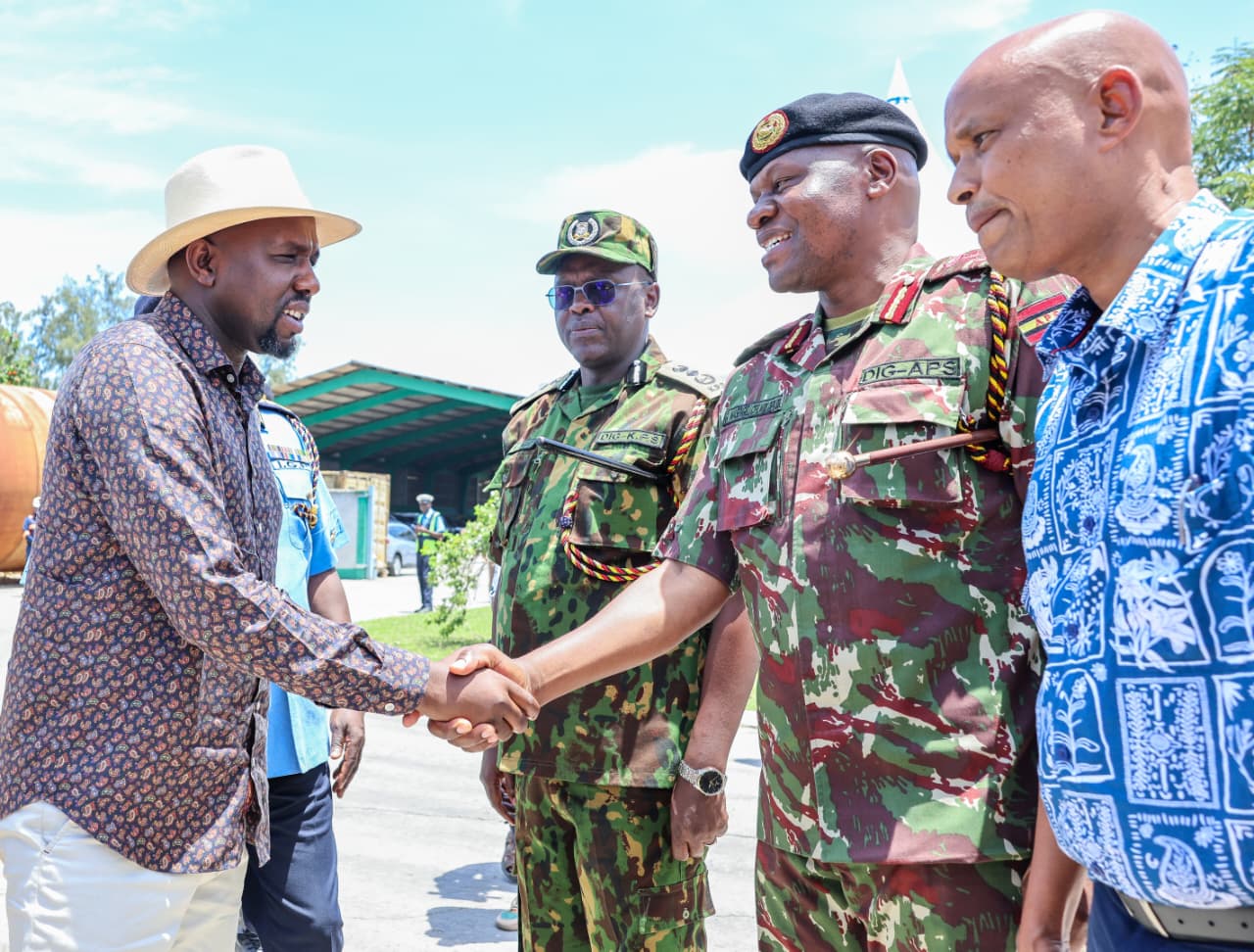
Interior CS Kipchumba Murkomen has overseen the destruction of narcotics worth Sh8.2 billion at Bamburi Cement Factory in Mombasa, including more than 1,000kg of methamphetamine seized in the Indian Ocean last October.
-
Bomet Green Stadium hosted activities marking International Week of Deaf People, bringing together members of the Deaf community, families, advocates and other stakeholders to raise awareness about the rights, dignity, language and inclusion of Deaf people. The event highlighted the importance of Ke
-
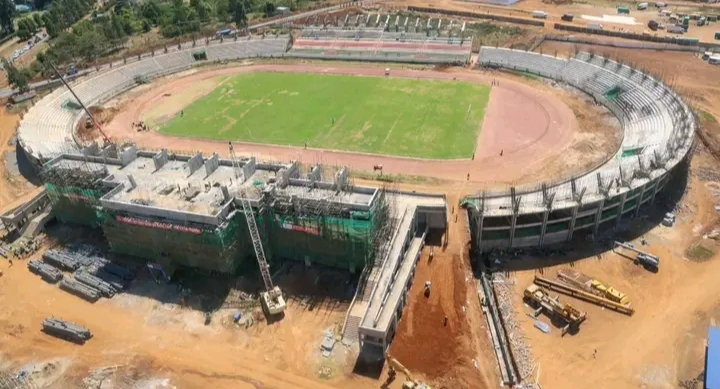
Kipchoge Keino Stadium in Eldoret is undergoing a major transformation as the government accelerates preparations ahead of the 2026 Mashujaa Day celebrations scheduled for October 20. Defence Principal Secretary Patrick Mariru has toured the facility to assess progress and monitor the ongoing works,
-
Interior CS Kipchumba Murkomen is overseeing the destruction of methamphetamine worth Sh8.2 billion at Bamburi Cement Factory in Mombasa. The more than one-tonne narcotics consignment was seized by a multi-agency security team in the Indian Ocean last year.
-
UASU's announcement today marks a significant escalation in the ongoing dispute over lecturers' employment terms and the financing of public universities. The union has issued a seven-day strike notice and says lecturers could down their tools on October 2, 2026, unless the 2025–2029 CBA and relat
-
IEBC Commissioner Dr. Ann Nderitu has emphasized the importance of ensuring that Deaf Kenyans can participate fully and equally in the country’s electoral process as preparations for the 2027 General Election continue. The focus includes accessible voter education, Kenyan Sign Language interpretat