




UASU Issues 7-Day Strike Notice: Lecturers Set to Down Tools Over Pay and CBA Dispute
UASU's announcement today marks a significant escalation in the ongoing dispute over lecturers' employment terms and the financing of public universities. The union has issued a seven-day strike notice and says lecturers could down their tools on October 2, 2026, unless the 2025–2029 CBA and related grievances are addressed. The disagreement involves pay negotiations, funding through the National Exchequer, staffing shortages, reliance on part-time lecturers, workloads and broader university financing. The next seven days will therefore be crucial for negotiations between UASU, the government and university councils.
The Universities Academic Staff Union (UASU) has issued a fresh seven-day strike notice, putting Kenya’s public universities on alert over unresolved issues surrounding lecturers’ pay, the 2025–2029 Collective Bargaining Agreement (CBA), university funding, staffing and working conditions. The development was announced on Thursday, September 24, 2026, by UASU Secretary-General Constantine Wasonga. According to reports from several Kenyan news outlets, the union says lecturers in public universities will down their tools from midnight on Friday, October 2, 2026, if the outstanding issues are not resolved.
The latest announcement comes after months of disagreement between UASU, the government and the Inter-Public Universities Councils Consultative Forum (IPUCCF) over the implementation of an earlier Return-to-Work Formula and negotiations for a new five-year CBA. The union argues that sufficient progress has not been made despite previous commitments to conclude the negotiations.
What UASU is demanding
At the centre of the current dispute is the 2025–2029 Collective Bargaining Agreement. A CBA is an agreement negotiated between an employer and employees, usually through their representatives, covering matters such as salaries, benefits, working conditions and other employment issues.
UASU says negotiations for the new agreement have stalled because the government has not provided a substantive financial counter-proposal. The union wants the government and the relevant university bodies to negotiate, sign and begin implementing the agreement.
The union says the issue has remained unresolved for nearly a year. Earlier this month, UASU had given the government and IPUCCF a longer deadline to address the impasse. The situation has now escalated to a seven-day strike notice.
According to UASU, the Salaries and Remuneration Commission (SRC) informed university-sector unions on September 21 that neither the Ministry of Education nor the National Treasury had provided a written commitment that funding for the CBA would come through the National Exchequer. The union says this has complicated the negotiations because the necessary financial counter-proposals cannot proceed without clarity on funding.
The question of how lecturers' salaries should be funded
Another major issue raised by UASU concerns the source of funding for salaries and benefits of academic staff in public universities.
The union maintains that academic staff in public universities are public officers and that their salaries should therefore be protected through funding from the National Exchequer. UASU has expressed opposition to a financing arrangement in which universities would have to depend heavily on student fees to meet their salary obligations.
This issue has become increasingly important as public universities face financial pressures and growing student populations. UASU argues that linking lecturers' salaries to student fees could expose academic staff to financial uncertainty, particularly when universities experience difficulties collecting fees or receiving other revenues.
The dispute therefore goes beyond the question of an immediate salary increase. It also involves the broader question of how Kenya should finance public higher education and ensure that universities can meet their employment obligations.
Return-to-Work Formula
UASU has also pointed to the Return-to-Work Formula signed on November 5, 2025.
According to the union, the agreement was intended to provide a framework for resolving the earlier lecturers' dispute and completing negotiations for the subsequent CBA. UASU now says university councils, the Ministry of Education and the National Treasury have failed to honour the commitments contained in that arrangement.
The union's latest strike notice is consequently being presented as a response to what it considers prolonged delays rather than an isolated disagreement that emerged this week.
Staffing crisis in public universities
Another important part of the UASU dispute is the shortage of permanent academic staff.
The union has raised concerns that universities are increasingly depending on part-time and adjunct lecturers to cope with growing student numbers. Recent data cited by the Daily Nation from the Commission for University Education (CUE) show that adjunct academic staff increased from 758 in 2024 to 1,611 in 2025.
UASU argues that the increase demonstrates the pressure being placed on permanent academic staff and institutions.
The CUE figures also show that the total number of academic staff increased from 15,383 in 2024 to 16,434 in 2025. However, student numbers have also been increasing, meaning that the growth in staff has not necessarily kept pace with demand. The student-to-teacher ratio in public chartered universities deteriorated from 40.77 students per teacher in 2023 to 44.36 in 2024, according to figures reported from CUE.
For students, staffing levels can affect class sizes, availability of lecturers, marking of examinations, academic supervision, research and access to individual support.
Workload concerns
UASU Secretary-General Constantine Wasonga has also raised concerns about excessive workloads among lecturers.
The union says some lecturers are handling extremely large numbers of students. One report quoting Wasonga said some lecturers could be responsible for as many as 1,000 students.
Large student populations create challenges beyond classroom teaching. Lecturers are expected to prepare lessons, deliver lectures, set and mark continuous assessment tests, supervise examinations, guide students, undertake research and participate in university administration.
UASU has therefore connected the staffing issue to the quality of university education. The union's position is that increasing enrolment should be accompanied by corresponding recruitment of permanent academic staff.
Concerns over part-time lecturers
The growing use of part-time lecturers has become another contentious issue.
According to CUE statistics reported by Nation, adjunct academic staff more than doubled between 2024 and 2025. CUE has acknowledged that flexible staffing arrangements can provide institutions with adaptability and short-term cost savings, but it has also identified potential concerns relating to teaching continuity, student mentorship, curriculum development and institutional commitment.
UASU argues that part-time employment should not become a permanent substitute for recruiting full-time academic staff.
The union has also called for qualified part-time lecturers to be considered for available permanent positions. The dispute therefore touches on employment security as well as the quality and continuity of teaching.
Retirement-age dispute
UASU has also raised concerns about proposals affecting the retirement age of academic staff.
The union argues that universities need experienced professors and researchers, particularly at a time when some institutions are experiencing staffing shortages. It has questioned the logic of losing experienced academics while simultaneously advertising for part-time lecturers.
The union has also raised concerns about Kenya's academic talent pipeline. Recent figures cited by Nation showed that tutorial fellows declined from 3,498 in 2023 to 3,119 in 2024, while graduate assistants declined from 815 to 604.
These positions are important because they can form part of the pipeline through which universities develop future lecturers, researchers and professors.
Financial problems facing universities
UASU has linked the CBA dispute to broader financial problems affecting public universities.
The union has claimed that the government owes public universities approximately KSh100 billion. That figure is a claim made by UASU and should not be treated as an independently established government figure without further verification. According to the union, settling outstanding government obligations would help universities meet their financial responsibilities, including those related to employees.
The financial challenges facing universities have become a major issue in the debate over higher education financing. Institutions must meet expenses such as salaries, infrastructure, research, utilities, teaching materials and other operational costs.
What the strike could mean for students
If the threatened strike goes ahead, students in public universities could face disruption of lectures, examinations, research activities and other academic programmes.
The timing is particularly significant because some universities are beginning or continuing academic activities involving new and returning students. A prolonged lecturers' strike could affect academic calendars, examinations and graduation schedules.
However, the strike has not yet begun as of September 24, 2026. UASU has issued a notice giving the government seven days to address its concerns. This means negotiations or other interventions could still affect whether industrial action actually takes place.
Government and university response
The dispute involves several institutions, including the Ministry of Education, National Treasury, university councils, IPUCCF, SRC and UASU.
The government side has previously maintained that issues affecting university staff should be addressed through negotiations and established processes. The current dispute is therefore likely to involve discussions over the financial implications of the proposed CBA and the mechanism through which it would be financed.
The key issue now is whether the parties can reach an agreement before the announced strike date. Contemporaneous reports quote the union's announcement as October 2, October 2 is the date most consistently reported, but students and university staff should follow any subsequent official UASU communication for confirmation.
Kenyans
What happens next?
The coming days are likely to be important for Kenya's public university sector. UASU has given the government a seven-day window to address the outstanding issues. The central questions are whether the parties can agree on financing, whether the 2025–2029 CBA can be concluded, and whether the government can provide the financial commitments demanded by the union.
The dispute also highlights wider questions about the future of public universities in Kenya: how institutions should be financed, how rapidly academic staffing should grow alongside enrolment, how permanent and part-time lecturers should be balanced, and how the government can maintain sustainable working conditions for academic staff.
For students, the immediate concern is whether the threatened industrial action will disrupt learning. For lecturers, the central issues remain the CBA, remuneration, staffing, workload and employment conditions. For the government and university councils, the challenge is finding a financially sustainable agreement that can address the union's demands while maintaining the operations of public universities.

You Might Also Like
-
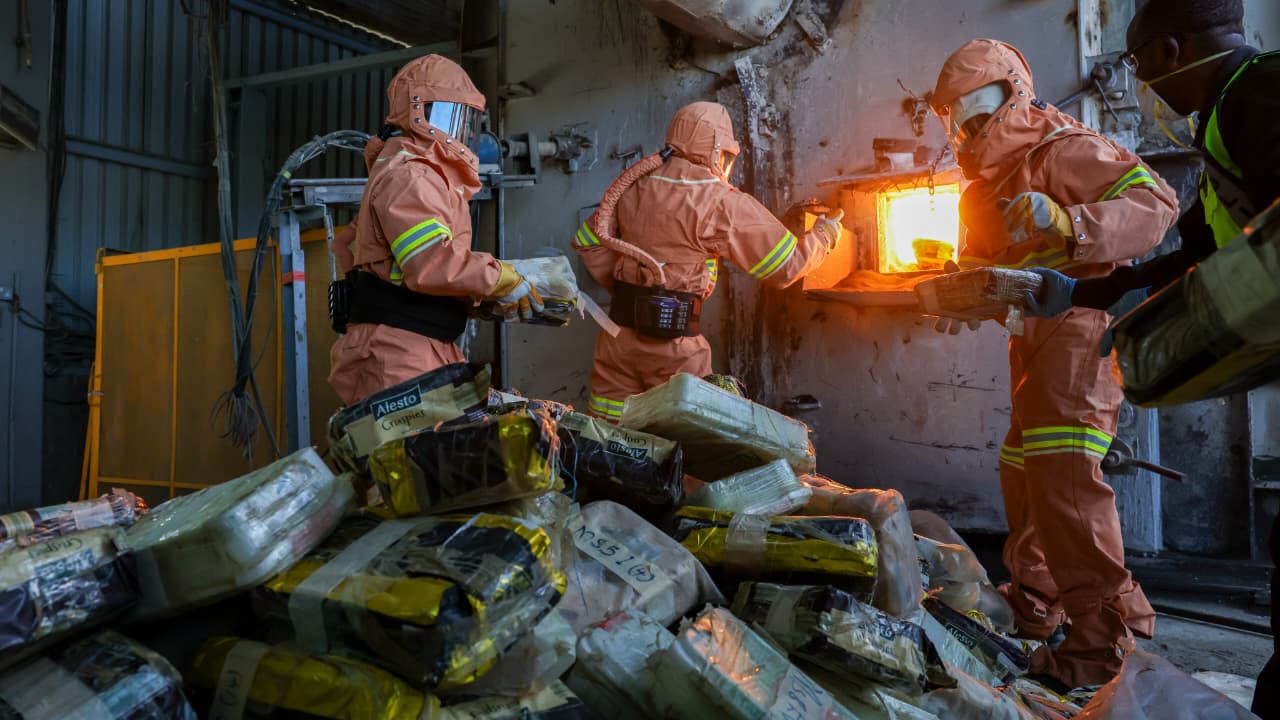
Interior CS Kipchumba Murkomen has overseen the destruction of narcotics worth Sh8.2 billion at Bamburi Cement Factory in Mombasa, including more than 1,000kg of methamphetamine seized in the Indian Ocean last October.
-
Bomet Green Stadium hosted activities marking International Week of Deaf People, bringing together members of the Deaf community, families, advocates and other stakeholders to raise awareness about the rights, dignity, language and inclusion of Deaf people. The event highlighted the importance of Ke
-
Kipchoge Keino Stadium in Eldoret is undergoing a major transformation as the government accelerates preparations ahead of the 2026 Mashujaa Day celebrations scheduled for October 20. Defence Principal Secretary Patrick Mariru has toured the facility to assess progress and monitor the ongoing works,
-
Interior CS Kipchumba Murkomen is overseeing the destruction of methamphetamine worth Sh8.2 billion at Bamburi Cement Factory in Mombasa. The more than one-tonne narcotics consignment was seized by a multi-agency security team in the Indian Ocean last year.
-
IEBC Commissioner Dr. Ann Nderitu has emphasized the importance of ensuring that Deaf Kenyans can participate fully and equally in the country’s electoral process as preparations for the 2027 General Election continue. The focus includes accessible voter education, Kenyan Sign Language interpretat
-
Eldoret's hosting of the 2026 UN Tourism Week and World Tourism Day celebrations places the North Rift firmly in the national tourism spotlight. With activities taking place mainly at the University of Eldoret, the celebrations are bringing together tourism, culture, sports, technology, artificial i