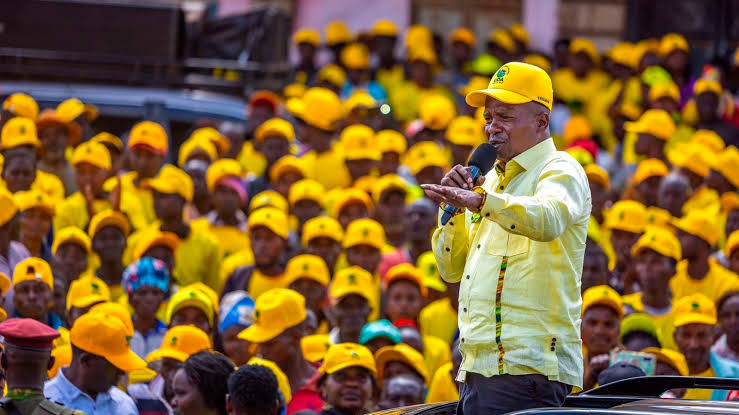
Kindiki Reaffirms Government Commitment to Equitable Development Across Kenya
Deputy President Kithure Kindiki has reaffirmed the government’s commitment to equitable development, insisting that every region across Kenya deserves a fair share of national resources. He emphasised that no Kenyan is more important than another and that all citizens have equal rights, regardless of their county, community or background. Reiterating the message of “Usawa ni Sawa,” Kindiki maintained that the government has a responsibility to serve every citizen without discrimination and ensure that no region is left behind in the national development agenda. His remarks highlight the importance of fair resource allocation, national unity and equal access to essential services such as healthcare, education, roads, water and electricity. The Deputy President also stressed that Kenya must be treated as one nation, where every community has an equal opportunity to benefit from government projects and economic growth. His statement comes amid continued calls for balanced development and improved service delivery across the country's 47 counties.
Deputy President Kithure Kindiki has reaffirmed the government's commitment to ensuring that all parts of Kenya benefit fairly from national development, declaring that the pursuit of inclusive growth and equitable distribution of resources is not negotiable.
Kindiki said every region deserves its rightful share of national resources, emphasising that no Kenyan should be disadvantaged because of their geographical location, community or background. He maintained that the government has a responsibility to serve all citizens equally and ensure that development reaches every part of the country.
The Deputy President stressed that Kenya is one nation whose citizens enjoy equal rights and deserve equal treatment from the government. He argued that public resources should be distributed fairly to ensure that communities across the country have access to development opportunities and essential services.
“We are one nation, and no Kenyan is more important than another. No citizen has more rights than a citizen from another part of the country. That is why we say Usawa ni Sawa. We are all Kenyans, and we have one government which must serve every citizen without any form of discrimination,” Kindiki said.
His remarks underline the government's position that national development should not be concentrated in a few regions but should benefit citizens across all counties. The Deputy President maintained that every Kenyan has an equal stake in the country's development agenda and should enjoy the benefits of public investment.
The principle of equitable development remains an important issue in Kenya's national conversation, particularly as communities continue to demand improved infrastructure, better healthcare, quality education, employment opportunities and access to basic services.
For many years, questions surrounding the distribution of national resources have featured prominently in political discussions, with different regions calling for increased investment in roads, electricity, water supply, health facilities and other development projects.
Kindiki's statement seeks to reinforce the government's commitment to addressing these concerns by ensuring that public investment is guided by fairness and the needs of citizens across the country.
He emphasised that national unity should remain a priority, arguing that Kenyans should not be divided by regional differences or perceptions that some communities are more important than others. According to the Deputy President, the responsibility of the government is to serve the entire population without favouring particular areas.
The principle of equal treatment is also central to the country's constitutional framework, which recognises the importance of fairness, equality and non-discrimination in public service delivery. Government institutions are expected to provide services to citizens without discrimination while ensuring that public resources are used for the benefit of the nation.
The Deputy President's remarks come amid continued discussions about regional development and the need to ensure that all counties benefit from government programmes. Across the country, residents have consistently called for investments that address local challenges and improve their living standards.
In rural areas, communities continue to seek better road networks to connect farmers to markets, improve access to schools and hospitals and facilitate the movement of goods and services. Improved electricity connectivity is also considered essential in supporting businesses, promoting industrial activities and expanding opportunities for young people.
In urban centres, residents face different challenges, including congestion, housing shortages, unemployment, waste management and pressure on public infrastructure. Addressing these issues requires coordinated planning and the fair allocation of resources based on the needs of different communities.
Kindiki maintained that no part of the country should be left behind in the government's development agenda. His position reflects the broader argument that national progress can only be achieved when opportunities and public investments are extended to all regions.
The Deputy President's reference to “Usawa ni Sawa” also highlights the importance of equality among citizens. The message is that every Kenyan, regardless of their county or community, deserves respect, equal protection under the law and access to government services.
He further emphasised that the government must operate as a national institution serving all citizens rather than an administration representing only selected regions. Such an approach, he argued, is necessary for strengthening national cohesion and ensuring that development benefits are shared across the country.
Equitable distribution of resources is particularly important in addressing historical development gaps between regions. Some communities have faced challenges accessing essential services and infrastructure, making government investment necessary to improve living conditions and create economic opportunities.
Through investments in roads, healthcare facilities, schools, water projects and electricity connectivity, the government can help address these gaps while creating an environment where communities have better opportunities to participate in economic activities.
However, equitable development also requires transparency, accountability and effective management of public resources. Citizens expect government projects to be completed as planned, public funds to be used responsibly and development programmes to deliver measurable benefits.
The effectiveness of such initiatives is often judged by the impact they have on ordinary households. For residents, development is reflected in accessible healthcare, reliable water supply, improved roads, affordable education, employment opportunities and better living conditions.
The Deputy President's remarks therefore place emphasis on the responsibility of government to ensure that national development commitments translate into tangible improvements in people's lives.
Kenya's devolved system of government also provides counties with an important role in delivering services and addressing local development priorities. County administrations are responsible for various functions, while the national government oversees other key sectors and supports national infrastructure and development programmes.
Cooperation between the two levels of government remains essential in ensuring that development projects are implemented effectively and that resources are directed towards areas where they are most needed.
Kindiki's call for inclusive development also carries a message of national unity at a time when political competition and regional interests often influence public discussions. He maintained that Kenyans should recognise their shared identity and work towards a common national goal.
The Deputy President's position is that no citizen should feel less important because they come from a particular region. Every Kenyan should have the opportunity to benefit from national development and participate in the country's economic growth.
As the government continues implementing its development agenda, attention will remain on how resources are allocated and whether different regions receive investments that address their unique challenges.
The public will also be watching how government commitments translate into completed projects and improved services. Beyond political statements, communities expect practical action that demonstrates fairness in the distribution of opportunities and national resources.
Kindiki has maintained that the government's responsibility is to serve every Kenyan without discrimination, regardless of geographical or political differences. His message reinforces the importance of equality, national unity and balanced development as key pillars of the country's progress.
The Deputy President's remarks present a vision of a Kenya where every citizen has equal rights and every region has an opportunity to benefit from national development. The government, he insists, must remain committed to ensuring that no community is overlooked and that the country's development agenda serves all Kenyans.

You Might Also Like
-
Interior Cabinet Secretary Kipchumba Murkomen has reassured international partners that the government is strengthening security arrangements to ensure Kenya conducts peaceful 2027 General Elections. Speaking on Monday, November 9, 2026, during a meeting with Refugee Donor Group heads of mission, re
-
Kasarani Member of Parliament Ronald Karauri has officially joined the United Democratic Alliance (UDA) as he positions himself to contest the Nairobi gubernatorial seat in the 2027 General Election on the ruling party’s ticket. His move marks a significant political development as preparations fo
-
The Directorate of Criminal Investigations (DCI) has clarified that the 454-kilogram consignment of suspected methamphetamine seized in Kwale County originated from Pakistan and is not connected to the separate 1,036-kilogram narcotics shipment recovered from the vessel MV Mashala, which was traced
-
Police are investigating the tragic death of 17-year-old Michael Kimani, who was allegedly pushed from the ninth floor of an Airbnb apartment in Gwakairu in an incident that has left his family devastated and raised serious questions about the circumstances surrounding his death. The teenager’s pa
-
Principal Secretary for Internal Security and National Administration Dr. Raymond Omollo has officially opened the 12th cohort of the Kenya Coordinated Border Management Programme, reaffirming the government's commitment to strengthening national security and improving border operations. The program
-
Deputy President Professor Kithure Kindiki visited Taita Taveta County on Monday, November 9, 2026, as part of the government's ongoing development. The confirmed activity from the day's programme includes the inspection of Kimala Senior School at Rekeke in Taveta Constituency. The project involves